Quick answer
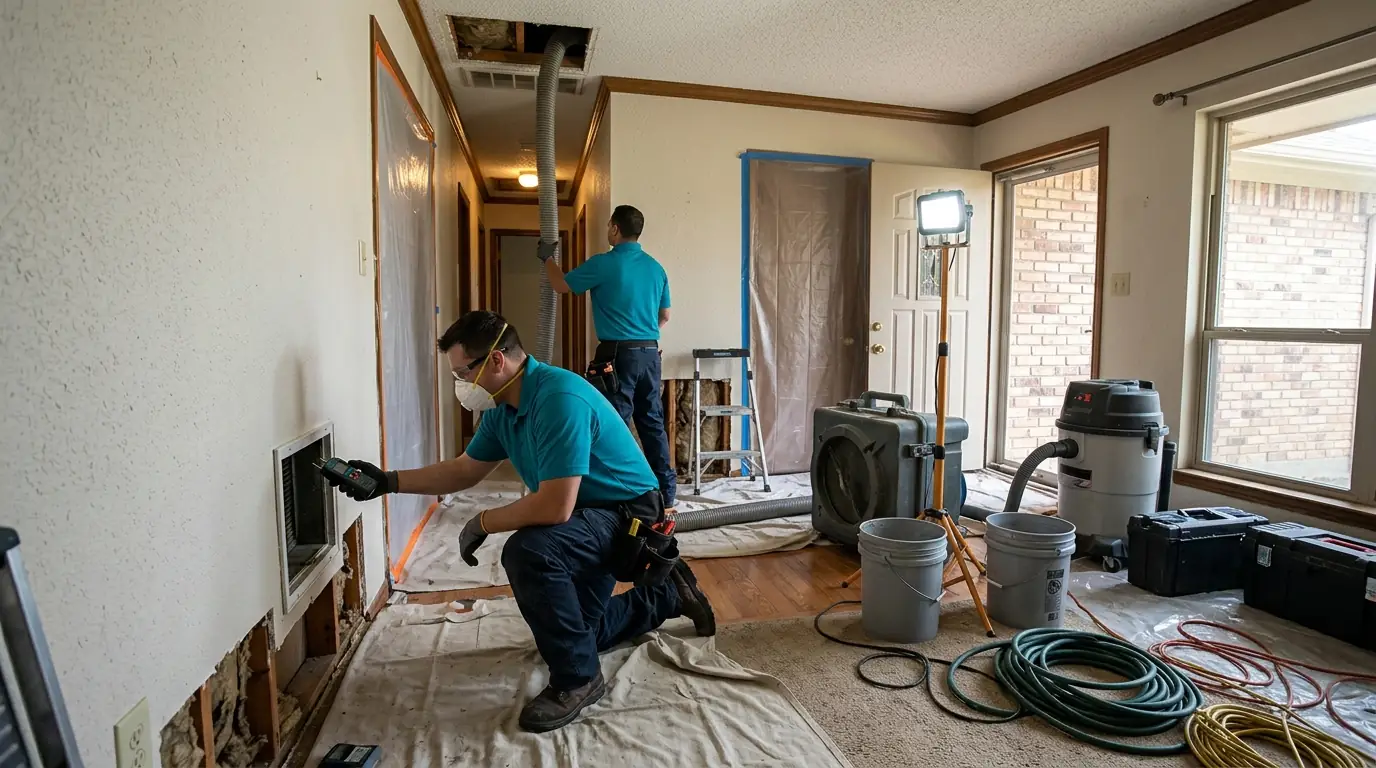
Air duct cleaning after a fire or mold problem in Fort Worth homes removes residue that would otherwise blow back into clean rooms every time the system runs. A single cycle can redistribute soot or spores across the house. We put the ducts under negative pressure, agitate and vacuum the inside, clean plenums and registers, and replace filters.
What Air Duct Cleaning After Fire or Mold Involves
Most duct cleaning is routine dust removal. After a fire or a mold problem, it's part of the restoration itself. If the HVAC was running during or after a fire, the return pulled smoke into the system and soot settled inside the ductwork, the air handler and the supply registers. If mold grew around a wet air handler or in an attic return, spores and growth can sit in the plenum and duct liner. Either way, cleaning the rooms without cleaning the ducts lets the problem blow right back.
We attach a HEPA-filtered negative air machine to the system, seal off the registers, then work through each run with brushes and air whips so loosened debris is pulled into the collector. Plenums and accessible air handler surfaces get cleaned by hand. Duct cleaning is usually one step in a larger job alongside smoke damage cleaning or mold remediation.
Smoke Residue Inside the Ductwork
Smoke residue in the ducts shows up as gray or black streaks around supply registers, soot on the return filter, and a smoke smell that gets stronger when the system kicks on. If the house was cleaned and still smells when the AC runs, the ducts are the likely source. We seal registers, put the system under negative pressure, and run brushes and air whips through each duct to loosen residue so it's pulled into the HEPA collector. Metal ducts clean well. Flexible ducts with heavy soot inside the liner are often cheaper to replace than to clean. Cost depends on the number of runs, duct type and how heavy the residue is.
Mold in Returns and Plenums
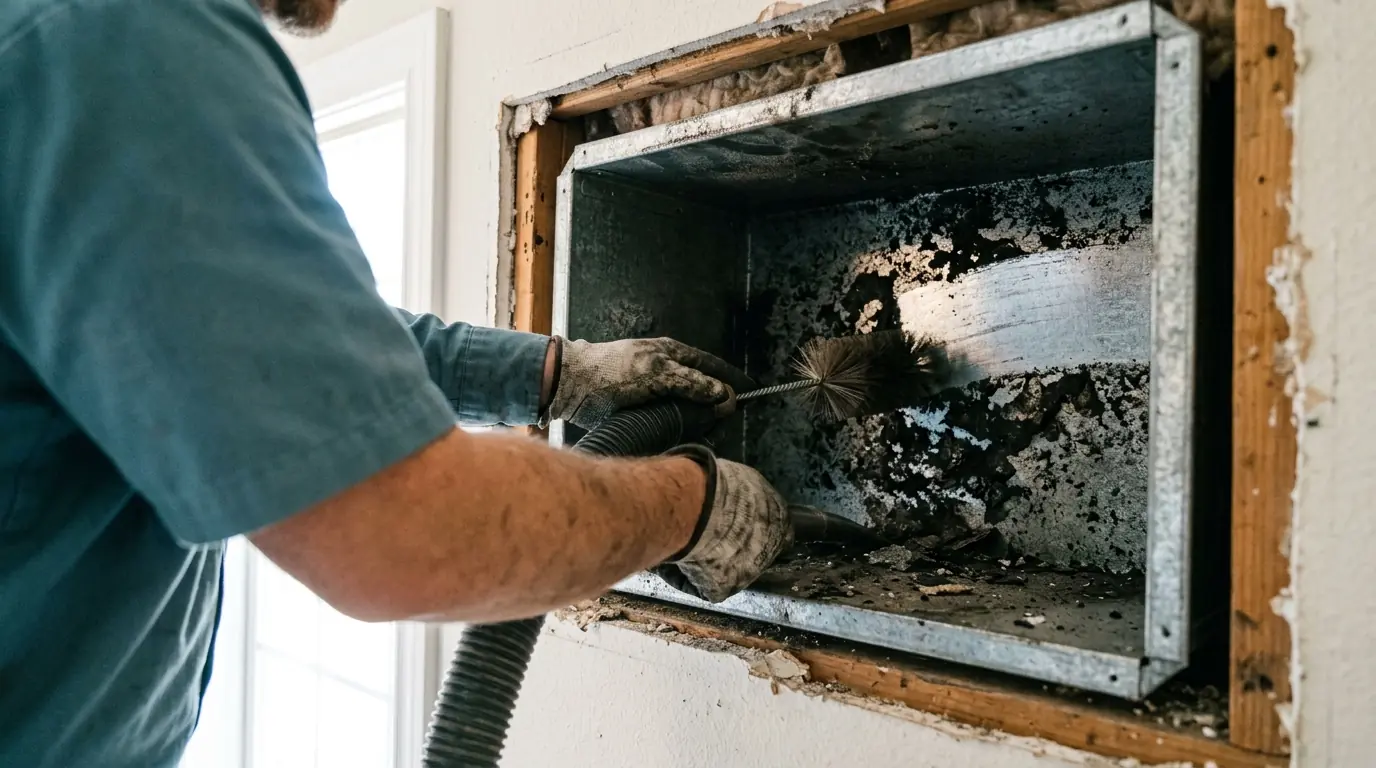
Mold in an HVAC system usually starts where moisture collects: around a sweating air handler, in a return plenum near a wet attic space, or on duct liner that got wet from a condensate leak. You might see dark spots on the return grille or inside the filter compartment, or notice a musty smell when the system starts. We find and fix the moisture source first, since cleaning without it just invites regrowth. Then we clean the plenum and accessible surfaces, HEPA vacuum the duct runs, and remove fiberglass duct board or flex duct that's grown mold, since porous liner can't be cleaned reliably. How much porous material has to be replaced decides most of the cost.
Registers and Grilles
Supply registers and return grilles collect residue first and are what you see. After smoke damage, there's often a dark ring on the ceiling around each register. After mold, there may be spotting on the grille itself. We remove each register and grille, clean them by hand or replace them if they're corroded or stained, and clean the ceiling or wall around them. That step happens after the duct runs are cleaned, so new residue doesn't land on clean grilles. Registers are inexpensive to replace, so heavily stained or rusted ones are usually swapped instead of scrubbed.
Water Still Moving Through the House?
Shut it off if you can and call. Every hour it sits, water travels further into drywall, pad and framing.
How Much Does Duct Cleaning Cost After Fire or Mold?
This Old House's cost guide puts air duct cleaning at $450-$1,000 ($0.15 and $0.40 per square foot) as a national planning range. That figure reflects standard cleaning. After a fire or mold problem, sections of flex duct or duct board may need replacement, which goes beyond the cleaning range.
- Number of runsLarger homes have more supply runs, returns and branches. Each run takes time to seal, clean and verify, so square footage drives the base cost.
- Duct materialSheet metal ducts clean well. Flex duct and fiberglass duct board hold residue in their liners and often need replacement after heavy smoke or mold.
- Air handler conditionA coil, blower or drain pan with soot or mold growth needs extra cleaning and sometimes an HVAC technician to service or replace parts.
- Attic accessTight attic spaces, low pitch roofs and summer heat make access harder and slow the work, especially for duct replacement.
Range cited from a national cost guide (source, 2026-04-09). It is a planning figure, not a quote; your job is priced after we see it.
Attic Duct Runs in Fort Worth Homes
Fort Worth field note
In most Fort Worth houses built on a slab, the air handler and ductwork sit in the attic. That puts the HVAC directly above the living space and in the hottest part of the house. During a fire, smoke rises into the attic and finds the return. During summer, a clogged condensate line can drip onto the air handler and duct board for weeks before anyone sees a stain. Either way, the attic layout means the ducts often need attention after fire or mold work in the rooms below.
How We Clean the HVAC After Smoke or Mold
- 01
Inspect the system
We check the return, plenum, air handler and a sample of duct runs with a camera or by opening access points, so we know whether to clean or replace sections.
- 02
Fix the moisture source
For mold, the condensate line, drain pan or leak causing it has to be fixed first. An HVAC technician handles mechanical repairs; we handle the cleanup.
- 03
Seal and set negative air
Registers get sealed and a HEPA negative air machine connects to the trunk line, so loosened debris is pulled out instead of blowing into rooms.
- 04
Agitate and vacuum each run
Brushes and air whips loosen residue inside every run, moving from the farthest register back toward the collector. Plenums and the return box are cleaned by hand.
- 05
Registers, filter and check
Registers and grilles get cleaned or replaced, a new filter goes in, and we run the system to check for odor or visible residue at the supplies.
Signs Your Ducts Are Carrying Smoke or Mold
Smell jumps when the AC starts
A smoke or musty smell that's strongest in the first minutes of a cycle points to residue inside the system.
Dark rings around supply registers
Gray or black staining on the ceiling around vents means air leaving the duct is carrying particles.
Filter darkens in days
A new filter turning gray or spotted within a week after a fire or leak means the system is still circulating residue.
Spotting on the return grille
Dark specks on the return grille or inside the filter slot can be mold growing where humid air collects.
Duct Care You Can Do and Duct Work You Shouldn't
| Task | What you can do | What we do |
|---|---|---|
| Filters | Change the filter after any fire or mold cleanup and check it again in a week. | We replace it as part of the cleaning and tell you if residue is still showing up. |
| Register covers | Remove and wash lightly soiled registers with soap and water. | We clean or replace stained and corroded registers after the duct runs are done. |
| Inside the ducts | Don't run a household vacuum hose into ducts; it can't reach and may tear flex duct. | We use negative air, brushes and air whips to clean each full run. |
| Mold on duct liner | Avoid spraying bleach or fogger cans into the system. | We remove porous liner with growth and clean metal surfaces properly. |
Spraying chemicals into ductwork can damage the air handler and spread fumes through the house, so leave inside-the-duct work to proper equipment.
Air Duct Cleaning After Fire or Mold Questions From Fort Worth Homeowners
Usually at the same stage, with the system off the whole time. If rooms are cleaned first and the dirty ducts run afterward, residue blows back onto clean surfaces. We clean ducts while the rooms are being done and keep the system off until both are finished.
Light residue can sometimes be cleaned carefully, but flex duct's inner liner is easy to tear and holds soot in its folds. After heavy smoke, replacing flex runs is often cheaper and more reliable than cleaning them. Metal ducts and plenums clean much better.
Not always, but it's a common cause. A musty smell can also come from a dirty coil, standing water in the drain pan, or a wet filter. Any of those can turn into mold growth if left alone. Check the drain pan and filter first, then have the system inspected if the smell continues.
Both need attention. The blower, coil and drain pan can hold soot or mold growth that keeps contaminating clean ducts. We clean accessible surfaces of the air handler and plenum, and recommend an HVAC technician for the coil and mechanical parts.
It removes one of the main sources. If odor is still in the ductwork, cleaning it will make a noticeable difference. If the smell remains after duct cleaning, it's usually coming from other materials in the house, like attic insulation, which need their own treatment.
Related Work We Handle
Smoke or Musty Smell When the AC Runs?
If the vents are spreading it, cleaning the rooms won't be enough. We'll inspect the system and clean it under negative pressure. Call us to set up a visit.
Updated October 2026