Arlington Heights, Fort Worth, TX
Flood and Leak Cleanup in Fort Worth's Arlington Heights
Phones answered 24/7 for Arlington Heights homes and businesses.
Quick answer
Flood and leak cleanup in Arlington Heights starts with the ground under the houses. Many homes on Carleton and Western Avenues sit on an old creek bed, and in June 2016 about 3.7 inches of rain in one hour sent water into them. Floodwater is contaminated, so soaked pad and drywall come out.
Restoration Work Around Arlington Heights
In Fort Worth's Arlington Heights, most homes date from the 1920s to the late 1940s. The neighborhood sits north of I-30 and southeast of Camp Bowie Boulevard. They mix pier-and-beam and early slab foundations, plaster and early drywall, oak floors and original tile. Water behaves differently in each, so we check how a house is built before deciding where to dry and what to remove.
Flash flooding is the big local risk, but leaks from aging plumbing come in steadily too. Galvanized supply lines rust from the inside, cast iron drains crack, and old shower pans fail. Those leaks soak subfloors, plaster and hardwood. We dry plaster in place where it holds, dry oak floors with mats and run flood damage cleanup when outside water is the source.
Old Creek Bed Under Carleton and Western Avenues
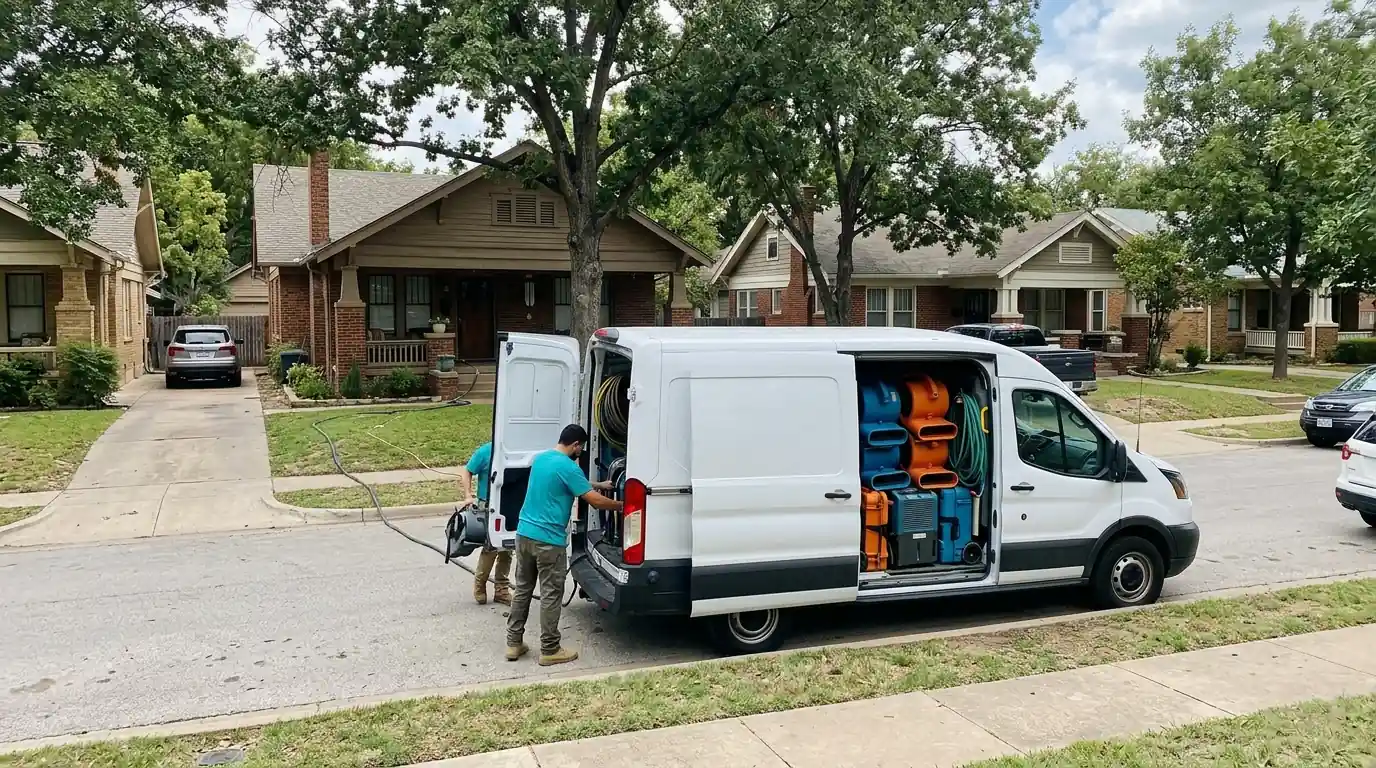
In June 2016, about 3.7 inches of rain fell in one hour and flooded homes on Carleton and Western Avenues in Arlington Heights, where houses sit on an old creek bed. Water follows old channels even after streets and yards are built over them. When rain arrives that fast, storm drains can't keep up and runoff heads for the low ground. Homes there can take water into crawl spaces, garages and first floors in one storm. Floodwater carries soil and contamination, so porous materials it reached come out before the slab and framing are disinfected and dried.
1920s to 1940s Houses and the Way They Hold Water
Most Arlington Heights homes were built between the 1920s and the late 1940s, and Fort Worth annexed the neighborhood in 1922. Houses from that span range from pier-and-beam cottages to early slab ranches. Pier-and-beam homes collect water in the crawl space, while slab homes push it sideways under flooring and into wall bottoms. Plaster walls dry slower than drywall but often survive. Oak floors cup but usually come back with slow drying. We set up equipment around the specific house, not a template, and adjust it as readings change from day to day.
Calls We Get From Arlington Heights
How a Call From Arlington Heights Runs
We take Arlington Heights calls 24/7 and start by asking whether the water came from outside or from a pipe, and whether it reached the crawl space or living areas. We bring pumps, extractors, floor drying mats, dehumidifiers, antimicrobials and moisture meters. Waterlines and original materials get photographed before anything is removed.
Arlington Heights Restoration Questions
If it sits on low ground over the old creek bed, a heavy, fast rain can bring water back. Clear gutters and yard drains before storm season, keep belongings off the floor in low rooms and know where your breaker panel is. Flood insurance is worth discussing with your agent.
Yes. Standing water under the house keeps humidity high, and joists and subfloor absorb it. Oak floors above may cup within days. We pump out the water, remove soaked insulation and dry the crawl space so the floor dries from below.
Galvanized steel rusts from the inside over decades. Low water pressure, rust-colored water or small leaks at fittings are signs it's wearing out. A plumber can tell you whether to repipe. We handle the water damage when a line fails.
Clean-water leaks often leave plaster salvageable. Floodwater is different: contaminated water soaking the bottom of plaster walls may require removing the affected section. We check each wall and remove only what readings and contamination require.
Nearby Areas We Cover
Water, Fire or Storm Damage in Arlington Heights?
Tell us what happened and where the water or smoke went. We will walk you through the first steps on the phone.
Updated October 2026