Westcliff, Fort Worth, TX
Slab Leak and Water Cleanup in Fort Worth's Westcliff
Phones answered 24/7 for Westcliff homes and businesses.
Quick answer
Slab leak and water cleanup in Westcliff mostly involves single-story homes built in the 1950s and 1960s. Copper and cast iron lines under those slabs have been in the ground for six decades, and mature tree roots near the foundation add stress. A leak under the floor can spread before anyone notices.
Restoration Work Around Westcliff
In Fort Worth's Westcliff, homes are mostly single-story ranches on slabs, set on lots with many mature trees. Water lines run under or through the slab, and drains connect through cast iron. When a supply line pinholes under the floor, water moves sideways through the slab and into flooring, tack strip and wall bottoms. Tile may stay intact while the grout darkens.
Our job starts after the plumber finds and fixes the leak. We map moisture across every room, pull wet carpet pad, lift flooring where readings stay high and dry the slab with dehumidifiers and air movers. Baseboards come off so we can check drywall bottoms. If the leak ran long enough, mold prevention after water damage treats the framing before walls close.
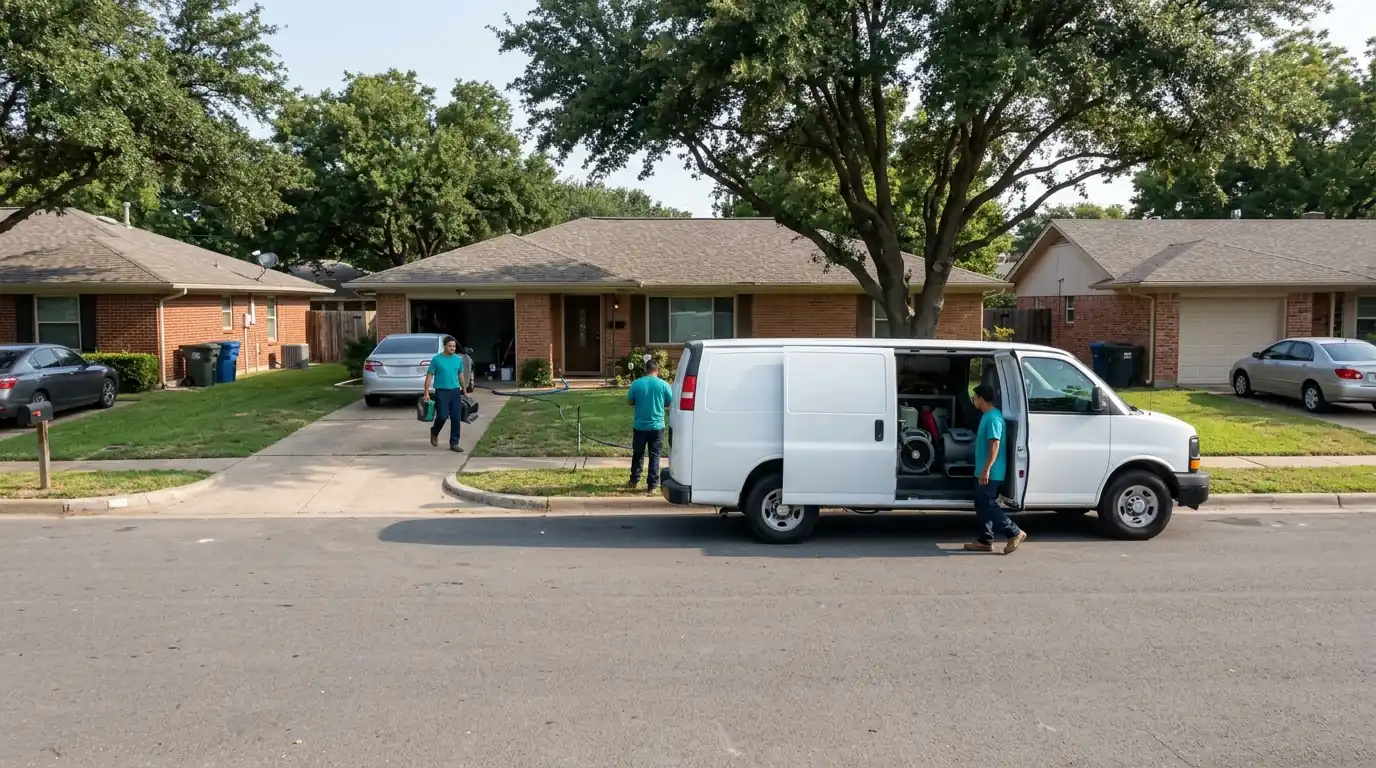
1950s Slabs and Mature Trees South of TCU
Westcliff, just south of TCU, was built mostly in the 1950s and 1960s with single-story homes on lots with many mature trees. Large root systems near foundations pull moisture from the soil in dry months and add pressure when they grow. Combined with clay that swells and shrinks, that movement stresses older copper lines under slabs. A pinhole leak may run for weeks, wetting the slab and flooring. Baseboards and door jambs near the leak usually show it first. We meter each room to find how far the water traveled before removing anything.
Between Granbury Road and Trail Lake Drive
Granbury Road and Bellaire Drive South form part of Westcliff's edge. Trail Lake Drive and the Stadium and University corridor close the rest. The homes inside those streets share a construction era, which means similar plumbing materials aging at similar rates. When neighbors start seeing slab leaks, others nearby are often next. Signs to watch include warm spots on the floor, cracked grout, damp carpet with no source and a water bill that jumps. Calling early keeps drying smaller, limits how much flooring comes up and shortens the time your rooms are out of use.
Calls We Get From Westcliff
How a Call From Westcliff Runs
We answer Westcliff calls 24/7. If a slab leak is suspected, we ask whether a plumber has found it yet and whether the water is off to that line. We bring moisture meters, a thermal camera, extractors, air movers and dehumidifiers. We map wet areas room by room and photograph flooring before we lift anything.
Westcliff Restoration Questions
Roots don't usually break pipes directly under a slab, but they dry and shift the soil around the foundation. That movement stresses older lines and fittings. Roots can invade sewer lines through cracked joints, though.
Only what readings show is wet and can't dry in place. Carpet pad usually comes out over the wet area. Tile can stay if the grout and thinset dry. Laminate often swells and needs replacing.
Call a plumber first to find and stop the leak. You can call us at the same time so drying starts right after the repair. Waiting lets water spread farther under flooring and into walls.
A warm spot often means a hot water line is leaking under the slab. Turn off the water heater supply and call a plumber. Damp carpet or cracked grout near the warm area usually confirms it.
Nearby Areas We Cover
Water, Fire or Storm Damage in Westcliff?
Tell us what happened and where the water or smoke went. We will walk you through the first steps on the phone.
Updated October 2026