Quick answer
Fire sprinkler water cleanup in Fort Worth means handling water that sat in pipe for years, so it often comes out black, oily and foul-smelling. One head keeps flowing until someone shuts the valve, and the water drops through ceilings to every floor below. We extract it, remove wet ceiling drywall and insulation, clean the stains and dry the structure.
What Fire Sprinkler Water Cleanup Involves
A sprinkler discharge is not a fire job and it isn't a typical leak either. Water in a wet sprinkler system sits in steel or CPVC pipe between inspections, picking up rust, pipe scale and sometimes the black, sulfur-smelling sludge that comes from bacteria growing inside the line. When a head opens, that water comes out first, so the staining on carpet, ceilings and furniture is often worse than the water volume suggests.
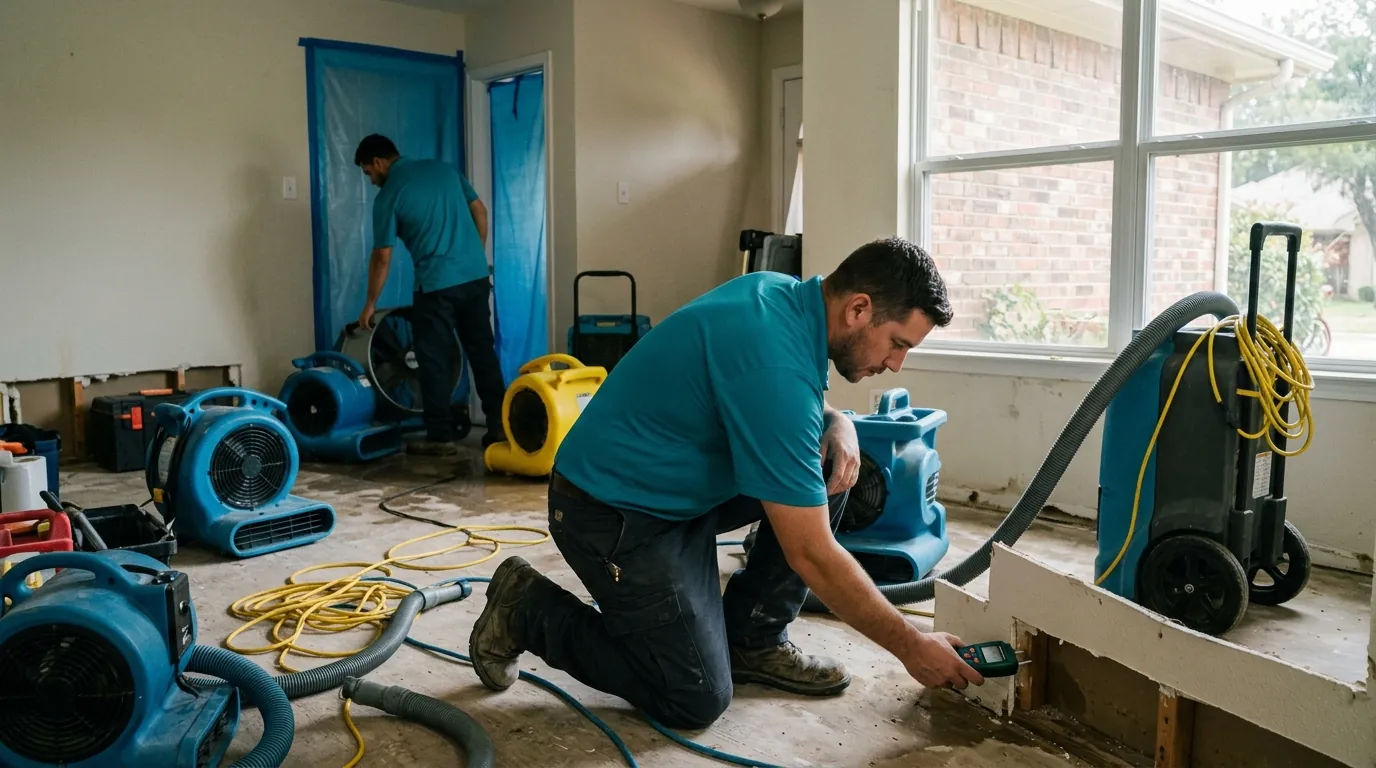
We treat sprinkler water as Category 2 or 3 depending on what came out and how long it sat. The work is extraction, removing ceiling drywall and insulation that soaked through, cleaning residue off hard surfaces, and drying with air movers and dehumidifiers. The fire sprinkler contractor or building engineer handles the system itself; we don't touch the fire protection piping. Our photos and structural drying logs give owners, tenants and adjusters the same record.
What Happens After a Sprinkler Head Opens
- 01
Confirm the system is off
We confirm the zone or riser valve is closed and the sprinkler contractor is called to replace the head and restore protection. We don't work on fire protection piping.
- 02
Extract from the top down
We start where the head discharged and work down floor by floor, extracting standing water and lifting wet carpet tiles or pad before water spreads further.
- 03
Map moisture in every space
Thermal imaging and moisture meters show where water traveled through ceilings and walls. Each room or unit gets its own readings and photos, so nothing wet gets missed.
- 04
Open wet ceilings and walls
Saturated ceiling drywall, tiles and insulation come out. We cut wet wall drywall above the last high reading so cavities can dry and be treated.
- 05
Clean residue and dry
Hard surfaces get cleaned of rust and pipe sludge. Air movers and dehumidifiers run while we log readings daily until every space reaches dry standard.
Accidental Sprinkler Head Discharges
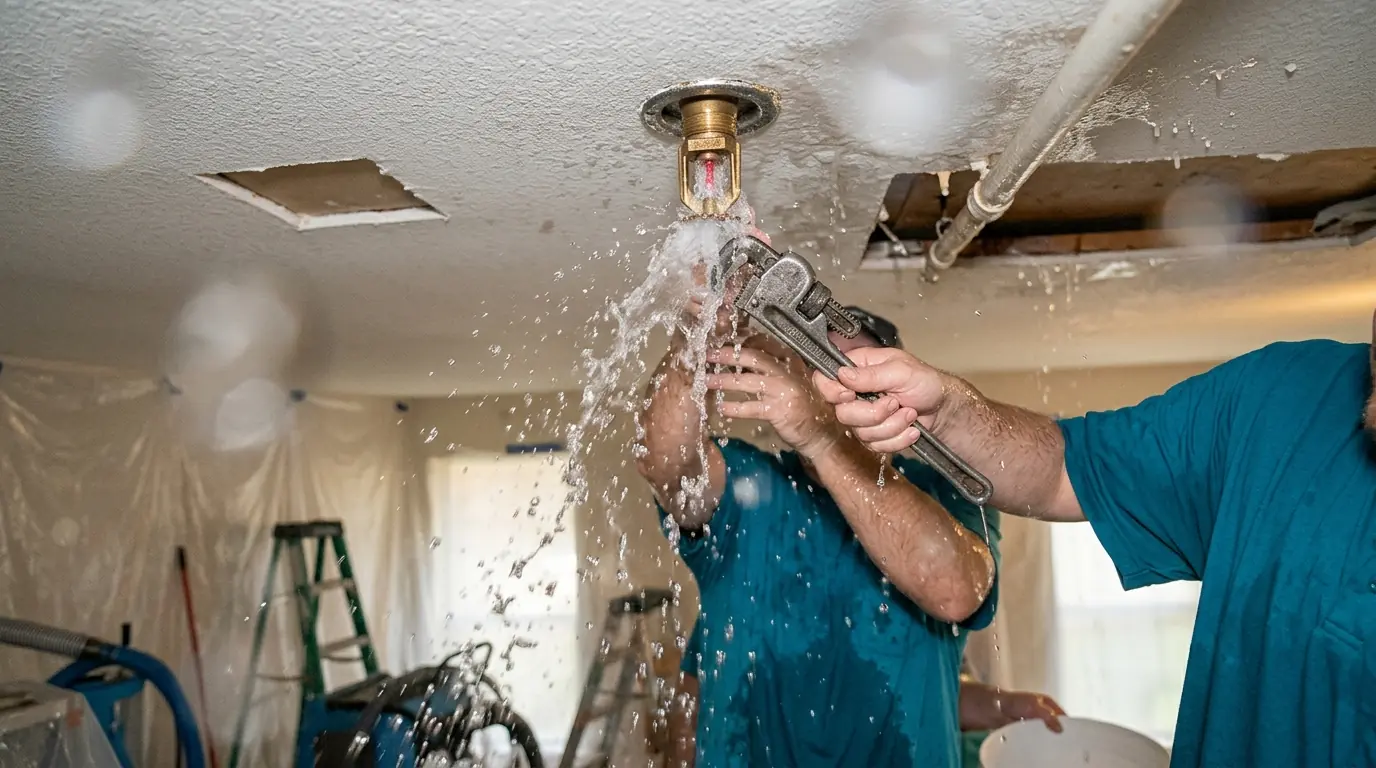
Most accidental discharges start with something hitting a head: a ladder, a moving box carried overhead, a kid's ball in an apartment hallway. Others come from heat near a head, like a space heater or a light fixture in a closet. The head opens fully and flows until someone closes the riser or zone valve. You'll see dark water spreading from one point, then water appearing through the ceiling or light fixtures below. We extract the standing water, check ceilings, walls and flooring room by room, open saturated drywall, and dry. Cost depends on how long it flowed before shut-off, how many rooms or floors it reached, and how much staining the pipe water left behind.
Freeze-Broken Sprinkler Pipes
Sprinkler branch lines run through attics, soffits and exterior walls, and a hard freeze can split CPVC or crack a fitting in an unheated space. The leak often shows up after the thaw, when the ice inside the pipe melts and system pressure pushes water out of the break. Because the pipe is above the ceiling, the first sign is usually a sagging, stained ceiling or water running down a wall. After the sprinkler contractor repairs the line, we remove wet ceiling drywall and attic insulation, dry the framing and ceiling joists, and check walls below for wicking. The size of the job depends on where the break was and how long it ran before anyone noticed.
Apartment and Office Discharges
In an apartment building or office, one open head can affect several units or suites below it. We work floor by floor from the top down, extracting and mapping moisture in each unit, removing wet ceiling tiles and drywall, and setting drying equipment so occupied spaces can stay in use where possible. We keep a separate photo and moisture record for each unit or suite, which helps the property manager sort out who is responsible for what. Timeline depends mostly on the number of affected units, access to each one, and whether carpet tiles or glued-down flooring took water.
Do Not Wait for the Stain to Spread
Most of what we remove is material that stayed wet too long. Calling early keeps the job smaller.

Freezes and Sprinkler Lines in Unheated Spaces
Fort Worth field note
Grapevine's record low is minus 12 degrees, set in February, and cold like that finds sprinkler branch lines that run through attics, soffits and exterior walls. Grapevine also grew from 11,801 residents in 1980 to 42,059 in 2000 after DFW Airport opened, and the offices, hotels and apartment buildings that come with that kind of growth usually carry wet sprinkler systems. When a freeze splits one of those lines, the water drops through ceilings into units and suites below, so the cleanup has to move floor by floor.
How Long Sprinkler Water Drying Takes
A single-room residential discharge usually dries in 3 to 5 days once wet ceiling drywall and insulation are out. Multi-floor commercial discharges usually take 5 to 10 days of drying, longer if tenants limit access to units or if glued-down flooring has to come up. What drives it most is how much water got into ceiling and wall cavities, how dense the framing is, and how well the space can be closed off for the dehumidifiers. Rebuild of ceilings and flooring follows drying and adds its own time.
What Our Sprinkler Discharge Cleanup Covers
- Extraction of standing water on every affected floor
- Thermal camera and moisture meter mapping of ceilings and walls
- Removal of wet ceiling drywall, tiles and attic insulation
- Lifting or removal of wet carpet tiles, pad and baseboards
- Cleaning rust and pipe sludge off hard surfaces
- Drying equipment set per room, unit or suite
- Daily moisture logs kept separately for each unit
What Drives the Cost of a Sprinkler Water Cleanup?
HomeAdvisor reports water extraction and drying runs between $3.50 and $7.50 per square foot, as a national planning range. That covers drying. It doesn't include ceiling and drywall replacement, stained carpet, or cleaning furniture and stock. On a sprinkler job, the floor area hit and the number of floors involved matter more than anything else.
- Minutes before shut-offA head shut off in two minutes and one that ran for half an hour produce very different damage. Flow time sets how far the water spread and how many floors it reached.
- Floors and units belowEvery floor the water reaches adds ceilings, walls and flooring to inspect and dry. In multi-unit buildings, access to each unit also affects scheduling.
- Staining from pipe waterBlack, oily water can permanently stain carpet, fabric and ceiling tiles. Items that clean up well cost less than items that have to be replaced.
- Ceiling typeDrop-ceiling tiles come out quickly and are cheap to replace. Hard drywall ceilings with texture take more time to open, dry and rebuild.
Range cited from a national cost guide (source, 2026-06-17). It is a planning figure, not a quote; your job is priced after we see it.
Fire Sprinkler Water Cleanup Questions From Fort Worth Homeowners
Water in a wet sprinkler system sits still in the pipe for months or years. It picks up rust, scale and sometimes bacteria that produce a black, sulfur-smelling sludge. When a head opens, that stagnant water comes out first. That's why sprinkler water stains carpet and ceilings more than tap water does, and why we clean it as contaminated water.
A fire sprinkler contractor replaces the head, repairs any broken pipe, and restores the system to service, often with the building owner or fire marshal involved. Until it's back in service, the building may need a fire watch. We handle the water cleanup and drying, not the sprinkler piping or its inspection.
Not always. If ceilings in their unit were opened and drying equipment is running, many tenants still stay, though the noise and warmth are noticeable. If water came through light fixtures or wet ceiling drywall is sagging, the unit should be cleared until that drywall is removed and power to wet circuits is checked.
Usually not. Mineral fiber ceiling tiles sag and stain when they get wet, especially with dark sprinkler water, and they rarely return to their original shape. They're inexpensive and quick to replace, so we remove wet ones and leave the grid in place unless it's bent or rusted.
Sometimes. Light staining on synthetic carpet can often be cleaned if it's treated quickly. Heavy black staining from rusted pipe water, especially on light-colored carpet or wool, often doesn't come out fully. Carpet tiles make it easier, since only the stained sections need replacing.
Related Work We Handle
Sprinkler Went Off? Shut the Valve, Then Call
Once the valve is closed, every hour matters for the floors below. We answer 24/7 and will start extraction where the water landed and work down. Call now and tell us how many floors are affected.
Updated October 2026