All 38 services
Damage Restoration Services for Fort Worth Homes and Businesses
Grouped by what happened, so you can find your situation fast. Every service starts with a call answered 24/7.
How These Services Fit Together
Restoration is usually two jobs back to back. The first is mitigation: stop the damage, get the water or smoke out, and dry or clean what can be saved. The second is repair: put back the drywall, flooring, cabinets and insulation that had to come out. We do both, so the same people who mapped the moisture are the ones who know which walls were opened and why.
The pages below cover each job on its own, because a slab leak, an attic AC overflow and a grease fire need different tools and different decisions. Start with the group that matches what happened, then read the specific page. Each one explains what the work involves, what drives the cost and what to do before we arrive.
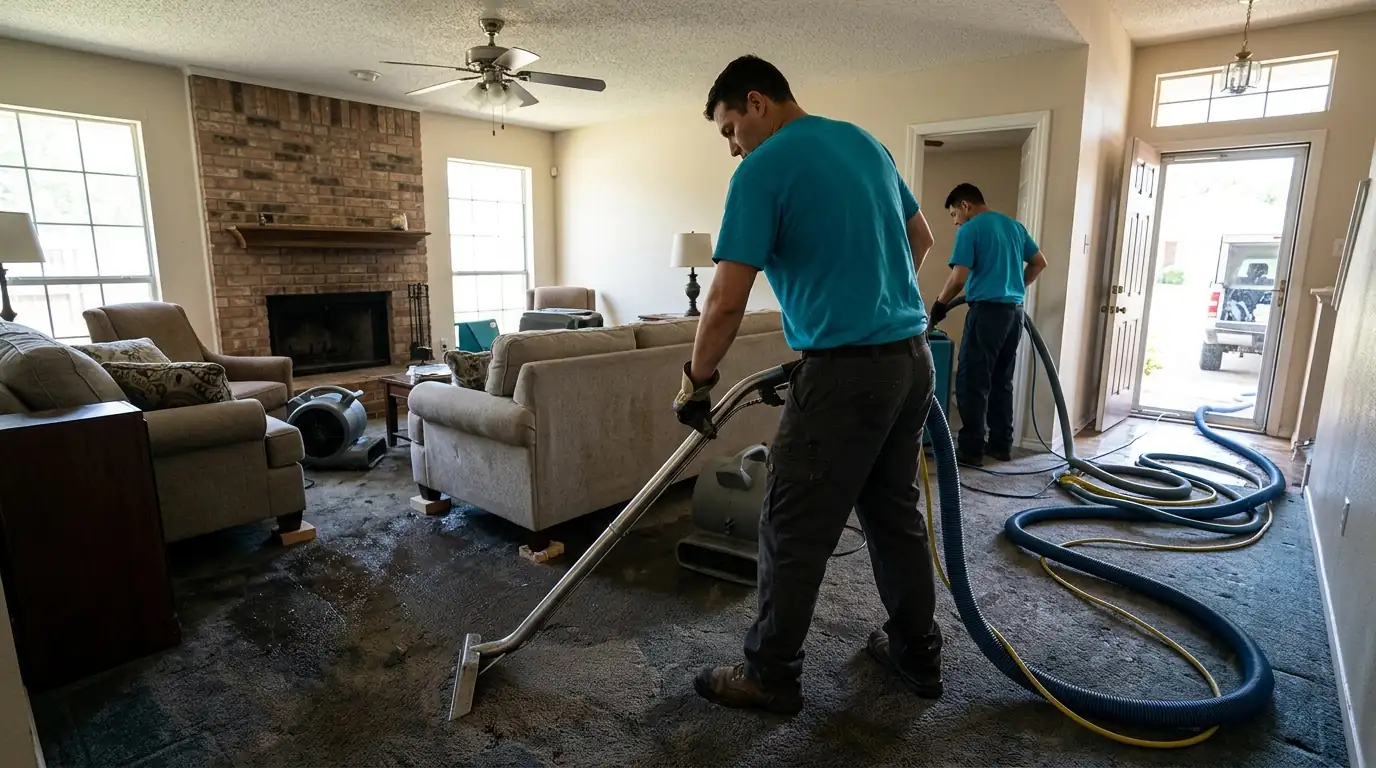
Water Damage: Leaks, Bursts and Drying
Clean and gray water from pipes, fixtures, appliances and AC lines. Speed decides most of the outcome here: water caught in the first hours often dries in place, while water left for days ends in removal and mold work.
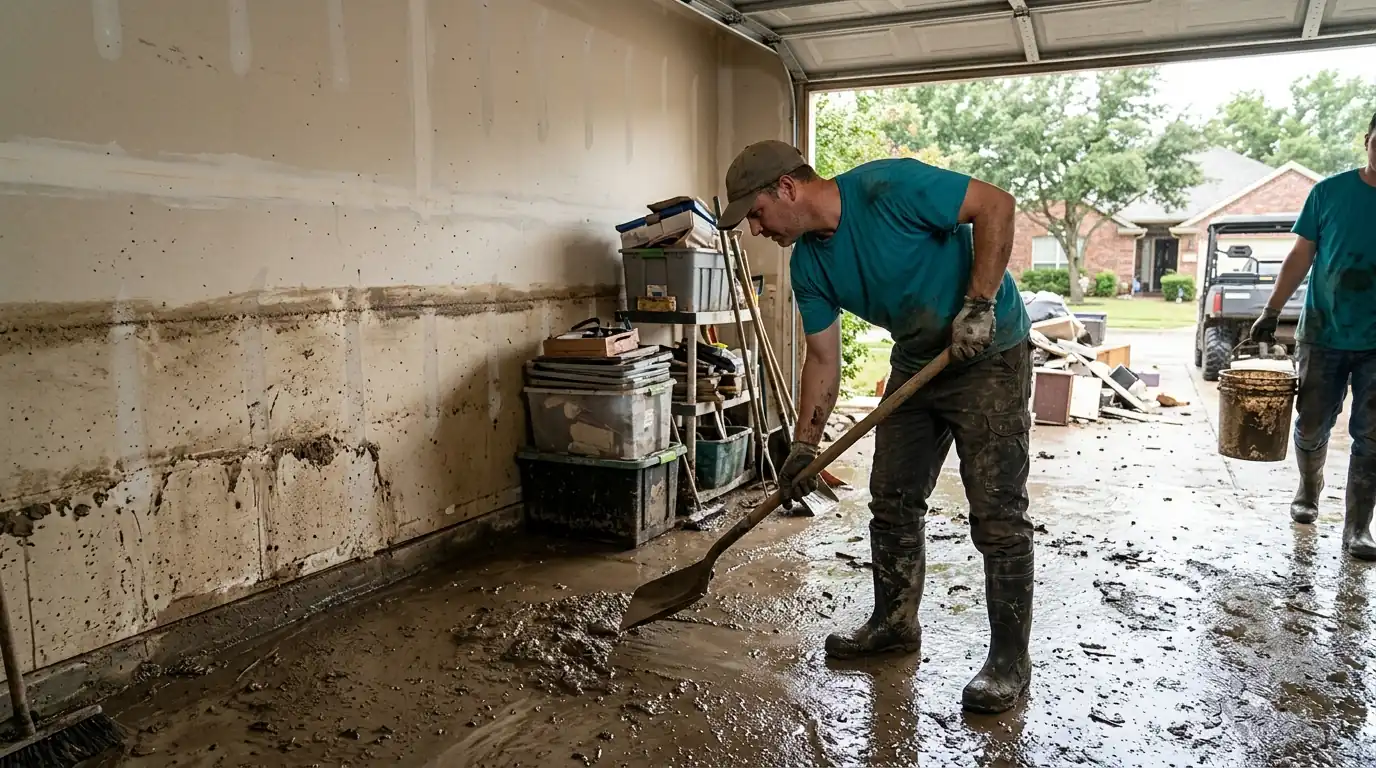
Flood and Sewage Water
Water that came from outside or from a drain is treated as contaminated. That changes what can be saved and how the crew protects itself and your family while it works.
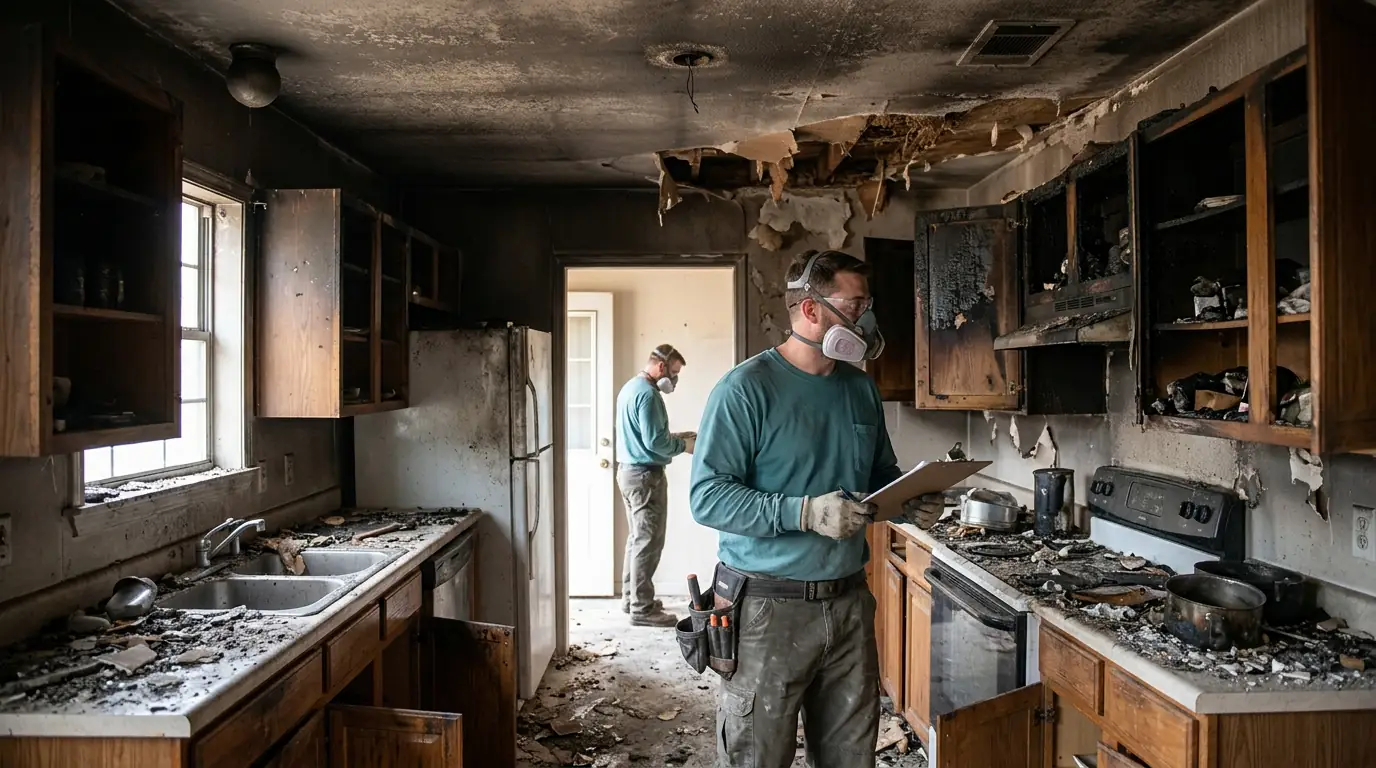
Fire and Smoke Damage
A fire leaves three problems: what burned, the residue smoke left on everything it touched, and the water used to put it out. These services handle all three, along with the belongings inside.
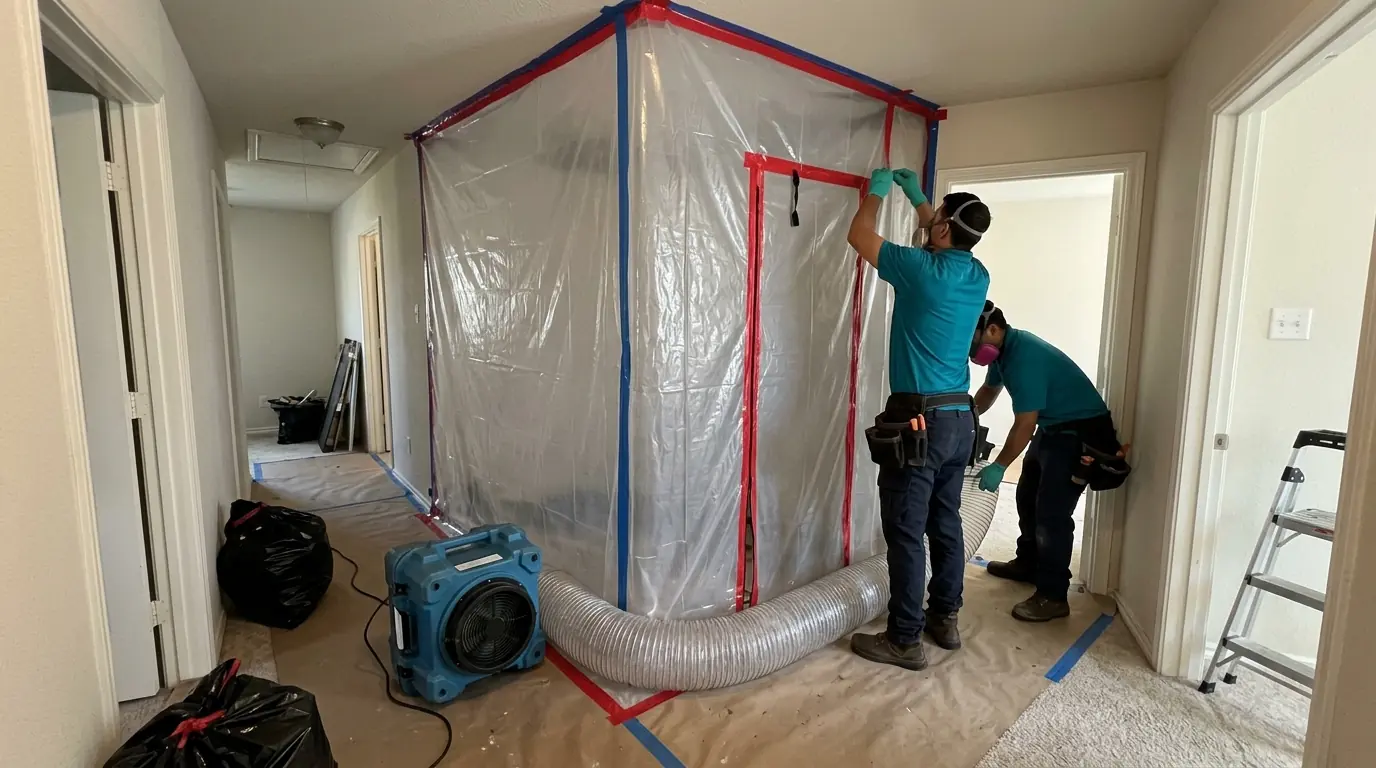
Mold Removal and Prevention
Mold follows water that stayed too long. These services cover containment, removal and cleaning, and they follow the Texas process that separates the assessment from the removal on larger projects.
Storm and Emergency Protection
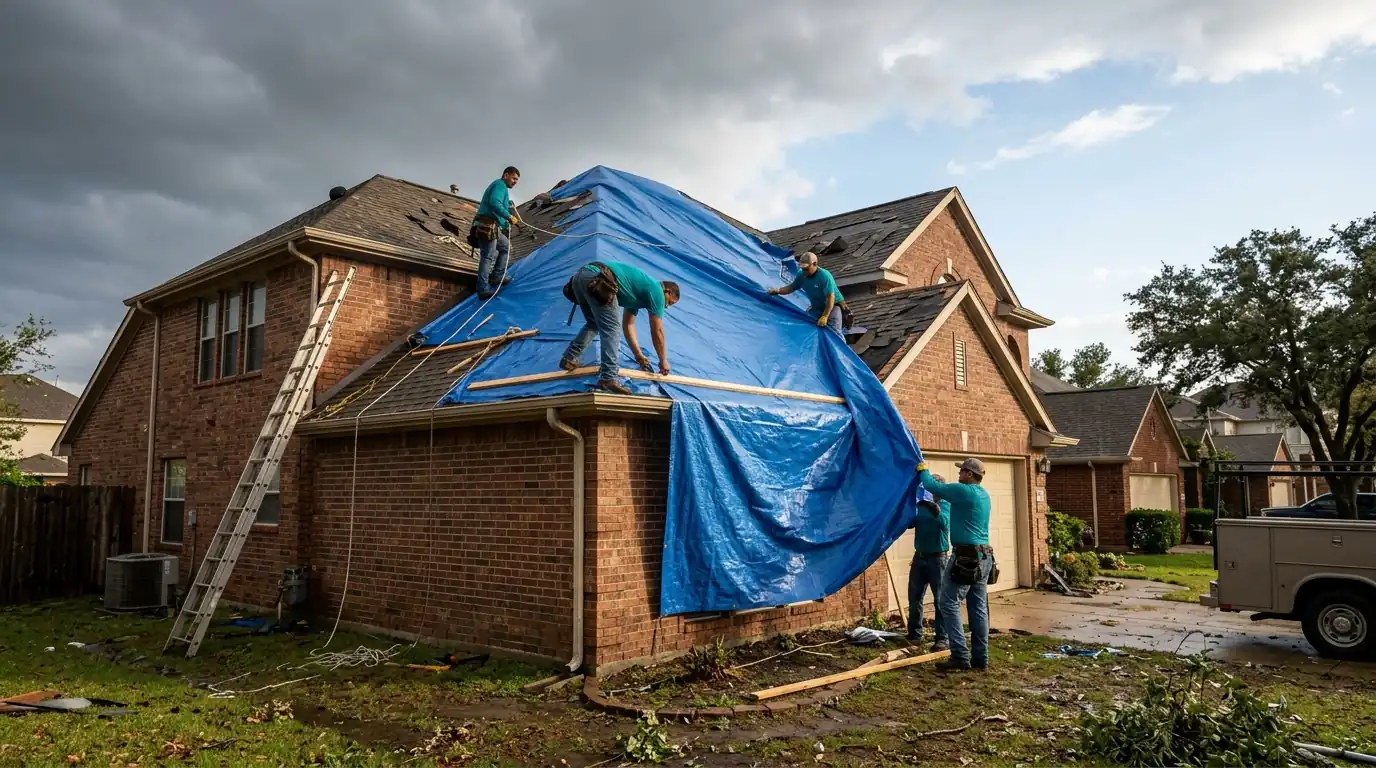
Hail, wind and falling limbs open the house to the next rain. These jobs close the openings fast and dry whatever got wet before the roofer or glazier arrives.
Repairs After the Damage
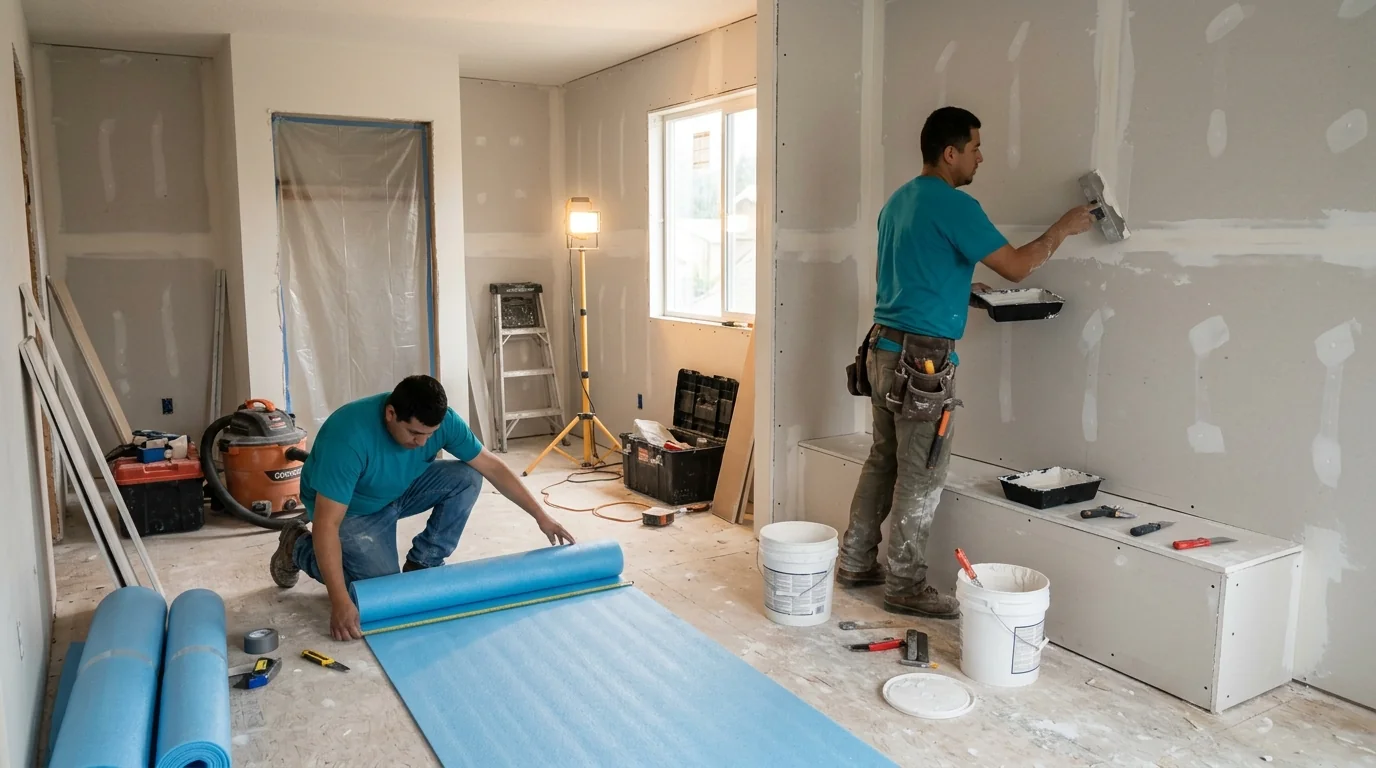
Once the readings say dry, the rooms go back together. These services cover the materials most often removed during restoration and the full rebuild after larger losses.
Which of These Do I Actually Need?
If water is still coming in, the first call is about stopping it and extracting it, which is emergency water extraction and water damage restoration in nearly every case. If the water came from a toilet, a drain or outside, look at sewage cleanup or flood damage cleanup instead, because contaminated water is handled differently.
If you smell mustiness but see no water, a moisture inspection usually comes before anything else, since the source has to be found before mold work makes sense. After a fire, fire damage restoration is the umbrella job, and smoke cleaning, odor work and pack-out sit under it. When you are not sure, call and describe it; we sort it out on the phone. For budgeting, our water damage cost guide explains the national ranges, and the AC drain line overflow guide covers the most common ceiling leak we see in newer homes.
Questions About Our Services
Yes. We dry or clean first, then put back the drywall, flooring, cabinets and insulation that had to come out. Keeping both halves together means the rebuild follows the same moisture map and photos, and you are not explaining the job twice to two companies.
We do. Offices, retail spaces, restaurants and multi-unit buildings have their own pages for water and fire damage. The process is the same; what changes is scheduling around business hours, tenants and occupied areas, and the size of the drying setup.
Call and describe what you see: where the water is, what it smells like, how long it has been there, whether anything is sagging or stained. That is usually enough to point you to the right service and tell you what to do before we arrive.
No. A single wet cabinet base or one stained ceiling is a normal call. Small jobs matter because a small leak left alone is how many mold jobs start, and catching it early keeps the repair small.
Not Sure Which Service Fits?
Describe what you see and we will tell you on the phone.