Ryan Place, Fort Worth, TX
Water Damage and Mold Repair Across Fort Worth's Ryan Place
Phones answered 24/7 for Ryan Place homes and businesses.
Quick answer
Water damage and mold repair in Ryan Place deals with houses platted in 1911, with plaster walls, original wood trim and crawl spaces. Moisture in those old cavities can grow mold on lath and joists out of sight, so we find the wet areas with meters before opening anything historic.
Restoration Work Around Ryan Place
In Fort Worth's Ryan Place, many homes are prairie-style foursquares and Craftsman houses from the 1910s and 1920s. Original features matter here: plaster, wood floors, built-in cabinetry and window trim. When water gets inside one of these houses, we work to dry those materials in place rather than replace them. That means slower, careful drying and close monitoring with moisture meters.
Mold in older houses often grows where no one looks: on joists in the crawl space, behind plaster in a bathroom wall or on attic sheathing. We contain the area, remove what can't be saved, HEPA vacuum and treat the wood. Larger jobs follow an independent assessor's protocol as Texas requires. For wet crawl spaces, crawl space mold removal covers joists, beams and vapor barrier.
Prairie Foursquares on Elizabeth Boulevard
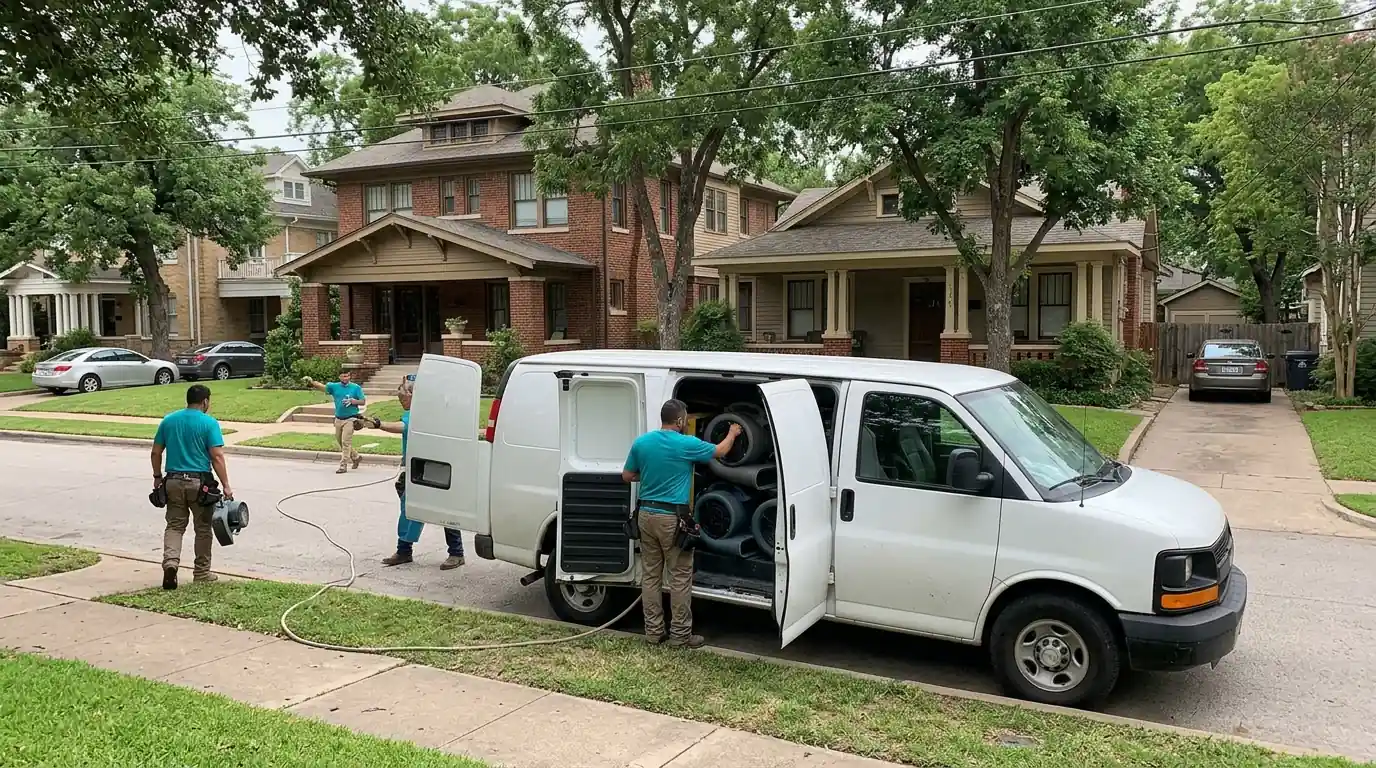
The original houses on Elizabeth Boulevard went up between 1911 and 1928, including prairie-style foursquares with Craftsman details, and the street was placed on the National Register of Historic Places in 1979. Homes like these have deep eaves, plaster walls, wood floors over joists and often second-floor bathrooms. A leak upstairs can run down through plaster and lath to the first-floor ceiling. We trace the path with a thermal camera, support any loose plaster and dry it in place so original finishes survive. Painted trim and old varnish react badly to fast heat, so we keep airflow gentle and check readings daily.
Where Ryan Place Sits and Why Crawl Spaces Matter Here
Ryan Place was platted in 1911, with Berry Street and 8th Avenue among its edges and Jessamine Street and the railroad tracks closing the rest. Houses from that era were raised on piers, leaving a crawl space that collects water from plumbing leaks and heavy rains. A damp crawl space keeps the joists wet and feeds mold on the underside of the floor. You might notice a musty smell, soft spots or cupped boards. We pump out water, remove wet insulation and old vapor barrier, treat mold and dry the crawl space until the joists read normal again.
Calls We Get From Ryan Place
How a Call From Ryan Place Runs
We answer Ryan Place calls any time of day or night. We ask what you've noticed, where it is, and whether built-ins, trim or wood floors sit close by. Our gear covers infrared scanning, moisture metering, poly containment, HEPA filtration, dehumidification and crawl space drying, and we photograph original materials before any work.
Ryan Place Restoration Questions
We protect trim, floors and built-ins with plastic, then work inside containment. Mold on plaster or wood surfaces can often be cleaned and treated rather than removed. Trim that has to come off gets labeled and stored for reinstallation.
Humid air flows into the crawl space through vents and condenses on cooler joists and pipes. Over time, mold grows on the wood. A moisture check of the crawl space, plus a new vapor barrier or dehumidifier, often fixes the smell.
Yes. Water runs down through lath and soaks the plaster ceiling below. If the plaster keys stay attached, it can dry in place. If the ceiling sags or cracks, sections may need support or careful removal.
Usually. Windows and trim rarely need removal for drying. We pull only baseboards where wall bottoms read wet, number each piece and store it on site. Air moves into the cavity through the baseboard gap, and the trim goes back once readings drop.
Nearby Areas We Cover
Water, Fire or Storm Damage in Ryan Place?
Tell us what happened and where the water or smoke went. We will walk you through the first steps on the phone.
Updated October 2026