Quick answer
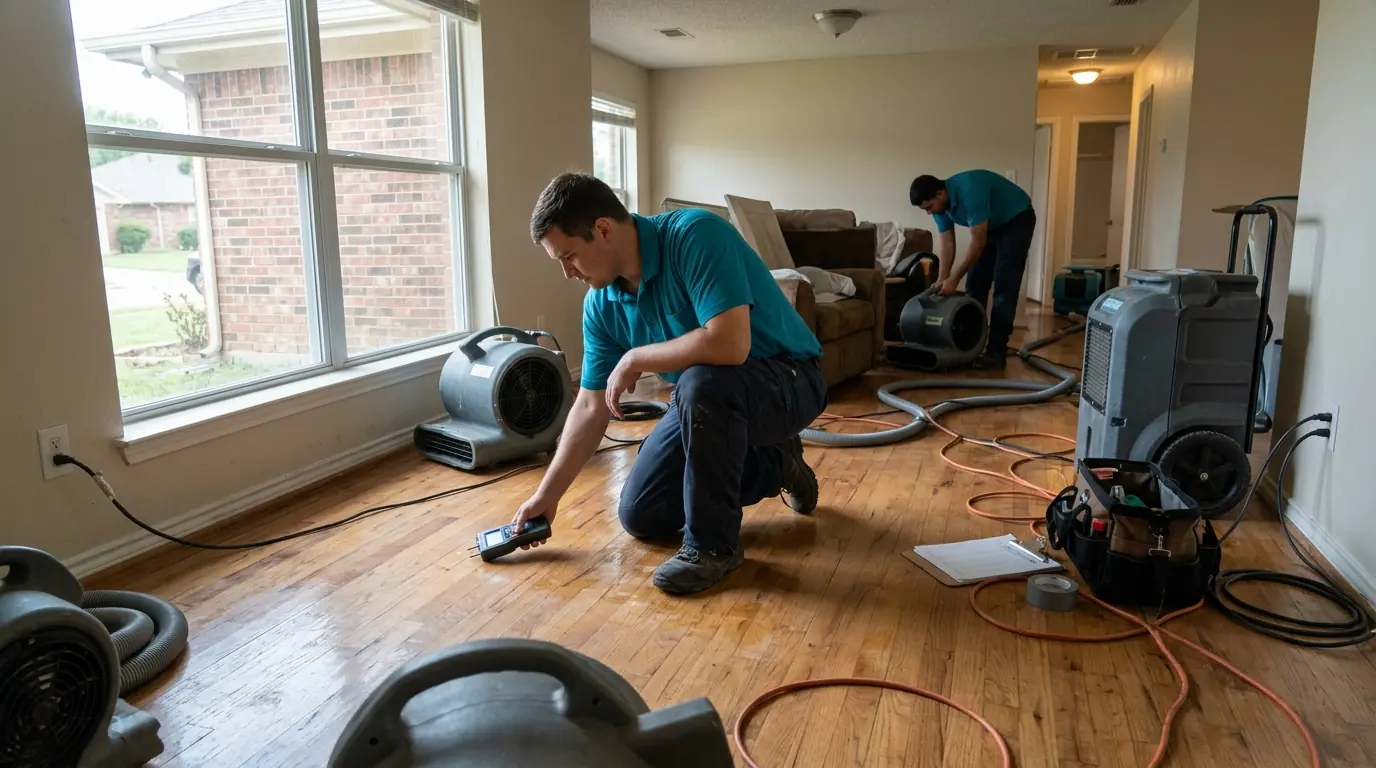
Wet hardwood floor drying in Fort Worth works best when it starts within the first day or two. Boards absorb water from below and swell, so they cup at the edges, and sanding too early can ruin a floor that would have flattened on its own. We dry the wood in place with drying mats and dehumidifiers, then track readings.
What Wet Hardwood Floor Drying Involves
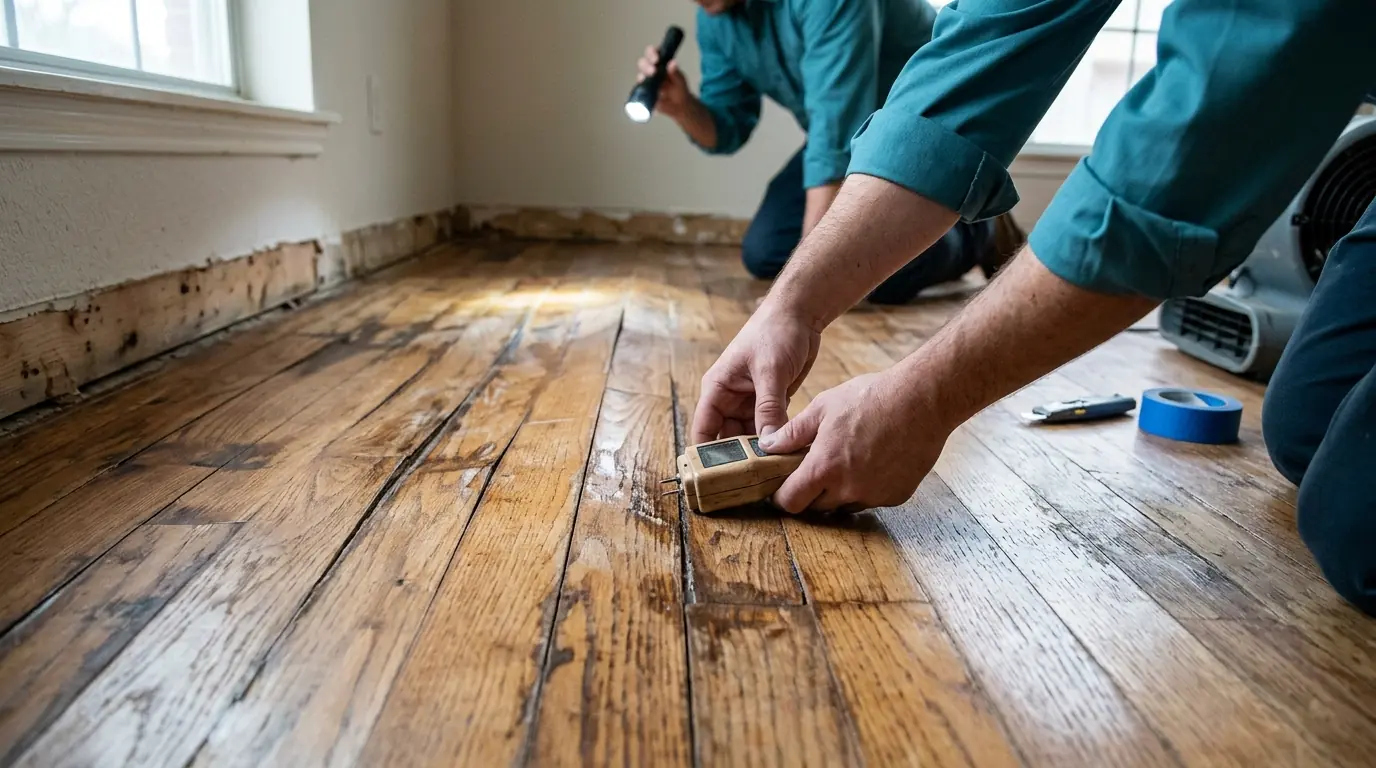
Solid hardwood is more forgiving than most people think, if it's dried the right way. Water gets into the bottom of the boards and the subfloor, the wood swells and the boards push against each other, raising the edges. Drying from the top alone can make it worse by shrinking the surface while the bottom stays swollen.
We pair floor drying mats with dehumidifiers so the wood gives up moisture evenly, and on raised homes we dry the subfloor from the crawl space too. Once readings match dry wood elsewhere in the house, many cupped floors settle close to flat and the rest can be sanded. Buckled or delaminated boards move to flooring replacement.
How We Dry a Hardwood Floor
- 01
Extract and map
Standing water comes off fast with squeegees and wet vacuums. Then we read the floor in a grid and compare it to dry wood of the same species elsewhere.
- 02
Set mats and dehumidifiers
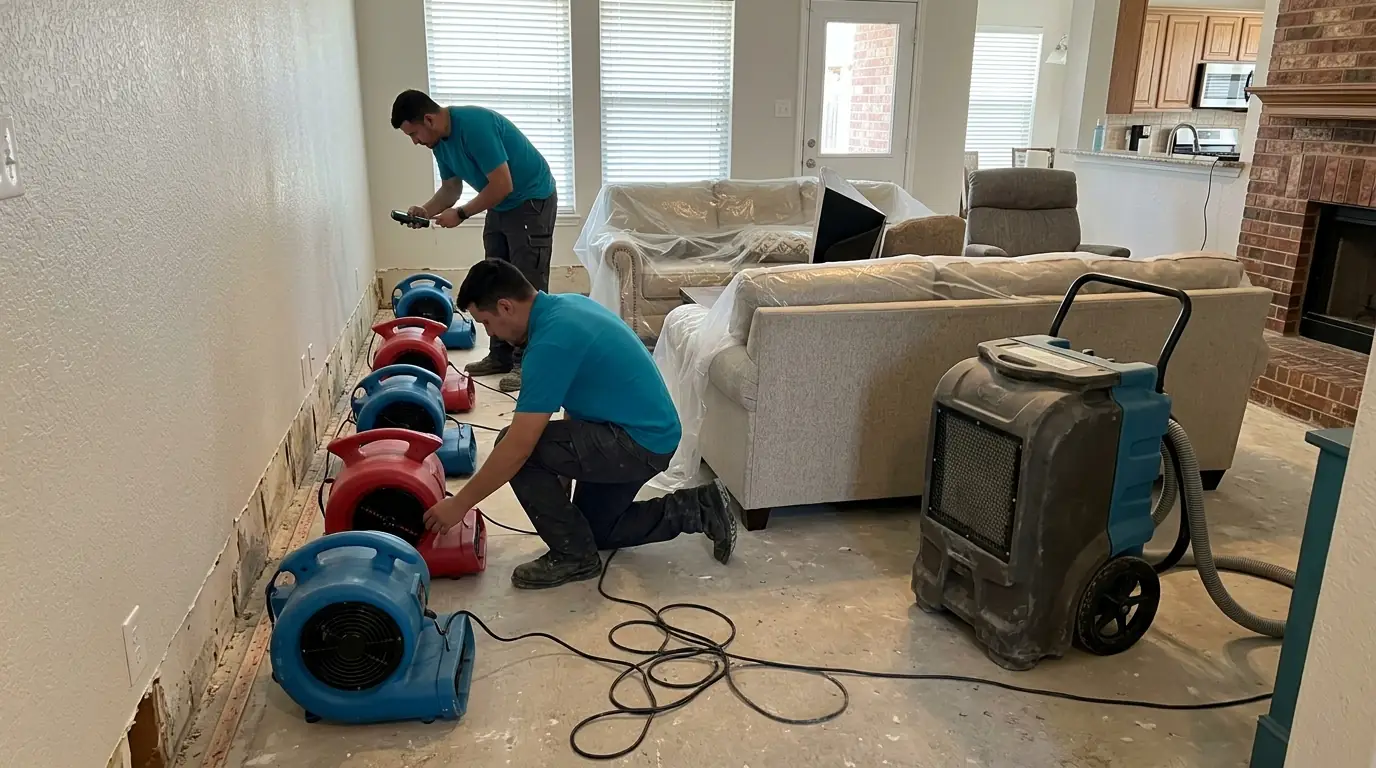
Drying mats go over the wettest boards, with dehumidifiers controlling the room air. On pier-and-beam houses we also dry the subfloor from the crawl space.
- 03
Track and wait
We record readings until the wood matches dry standard, then give the floor time to settle so you can see how much cupping actually remains.
- 04
Repair or refinish
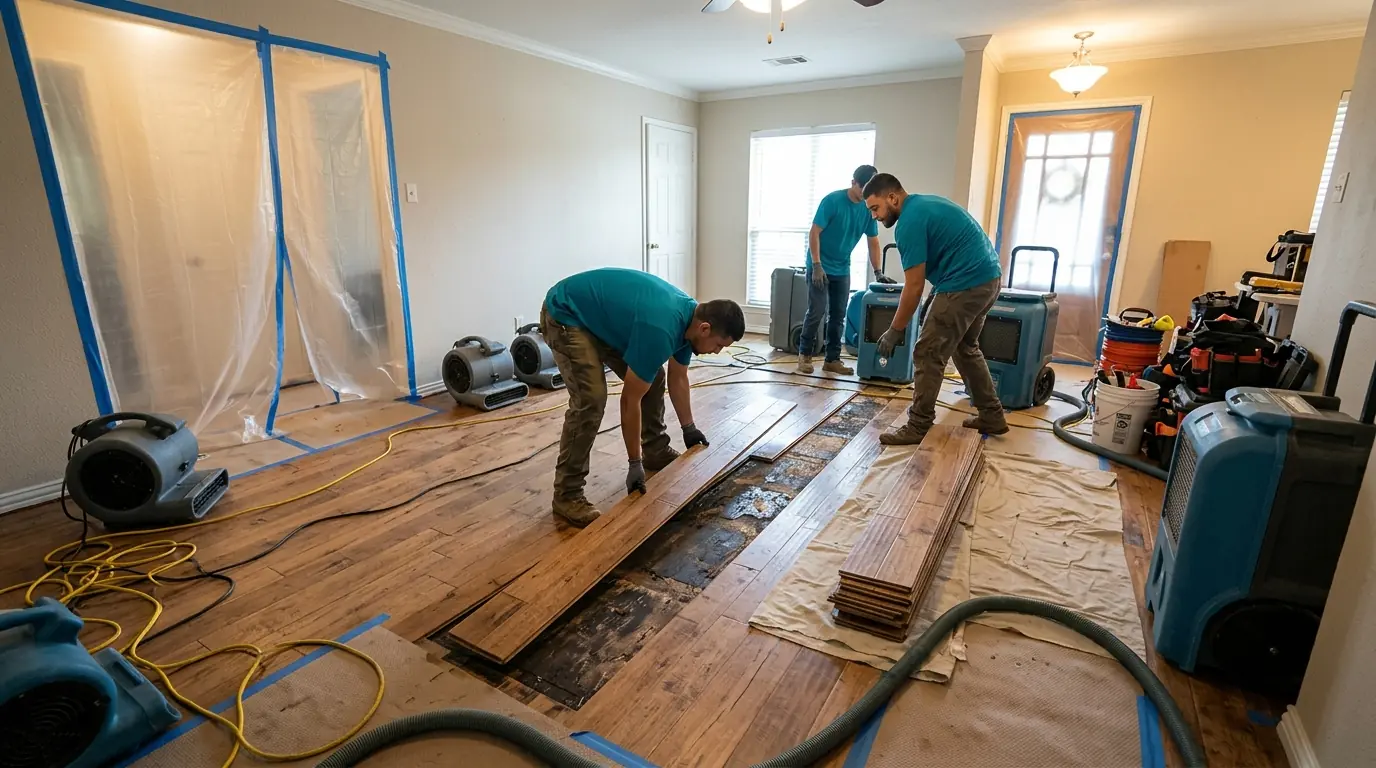
Boards that buckled, split or stained black are replaced and woven into the floor. Remaining cupping is sanded out and the room is refinished so it blends.
Cupping and Crowning
Cupping means the board edges sit higher than the centers, because the bottom of the wood took on more water than the top. It's the most common shape after a leak. Crowning is the reverse, and it usually happens when a cupped floor was sanded flat before it dried and the boards then shrank back. Buckling, where boards lift off the subfloor, means the swelling was severe. Cupping usually eases as the floor dries, so we wait for dry readings, let the wood settle and only then decide whether sanding is needed.
Engineered Wood Floors
Engineered hardwood has a thin wood veneer over a plywood or fiberboard core. It handles humidity swings better than solid wood, but standing water is harder on it: the core can swell or delaminate, and the veneer is often too thin to sand more than once or twice. Glued-down engineered floors over a slab can sometimes be dried in place. Floating engineered floors usually trap water underneath and need to come up in the wet area. We read the boards and check for soft spots or separating layers before deciding.
Floor Drying Mats
Drying mats are panels laid on the floor and sealed at the edges. A vacuum or blower unit pulls air through the gaps between boards and out of the subfloor, drawing moisture from the bottom of the wood where it's concentrated instead of drying only the surface. Mats go over the wettest areas on the moisture map and move as sections dry, with dehumidifiers carrying the moisture out of the room. The number of mats and days depends on the wet area and the species and thickness of the wood.
Do Not Wait for the Stain to Spread
Most of what we remove is material that stayed wet too long. Calling early keeps the job smaller.
Original Hardwood in Fort Worth's Older Homes
Fort Worth field note
The original houses on Elizabeth Boulevard in Ryan Place were built between 1911 and 1928, including prairie-style foursquares with Craftsman details. Wedgwood's ranch houses went up in the 1950s and 1960s. Homes from both eras often have solid hardwood, sometimes exposed and sometimes under carpet a later owner put down. Older solid floors are usually thicker than modern ones, which matters after a leak: thick boards take longer to dry, but they also have enough wood left to sand flat if some cupping remains.
How Long Hardwood Drying Takes
Hardwood usually takes longer than drywall, often five to ten days with drying mats, and sometimes longer for thick older boards or a wet subfloor. After readings reach dry standard, it's wise to wait a while longer before sanding so the wood can settle and you can see how much cupping remains. Refinishing adds a few more days for sanding, stain and finish coats to cure.
Dry in Place or Replace the Floor?
| Factor | Dry in place | Remove and replace |
|---|---|---|
| Best for | Solid or glued engineered wood, clean water, caught early | Gray or black water, delaminated boards, or floors wet a week or more |
| Typical result | Cupping eases as wood dries; light sanding may finish it | New boards woven in, or a full room replacement |
| Disruption | Equipment in the room for several days, then refinishing | Tear-out, subfloor drying, then install and finish |
| Matching | Original boards stay, so color and grain already match | New boards may need stain work to blend with the rest |
If the water was clean and the boards still read salvageable, drying in place deserves a try before anything comes up.
What Does Hardwood Floor Water Damage Cost to Repair?
HomeAdvisor's guide to wood flooring repair gives a national range of $8 to $100 per square foot for hardwood floor water damage repair. The spread is wide because it runs from drying and refinishing in place to tearing out and replacing. Drying early keeps a job toward the low end.
- Time before dryingFloors dried within a day or two often flatten. Wood left wet for a week is more likely to buckle, stain or grow mold on the underside.
- Solid or engineeredSolid hardwood can be sanded several times over its life. Engineered floors with a thin veneer may need boards replaced instead of sanded.
- Installation methodNailed floors over plywood, glued floors on a slab and floating floors over pad each dry differently and have different odds of being saved.
- Refinishing and matchingSanding, staining and finishing a whole room so the repaired area blends in can be a large part of the total once drying is done.
Range cited from a national cost guide (source, 2026-06-17). It is a planning figure, not a quote; your job is priced after we see it.
Wet Hardwood Floor Drying Questions From Fort Worth Homeowners
No. Sanding a cupped floor while it's still wet flattens the raised edges, and when the wood dries and shrinks, the boards end up crowned in the middle. Dry the floor first, confirm it with readings and let it settle. Then decide whether sanding is still needed.
Often it gets close. Cupping comes from a moisture imbalance, and as the bottom of each board dries, the edges come down. Floors wet for a long time, or that buckled off the subfloor, may keep some shape and need sanding or board replacement.
Many older Fort Worth houses have hardwood under carpet. If the carpet got wet, the wood underneath almost certainly did, and the pad holds water against it. We pull back a corner to check, and if wood is there, the carpet and pad come up so it can dry.
Yes. Dark staining comes from a reaction between water and tannins in oak and some other species, or from mold on boards that stayed wet. Surface staining can sometimes be sanded out. Deep black stains usually mean those boards are replaced and woven into the floor.
On pier-and-beam houses, the wood floor sits on subfloor and joists over a crawl space. Water can drain through and pool below, or humidity from a wet crawl space can keep the floor from drying. Checking underneath lets the floor dry from both sides.
Related Work We Handle
Save the Hardwood Before It Buckles
The first couple of days decide whether a wet wood floor can be dried or has to come up. Call us any hour and we'll get the mats and readings going.
Updated October 2026