Quick answer
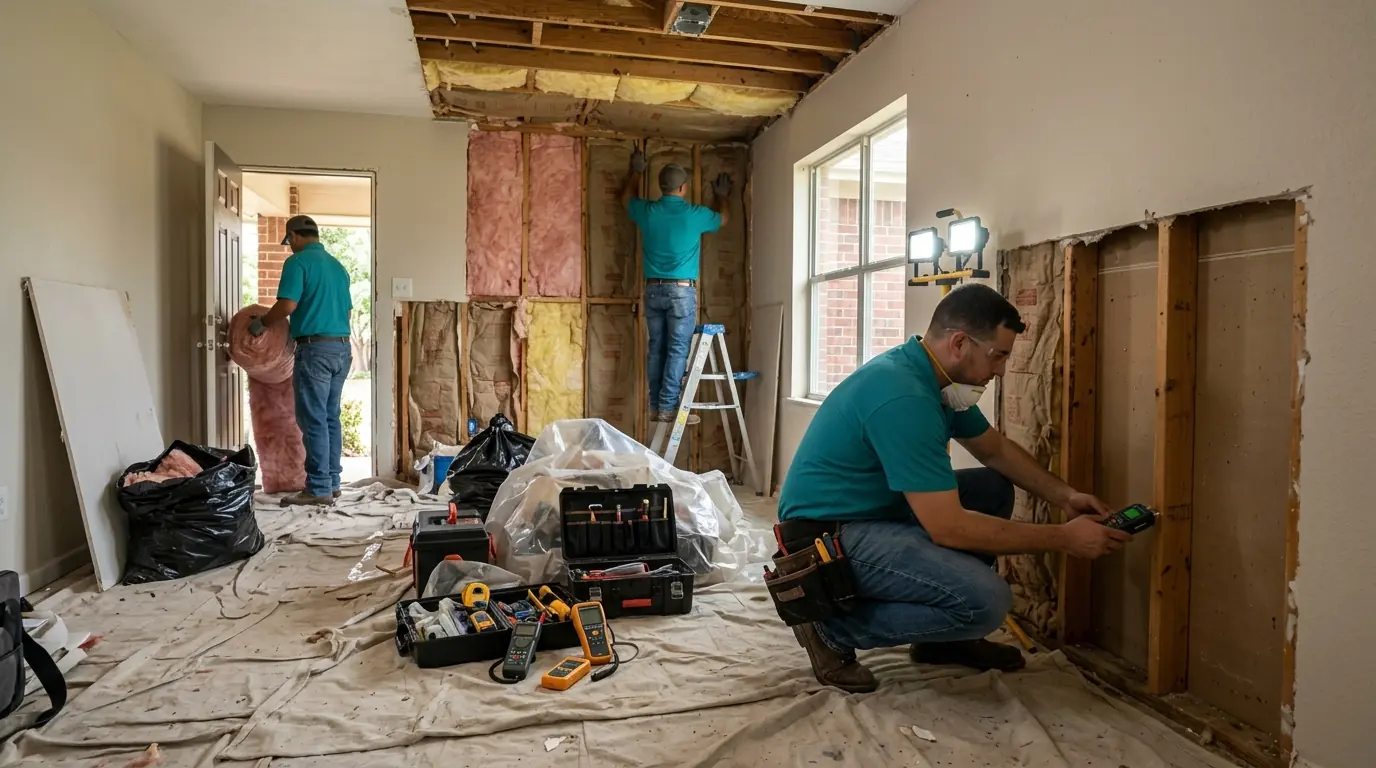
Insulation replacement in Fort Worth is needed when attic or wall insulation gets soaked or smoke-damaged, because wet insulation loses most of its value and holds water against drywall for days. We vacuum or pull the damaged material, dry or clean the framing and decking it touched, then install new insulation to the depth the space calls for.
What Insulation Replacement Involves
Insulation does its job by trapping still air. Water collapses those air pockets, and smoke fills them with odor and soot particles. Either way, the insulation stops working and starts causing problems: wet blown-in insulation mats down and keeps the ceiling below damp, and smoke-filled insulation keeps releasing odor into the house long after the fire is out. Removing it isn't optional on most jobs, it's how the rest of the repair gets to work.
We use a high-powered insulation vacuum for blown-in material in attics and hand-remove batts from walls. With the insulation out, the framing, decking and drywall back can be dried or cleaned properly. After a roof leak, that usually ties into storm damage restoration. After a fire, it pairs with smoke odor removal so the new insulation doesn't absorb leftover odor. New material only goes in once the space reads dry and clean.
Wet Attic Insulation
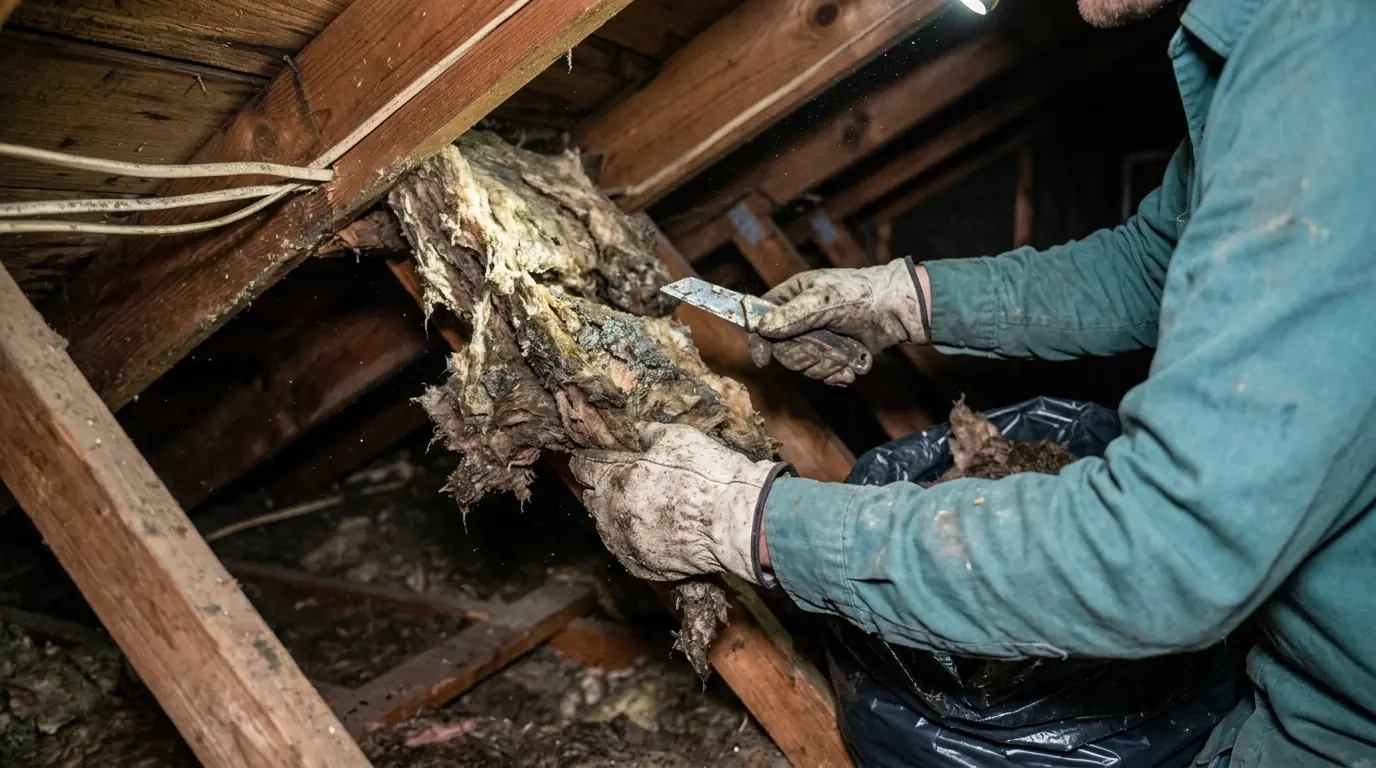
A roof leak, an AC condensate overflow or a burst attic line soaks the blown-in insulation lying on the ceiling. You'll usually see a ceiling stain first. In the attic, the insulation looks matted, darker and heavier, and it may feel cold. We vacuum out the wet area plus a margin around it, check the ceiling drywall and joists with a moisture meter and dry them. Once the source is fixed and the ceiling reads dry, we blow in new insulation to the surrounding depth. Cost depends on the square footage removed and how much access the attic allows.
Smoke-Contaminated Insulation
Smoke travels into the attic through ceiling penetrations, around light fixtures and up through wall cavities, and insulation filters it like a giant air filter. Even if flames never reached the attic, the insulation can hold smoke odor for months. You notice a smoky smell that gets stronger on hot days or when the HVAC runs. We remove the affected insulation, HEPA vacuum and clean the framing and decking, treat odor at the surfaces, then reinsulate. Scope and cost depend on how much of the attic smoke reached and whether the framing has soot or char.
Wall Insulation After a Leak
Fiberglass batts in walls can hold water at the bottom plate for a long time after a leak, even after the drywall face looks dry. If the batt has a paper facing, it can also feed mold. You'll notice a musty smell, swollen baseboards or paint bubbles low on the wall. We open the drywall, pull the wet batts, read the studs and bottom plate and dry the cavity. New batts go in before the wall is closed. Cost depends on the length of wall opened and whether the cavity needs mold cleaning before reinsulating.
Smoke, Soot or Water Damage Tonight?
The line is answered around the clock. Tell us what you see and we will tell you what to do first.
What Affects the Cost of Replacing Damaged Insulation?
None of the cost sources we use publishes a range for insulation replacement after water or smoke, so we won't quote one. The cost comes from how much material has to come out, how hard the space is to work in, and what has to happen to the framing before new insulation goes in.
- Area removedA wet patch over one room is a small job. Smoke that spread across the whole attic means removing and replacing insulation everywhere.
- Attic accessLow-pitched roofs, narrow hatches and HVAC equipment or ductwork in the way slow down removal and make the work harder and longer.
- Insulation typeBlown-in loose fill is vacuumed out. Batts are pulled by hand. Spray foam, if present, has to be cut away and takes far longer to remove.
- Framing cleanupWet framing needs drying, and soot or char on framing needs cleaning or sealing before new insulation goes in, or odor and moisture stay trapped.
- New insulation depthMatching the existing depth across the attic, or bringing a section up to the depth in the rest of the house, sets the material amount.
Every job is priced after we see the damage and take readings; these factors explain why two jobs that look alike can cost very different amounts.
What Insulation Replacement Includes
- Thermal and moisture check of the attic or wall cavity
- Protection of rooms below before removal starts
- Vacuum removal of blown-in insulation into sealed bags
- Hand removal of wet or smoky batts
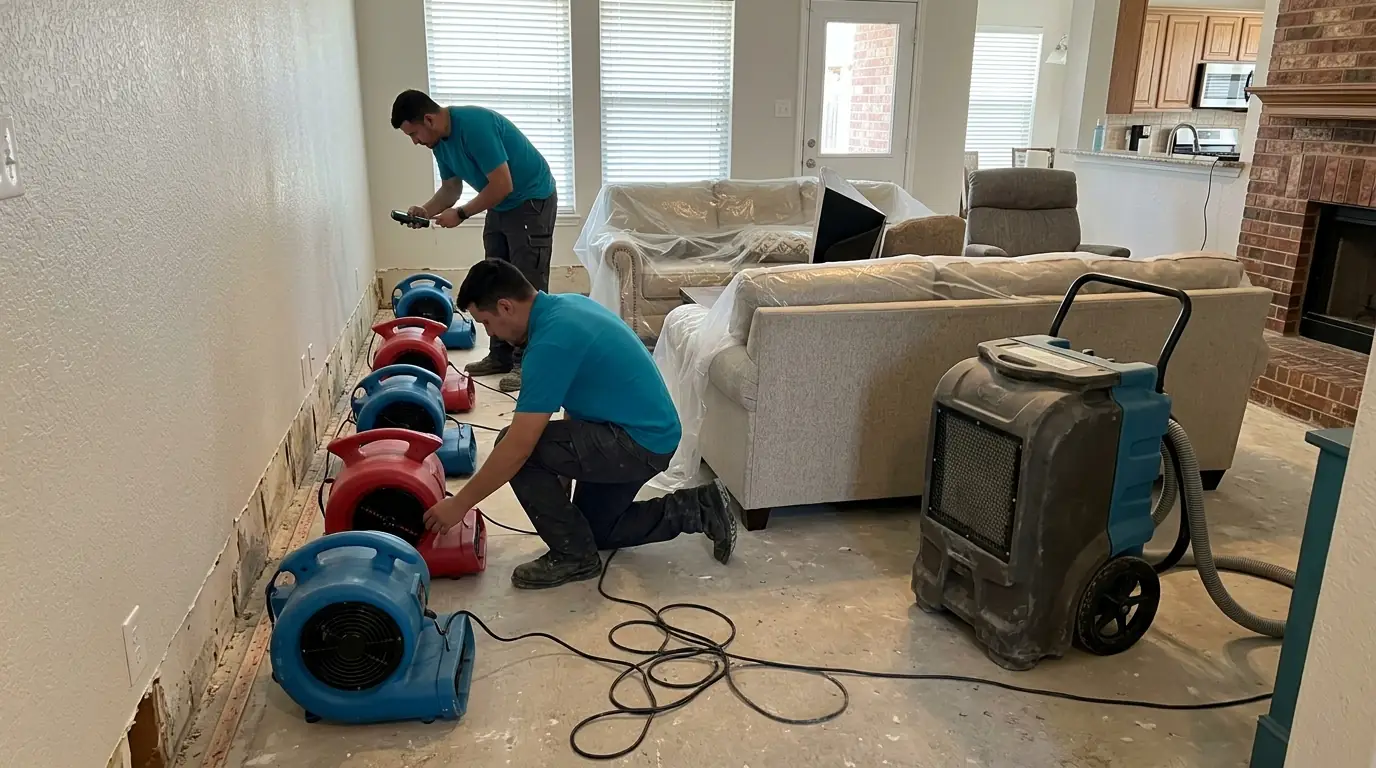
- Drying of joists, decking and drywall backs
- HEPA vacuuming and odor treatment of smoky framing
- Moisture readings logged before new insulation goes in
- New blown-in or batt insulation to match surrounding depth
Hail and Wet Attics in Northeast Tarrant County
Fort Worth field note
Most wet attic insulation we pull comes from storm leaks. Hail tracking lists 226 hail reports within 10 miles of Southlake since 2004, and 249 within 10 miles of Keller, including baseball-size hail in nearby Hurst on May 27, 2024. Roofs that take that many hits develop small leaks at vents and pipe boots, and the insulation underneath soaks up the water quietly until a ceiling stain shows up. We check those attics around every roof penetration, not just above the stain.
How We Replace Damaged Insulation
- 01
Find the extent
We check the attic or wall with a thermal camera and a moisture meter, and smell for smoke along the framing, to find where the damage actually ends before removal starts.
- 02
Remove the material
Blown-in insulation is vacuumed out into sealed bags, and batts are pulled by hand, with the hatch sealed and the living space below covered to catch debris.
- 03
Dry or clean framing
Wet framing and drywall backs are dried with air movers and dehumidifiers. Smoky framing is HEPA vacuumed, wiped down and treated for odor before anything goes back.
- 04
Confirm it's ready
Readings must show the joists, decking and drywall are dry, and the smoke odor must be gone at the surfaces, before any new insulation goes into the space.
- 05
Install new insulation
We blow in new loose fill or fit new batts to match the depth and coverage of the space around the repair, so the whole attic or wall performs evenly.
Signs Your Insulation Needs Replacing
Matted or darkened attic insulation
Blown-in insulation that has flattened into clumps or turned darker in patches has usually been wet, often from a roof or AC leak above.
Smoke smell on hot days
A smoky odor that returns when the attic heats up or the AC runs usually means insulation is holding smoke residue.
Ceiling stain under the attic
A stain on a top-floor ceiling usually means the insulation right above it is wet and pressing moisture into the drywall.
Musty smell from a wall
Wet batts at the bottom of a wall cavity hold moisture and can grow mold even when the wall surface looks dry.
Rooms that suddenly heat up
A room that runs warmer than it used to after a leak or storm may sit under insulation that's been compressed or soaked.
Insulation Replacement Questions From Fort Worth Homeowners
Small damp spots sometimes do if the leak was brief and the attic is hot. Soaked insulation usually doesn't. It mats down, loses its loft, holds water against the ceiling and can take weeks to dry, if it ever fully does. Replacing the wet section is usually faster and safer for the drywall below.
Insulation filters smoke as it rises, and it holds the odor in its fibers. Cleaning the rooms below doesn't reach it. When the attic heats up, the odor releases and drifts back down through fixtures and gaps. Removing smoke-affected insulation and cleaning the framing is what usually fixes it.
Usually, yes. Most attics here have blown-in loose fill and most walls have fiberglass batts, so we replace like with like and match the depth around the repair. If you want a different type or more depth, that's a choice you can make during the rebuild.
Generally yes. We seal off the attic access and protect the rooms below. Removal is noisy and can stir up dust near the hatch, so keep kids and pets away from that area. People sensitive to dust may want to be out of the house while it's happening.
Not necessarily. Many leaks come from a single failed pipe boot, a vent seal or an AC overflow, all of which can be repaired. We trace where the water entered before replacing insulation, so the new material doesn't get soaked again. Whether the roof needs more is a question for whoever repairs the roof.
Related Work We Handle
Get the Wet or Smoky Insulation Out
Insulation that's wet or holding smoke keeps damaging the house around it. Tell us whether it's a leak or a fire, and we'll check how far it spread and replace it once the framing is ready. Call us around the clock.
Updated October 2026