Quick answer
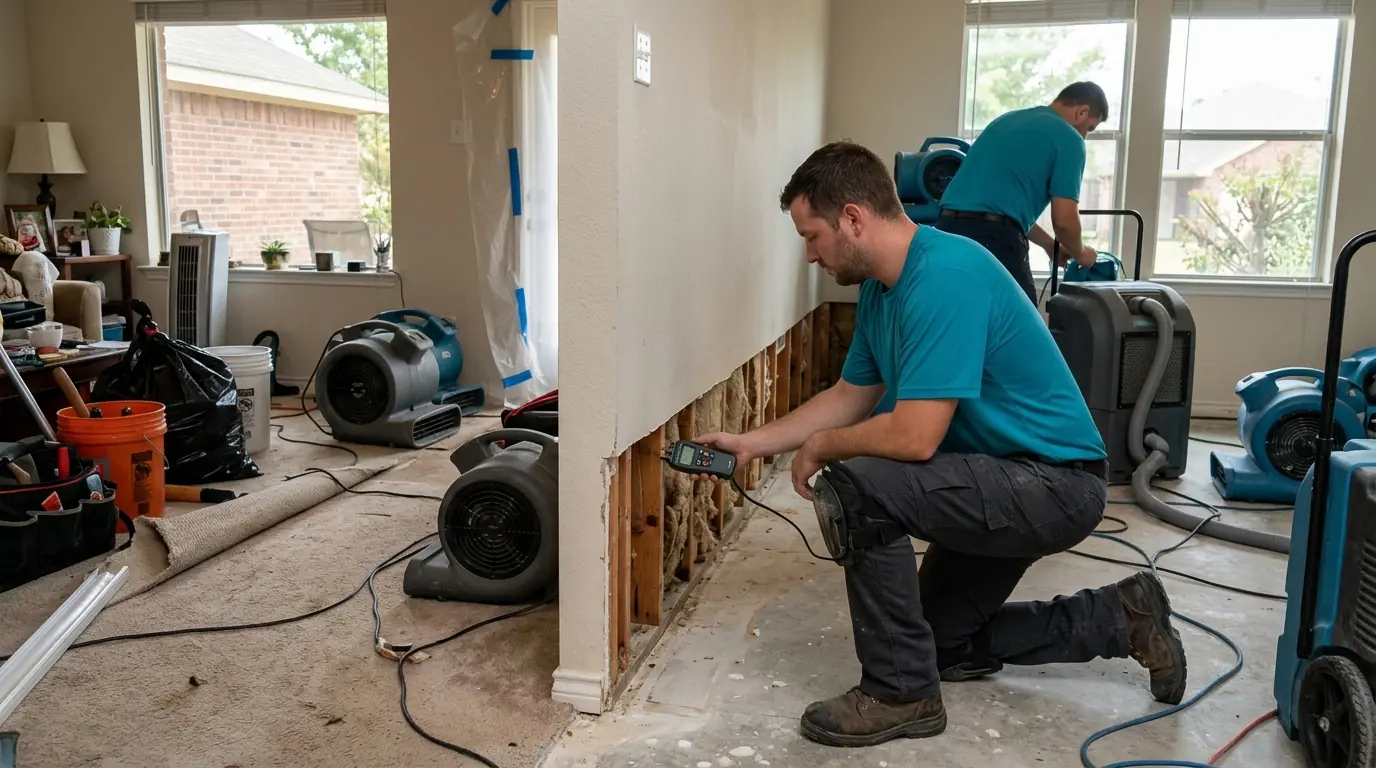
Water damage restoration in Fort Worth starts with stopping the source and pulling out standing water, then drying what you can't see. Drywall wicks water upward a foot or more, and mold can start within 24 to 48 hours on wet materials. We extract, map moisture with meters, set air movers and dehumidifiers, and log readings until the structure is dry.
What Water Damage Restoration Involves
Most water losses are bigger than they look. The puddle on the tile is the part you can see; the rest sits in the carpet pad, the bottom plate of the wall and the gap under the cabinets. We start every job with a moisture map: meter readings plus a thermal camera pass, marked on a sketch of the rooms. That map decides what gets dried in place and what has to come out.
Clean water from a supply line can usually be dried in place if we reach it early. Water that sat for days, or came from a drain, a washer or a toilet, changes the plan, and porous materials usually go. Once the structure reads dry, we put back drywall, trim, paint and flooring. If you're still sorting out what to do first, read our guide on the first hour after a leak.
What Happens After You Call About Water Damage
- 01
Stop the source together
We talk you through finding the main shutoff or the fixture valve on the phone, and help you decide whether to cut power to wet rooms before anyone walks in.
- 02
Inspect and map moisture
We read floors, walls and ceilings with meters and a thermal camera, mark the wet boundary on a sketch, and photograph everything before anything is moved.
- 03
Extract, remove, set drying
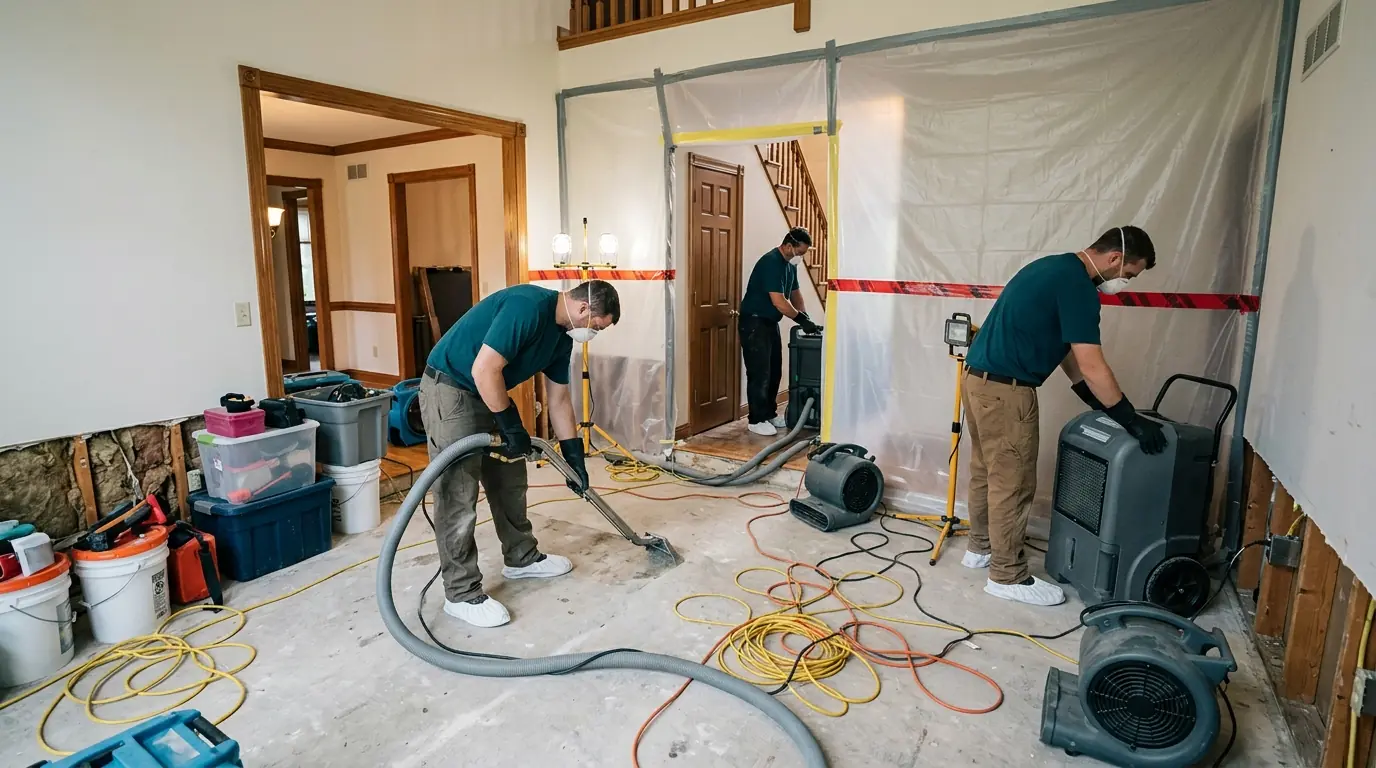
Standing water comes out, then pad, baseboards and wet drywall where the readings call for it. Air movers and dehumidifiers go in, sized to the rooms.
- 04
Log readings and rebuild
We record readings on each visit until every point reaches dry standard, then put back drywall, paint, trim and flooring and hand you the records.
Signs Water Is Still Inside the House
Baseboards pulling away
MDF baseboards swell and split at the bottom when the wall behind them stays wet, often days after the floor looks dry.
Paint bubbling low on walls
Bubbles or a tide line six to twelve inches up the drywall mean water wicked into the board from the bottom plate.
A musty smell that returns
If the smell comes back after you air the room out, something porous is still wet, usually pad, insulation or drywall.
Laminate peaking at seams
Laminate and some vinyl plank swell and lift at the joints when water is sitting beneath them on the slab.
Clean-Water Leaks (Category 1)
A failed supply line, an overflowing sink or a dripping water heater usually starts as Category 1 clean water. You notice a wet floor, a soft baseboard or a stain creeping along the bottom of a wall. Caught early, most of it dries in place: we extract, pull baseboards, drill small weep holes if the cavity is wet, and set air movers and dehumidifiers. Clean water left two or three days in a warm house grows bacteria and gets treated as Category 2. Square footage, how far water ran under walls and whether the pad can stay decide the cost.
Gray-Water Spills (Category 2)
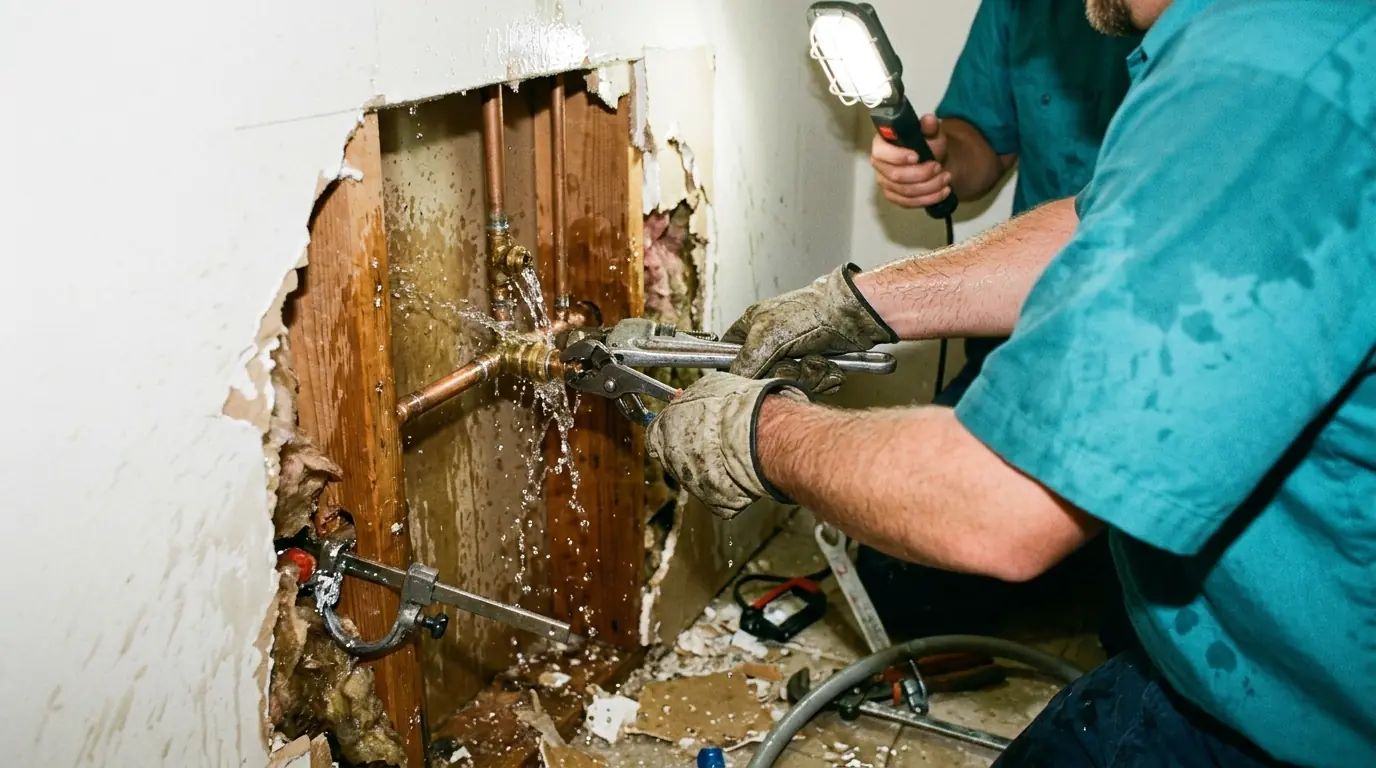
Washing machine discharge, dishwasher backups and a toilet overflow without feces count as Category 2 gray water. It carries detergent, food soil and bacteria, so the rules change. Pad that took gray water comes out, and drywall that wicked it usually gets a flood cut a couple of feet up. We extract, remove those porous materials, clean the framing and slab, apply an antimicrobial and then dry. Tear-out, disposal and replacement make it cost more than a clean-water job of the same size. Our guide to clean, gray and black water explains the lines.
Wet Wall Cavities
Water rarely stays on the floor. It runs under the bottom plate and soaks the insulation and the back of the drywall, where you won't see it until paint bubbles or baseboards swell. We read the wall at several heights to find the wet line. A cavity holding wet fiberglass usually has to open so the insulation can come out, and vinyl wallcovering that traps moisture comes off too. An uninsulated interior wall can often dry through small holes with directed air. Insulation type, wall finish and how high the water climbed set the approach and the cost.
Wet Subfloors and Slabs
On a slab-on-grade house the subfloor is concrete, and it holds water under tile, laminate and vinyl plank for a long time. On a pier-and-beam house it's plywood or plank decking over joists, with a crawl space below that may be wet too. Watch for laminate swelling at the seams, tile that sounds hollow and a musty smell near the floor. Floating floors usually come up so the slab can dry. Plywood dries with mats and air from both sides, while delaminated OSB is replaced. Floor type, time wet and conditions below set the timeline.
Water Still Moving Through the House?
Shut it off if you can and call. Every hour it sits, water travels further into drywall, pad and framing.

What the 2021 Freeze Taught Fort Worth About Water Damage
Fort Worth field note
During the February 2021 winter storm, Fort Worth recorded more than 700 water main breaks, three of the city's four treatment plants lost power, and more than 300,000 people were put under a boil-water notice. Pipes inside houses faced the same cold, and attic runs and exterior-wall lines split first. Many of those leaks didn't show until temperatures climbed and pressure came back, so clean water sat for days before anyone found it. The lesson holds every winter: know where your main shutoff is, and call before the water has time to sit.
How Long Water Damage Restoration Takes
Drying usually takes three to five days for a clean-water loss caught early. Dense materials stretch it: hardwood, plaster and a slab under tile can take a week or more. Gray water adds a day or two of tear-out and cleaning before drying starts. Rebuild is a separate stage. A couple of patched walls may take a few days, while new flooring through several rooms depends on how fast materials arrive. You'll get a working timeline once the moisture map is done.
What a Water Damage Job Includes
- Moisture readings and a thermal scan of every affected room
- Photos of the damage before, during and after work
- Water extraction from carpet, pad and hard floors
- Removal of pad and drywall where readings require it
- Air movers and dehumidifiers sized to the space
- Drywall, paint, trim and flooring put back after drying
What Does Water Damage Restoration Cost in Fort Worth?
HomeGuide's cost guide puts water damage restoration at $2,000 to $6,000 as a national planning range. That's a starting point, not a quote. Your number depends on the wet area, the category of water and how much has to be removed and rebuilt, and we write the scope from the moisture map so you can see what drives it.
- Square footage affectedDrying equipment and labor scale with the wet area. A single bathroom and a whole first floor are very different jobs, even when the source is the same leak.
- Water categoryClean water can often be dried in place. Gray or black water means removing pad, lower drywall and insulation, plus antimicrobial treatment and disposal.
- Time before drying startsWater that sits for days migrates further, soaks framing and can start microbial growth, which turns a drying job into a removal job.
- Rebuild scopePutting back drywall, texture, paint, baseboards and flooring is often a large share of the total once the drying is finished and signed off.
Range cited from a national cost guide (source, 2026-02-06). It is a planning figure, not a quote; your job is priced after we see it.
Water Damage Restoration Questions From Fort Worth Homeowners
Usually, yes. Air movers and dehumidifiers are loud and warm the room, but most families stay home during a clean-water job. Staying elsewhere makes sense if the water was sewage, if there's no working kitchen or bathroom, or if someone has asthma and materials are being torn out.
It depends on the water category and how long things were wet. Solid wood furniture, tile, concrete and framing are almost always dried. Carpet can often be saved after clean water. Pad, particleboard and anything soaked in gray or black water usually go, and we photograph every removed item.
Pick up rugs, shoes, electronics, papers and anything sitting on a wet floor. Put foil or plastic under furniture legs so stain and rust don't transfer to the carpet. Don't try to lift wet carpet or move heavy furniture yourself, since soaked pad is heavier than it looks.
Because the water keeps moving. It wicks up drywall, spreads through pad and soaks into framing and the slab. After a day or two in a warm house, bacteria multiply and mold can start soon after. Stopping the source ends the inflow; only drying stops the damage.
Generally yes, at a normal setting. The AC removes some moisture and keeps the house from overheating with equipment running. The exception is a system that took water itself, like a flooded air handler closet or a wet return, which should stay off until an HVAC tech checks it.
Related Work We Handle
Get the Water Out and the Drying Started
The sooner the moisture map is done, the more of your floors and walls can stay. We answer 24/7, so call now and we'll walk you through the shutoff and get the job moving.
Updated October 2026