Quick answer
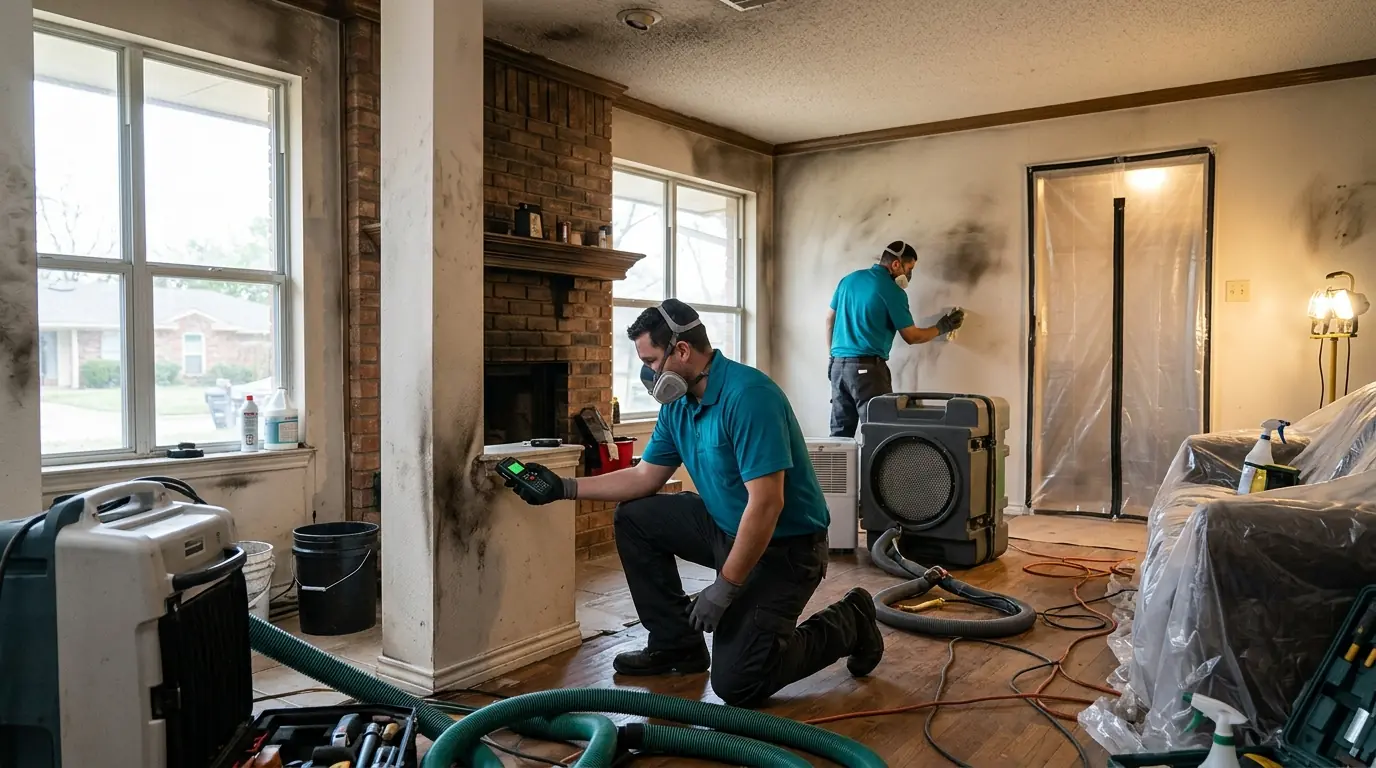
Soot removal in Fort Worth homes works from dry to wet: loose soot comes off with HEPA vacuums before any liquid touches the wall, because wet soot smears into paint. Particles are fine enough to slip into outlets and HVAC registers. We test each surface, clean it with the gentlest method that works, and seal what still stains.
What Soot Removal Involves
Soot is the solid residue that smoke leaves behind, and what's in it depends on what burned. Wood and paper fires leave dry, powdery soot. Plastics, foam and rubber leave sticky, oily soot that clings and smears. Most house fires burn a mix, so one room can need two methods. Soot is also slightly acidic, which is why chrome faucets, appliance trim and window frames can start to tarnish if it stays on for more than a few days.
We remove it in a set order: HEPA vacuum, dry chemical sponge, then detergents or solvents only where needed, always top to bottom. Surfaces that keep shadowing get a stain-blocking primer. If soot reached the ductwork, air duct cleaning comes next so the system doesn't redeposit it, and smoke odor removal handles what you can still smell.
Dry Soot From Wood and Paper Fires
Dry soot comes from fast, hot fires burning wood, paper and natural materials. It's powdery and black or dark gray, and it sits loosely on walls, shelves and the tops of door frames. You can usually see a gradient: heavy near the fire, lighter in the rooms beyond. The good news is that dry soot is the easiest kind to remove if nobody has wiped it yet. We HEPA vacuum loose soot, then go over flat surfaces with dry chemical sponges, and finish with a light detergent wash where a film remains. Cost depends on the area covered and how much of it was smeared before cleaning started.
Oily Soot From Plastics and Synthetics
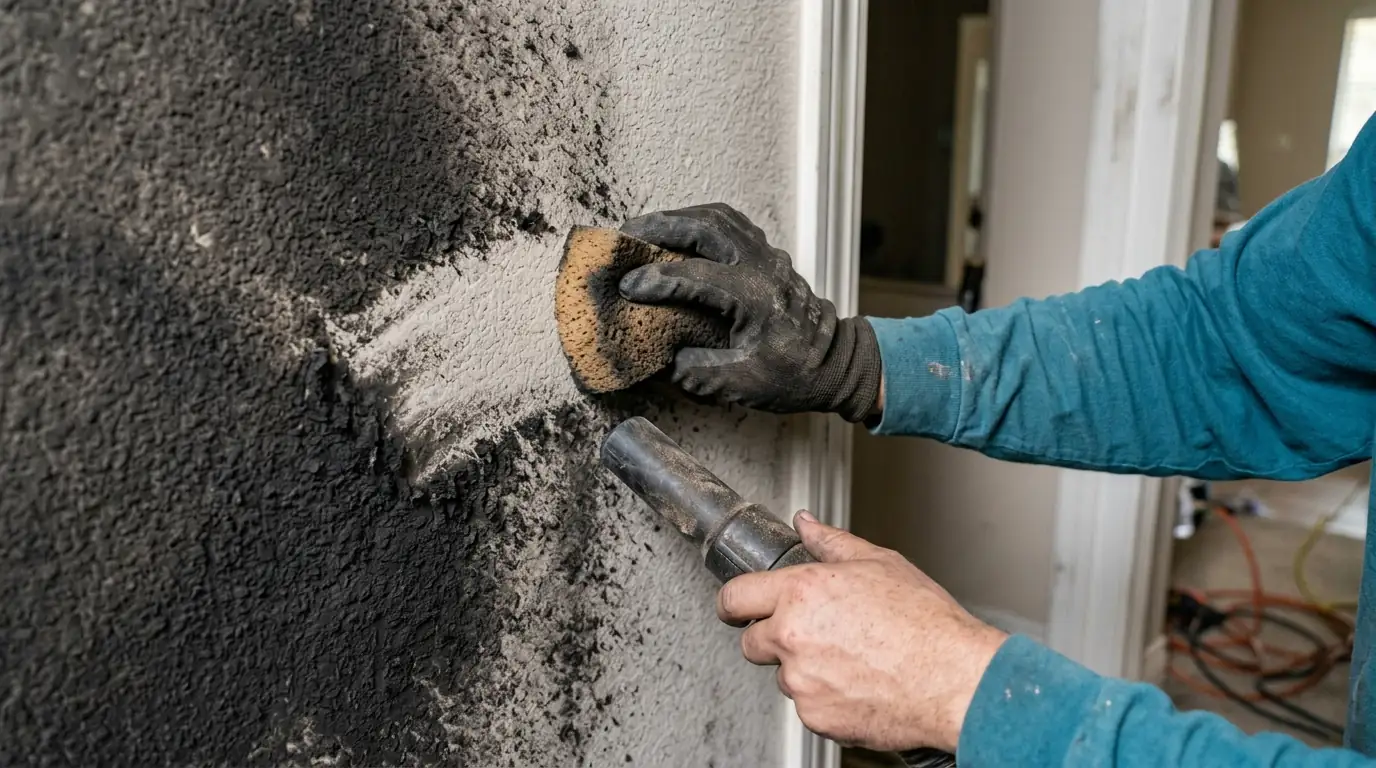
Oily soot comes from slow, smoldering fires and burning plastics, vinyl, foam and electronics. It looks wet or shiny and leaves a black smear on anything that touches it. It also carries a stronger, chemical odor than dry soot. Dry sponges don't do much here, so after HEPA vacuuming we use degreasers or solvent-based cleaners suited to each surface, working in small sections with frequent wipe changes so we're removing residue instead of spreading it. Drywall with heavy oily soot often costs less to seal or replace than to scrub repeatedly. The deciding factors are surface type and how thick the residue built up.
Soot Around HVAC Registers and Returns
Dark streaks around supply registers and return grilles mean soot moved through the duct system, either while the fire burned or because the system ran afterward. Return grilles show it first, because they pull room air in. You may also see gray dust on the ceiling around each supply vent. Cleaning the grille and the wall around it is the easy part. If soot is inside the ducts, it will keep blowing out each time the system runs. We clean registers and the surrounding drywall, check inside the duct and air handler, and recommend duct cleaning when residue is present beyond the first few feet. Scope depends on how far into the system the soot traveled.
Dry Soot or Oily Soot: How the Cleanup Differs
| Factor | Dry soot | Oily soot |
|---|---|---|
| Source | Fast, hot fires burning wood and paper | Smoldering fires burning plastics, foam and rubber |
| How it looks | Powdery, matte, dark gray or black | Shiny, sticky, smears on contact |
| First method | HEPA vacuum, then dry sponge | HEPA vacuum, then degreaser or solvent |
| Odor | Woody, fades after cleaning | Sharp chemical smell that lingers |
| Likely outcome | Most painted surfaces clean up | More walls need sealing or replacement |
Rub a dry tissue on the wall: if soot lifts off as powder it's dry soot, and if it streaks it's oily soot.
Do Not Wait for the Stain to Spread
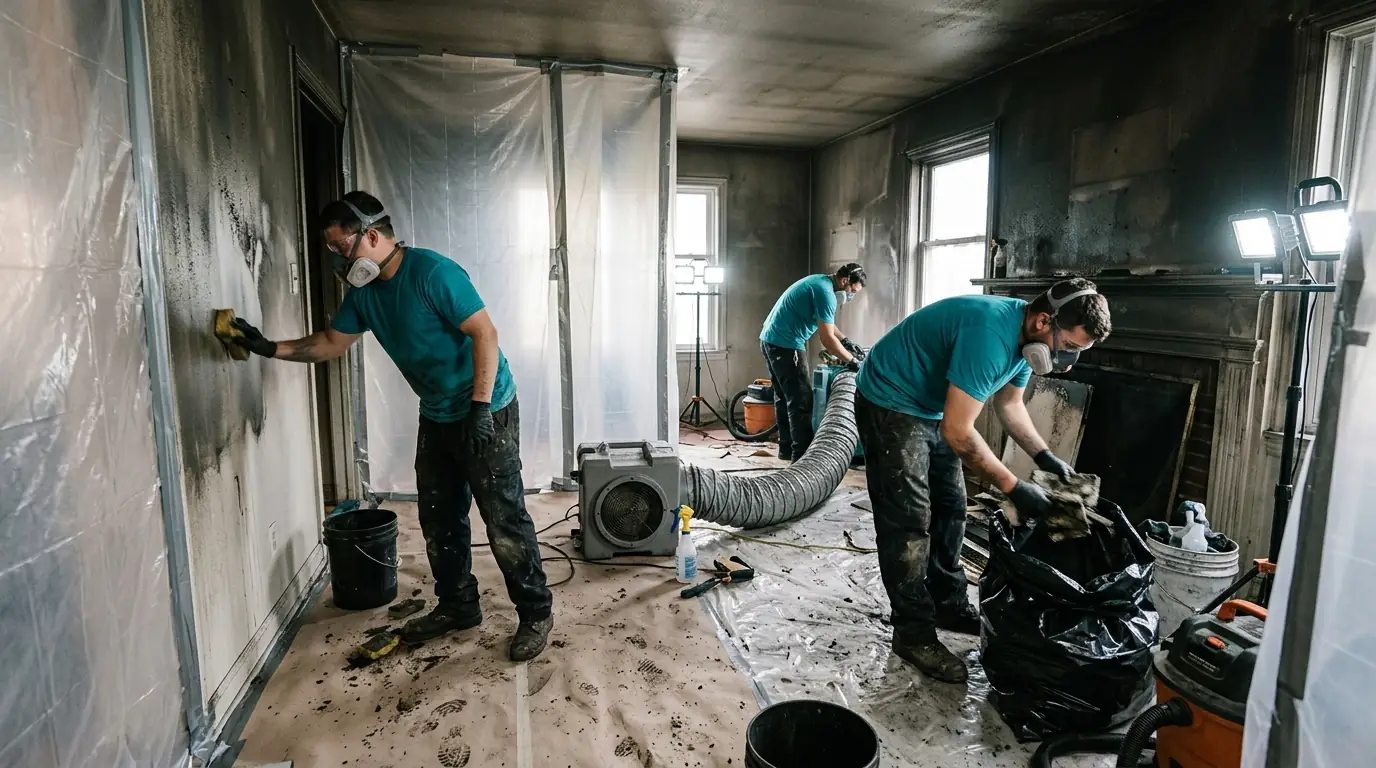
Most of what we remove is material that stayed wet too long. Calling early keeps the job smaller.

What Does Soot Removal Cost?
HomeAdvisor reports soot removal usually costs between $2,000 and $6,000 as a national planning range. A garage or single room with dry soot sits near the bottom, while oily soot spread through several rooms and the ductwork sits near the top. Contents cleaning is usually counted separately.
- Dry or oily residueDry soot lifts with vacuums and sponges. Oily soot needs solvents and more passes, which takes more labor for the same square footage.
- Area coveredWalls, ceilings, cabinet interiors, closets and attic surfaces all count toward the total. Soot that traveled through several rooms adds up quickly.
- Previous wipingSoot that was already smeared with a wet rag is harder to remove and more likely to need sealing instead of cleaning.
- Duct contaminationIf the HVAC ran with soot in the air, the ducts and air handler may need cleaning so they don't keep redepositing residue.
Range cited from a national cost guide (source, 2026-06-20). It is a planning figure, not a quote; your job is priced after we see it.
Attached Garage Fires in Brick Ranch Homes
Fort Worth field note
Tanglewood homes are mostly single-story ranch houses, and land-use rules there require brick or stone construction with an attached two-car garage. That layout matters for soot. A fire in an attached garage burns tires, plastic bins, paint and gasoline cans, which is exactly the mix that produces oily synthetic soot. The brick outside holds up, but soot pushes through the door into the house and into an attic shared with the living space. In homes built that way, we check the house side of the garage wall and the attic before calling the cleanup finished.
How Soot Comes Off Without Smearing
- 01
Test each surface
We test-wipe paint, wood, tile and fabric to see whether soot lifts dry or smears. That decides the method and tells us which surfaces may need sealing instead.
- 02
HEPA vacuum loose soot
Loose soot and smoke webs come off with HEPA vacuums and soft brush attachments, ceiling first. Nothing wet touches the wall until the loose material is gone.
- 03
Dry sponge flat surfaces
Dry chemical sponges lift remaining film from painted walls and ceilings. We turn and replace them often so they keep pulling soot off rather than pushing it around.
- 04
Wet clean where needed
Oily residue and remaining film get detergents or solvents suited to the surface. Metal fixtures, grout and glass get early attention to prevent acid etching.
- 05
Seal and inspect
Drywall that still shadows gets a stain-blocking primer. We check every room in daylight and with a work light before calling the soot cleanup finished.
Soot You Can Handle and Soot You Shouldn't
| Task | What you can do | What we do |
|---|---|---|
| A light film near a candle or fireplace | Use a dry soot sponge in one direction and a HEPA vacuum on fabrics. | Not needed for small, localized film unless it keeps coming back. |
| Soot across several rooms | Close doors, shut off the HVAC and leave surfaces alone. | We test, vacuum and clean room by room so soot isn't spread into clean areas. |
| Oily black smears | Avoid water and household sprays, which spread the residue. | We use solvents and degreasers matched to the surface, or seal when cleaning won't work. |
| Soot at vents | Change the HVAC filter and keep the system off. | We clean registers and check inside the ducts before the system runs again. |
Soot particles are fine enough to reach deep into the lungs, so wear an N95 or better mask and gloves even for small cleanups.
Soot Removal Questions From Fort Worth Homeowners
Usually because soot is still in the system somewhere. Ducts, attic insulation or the inside of wall cavities can hold residue that the HVAC or air movement carries back out. Sometimes the wall was cleaned but not sealed, and stains bleed back through new paint. Finding the source fixes the return.
It's similar in makeup but much smaller in amount. Candle and fireplace soot usually shows as dark marks above the flame or on nearby walls. It's often dry and can be handled with a soot sponge. Heavy, repeated buildup can point to a fireplace draft problem worth having checked.
Yes, though porous brick and stone hold soot deeper than paint. We vacuum loose residue, then use alkaline cleaners and stiff brushes or a poultice for stubborn stains. Some discoloration in deep pores may remain, and sealing the masonry afterward helps it resist new staining.
Acidic residue can start tarnishing chrome, brass and aluminum within a few days and can pit surfaces if left for weeks. Grout and glass can also discolor. That's why we clean faucets, hardware, appliance trim and windows early in the job.
Not always. Many washable clothes come clean with a proper pre-treatment and wash cycle, and dry-clean items can often be restored by a cleaner who handles smoke work. Synthetic fabrics that melted or items with heat damage usually can't be saved.
Related Work We Handle
Soot on the Walls? Leave the Rag in the Drawer
Soot that's untouched is much easier to remove. We'll test the residue and clean room by room. Give us a call and tell us where you're seeing it.
Updated October 2026