North Richland Hills, TX
Flood and Water Damage Repair in North Richland Hills
Phones answered 24/7 for North Richland Hills homes and businesses.
Quick answer
Flood and water damage repair in North Richland Hills ties back to Big Fossil Creek and the age of the houses near it. The city began in 1952 with brick and masonry homes, so many sit on older slabs with cast iron drains and supply lines now seventy years old.
Restoration Work Around North Richland Hills
North Richland Hills grew from about 8,700 residents in 1960 to nearly 46,000 in 1990, so its housing runs from early 1950s brick ranches to 1980s two-story homes. Older houses here carry cast iron drain lines under the slab, galvanized or early copper supply lines and original tile. When those fail, water can reach several rooms before anyone sees it, especially under carpet or along a hallway wall.
Creek-side flooding is a separate problem with its own rules. Heavy rain can push Big Fossil Creek over its banks and send muddy water into low lots nearby. That water is contaminated, so we remove carpet, pad and wet drywall bottoms, sanitize the slab and dry with logged readings. For drain backups inside older homes, sewage cleanup follows the same contaminated-water steps.
Brick Houses From a 1952 Dairy Farm Subdivision
North Richland Hills began in 1952 when Clarence Jones subdivided his 268-acre dairy farm, and its first section of 188 homes was restricted to brick and masonry construction. Brick walls hold up well in storms, but the plumbing inside those early homes is now about seventy years old. Cast iron drain lines under the slab corrode and crack, which can push sewage up through tub drains or floor drains. Original supply lines rust and seep inside walls. We trace these failures with moisture meters and cameras before opening anything, then dry and clean what the water reached.
Living Along Big Fossil Creek
Big Fossil Creek runs southeast through North Richland Hills on its way to the West Fork of the Trinity River. When a heavy storm stalls over the area, the creek and the drainage feeding it rise fast, and homes on the lowest lots can take water through garages and back doors. Floodwater carries soil, lawn chemicals and sewage from overwhelmed lines, so it's never treated like a clean leak. We remove what it soaked, scrub and disinfect the slab, apply antimicrobial to the framing and set drying equipment. Then we check the wall cavities again before anything is closed.
Calls We Get From North Richland Hills
How a Call From North Richland Hills Runs
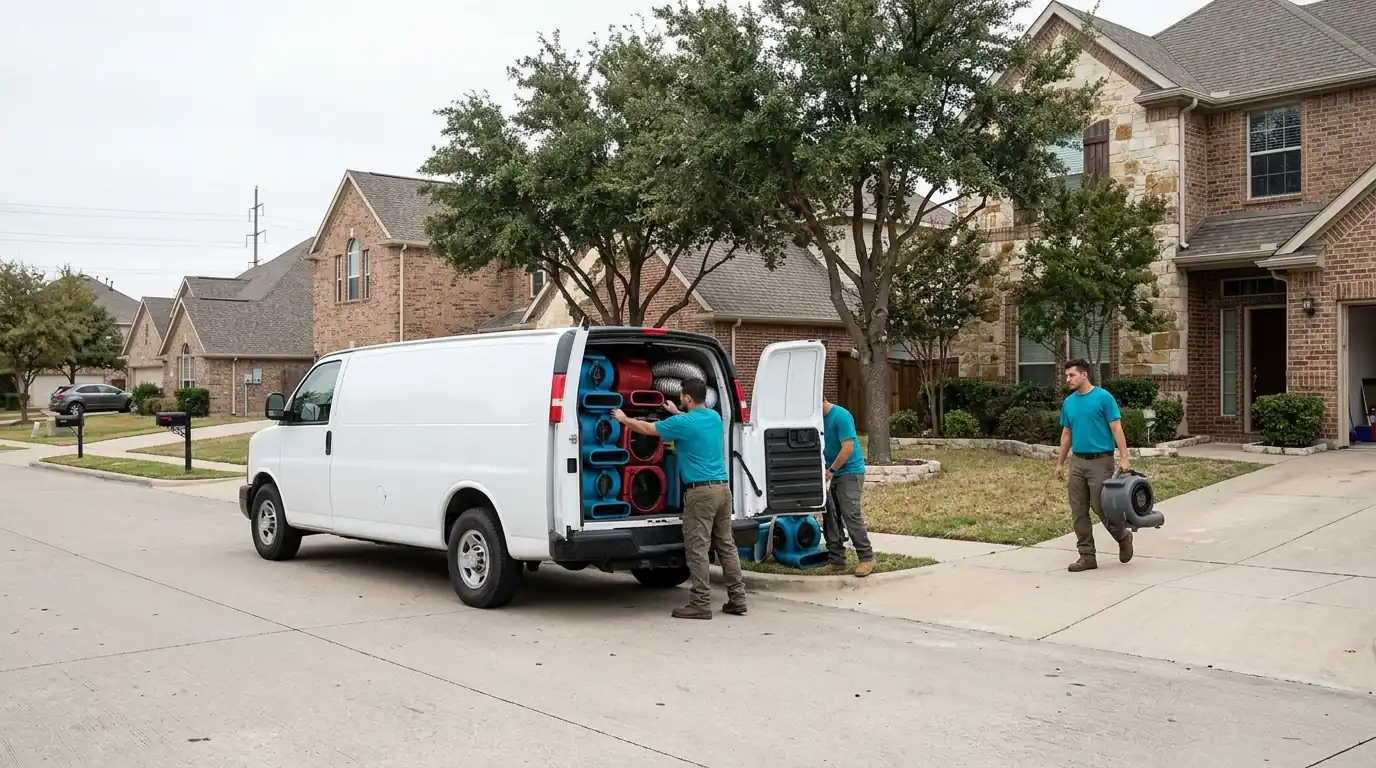
Calls from North Richland Hills get answered at any hour. We ask whether the water came from a fixture, a drain or outside, since each needs different handling. We bring extractors, sewer-rated protective gear, antimicrobials, moisture meters, air movers and dehumidifiers. Wet rooms are photographed and metered before carpet or drywall comes out, so your claim file is complete.
North Richland Hills Restoration Questions
If it smells foul, looks gray or brown, or rises from a tub, shower or floor drain rather than a supply line, treat it as sewage. Stop running water in the house and call. Don't wade through it without boots and gloves.
Cast iron that old often has corrosion inside, which can lead to cracks or blockages. Slow drains, gurgling toilets and sewer smells are warning signs. A plumber can scope the line with a camera to check its condition.
That depends on your lender and flood zone. A typical homeowners policy leaves out water that rises from a creek or street, so overflow may not be covered without a separate flood policy. Check your coverage before storm season arrives.
Usually not. Creek water is contaminated, and carpet and pad absorb it deeply. We remove both, sanitize the slab and dry it. Hard floors like tile can often be cleaned and kept once disinfected and dried.
Nearby Areas We Cover
Water, Fire or Storm Damage in North Richland Hills?
Tell us what happened and where the water or smoke went. We will walk you through the first steps on the phone.
Updated October 2026