Quick answer
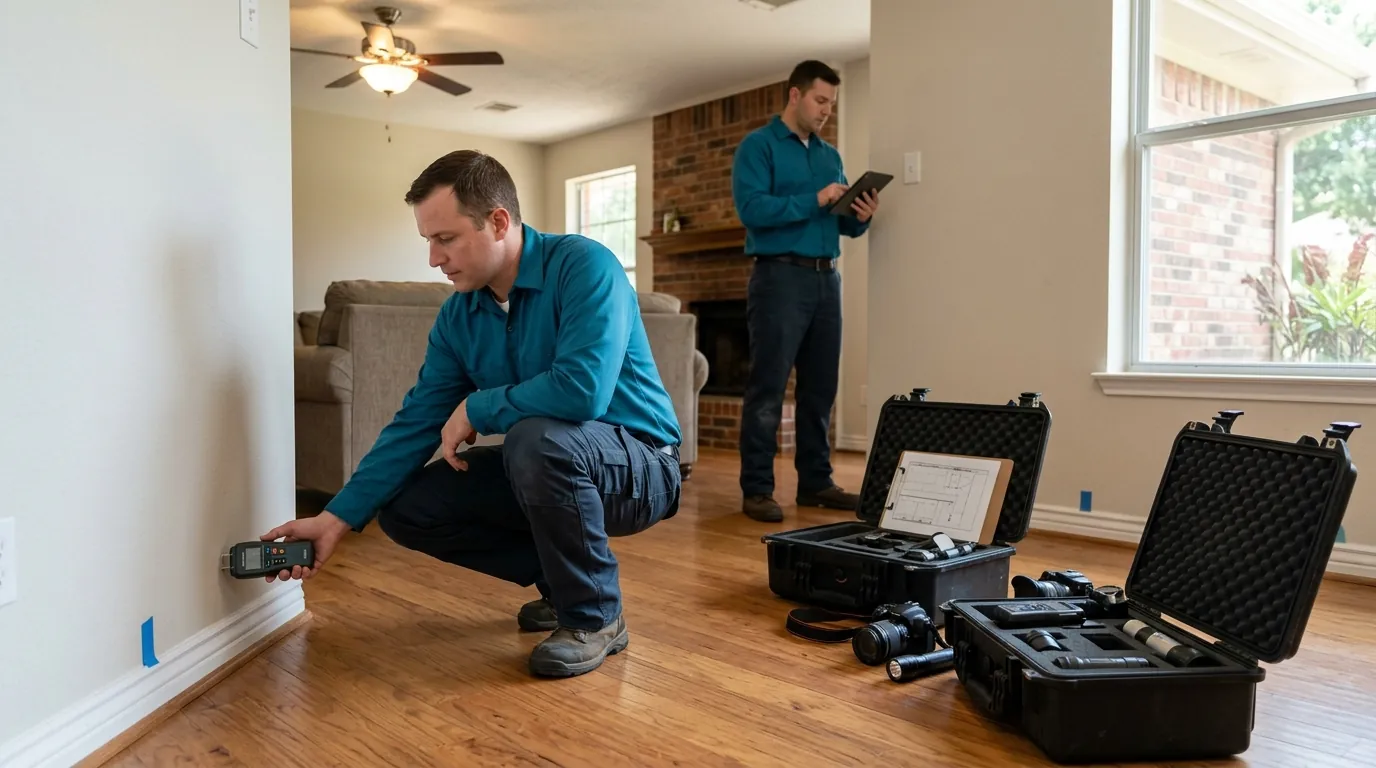
A moisture inspection in Fort Worth homes answers one question: where is the water, and how much? Drywall can feel dry while the framing behind it holds water, and a stain can't tell you if a leak is still active. We scan with a thermal camera, confirm with moisture meters and give you a marked map and photos of what we found.
What Moisture Mapping and Leak Inspection Involves
An inspection helps after a leak, to know the area is dry before walls close or flooring goes down. It helps when there's a smell, a stain or a high water bill with no visible source, before buying a house with freshly painted spots, and after a repair to confirm the damage didn't spread further than you think.
Thermal cameras show temperature, not water. A cool spot might be wet drywall or missing insulation, so every thermal finding is confirmed with a meter. You get a sketch with readings, photos and our read on the source. If something active turns up, the next step may be hidden leak water damage repair or a plumber.
What Our Moisture Inspection Includes
- Thermal camera scan of the area of concern and nearby rooms
- Matching regular photos for every thermal image captured
- Pinless and pin meter readings in a grid around suspect areas
- Dry standard readings from unaffected materials for comparison
- A marked sketch showing the wet boundary and reading locations
- Plain notes on the likely source and the next step
Thermal Imaging Scans
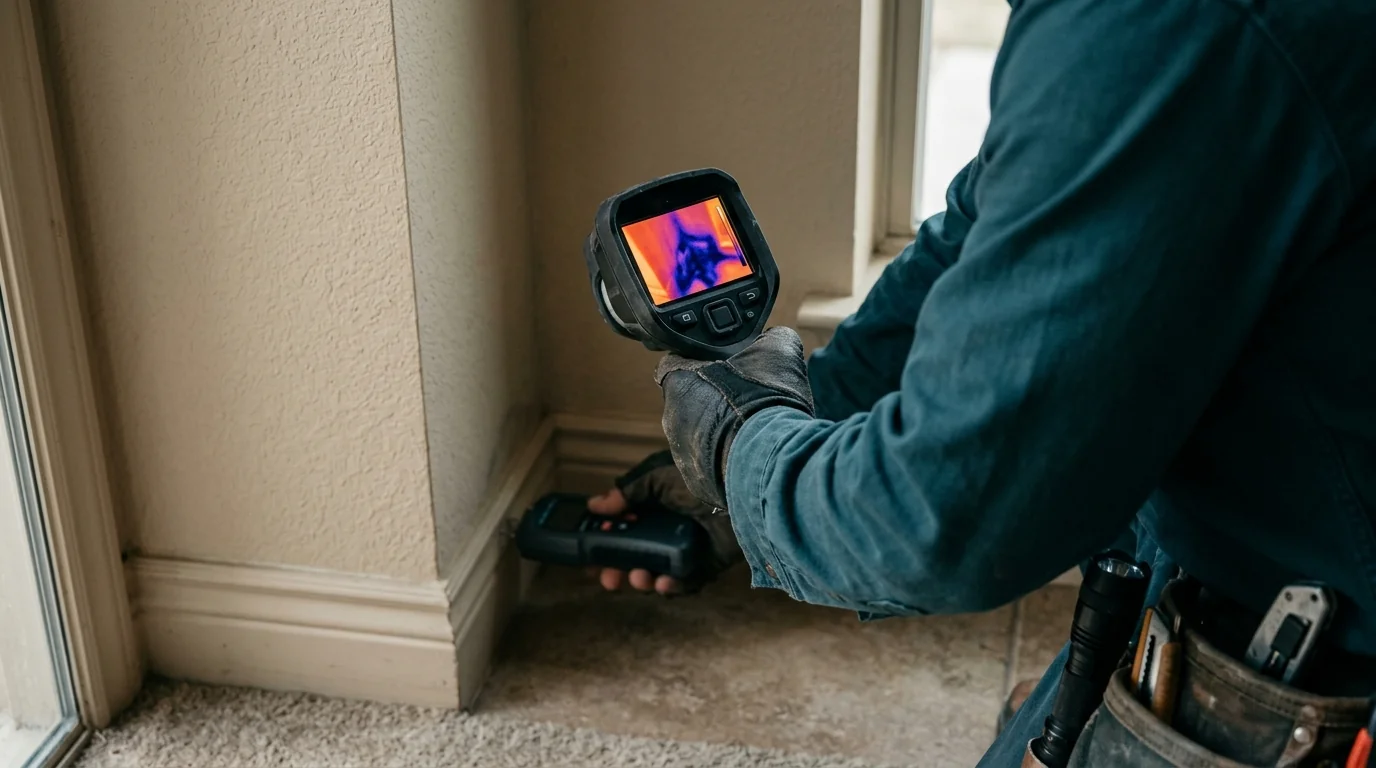
A thermal camera shows surface temperature, and wet materials usually read cooler because evaporating water pulls heat away. Scans work best with a temperature difference between inside and outside, so we run the AC or heat as needed. Patterns tell a story: a cool streak down a wall from a ceiling corner, a blotch around a shower valve, a fan shape spreading from a cabinet. Each image is paired with a regular photo so you can see exactly where it is. The number of rooms scanned sets the time involved.
Moisture Meter Mapping
Meters turn suspicion into numbers. A pinless meter reads into drywall, wood or tile without marking it, while a pin meter measures inside the material where the pins go. We read in a grid around the suspect area, compare to dry material of the same type elsewhere and mark the boundary where readings drop to normal. That boundary is the map. It shows whether a stain is old and dry or active and spreading, and how far to open a wall if it has to be opened.
Post-Repair Moisture Checks
After a plumber fixes a leak or a roofer replaces shingles, the materials around the repair may still be wet, and closing a wall or laying flooring over damp material is how mold starts inside finished spaces. We read the area, compare it to dry standard and tell you whether it's ready to close or needs more drying. It's also a good check after a do-it-yourself cleanup, to confirm the pad, slab or wall cavity is dry below the surface. Usually it's a short visit with readings and photos.
Water Still Moving Through the House?
Shut it off if you can and call. Every hour it sits, water travels further into drywall, pad and framing.
Moisture Checks in Fast-Growing Suburbs
Fort Worth field note
Euless grew quickly in the 1950s and 1960s after Amon Carter Field opened in 1953, so many of its homes are now well past fifty years old. Mansfield is the opposite case: its population roughly doubled between 2000 and 2010, and much of its housing stock is recent. Both kinds of house hide water. Older homes have decades of repairs layered over original plumbing, while newer ones put tile, backer board and wall-to-wall flooring over every pipe. A moisture map shows whether a stain in either one is still active.
What Happens During a Moisture Inspection
- 01
Tell us the concern
We start with what you've noticed: stain, smell, soft spot, high bill or a past leak. That points us to the rooms and fixtures worth scanning first.
- 02
Scan with thermal
With the AC or heat adjusted for contrast, we scan the area and the rooms around it, photographing any cool pattern beside a regular photo.
- 03
Confirm with meters
Every suspect area is read with both pinless and pin meters and compared to dry material of the same type in an unaffected part of the house.
- 04
Map and explain
You get a marked sketch, the photos and our read on the likely source, with plain advice on whether to call a plumber, start drying or simply watch it.
Thermal Camera or Moisture Meter?
| Factor | Thermal camera | Moisture meter |
|---|---|---|
| What it measures | Surface temperature differences | Moisture content in or just under the surface |
| Strength | Scans a whole room quickly and shows patterns | Confirms whether a spot is wet, with a number |
| Weakness | Cool spots can be drafts or missing insulation | Reads only where you place it, so it's slow on large areas |
| Best use | Finding where to look | Proving what's wet and tracking drying |
Use both together: the camera finds the suspect areas, and the meter confirms them before any decision is made.
What Does a Moisture Inspection Cost?
An inspection is priced by time and scope: how many rooms, whether you want the whole house or one area, and whether a written report is needed for an adjuster or a home purchase. We quote the inspection before we come, and any drying or repair is a separate decision.
- Area coveredOne stain on one ceiling takes far less time than a whole-house scan before a purchase, so the scope you choose sets most of the price.
- Report detailA verbal answer with photos costs less than a full written map with readings prepared for an adjuster, a buyer or a seller.
- Attic and crawl accessAttics, crawl spaces and furniture-filled rooms take longer to inspect properly, especially when the suspected source is above or below.
- Follow-up checksRepeat visits after a repair, or during drying, add short appointments to confirm the readings are falling the way they should.
Every job is priced after we see the damage and take readings; these factors explain why two jobs that look alike can cost very different amounts.
Moisture Mapping and Leak Inspection Questions From Fort Worth Homeowners
No. It reads surface temperature only. Water inside a wall often cools the drywall surface enough to show a pattern, which is why it's useful, but it can't see pipes or water directly. That's why every thermal finding gets confirmed with a meter.
It's worth considering if you see fresh paint on a ceiling, a new patch near a bathroom, a musty smell or flooring that looks newer in one room. A moisture map shows whether those areas are dry now. It's separate from a general home inspection.
Compare readings to dry drywall elsewhere in the house. When the wet area reads the same, it's ready for primer and paint. Painting over damp drywall traps moisture, and the paint often bubbles or peels later. A quick meter check avoids that.
Not exactly, but readings help. A stain that reads dry is likely from an old leak that stopped. One that reads wet or has a growing cool pattern is active. Rings inside the stain usually mean it has wet and dried more than once.
Most of the inspection is non-invasive. Thermal scans and pinless meters leave no marks, and pin meters leave two tiny holes that disappear with a dab of filler. If a cavity needs to be seen, we explain why and ask before opening anything.
Related Work We Handle
Find Out Exactly Where the Water Is
A moisture map turns guessing into a plan. Whether it's a stain, a smell or a check after a repair, call us and we'll set up a time to scan it.
Updated October 2026