Quick answer
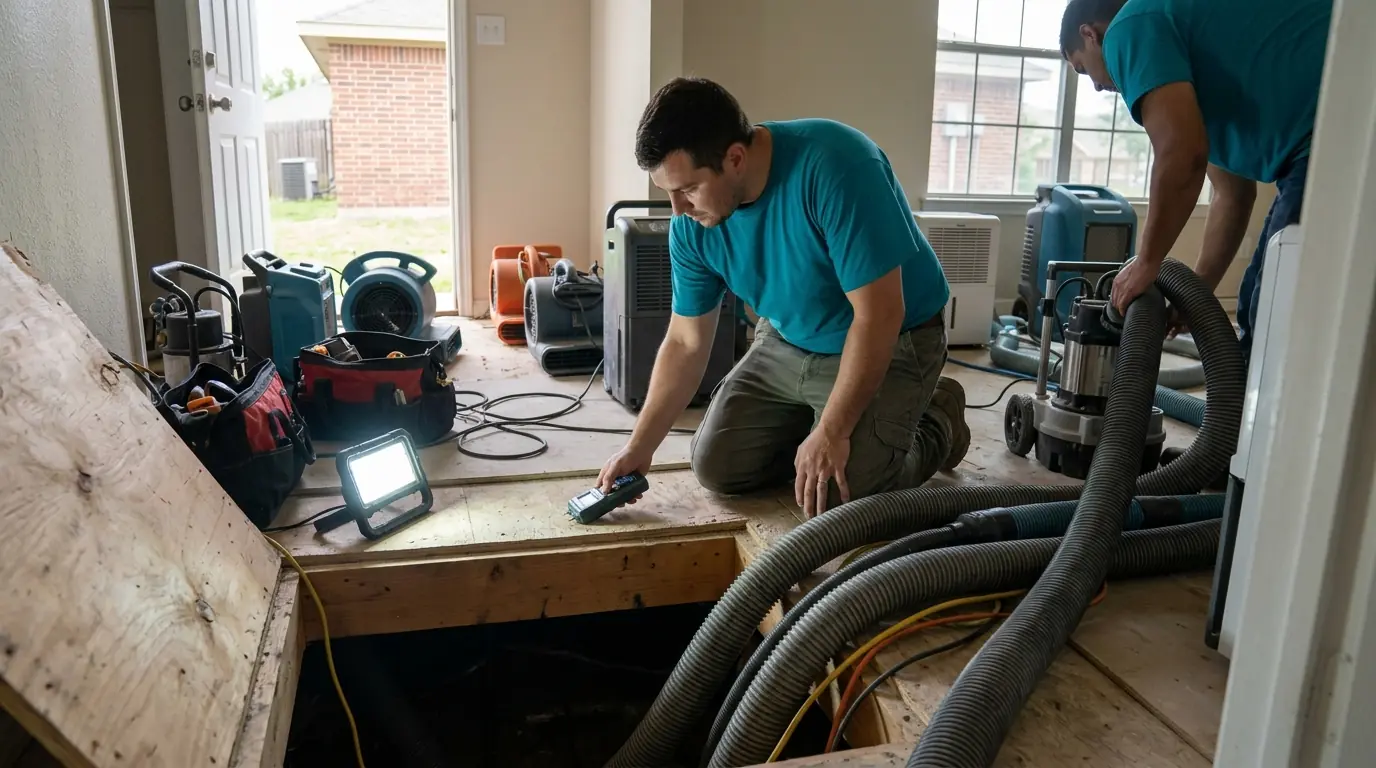
Crawl space water removal in Fort Worth means pumping out standing water under a pier-and-beam house and drying the wood above it. Water under the floor raises humidity in the whole crawl space, and joists that stay damp can grow mold and soften. We pump, pull wet insulation and vapor barrier, then dry the space with dehumidifiers and air movers.
What Crawl Space Water Removal Involves
A crawl space takes water from a plumbing leak under the house, a separated drain line, rain running toward the foundation or groundwater after a long wet stretch. Because nobody goes down there, it often sits for weeks. Upstairs, the first sign is usually a musty smell, a floor that feels soft or humidity the AC can't keep up with.
Clay soil makes crawl spaces here slow to drain, so water pooled on it can stay long after the leak or storm has stopped. Pumping is only the first step; the real work is drying the wood and replacing what the water ruined. If joists already show growth, the job moves into crawl space mold removal.
Standing Water Under Pier-and-Beam Homes
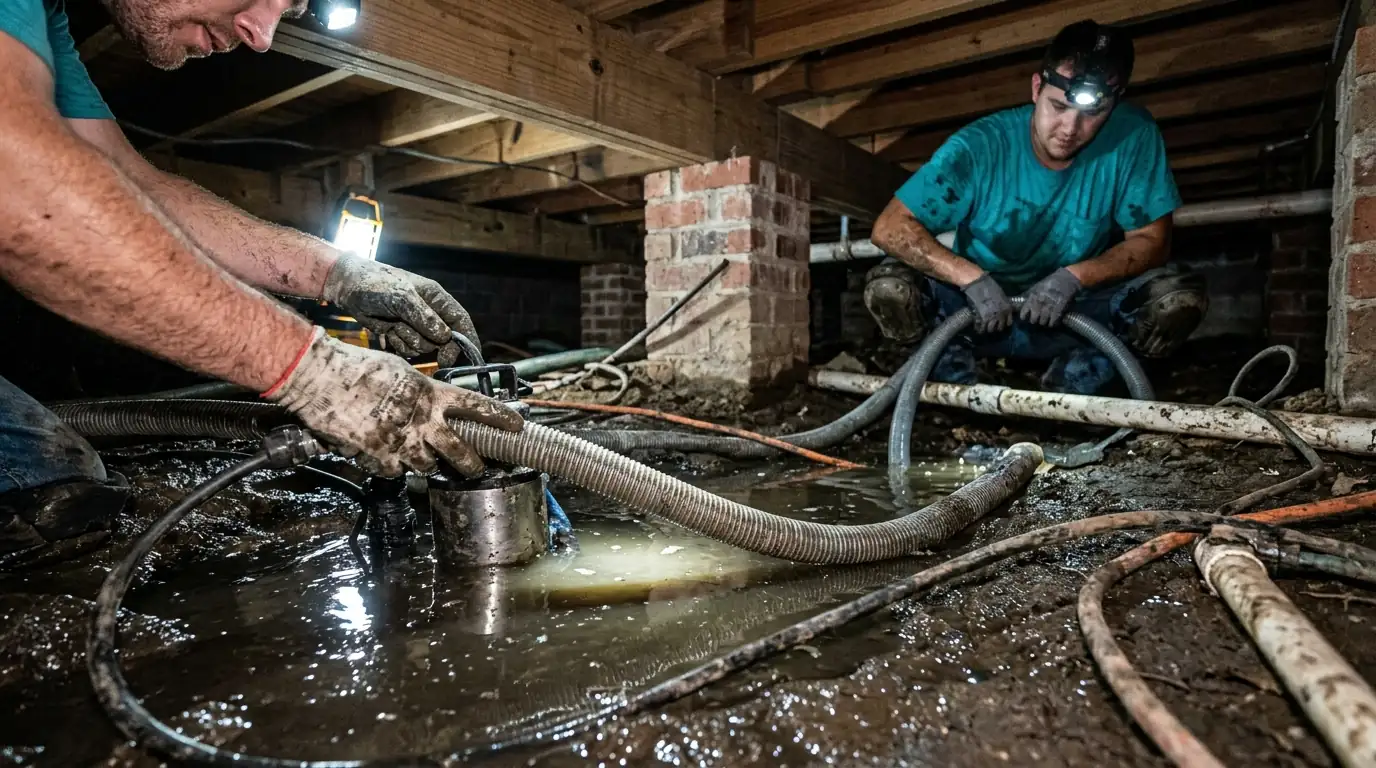
Standing water in a crawl space shows up as a wet vapor barrier, puddles between piers or, after a big leak, water across the whole space. You might smell it or notice the floor feels cold and damp. We find the source first: a supply line, a drain fitting or water coming in from outside. Then a submersible pump goes into the lowest point and runs until the pooled water is gone, with wet vacuums for the rest. Volume, access and whether the water is clean or drain water set the cost.
Wet Insulation and Vapor Barrier
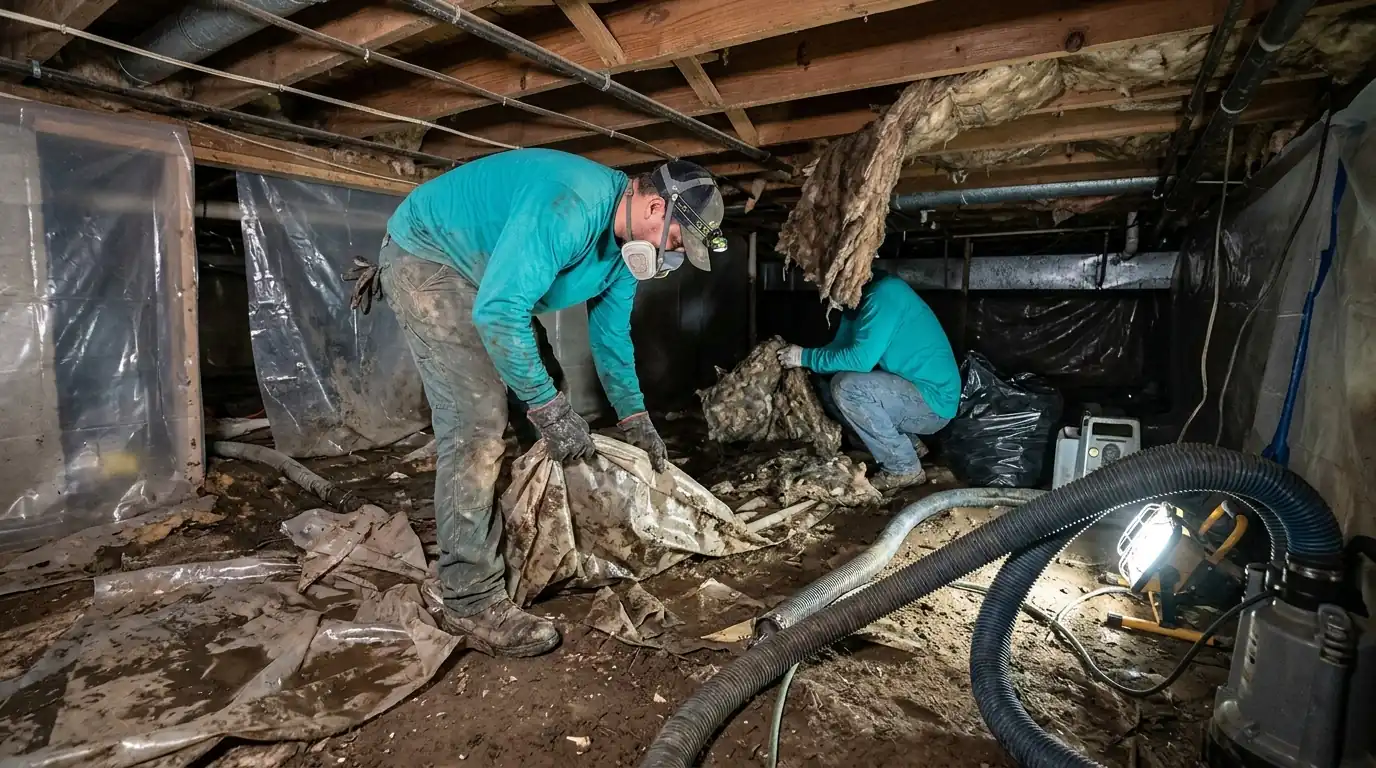
Fiberglass batts between floor joists sag when wet and hold water against the subfloor. A torn or flooded vapor barrier traps water on top and lets ground moisture in below. Both have to come out. We bag wet insulation, cut out the soaked vapor barrier and photograph the joists and subfloor once they're exposed. After the space is dry, a new vapor barrier goes down with seams overlapped and taped, and floor insulation is replaced if the house had it. Crawl space size and the amount of material drive the cost.
Crawl Space Drying
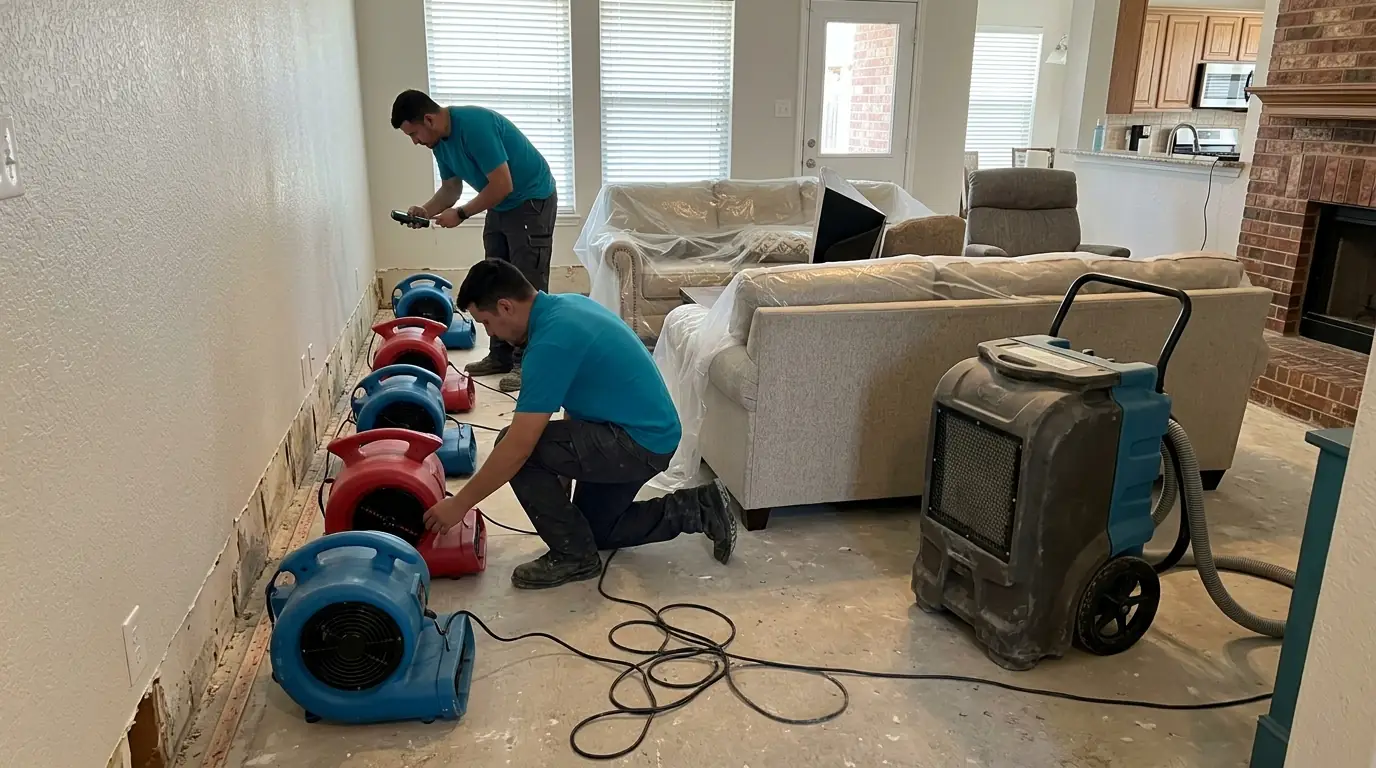
With standing water and wet materials out, the joists, beams, subfloor and soil surface still hold moisture. We set a dehumidifier sized to the crawl space volume and air movers aimed along the wet framing, and keep vents and the access closed so the dehumidifier isn't fighting outside air. Joist and subfloor readings are compared to dry wood elsewhere and logged each visit. Wood that lags may need an antimicrobial and more airflow. Clearance, the amount of wet wood and the weather decide how many days it runs.
Do Not Wait for the Stain to Spread
Most of what we remove is material that stayed wet too long. Calling early keeps the job smaller.
What Affects the Cost of Crawl Space Water Removal?
Crawl space jobs vary more than most because the spaces themselves vary: clearance, size, what's down there and how long the water sat. We scope after a look under the house, with photos, so you can see what's driving the price before work begins.
- Amount of waterA few puddles from a dripping fitting take far less pumping and drying than water standing across the entire crawl space after a broken line.
- Access and clearanceLow clearance, small hatches and ductwork in the way slow down every task, from pumping to laying the new vapor barrier.
- Material to removeWet insulation and vapor barrier are bagged out and replaced, and the amount depends on the size of the crawl space and how far water spread.
- Water source and growthDrain water means cleaning and disinfecting the soil surface and framing, and mold on joists adds containment and HEPA cleaning.
Every job is priced after we see the damage and take readings; these factors explain why two jobs that look alike can cost very different amounts.
What Crawl Space Water Removal Includes
- Inspection under the house with photos of water and framing
- Pumping of standing water at the crawl space low point
- Removal and disposal of wet insulation and vapor barrier
- Dehumidifier and air movers sized to the crawl space
- Antimicrobial on framing after drain or outside water
- New vapor barrier with overlapped, taped seams after drying
Crawl Spaces Under Fort Worth's Early 1900s Homes
Fort Worth field note
Fairmount/Southside, about two miles south of downtown, was built from 1890 to 1938, mostly between 1905 and 1920, with wood-frame bungalows the most common house type. Ryan Place was platted in 1911. Wood-frame houses of that age were commonly built on pier-and-beam foundations, leaving a crawl space under the floor. Many of those crawl spaces have low clearance and older plumbing and are reached through a small hatch, so when water gets under these homes, we plan for tight access and older framing.
How We Clear and Dry a Crawl Space
- 01
Look and photograph
We go under the house with lights, a meter and a camera to find the source and document the water, the framing and the condition of the insulation.
- 02
Stop the source and pump
Plumbing leaks get shut off and flagged for repair. A submersible pump clears pooled water at the low point, and wet vacuums pick up what's left.
- 03
Remove wet materials
Soaked insulation and vapor barrier are bagged and removed, exposing the joists and subfloor so they can be dried, inspected for any growth and photographed for your records.
- 04
Dry and reseal
A dehumidifier and air movers run with the vents closed until joist readings are dry. Then a new vapor barrier and replacement floor insulation go in.
Signs There's Water Under Your House
Musty smell indoors
Air from a wet crawl space rises through gaps in the floor, so an earthy smell in several rooms often starts below.
Soft or bouncy floors
Subfloor and joists that stay damp lose stiffness, and a spongy floor may be sitting over wet wood.
Sweating ducts
Condensation dripping off ductwork under the house means the crawl space air is very humid.
Water at the access hatch
Water or mud at the access opening after rain points to drainage running toward the foundation.
Crawl Space Water Removal Questions From Fort Worth Homeowners
Some dampness after heavy rain isn't unusual, but standing water that stays for days is a problem. It raises humidity under the floor, which invites mold on joists and sweating ducts. If water collects after every rain, the drainage around the foundation needs attention.
Yes. Wet joists and subfloor lose stiffness, and hardwood over a damp crawl space can cup as it absorbs moisture from below. Humidity rising into the house also makes the AC work harder. Drying the crawl space usually helps the floors settle back.
Closed. With vents open, humid outdoor air keeps flowing in and the dehumidifier can't keep up, especially in summer. We close the vents and the access while equipment runs, and afterward we can talk through whether to keep them closed long term.
Usually yes. A vapor barrier that took floodwater or drain water holds contamination and moisture on top of it, and a torn one doesn't do its job. Replacing it after the space is dry is a small part of the job that makes a real difference.
Be careful. Crawl spaces can have standing water near wiring, sharp debris, pests and very low clearance. If there's water, don't go under with power on to anything down there. A flashlight look from the hatch is a safer first step before you call.
Related Work We Handle
Get the Water Out From Under Your House
Water under a pier-and-beam house keeps the framing wet and the floors damp until it's removed. Call any hour and we'll get under there and see what it needs.
Updated October 2026