Summerfields, Fort Worth, TX
Ceiling Leak and Water Cleanup in Fort Worth's Summerfields
Phones answered 24/7 for Summerfields homes and businesses.
Quick answer
Ceiling leak and water cleanup in Summerfields mostly comes down to roofs and attics on homes developed in the 1970s. North Fort Worth along I-820 took baseball-size hail in March 2000, and older roofs here keep taking spring storms. A cracked shingle can soak attic insulation long before the ceiling stains.
Restoration Work Around Summerfields
In Fort Worth's Summerfields, homes date from the 1970s, which puts many roofs on their second or third replacement and many attic air handlers well into middle age. Water reaches ceilings from two directions. Rain gets in through a damaged roof, or a clogged condensate line spills over the pan in summer. Either way, the drywall underneath takes the weight.
We check the attic first, not the stain on the ceiling below it. Wet blown-in insulation compresses and holds water against the ceiling, so we pull it, dry the drywall and joists, then replace the insulation. Ceiling drywall that sagged or cracked comes down in one piece. For condensate overflows and roof leaks alike, ceiling water damage covers the drying and patch.
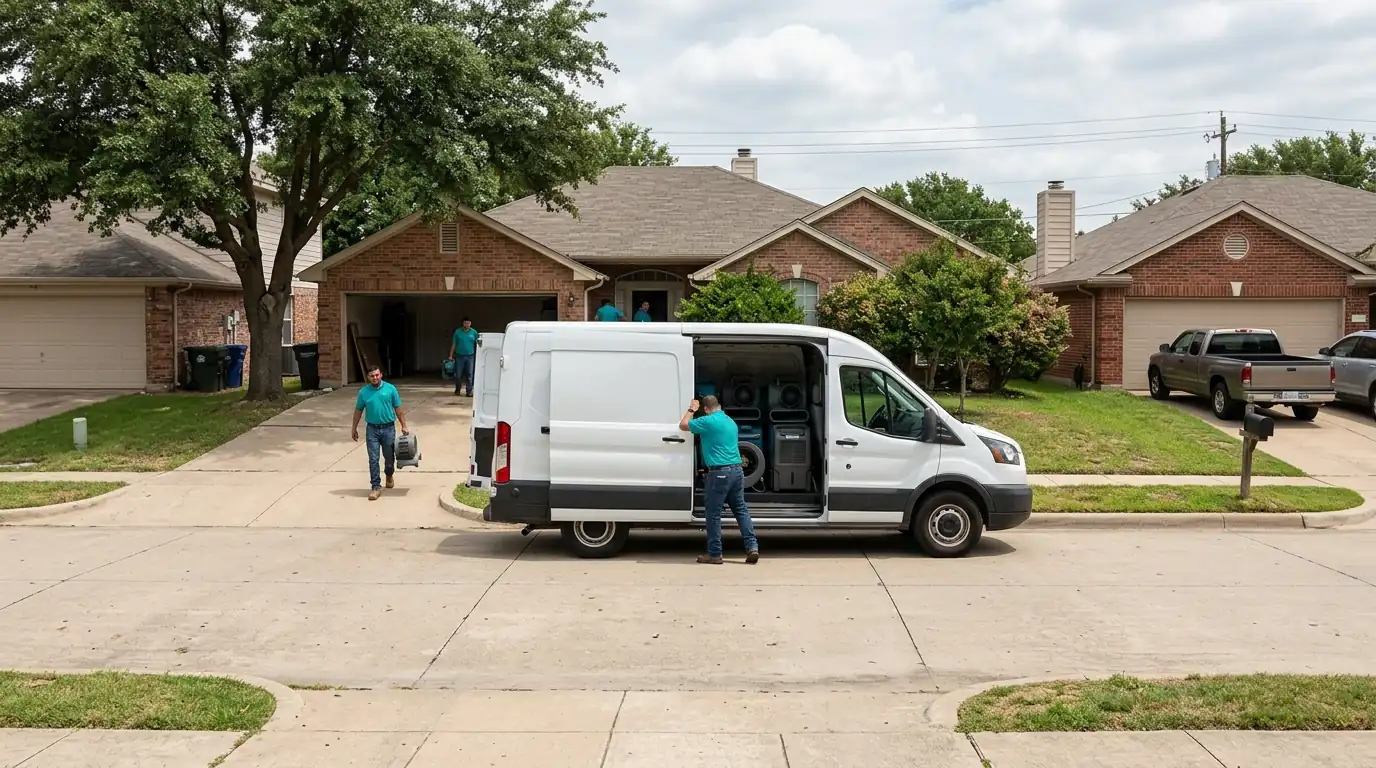
Summerfields, I-820 and the March 2000 Hail
Summerfields was developed in the 1970s north of I-820, and its park was acquired in 1978. During the tornado outbreak of March 28, 2000, baseball-sized hail fell in north Fort Worth along I-820. Hail that large cracks shingles, splits vent boots and dents flashing, and the roofs in this neighborhood were already twenty-some years old at the time. Many have been replaced since, but spring storms keep testing them. When a ceiling stain appears after rain, the attic usually shows the trail back to a cracked shingle or a lifted flashing.
Freeze Bursts in 1970s Attics
During the February 2021 winter storm, Fort Worth recorded more than 700 water main breaks, and the same cold that split city mains also reaches the water lines inside houses. In 1970s houses, supply lines sometimes run through the attic or along exterior walls, where cold reaches them first. When a frozen line thaws and splits, water pours onto the insulation and drops through the ceiling. Wrapping attic lines and keeping cabinet doors open under sinks during hard freezes lowers that risk a great deal. If a line does split, shutting the main quickly limits how much insulation and drywall we have to replace.
Calls We Get From Summerfields
How a Call From Summerfields Runs
We pick up Summerfields calls day or night. We ask where the ceiling is wet, whether it's sagging, and whether the leak shows during rain or while the AC runs. If water is dripping from a light fixture, we'll have you shut off that circuit. Ladders, meters, a thermal imager and attic drying equipment come with us.
Summerfields Restoration Questions
Timing helps. A roof leak shows during or after rain. An AC leak shows on hot days while the system runs and often sits under the air handler or near the hallway return. We check the attic to confirm which one it is.
Not until the power is off. Turn off that circuit at the breaker, set a bucket under the fixture and stay clear. Water in a light box can short the wiring. We dry the ceiling and an electrician can check the fixture.
Yes. A newer roof handles hail better, but large stones still crack shingles and damage vents and flashing. After a hailstorm, a look in the attic for damp spots or light coming through is a quick check.
Usually only the wet or sagging section. We meter around the stain to find the edges, remove what's damaged and dry the joists. A patch with matched texture blends the repair into the rest of the ceiling.
Nearby Areas We Cover
Water, Fire or Storm Damage in Summerfields?
Tell us what happened and where the water or smoke went. We will walk you through the first steps on the phone.
Updated October 2026