Quick answer
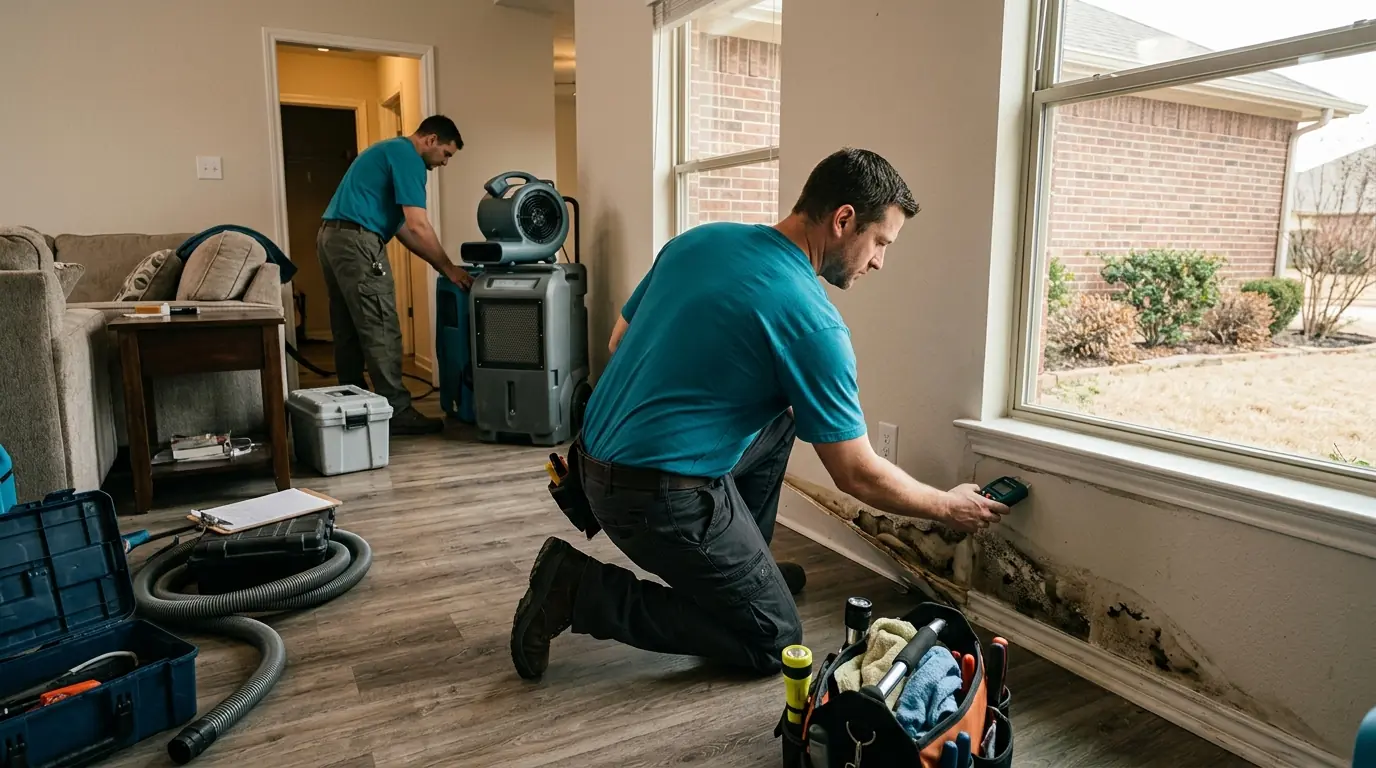
Hidden leak water damage in Fort Worth homes builds slowly inside walls, behind shower tile and under sink cabinets. A drip too small to puddle can keep wood and drywall wet for months, and mold can start within 24 to 48 hours on a damp surface. We find the wet area with meters and thermal imaging, open what's needed and dry it.
What Hidden Leak Water Damage Involves
A hidden leak shows up as a smell, a soft spot, peeling paint or a water bill that creeps up. By then it has often run for weeks, and the damage is in what it kept wet: the bottom of a stud, the back of the drywall, the subfloor under a vanity. The plumbing fix is usually small. Our work is everything around it.
We start without demolition. Meters, a thermal camera and a hygrometer outline the wet area from the room side, which tells us where to open and how big. Often one cut at the bottom of a wall or a removed vanity back is enough. For a broader check of the house, see moisture mapping and leak inspection.
Leaks Behind Shower Tile
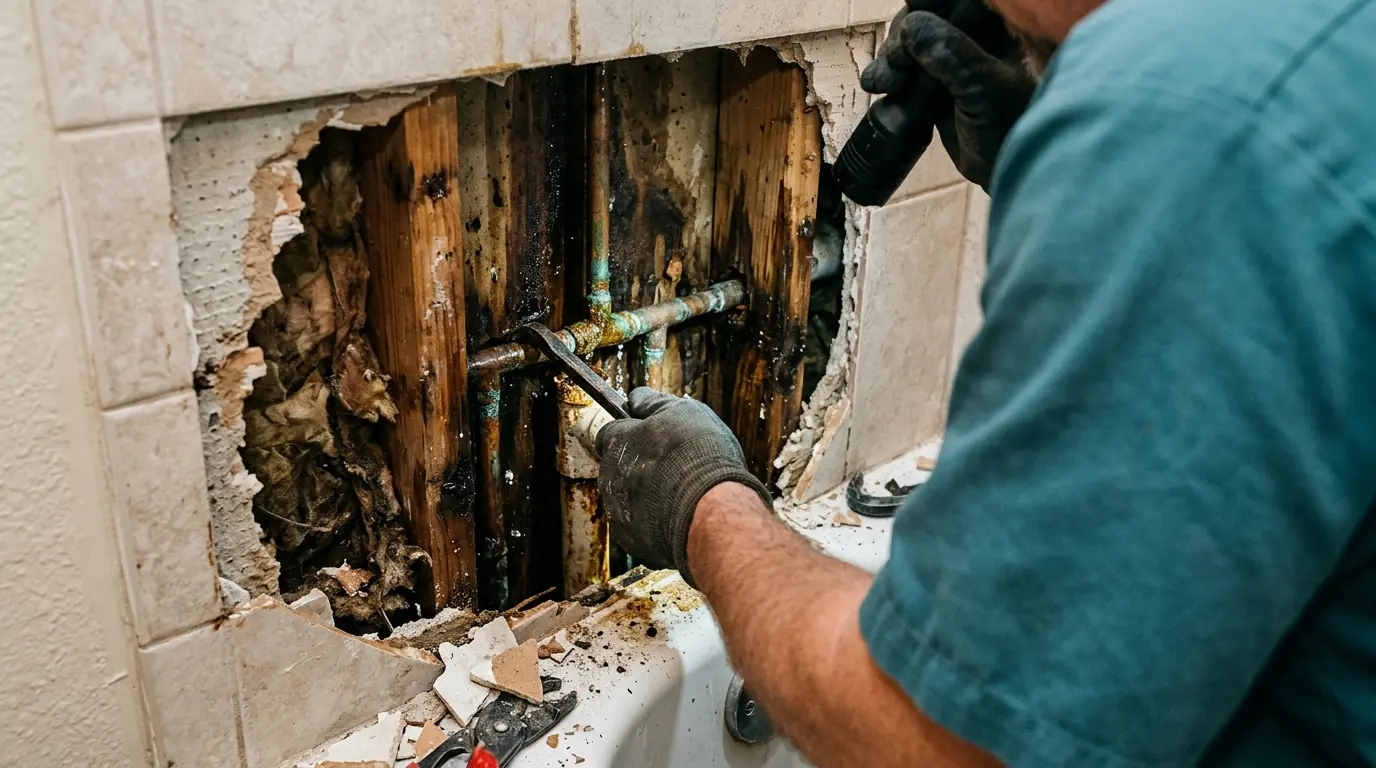
Water gets behind shower tile through failed grout, cracked tile, a gap around the valve trim or a shower pan that has started to leak. You may see grout that stays dark, loose tiles, stains on the other side of the wall or a baseboard in the next room that keeps swelling. If the backer board and studs are wet, the tile has to come off in that area so the wall can dry and be rebuilt properly. We remove what's damaged, dry the framing, treat any growth and leave the wall ready for tile.
Leaks Inside Walls
Supply lines, drain stacks and fittings inside walls can drip for months without a visible puddle. Signs include paint bubbling, drywall that gives when pressed, a swelling baseboard or a damp smell in a closet. We trace the wet line with meters at several heights and with thermal imaging, then open a small inspection section at the wettest point. Once the plumber has fixed the leak, wet insulation comes out, the studs and bottom plate dry with air directed into the cavity, and the drywall goes back.
Leaks Under Sink Cabinets
Sink cabinets hide slow leaks from P-traps, faucet supply lines, garbage disposals and dishwasher drain connections. The cabinet floor bubbles, there's a musty smell when you open the doors, or the toe-kick swells. Particleboard cabinet floors soak up water and don't recover. We empty the cabinet, read the cabinet floor, the subfloor below and the wall behind, and remove the damaged panel if needed, then dry the wall cavity and subfloor. A cabinet floor can usually be replaced without replacing the whole cabinet.
Do Not Wait for the Stain to Spread
Most of what we remove is material that stayed wet too long. Calling early keeps the job smaller.
What Determines the Cost of Hidden Leak Repair?
Hidden leaks are usually small in area but deep in the materials, so the bill depends less on square footage and more on what has to be opened and rebuilt. We set the scope from the moisture readings and put it in writing before any wall is opened.
- How long it leakedA leak caught in days may only need drying. One that ran for months often means mold removal on studs and drywall and more material replaced.
- What has to be openedA small drywall cut is simple to patch. Removing shower tile or a vanity adds demolition, disposal and a finish rebuild at the end.
- Mold presentGrowth on framing or drywall means containment, HEPA vacuuming, removal and cleaning, which adds both time and materials to the job.
- Finish materialsTile, stone, custom cabinets and plaster cost more to remove and put back than flat painted drywall, so finishes weigh heavily on the total.
Every job is priced after we see the damage and take readings; these factors explain why two jobs that look alike can cost very different amounts.
What Hidden Leak Repair Covers
- Thermal scan and meter readings around the suspected area
- Small inspection openings placed at the wettest readings
- Photos of the source and wet materials for your adjuster
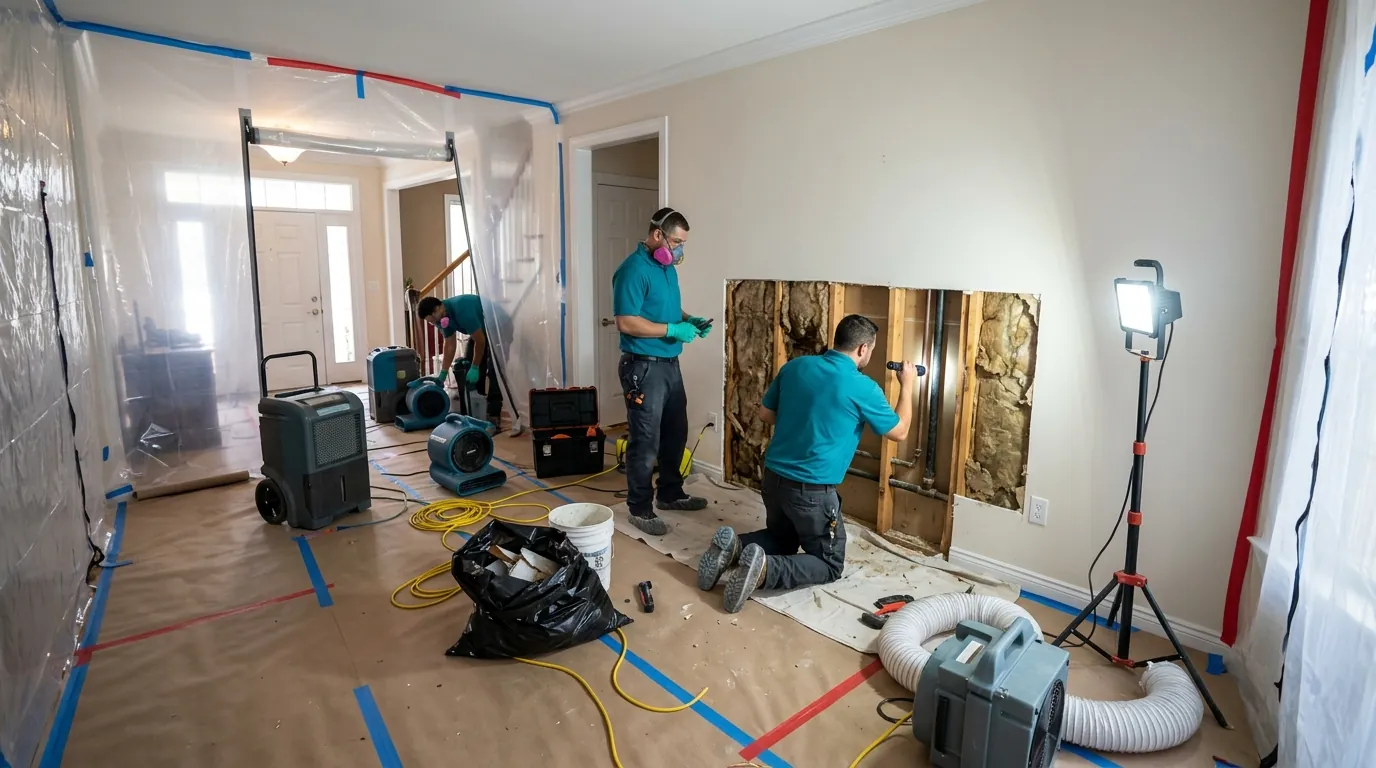
- Containment and HEPA vacuuming where mold growth is found
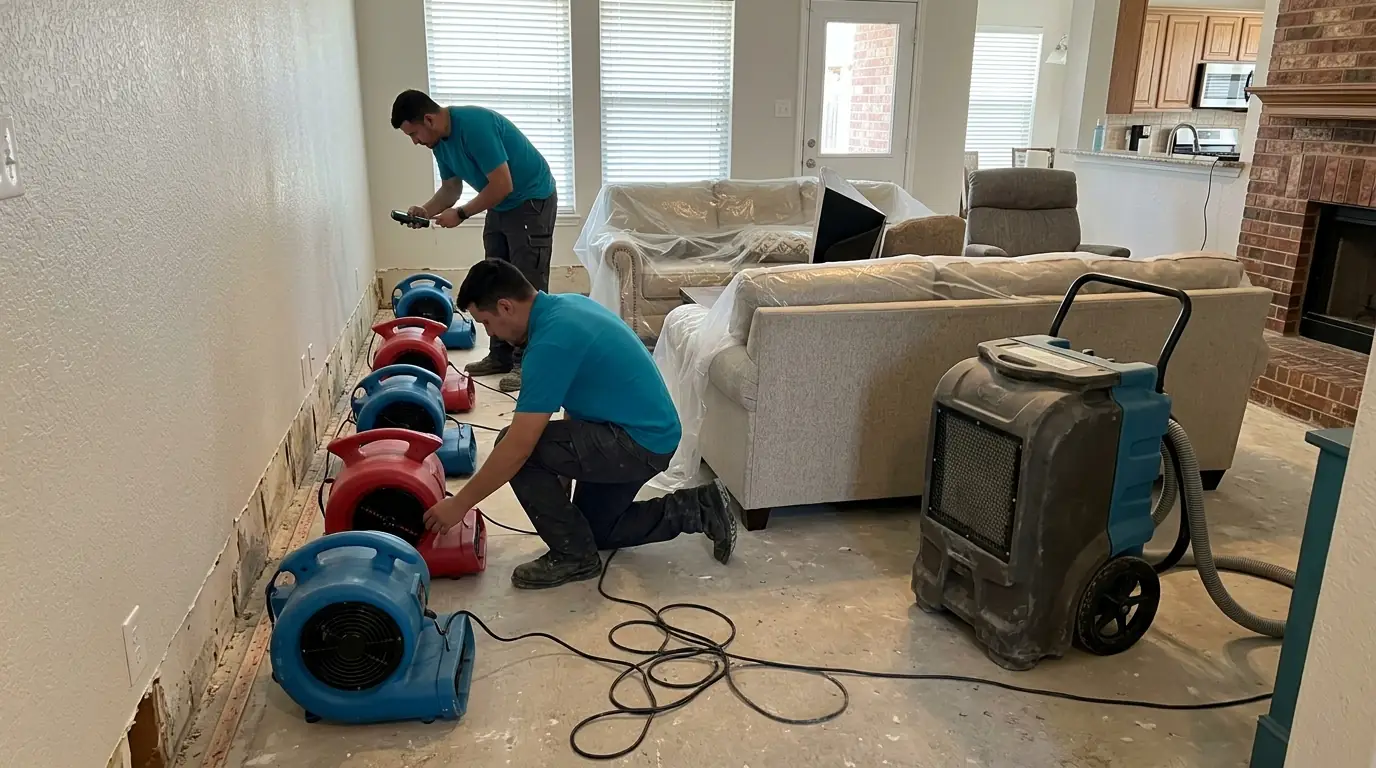
- Directed drying of wall cavities and subfloor, with logged readings
- Rebuild of drywall, tile backer or cabinet panels after drying
Hidden Leaks in Ridglea's Older Homes
Fort Worth field note
The Ridglea Addition's plan was approved in 1928 and the area was annexed by Fort Worth in 1944, while Ridglea Hills is a post-war neighborhood in west Fort Worth. Homes of those eras have usually had their baths and kitchens remodeled more than once, so new tile, vanities and fixtures often sit over older plumbing and older wall assemblies. That layering is where hidden leaks start: a new shower valve on an old line, or a vanity drain fitted to an older trap. We open carefully in these homes so finishes are easier to put back.
How We Find and Fix Hidden Leak Damage
- 01
Scan without opening
We start with what you've noticed, then thermal imaging shows the cooler wet zones and meters confirm them. The wet outline is marked on the wall and photographed.
- 02
Open at the wettest point
A small inspection opening lets us see the source and the condition of the framing before any bigger decision is made about what to remove.
- 03
Remove the damage
Once the plumber repairs the leak, wet insulation and any material with mold growth come out, with plastic containment and negative air set up when growth is present.
- 04
Dry and rebuild
Air goes into the cavity until readings are dry. Then we close the wall with drywall, tile backer or cabinet panels to match what was there.
Clues That a Leak Is Hiding Somewhere
Smell with no source
An earthy, musty odor in a closet, vanity or hallway that cleaning doesn't fix is often the first sign of a slow leak.
Grout that stays dark
Shower grout that stays dark long after the last shower suggests water is sitting behind the tile.
Soft drywall
Drywall that gives when pressed, or feels cool and damp, has been wet for a while and should be read with a meter.
Rising water bill
A steady climb in usage with no change in habits can mean a fixture or line is leaking somewhere inside a wall.
Hidden Leak Water Damage Questions From Fort Worth Homeowners
Usually we can outline the wet area without opening anything, using thermal imaging and moisture meters. Then one small opening at the wettest point confirms the source and shows the framing. That's far less damage than opening a whole wall to search.
Not always. If the leak came from the valve trim or a grout line and only a small area of backer board is wet, that section may be rebuilt. If the shower pan has failed, the shower floor usually needs to be redone so it doesn't leak again.
Mold can start on wet drywall paper and wood within a day or two of staying damp. A leak running for weeks very often has growth on the back of the drywall. Our Texas mold remediation rules guide explains when an assessor gets involved.
A plumber fixes the line, valve or drain. We find the wet area, open the wall where needed, remove damaged materials, dry the framing and close the wall. The opening is left ready so the plumber can work without making extra damage.
Most vanity floors are particleboard with a thin laminate on top. Water from a dripping trap or supply line soaks in, the board swells and the laminate lifts. It won't flatten again, so the cabinet floor is replaced after the subfloor below is checked and dried.
Related Work We Handle
Track Down the Leak Before It Spreads
A slow leak gets more expensive the longer it runs. Call us and we'll scan the area, open only what's needed and get the wall dry and closed again.
Updated October 2026