Quick answer
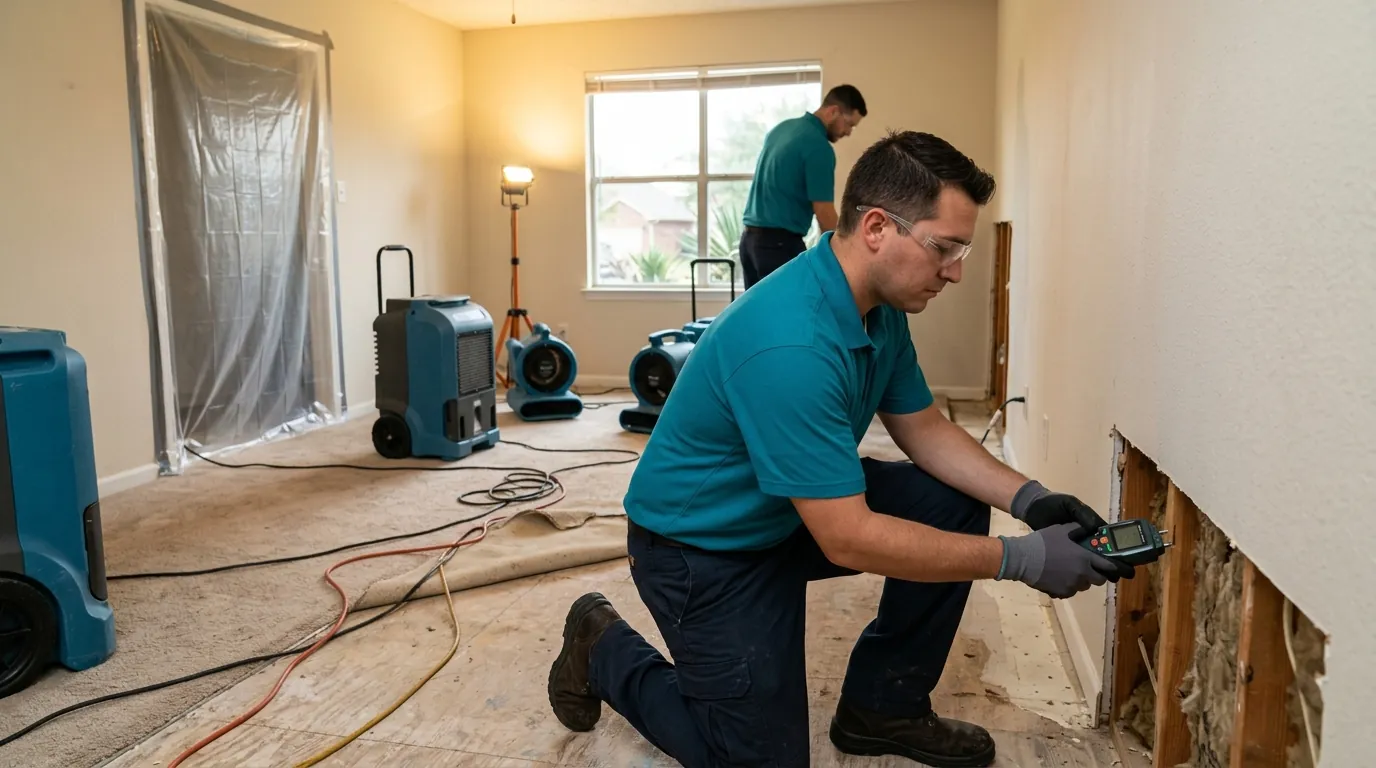
Storm damage restoration in Fort Worth starts at the roof opening, because drywall soaked by rain can start growing mold within 24 to 48 hours. We cover the hole, extract standing water, remove soaked insulation and ceiling board, and dry the structure until readings match the rooms that stayed dry. We answer 24/7, including the night the storm passes.
What Storm Damage Restoration Involves
Most storm calls start the same way: a brown spot spreading across a ceiling, water running down a window frame, or a drip in a closet that wasn't there before the hail. The visible stain is usually the smallest part of it. Rain that gets past the shingles soaks the roof decking, settles into attic insulation, then works down through ceiling drywall and into the wall cavities below. Stopping that path comes first, which is why many jobs begin with emergency roof tarping before anything inside gets touched.
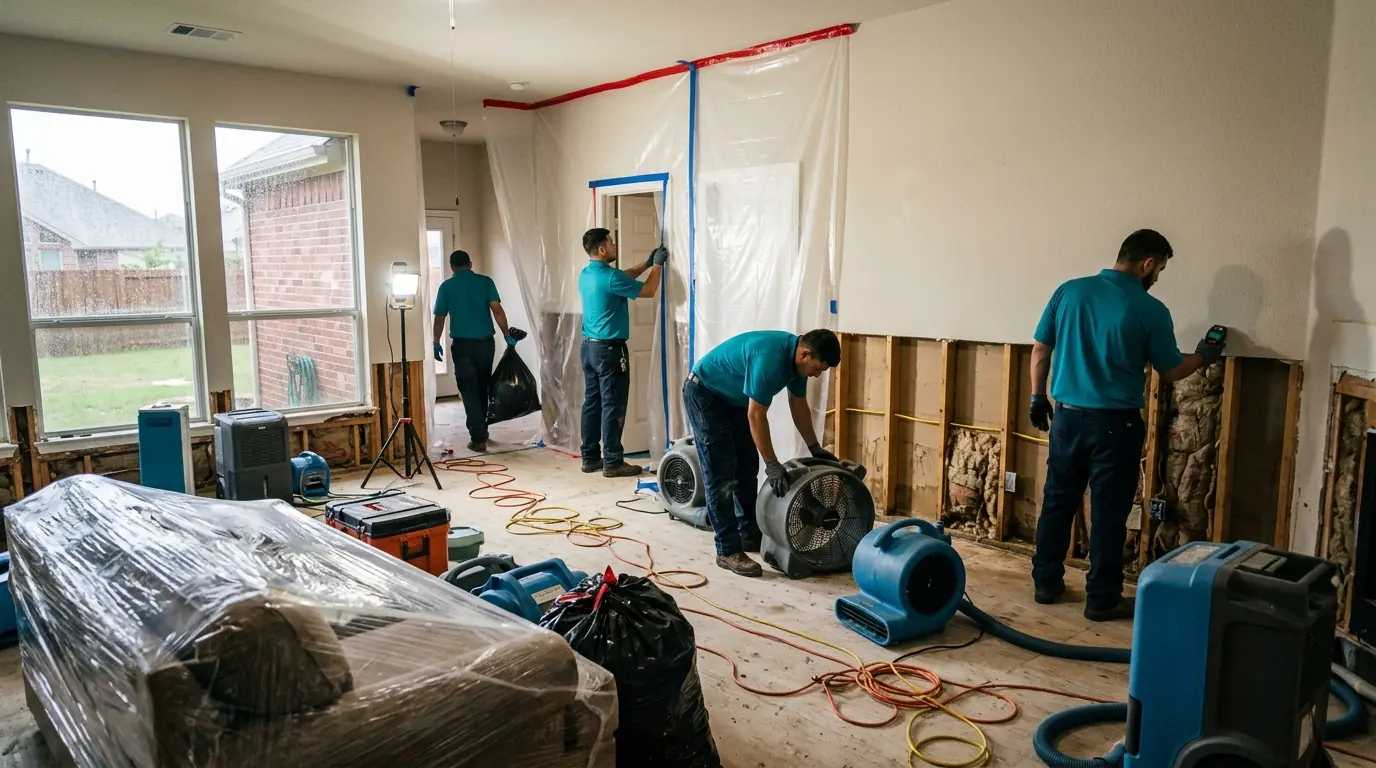
Once the roof is covered, we work from the top down. We check the attic with a moisture meter and a thermal camera, pull wet insulation, open stained ceilings and set air movers and dehumidifiers sized to each room. Broken glass and missing doors get covered through our board-up service so the house can be closed while it dries. Every reading goes into a drying log with photos, which gives you and your adjuster the same record of what was wet and when it came back to dry.
What Happens After You Call About Storm Damage
- 01
Stop the water first
We look for the entry point from the roof and the attic, then cover it with a tarp or plywood. Nothing inside gets dried until the source is closed.
- 02
Map the wet areas
We take moisture readings in the attic, ceilings, walls and floors, and use a thermal camera to find water you can't see. Every reading is written down with its location.
- 03
Remove what can't be saved
Soaked insulation, sagging ceiling drywall, wet carpet pad and swollen baseboards come out. We photograph each item before it leaves the house, so the record shows what was lost and why.
- 04
Dry the structure
Air movers and dehumidifiers run until framing, subfloor and remaining drywall read close to the rooms that stayed dry. We check and log readings on each visit.
- 05
Hand over the record
You get the photos, the moisture log and the list of removed materials to share with your adjuster, then we plan the rebuild if you want us to handle it.
Signs Rain Got Inside After the Storm
A ceiling stain that keeps growing
A brown ring that gets wider after each rain means water is still reaching the drywall from above, usually through the decking or a vent seal.
Damp or musty attic insulation
Insulation that feels cold, matted or heavy when you press it has absorbed water. It loses its value and holds moisture against the ceiling below.
Paint bubbling under windows
Bubbles or soft drywall below a window frame point to wind-driven rain getting past the frame and running down inside the wall.
Wet carpet along an exterior wall
A damp strip along the outside wall often means water ran down the wall cavity and out under the baseboard into the pad.
Water in light fixtures
Drips from a ceiling light or fan mean water is pooling on the drywall above. Turn that circuit off at the breaker and stay out from under it.
Hail Damage Leaks
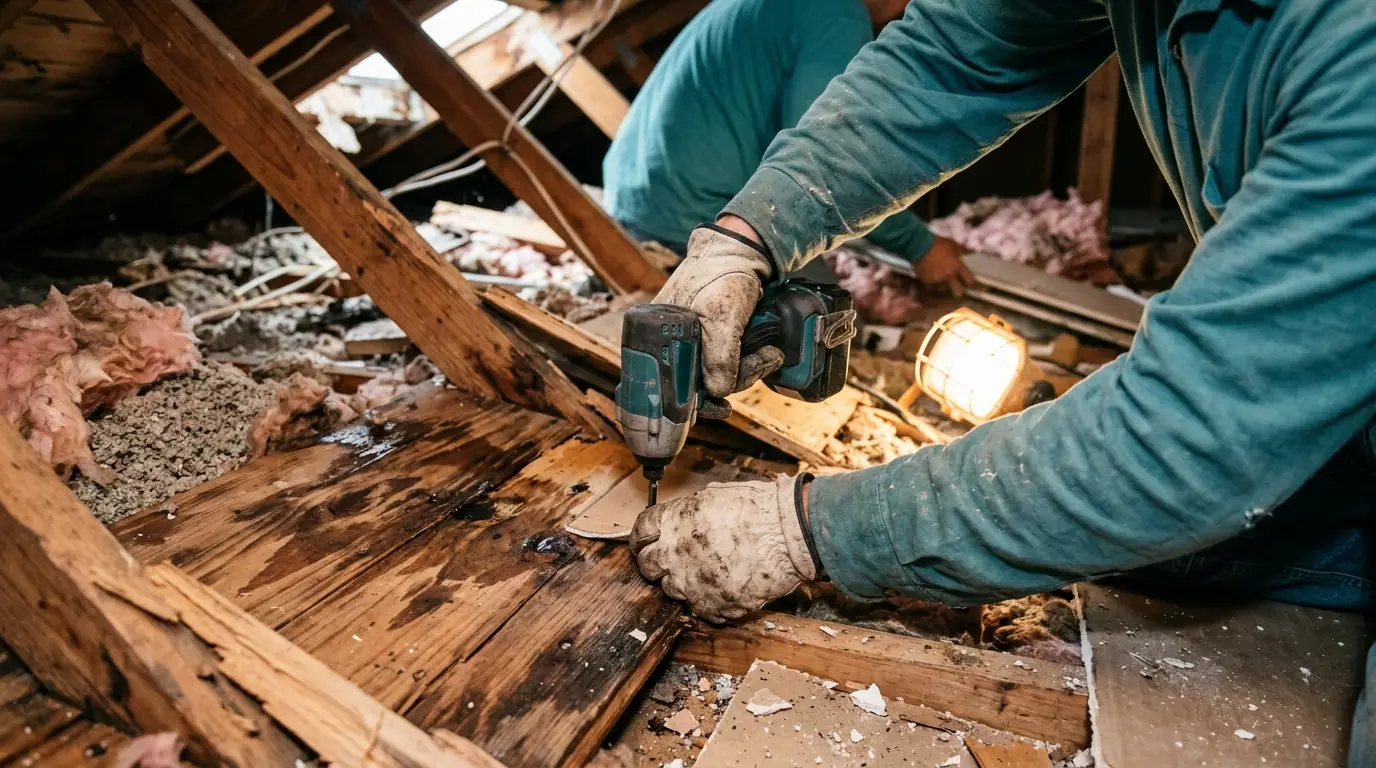
Hail rarely punches a clean hole. More often it bruises shingles, cracks the mat underneath and breaks the seal around vents, pipe boots and skylights, so the first leak shows up days or weeks later during the next hard rain. You notice a ceiling stain near an outside wall or a damp ring around a bathroom fan. We trace the water back from the stain to the entry point, cover that section of roof, then open and dry whatever got wet below it. Cost depends mostly on how long the water ran before anyone saw it, because a slow leak can soak insulation across a whole attic bay before the drywall shows a mark.
Wind-Driven Rain Through Walls and Windows
Strong wind pushes rain sideways, past window frames, under door thresholds and through gaps around siding and vents that stay dry in a normal storm. The result is water inside a wall rather than on a ceiling: swollen baseboards, bubbling paint under a window, or carpet that is wet along an exterior wall. We pull the baseboard, take readings up the wall, and drill or cut the drywall where water is trapped behind it. Soaked insulation comes out. The timeline depends on how many walls took water and whether the framing absorbed it, because studs and plates dry slower than drywall does.
Tornado Damage
A tornado leaves a house open in several places at once: torn roof decking, broken windows, punctured walls and debris driven into rooms. Rain in the following hours often does as much damage as the wind. Our first job is to make the structure weather-tight with tarps and plywood so nothing else gets wet. Then we sort what can be dried from what has to come out, photograph every room, and start structural drying on the sections that are still sound. Cost and timeline are set by how much of the building envelope is gone and whether framing needs repair before the drying can finish.
Do Not Wait for the Stain to Spread
Most of what we remove is material that stayed wet too long. Calling early keeps the job smaller.

Hail and Tornado History Around Fort Worth
Fort Worth field note
Storm damage here follows a long record. On March 28, 2000 an F3 tornado touched down in River Oaks, crossed the Trinity River and damaged 266 homes. The same outbreak dropped baseball-sized hail along I-820 on the north side. A March 2024 Star-Telegram report on a Roof Gnome study ranked Tarrant County third in the nation for hail risk among more than 600 counties. West of the city, 2.5-inch hail was reported in Weatherford on June 1, 2025. That history is why we open the attic on every storm call, not just the room with the stain.
What a Storm Damage Job Covers
- Tarp or plywood cover over the roof opening
- Plywood over broken windows and doors
- Attic inspection with moisture meter and thermal camera
- Removal and bagging of wet insulation
- Controlled removal of sagging or soaked ceiling drywall
- Extraction of standing water and wet carpet pad
- Air movers and dehumidifiers sized to each wet room
- Daily moisture log with photos for your adjuster
- Antimicrobial treatment on framing that stayed wet
What Does Storm Damage Cleanup Cost?
Fixr's storm damage recovery guide puts typical storm damage cleanup at $3,000 to $7,000, with a national average of $5,200. Treat that as a national planning range from that source, not a quote for your house. Your number depends on the factors below, and most of them come down to how much water got inside and how long it sat.
- Size of the roof openingA few lifted shingles need a small cover. A torn section of decking or a missing ridge needs a larger tarp, more framing lumber and more time on the roof.
- How long water ranRain that ran for one storm stays in the ceiling and the top of the wall. Rain that ran for several days reaches the floor, the baseboards and the bottom plate.
- Number of rooms affectedEach wet room needs its own air movers and readings. Two rooms under one bad spot cost far less to dry than water spread along a whole exterior wall.
- Insulation and ceiling removalSoaked blown-in insulation has to be vacuumed out and bagged. Sagging ceiling drywall has to come down before it falls, which adds labor and disposal.
- Glass and door openingsBroken windows and doors need plywood before drying equipment can run efficiently, since an open wall lets humid outside air back into the house.
Range cited from a national cost guide (source, 2025-01-31). It is a planning figure, not a quote; your job is priced after we see it.
Storm Damage Restoration Questions From Fort Worth Homeowners
No. Most policies expect you to prevent further damage, and a tarp over the opening is part of that. We photograph the damage before we cover it and before anything comes out of the house, so the adjuster still sees what the storm did. Waiting days with an open roof usually turns a ceiling repair into a wall and floor job.
Yes, and it often does. Hail cracks the shingle mat and breaks seals around pipe boots without making an obvious hole. The first heavy rain after that finds the weak spot. If a new ceiling stain appears after a hail storm, treat it as storm damage and have the attic checked, even if the roof looked fine from the ground.
Usually, if the water is limited to a few rooms and the power to those areas is safe. Stay out from under sagging ceilings, keep the breaker off for any fixture that is dripping, and keep children and pets away from wet insulation. A tornado-damaged house with open walls is a different case and may not be livable until it is closed up.
Blown-in insulation that gets soaked mats down, loses most of its insulating value and holds water against the ceiling drywall for days. Drying it in place is slow and uneven. Removing the wet section lets the drywall and framing dry properly and lets us confirm the decking above is not still letting water through.
Yes. The roof replacement can take weeks to schedule, but the inside can't wait that long. Once the opening is tarped and holding, we dry the structure under it. We check the tarp on each visit, and if a new storm comes through before the roof is done, we recheck readings in the rooms below.
Related Work We Handle
Get the Roof Covered and the House Drying
Every hour rain keeps running into the attic adds insulation, drywall and framing to the list. Tell us where the stain or the drip is, and we'll start with the opening and work down through the house. Call us any hour.
Updated October 2026