Quick answer
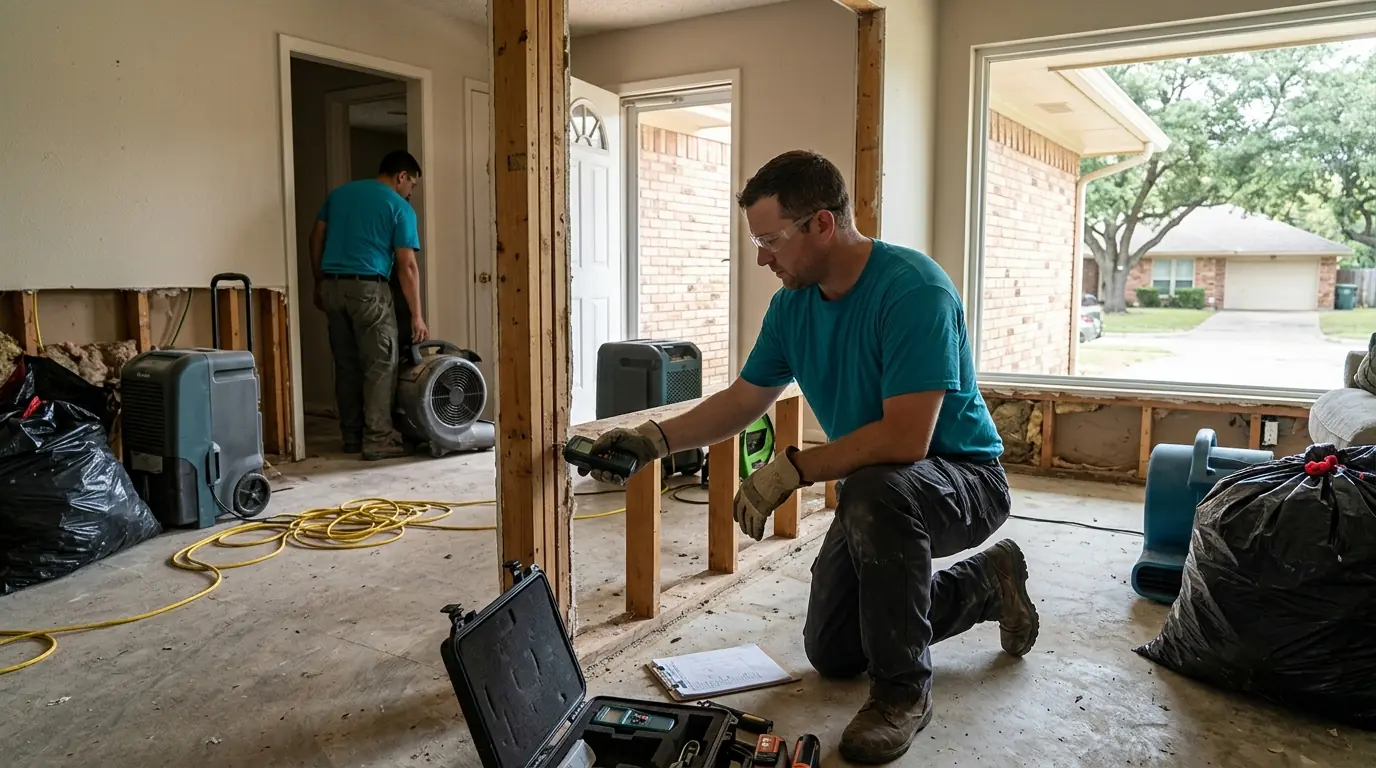
Flood damage cleanup in Fort Worth treats any water that came in from outside as Category 3, since it carries soil bacteria, sewage and fuel. Wet drywall wicks that water a foot or more above the line you can see. We pump out standing water, remove mud, cut out soaked materials, disinfect, and dry the structure with readings logged daily.
What Flood Damage Cleanup Involves
Flash flooding rarely looks dramatic from the street. Six inches of water through a back door is enough to soak the bottom of every wall in a slab-on-grade house, saturate the carpet pad, and push silt under baseboards and cabinets. The job is less about the water you can see and more about everything it touched on the way in.
We start by getting standing water and mud out, then make a flood cut: drywall and insulation come off the wall a set distance above the water line so the cavity can be cleaned, treated and dried. Carpet and pad that sat in floodwater go to the curb. Hard surfaces get washed and disinfected. Air movers and dehumidifiers then run while we take readings at the same marked spots every day. When the framing reads dry, the house is ready for drywall repair, and our photo log goes to you for the claim.
From Standing Water to a Dry Frame
- 01
Safety check and photos
We confirm power to flooded circuits is off, look for gas smells and sagging ceilings, and photograph every room before anything moves. Those first photos become the baseline for your claim file.
- 02
Pump out and shovel mud
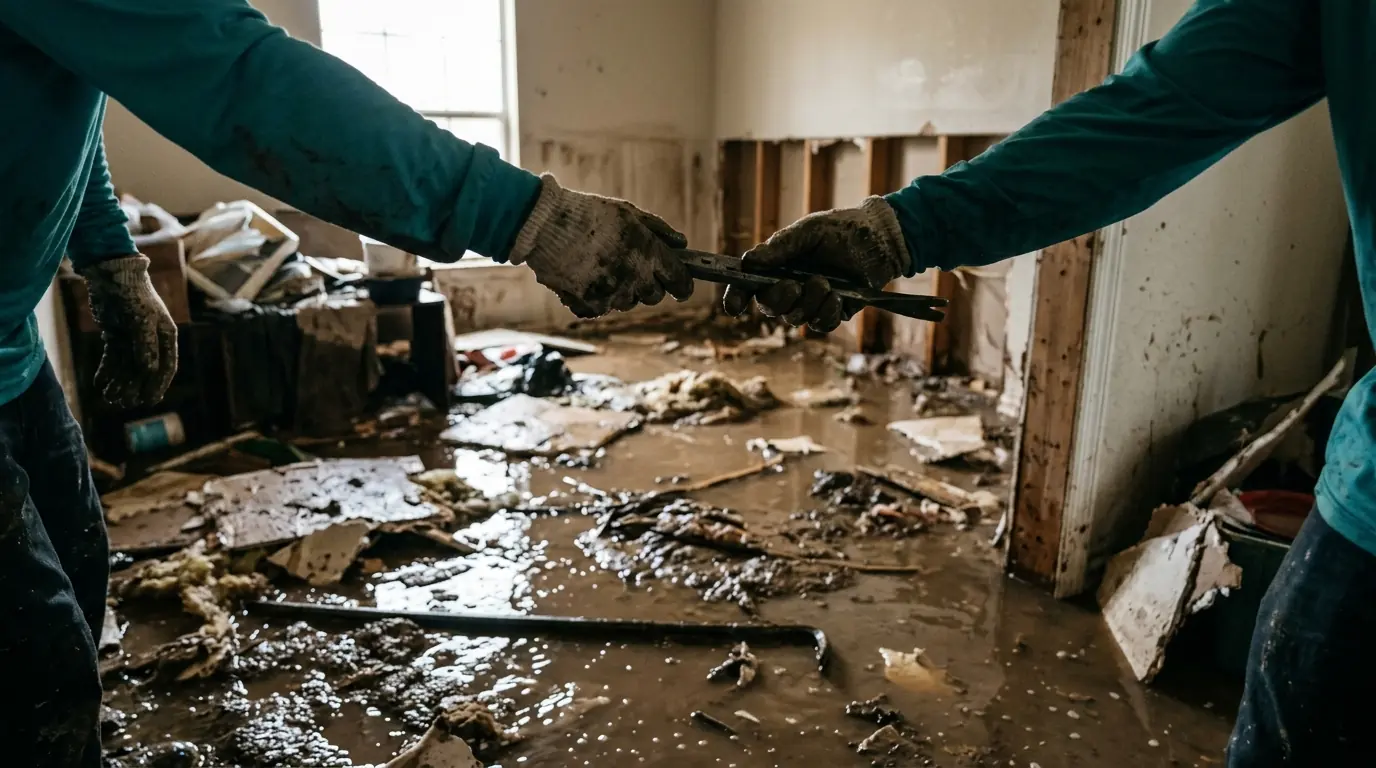
Standing water comes out with pumps and truck-mounted or portable extractors. Then we shovel and squeegee silt toward the doors and haul it off so the floors can be washed.
- 03
Flood cut and tear-out
We snap a line above the highest wet reading, cut the drywall, and pull wet insulation, baseboards, carpet, pad and swollen cabinet bases. Everything removed is photographed for your records.
- 04
Clean and disinfect
Studs, slab and the bottom plate get washed, HEPA vacuumed and treated with an antimicrobial. This is the step that keeps a flooded wall from growing mold once it's closed up again.
- 05
Dry and verify
Air movers and dehumidifiers run while we log readings at marked points every day. The equipment comes out only when framing and slab reach normal dry readings for the material.
Signs Flood Water Went Further Than You Think
A tide line on the drywall
The visible stain is not the top of the problem. Drywall keeps wicking water upward, often a foot or more above that line.
Baseboards pulling off the wall
Swollen MDF trim that gaps at the top means the wall behind it took on water and the bottom plate is probably wet too.
A sour smell on day two
If the house smells worse the morning after the water left, bacteria are already active in pad, insulation or mud under cabinets.
Wet carpet past the water's edge
Pad acts like a sponge and spreads water under dry-looking carpet, sometimes into the next room.
Flash Flood Water Inside the House
Flash flood water usually comes in fast through door thresholds, weep holes in brick and gaps at the slab edge, then drains out almost as quickly. What it leaves is a wet line on the walls, a gritty floor and a smell that builds by the next morning. The fix is a flood cut on every affected wall, removal of soaked insulation, carpet and pad, a wash-down and disinfection of the slab and studs, then drying. Cost and timeline depend mostly on how high the water climbed, how many rooms it reached and how long it sat before anyone could start pulling materials.
Garage and Doorway Flooding
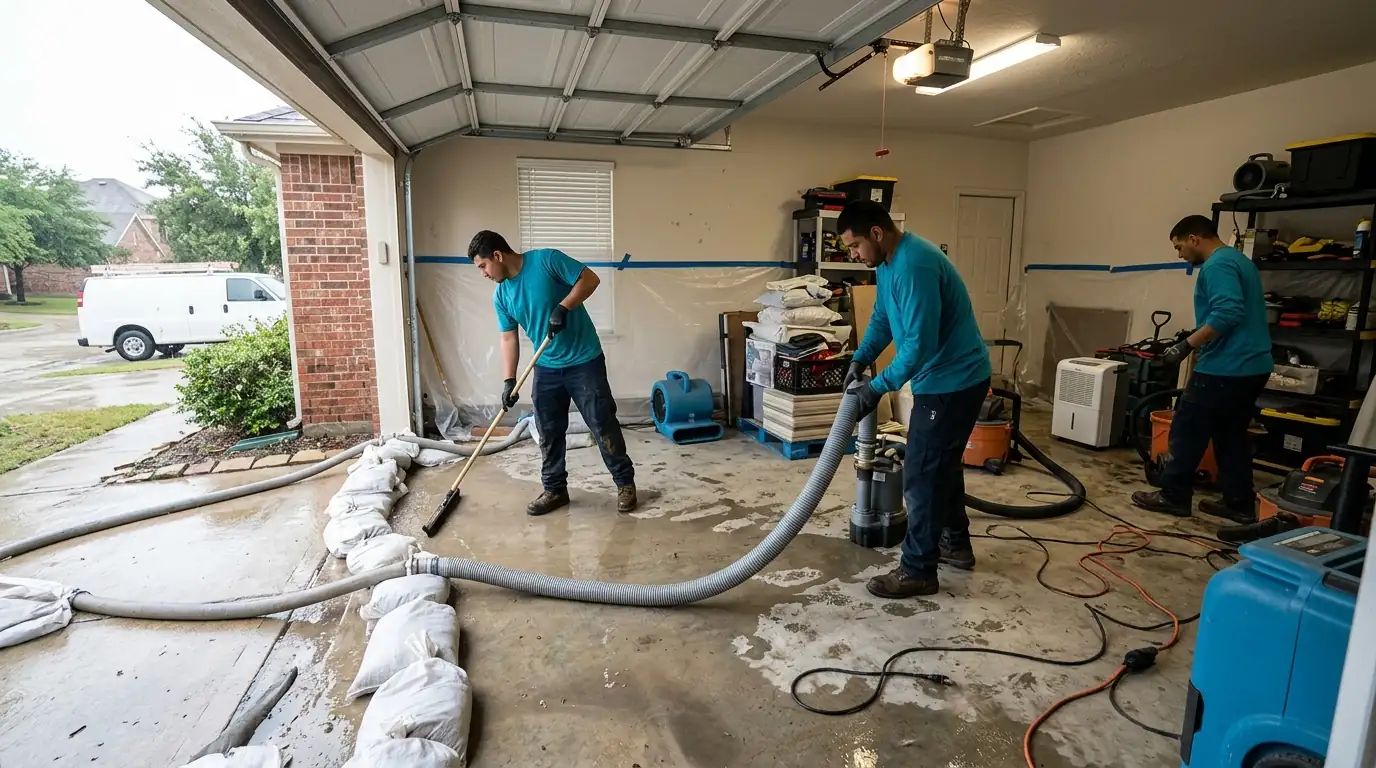
Attached garages often flood first because the garage slab usually sits a step lower than the house and the overhead door seal is the weakest barrier on the building. From there, water slips under the door into a laundry room or hallway. You'll notice swollen trim on the house side of that door, a wet carpet edge, or drywall that feels soft near the floor. We pull the base trim, check the shared wall with a moisture meter and a thermal camera, open what's wet and dry the rest in place. The size of the job depends on whether water stopped in the garage or reached finished rooms.
Mud and Silt Left Behind
The mud left after floodwater drains is the part most people underestimate. A thin film of silt across a floor holds bacteria and keeps the slab damp underneath. We shovel and squeegee the bulk first, wash surfaces with low-pressure water and a cleaning solution, HEPA vacuum dried residue, and apply an antimicrobial before drying starts. Cabinets that sat in mud usually come out, since silt packs into the toe-kick cavity where nobody can reach it. The volume of silt, how far it spread and whether ductwork took in water decide most of the labor on this part.
Smoke, Soot or Water Damage Tonight?
The line is answered around the clock. Tell us what you see and we will tell you what to do first.

Why Flood Water Still Reaches Fort Worth Homes
Fort Worth field note
Fort Worth flooded in 1889, 1908, 1922 and 1949, and the city still averages about 37 inches of rain a year, most of it from March through June. The floodway finished in 1957 keeps the Trinity River in check, but it can't stop a cloudburst on a small creek. In September 1962 up to 11 inches of rain fell on upper Big Fossil Creek near Haltom City, and Grand Prairie has a long history of flooding from Johnson Creek. That's why flood cleanup here tends to follow spring storms on small creeks and low streets, not the river itself.
What You Can Do Before We Get There
| Task | What you can do | What we do |
|---|---|---|
| Electricity | Shut off breakers for flooded rooms only if the panel area is dry and you're standing on dry ground. | We keep wet circuits off until the wall cavities are open and dry, and flag anything an electrician needs to inspect. |
| Photos | Take wide shots of each room and close-ups of the water line before moving anything. | We add moisture readings, measurements and daily drying logs to build a complete record for your claim. |
| Mud | Leave it unless it blocks a doorway. Dried silt turns to dust you'll breathe. | We remove it wet, then wash and HEPA vacuum the surfaces. |
| Drywall and carpet | Don't start cutting or pulling before photos and readings. | We measure where the water went and remove only what reads wet. |
Floodwater counts as Category 3, so wear boots and gloves, keep kids and pets away from it, and don't run the HVAC if water reached the returns.
What a Flood Cleanup Job Covers
- Pumping and extraction of standing water from every affected room
- Shoveling, squeegeeing and hauling away mud and silt
- Flood cuts on drywall above the highest wet reading
- Removal of wet insulation, baseboards, carpet and pad
- Washing and antimicrobial treatment of studs, slab and bottom plates
- Daily moisture readings logged at marked points
- A photo record of the damage and everything removed
What Decides the Cost of Flood Cleanup?
HomeGuide's cost guide puts water extraction and drying at $4 to $12 per square foot ($4 to $6 clean, $6 to $9 gray, $9 to $12 black water) as a national planning range. Floodwater from outside falls in the black-water band, and that figure covers extraction and drying, not the rebuild. Your real number comes from what we measure in the house.
- Water height on wallsA flood cut at two feet and one at four feet are different jobs. The higher the water climbed, the more drywall, insulation and trim come out and go back in.
- Silt and debris volumeA light film washes off in hours. Inches of mud in every room means shoveling, hauling and repeated washing before any drying equipment can do its job.
- Hours before work startsWater that sits for two or three days soaks deeper into framing and gives mold a head start, which adds removal and drying time.
- Flooring typeCarpet and pad come out after a flood. Tile on a slab can often be cleaned and kept, while laminate and engineered wood usually swell and get replaced.
Range cited from a national cost guide (source, 2026-02-06). It is a planning figure, not a quote; your job is priced after we see it.
Flood Damage Cleanup Questions From Fort Worth Homeowners
Usually not. Most standard homeowners policies exclude flood, meaning surface water that rises from outside and enters the house. That coverage comes from a separate flood policy, either through the National Flood Insurance Program or a private carrier. Water from a burst pipe inside the house is treated differently. Ask your agent which applies, and keep our photos and drying logs either way.
We cut based on moisture readings, not a fixed number. Drywall wicks water upward, so we measure above the visible line and cut just past the last wet reading. That often lands around two or four feet, which matches standard sheet sizes and makes the rebuild cleaner.
Hard, nonporous items like metal, glass, ceramic and sealed plastic can usually be washed and disinfected. Mattresses, upholstered furniture, stuffed toys, particleboard furniture and food that touched floodwater should be discarded. We help sort items and photograph anything that goes so your claim list is complete.
Floodwater carries organic matter and bacteria. Once it soaks into pad, insulation and drywall paper, warm air lets that bacteria multiply, and the odor builds overnight. It fades only after the wet materials are removed and the cavities are cleaned and dried.
Carpet and pad that sat in outdoor floodwater are generally thrown out, because they hold bacteria and silt that cleaning can't reach. Wool or synthetic area rugs can sometimes be sent out for washing, but wall-to-wall carpet in a flooded room is almost always a loss.
Related Work We Handle
Floodwater in the House Right Now?
Don't wait for the walls to dry on their own. We answer 24/7 and can talk you through what to shut off and what to leave alone while we head your way. Call us and we'll get the mud and water out.
Updated October 2026