Quick answer
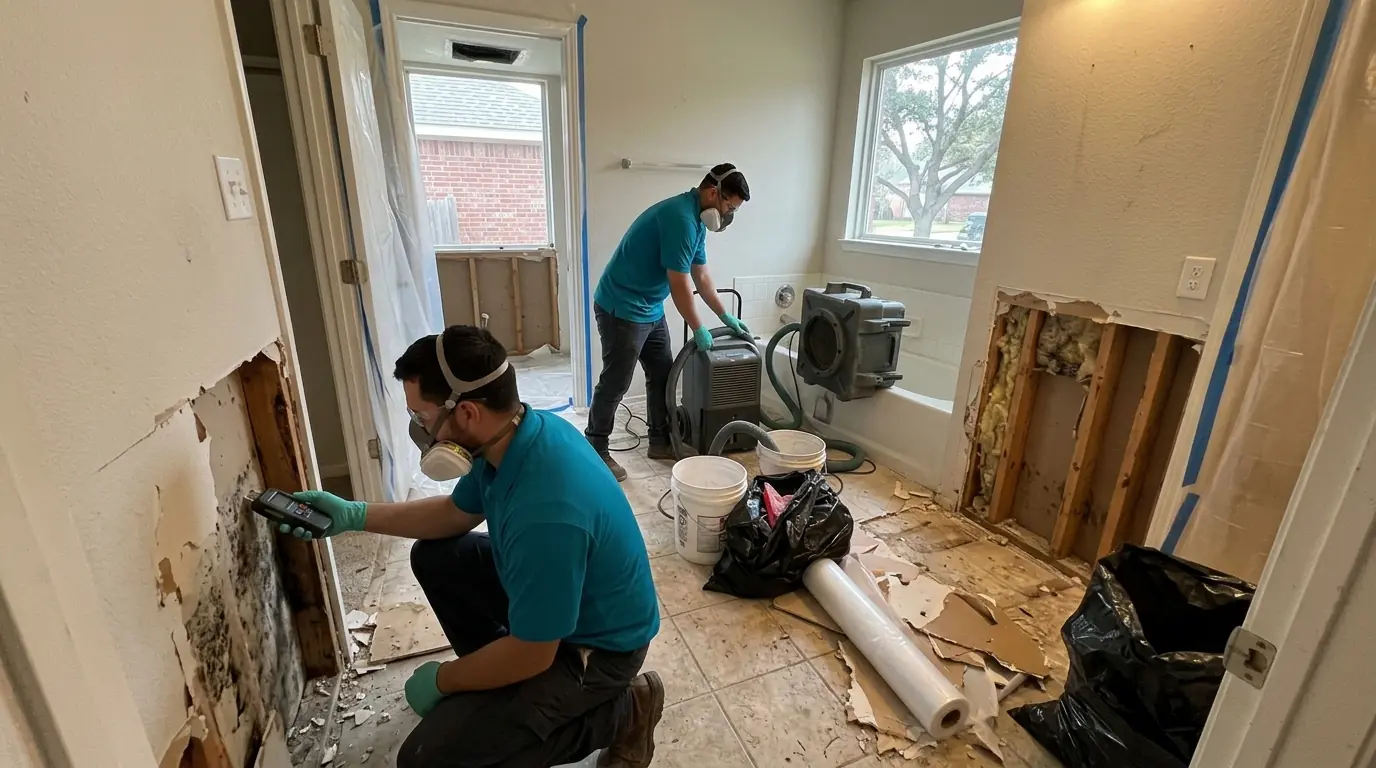
Bathroom mold removal in Fort Worth homes is different from wiping grout, because the mold that keeps coming back usually grows behind shower walls, under the toilet or inside the exhaust fan duct. A failed grout line can let water into the wall cavity on every shower. We find the moisture, open the affected area inside containment and remove the growth.
What Bathroom Mold Removal Involves
Surface mold on grout and caulk is common and easy to clean. When spotting keeps returning within days, the caulk turns black from behind, or the room smells musty even after scrubbing, the growth usually has a hidden source. Shower walls get water every day, and a cracked grout line, failed caulk joint or loose tile lets it soak into the backer board and framing.
We check walls, floors and the area around the toilet with a moisture meter and thermal camera, then open the wall or floor where readings are high, inside containment. Moldy backer board, drywall and subfloor are removed, framing is cleaned and treated, and everything is dried before rebuilding. For larger areas, Texas rules for assessment and clearance apply, covered on our mold remediation page.
Mold Behind Shower and Tub Walls
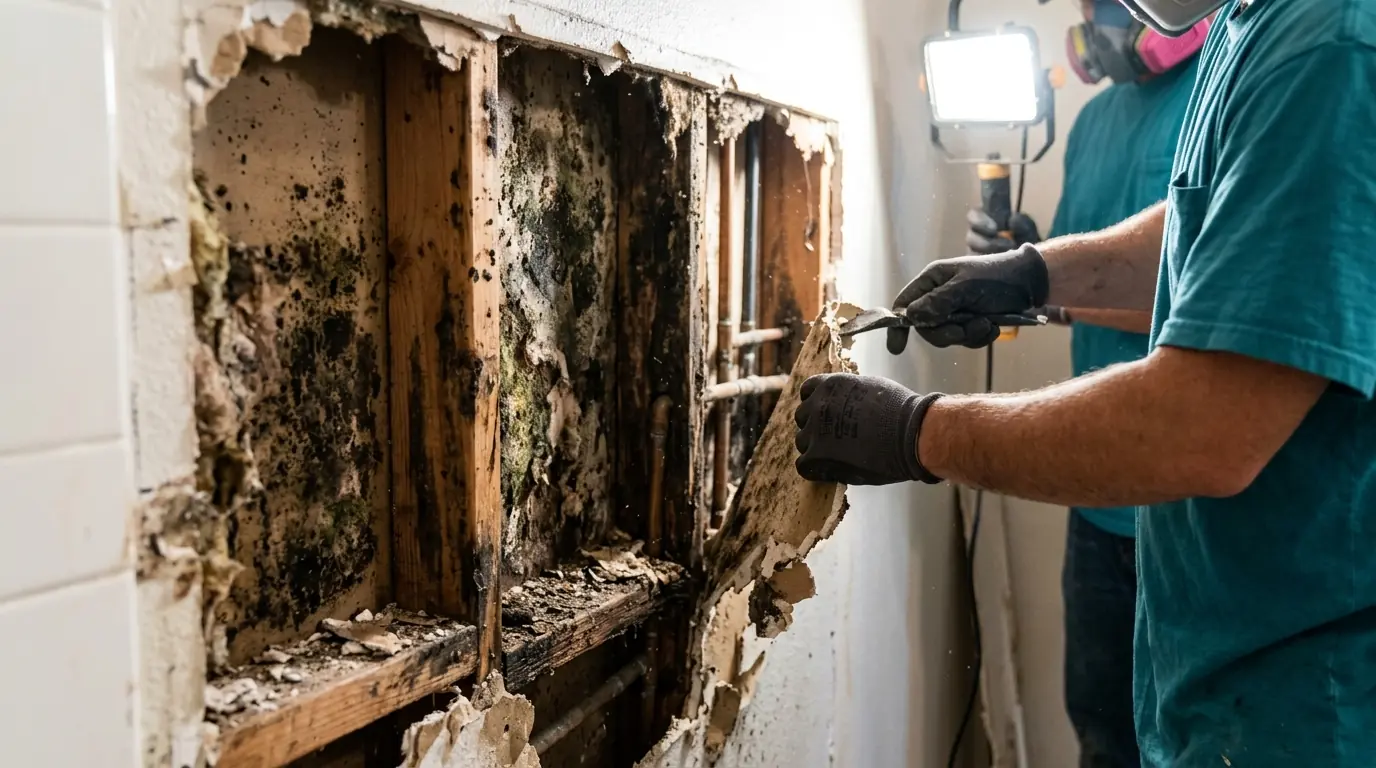
Mold behind shower walls usually starts from water getting through grout, caulk or a failed shower valve seal. Signs include loose or hollow-sounding tiles, black caulk that comes back right after replacing it, soft drywall on the wall outside the shower, or a musty smell when the shower runs. We read the walls with a moisture meter, then open the back side of the wall from an adjoining closet or room where possible to avoid tearing out good tile. Moldy backer board, drywall and insulation are removed, framing is cleaned and dried. If the tile itself has to come out, that adds rebuild cost. The size of the wet area and the tile approach decide the scope.
Exhaust Fan and Ventilation Problems
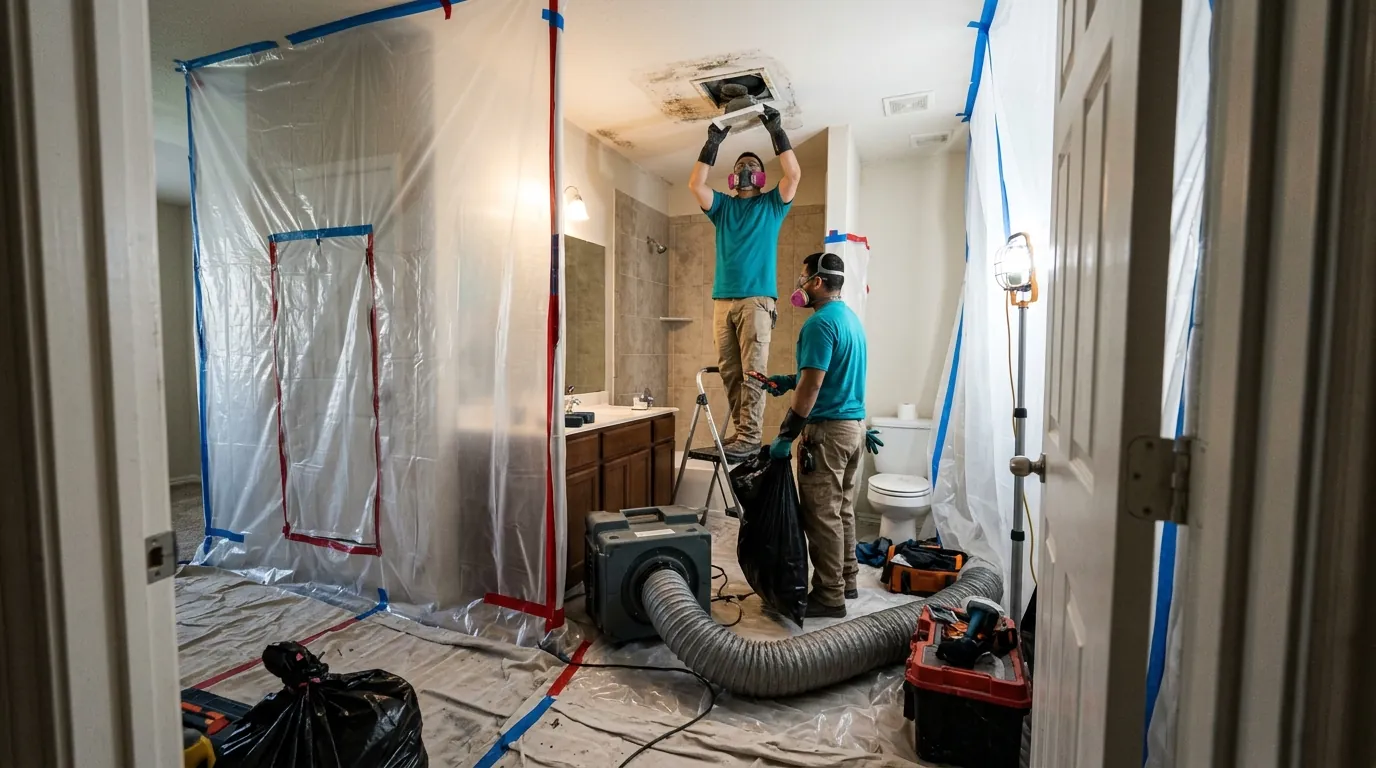
A bathroom without good exhaust ventilation stays humid long after each shower. Mold shows up on the ceiling above the shower, around the fan grille and in the corners of the room. Sometimes the fan works but vents into the attic instead of outside, which spreads moisture to the roof decking. We clean and treat ceiling growth, check whether the fan actually moves air and where its duct ends, and replace moldy ceiling drywall if needed. Correcting the fan vent or upgrading an undersized fan is what stops the recurrence. Cost depends on how much ceiling is affected and whether attic growth needs attention too.
Subfloor Mold Around the Toilet
A worn wax ring or a loose toilet lets a little water escape every time it's flushed. Over months, that seeps into the subfloor around the flange. Signs include a rocking toilet, discolored or soft flooring at the base, a sewer or musty smell, or a stain on the ceiling below if the bathroom is upstairs. We pull the toilet, check the subfloor with a moisture meter and probe for softness, then remove moldy or rotted subfloor, clean and treat the joists, and dry the area before new subfloor and the toilet go back in. Because toilet water is contaminated, we handle the removal under containment. The size of the damaged subfloor decides the repair.
Smoke, Soot or Water Damage Tonight?
The line is answered around the clock. Tell us what you see and we will tell you what to do first.
What Affects Bathroom Mold Removal Cost?
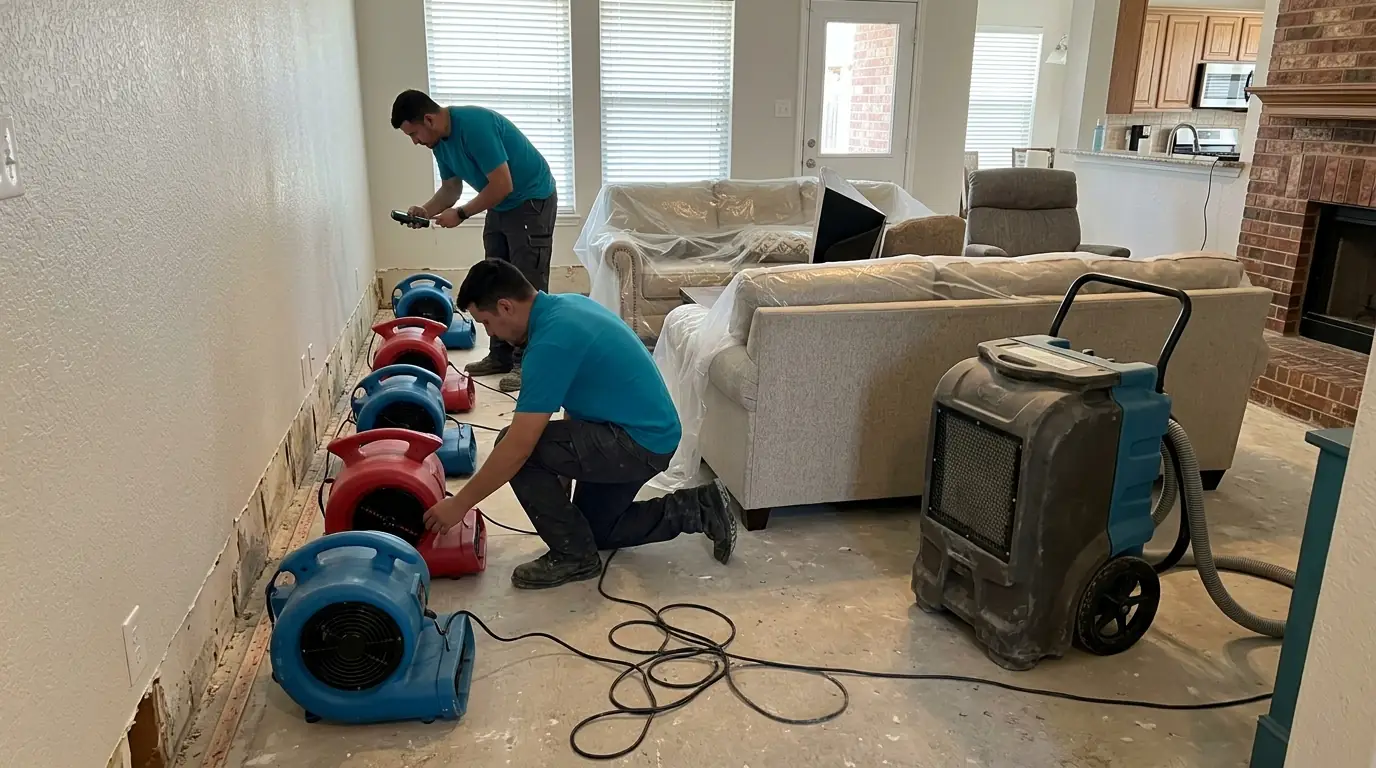
This Old House's cost guide puts mold remediation at $1,200-$3,750 (average $2,300) as a national planning range. Bathroom jobs vary widely: cleaning a ceiling is a small job, while opening a tiled shower wall or replacing subfloor adds demolition and rebuild. Tile and fixture work is usually priced separately.
- Tile removalIf the wall can be opened from the back side, tile stays. If tile has to come off, the rebuild cost rises with tile replacement and waterproofing.
- Subfloor damageSoft or rotted subfloor around a toilet has to be cut out and replaced, which adds carpentry and new flooring.
- Ceiling areaLight surface growth on a painted ceiling cleans up. Growth into the drywall core means removing and replacing that section.
- Fan and vent fixesRerouting a fan duct to the outside or replacing an undersized fan is often needed to keep mold from returning.
Range cited from a national cost guide (source, 2026-03-11). It is a planning figure, not a quote; your job is priced after we see it.
Bathroom Mold in Fort Worth Homes
Fort Worth field note
Bathroom mold doesn't follow neighborhood lines; it follows how a bathroom was built and used. In Fort Worth homes we often see the same patterns: tub surrounds where the original caulk failed years ago, exhaust fans ducted into the attic instead of through the roof, and toilet wax rings on slab floors that slowly leaked into the tile setting bed. Summer humidity makes a poorly ventilated bathroom slower to dry, so growth returns faster after each cleaning.
How We Remove Mold From a Bathroom
- 01
Read walls and floors
We use a moisture meter and thermal camera on shower walls, the floor around the toilet and nearby walls, so we open only where readings show moisture or growth.
- 02
Contain the bathroom
Plastic sheeting closes the doorway and a HEPA negative air machine pulls air out of the room, so spores and dust don't travel into the rest of the house.
- 03
Open and remove
Moldy backer board, drywall, insulation or subfloor is cut out and bagged inside containment. We work from the back side of a wall when it saves good tile.
- 04
Clean, treat and dry
Framing and joists are HEPA vacuumed, cleaned and treated with an antimicrobial, then dried to normal readings on the meter before anything is closed back up.
- 05
Fix the cause
We show you the failed grout, wax ring or fan vent so the cause can be corrected, and the area is rebuilt with proper waterproofing.
Signs Bathroom Mold Is Behind the Surface
Black caulk that comes right back
If new caulk turns dark within weeks, growth is behind it, feeding from moisture in the wall or tub joint.
Hollow or loose tiles
Tiles that sound hollow or shift when pressed often sit on wet, deteriorating backer board.
A toilet that rocks
A loose toilet usually means a failed wax seal that has been leaking a little with each flush.
Peeling paint outside the shower
Bubbling or peeling paint on the wall next to the shower means moisture is moving through the wall.
Bathroom Mold: What You Can Clean Yourself
| Task | What you can do | What we do |
|---|---|---|
| Spots on grout and caulk | Clean with detergent and water, rinse, and dry with the fan running. | Not needed unless spotting returns within days of cleaning. |
| Old caulk | Remove failed caulk completely, dry the joint for a day and recaulk. | We check the wall behind it if new caulk keeps turning dark. |
| Fan performance | Hold a tissue to the grille; if it doesn't pull, the fan isn't moving air. | We trace where the duct ends and note fixes for the fan or venting. |
| Soft wall or floor | Don't cut into it yourself, which spreads spores and contaminated debris. | We open it inside containment, remove the growth and dry the framing. |
Run the exhaust fan during and for 20 to 30 minutes after every shower to keep humidity from feeding new growth.
Bathroom Mold Removal Questions From Fort Worth Homeowners
Usually because it's growing behind the caulk, not just on it. Water gets past cracked grout or a failed joint into the wall or tub edge, and mold grows there. Cleaning the surface removes what you see, but the growth behind it returns within weeks.
Often, yes. If there's a closet, hallway or bedroom wall behind the shower, we can open that side, remove wet drywall and backer board, and dry the cavity without touching the tile. If the tile itself is loose or the backer board is failing, the tile may have to come off.
Not always, but it usually means the subfloor has been wet for some time, which often ends in mold and rot. A failed wax ring is the most common cause. The floor should be checked and dried or replaced before resetting the toilet.
Yes, when it actually vents outside and is sized for the room. It removes humid air before moisture can settle on walls and ceilings. A fan that vents into the attic or doesn't move enough air leaves the room damp and can cause attic mold too.
Cleaning a ceiling or opening a small wall section usually takes a day or two, plus drying time. Jobs that need tile removal, subfloor replacement or a new shower surround can take one to two weeks including the rebuild.
Related Work We Handle
Bathroom Mold That Won't Stay Gone?
When it keeps coming back, the source is usually behind the surface. We'll find where the moisture is and remove the growth. Call us to set up a bathroom inspection.
Updated October 2026