Quick answer
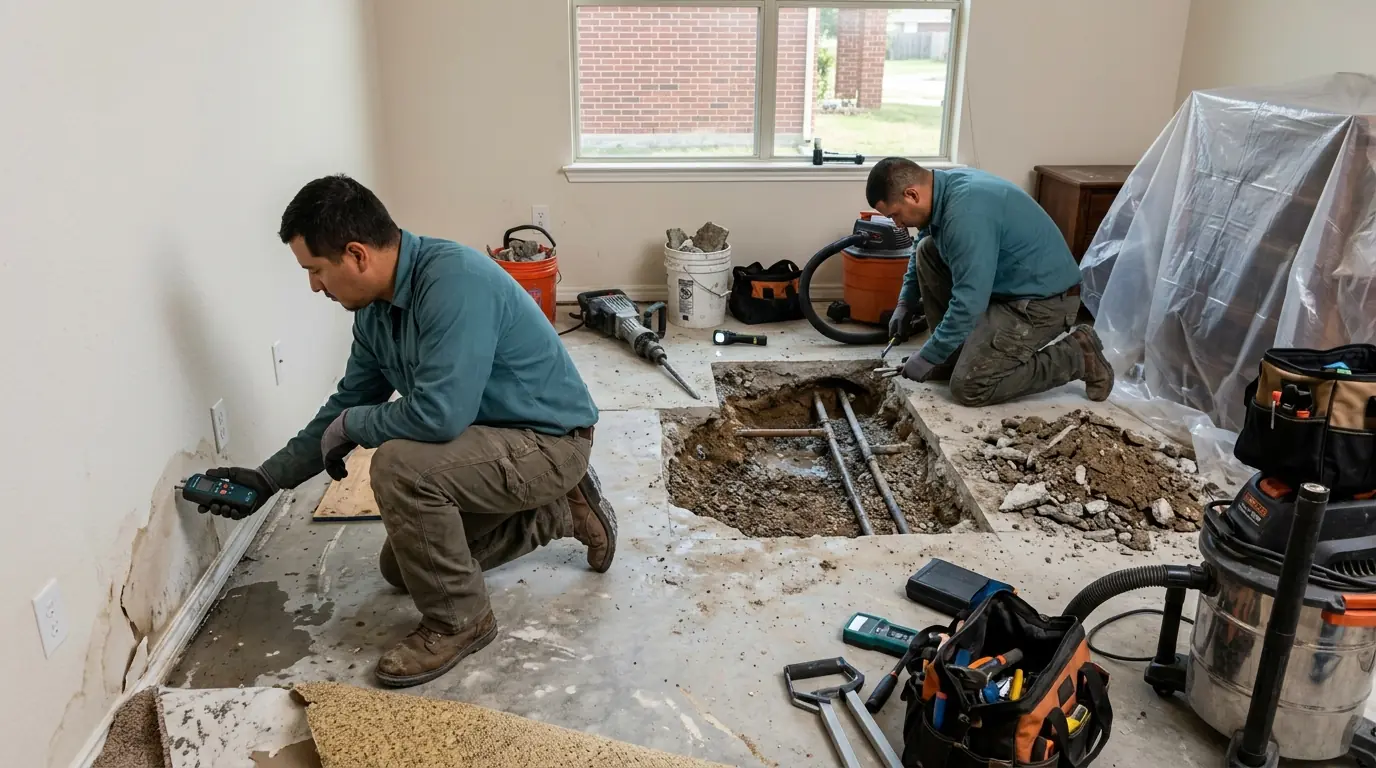
Slab leak water damage in Fort Worth homes starts under the flooring, so it's often weeks old when you find it. A pressurized line under the slab pushes water up through cracks and joints, and concrete holds that moisture long after the plumber's repair. We remove wet flooring, dry the slab and walls with logged readings, then rebuild.
What Slab Leak Water Damage Involves
Many North Texas houses sit on slab-on-grade foundations, with supply lines and drains under or through the concrete. When a line leaks under the slab, water finds the easiest way up: a crack, a plumbing penetration, an expansion joint. By the time you notice a warm spot or a damp carpet edge, it may have spread under tile, plank flooring and the bottom of interior walls.
Finding and fixing the leak is the plumber's job. Ours is the damage before and after that repair: early readings for your claim, then flooring removal and slab drying. Clay soil adds a wrinkle, because a long leak wets the soil and expansive clay swells and shrinks with water. Read our slab leak warning signs guide if you're still trying to confirm one.
What We Do Before and After the Leak Repair
- 01
Document before the repair
If you call before the plumber arrives, we photograph floors and walls and take readings, so the extent of the damage is on record for your claim.
- 02
Prepare the access point
If the plumber plans to open the slab indoors, we remove the flooring in that area cleanly so less of it has to be replaced afterward.
- 03
Remove and dry
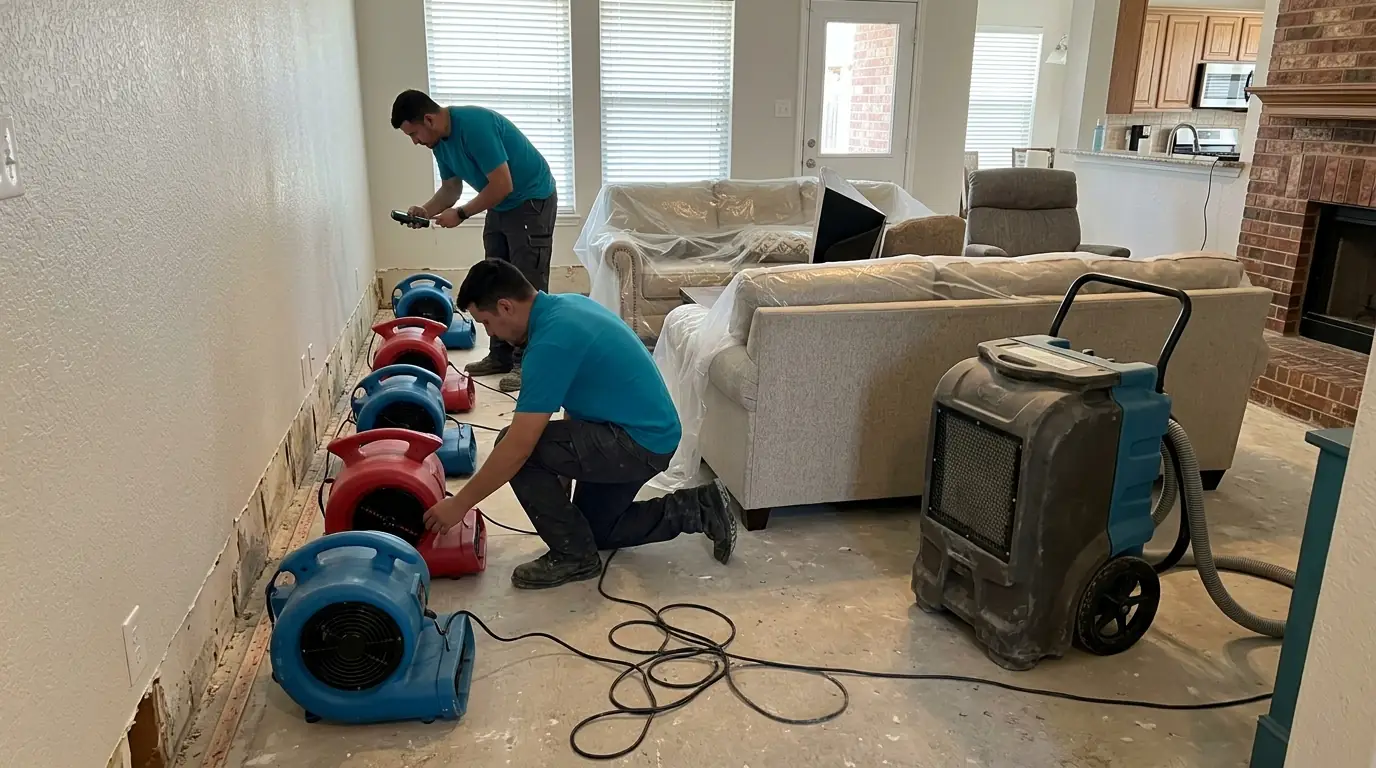
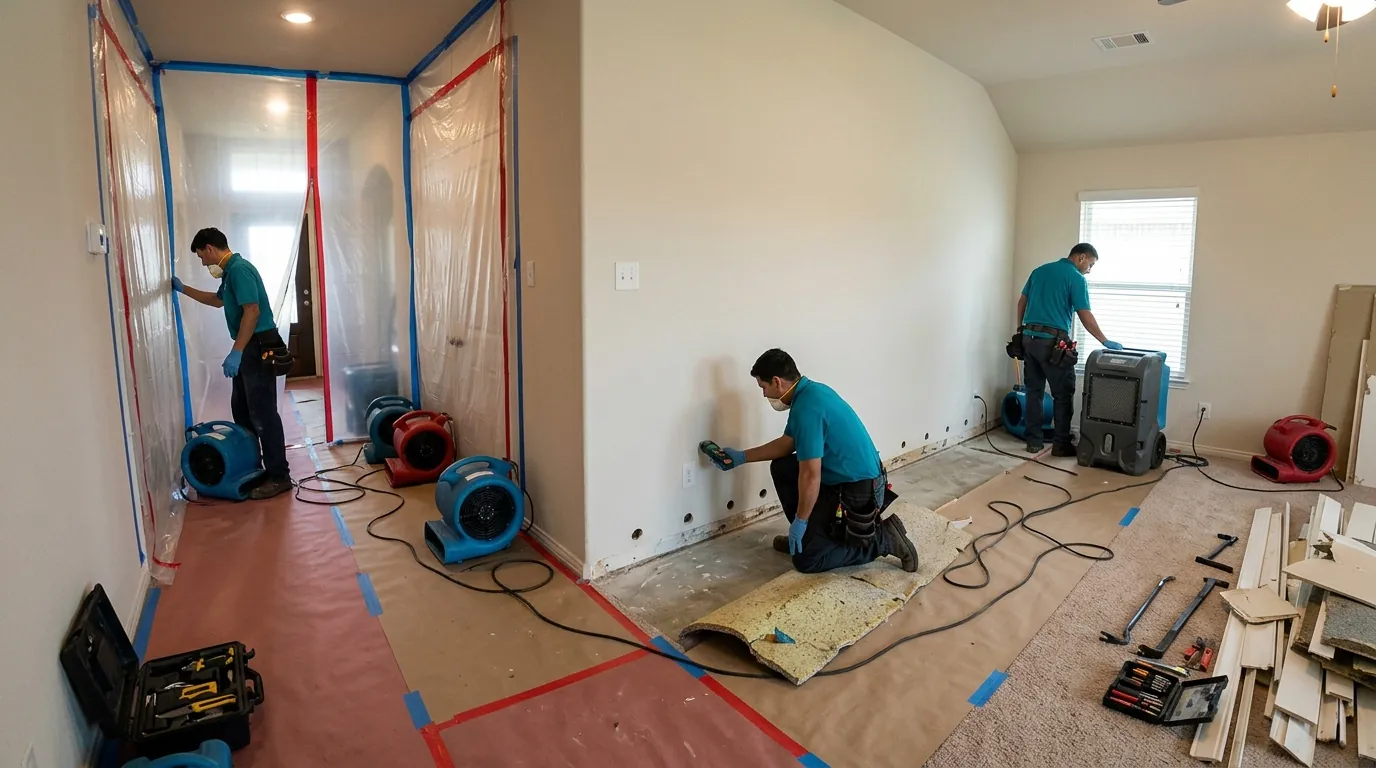
Wet pad, floating flooring, swollen baseboards and wicked drywall come out along the mapped footprint, then dehumidifiers and drying mats go to work on the concrete.
- 04
Rebuild the floor
Once the log shows the slab matches dry standard, new flooring, baseboards and paint go back in, matched to the finishes in the rooms around them.
Slab Leak Signs Inside the House
Warm spot on the floor
A hot-water line leaking under the slab warms the concrete above it, and you feel it barefoot on tile or see a pet favor one spot.
Water bill jumps
A higher bill with no change in use, and a meter that moves with every fixture off, points to a pressurized leak.
Damp carpet edge
Carpet wet along a wall with no fixture nearby often means water is surfacing through the slab beneath it.
Sound under the floor
Hearing water moving under the floor when nothing is on is common with slab supply leaks, especially at night.
Wet Flooring Over a Slab Leak
The floor tells you first: a warm spot under bare feet from a hot-water line, carpet damp along one edge, laminate that cups or lifts, or grout that stays dark. Under tile, water can travel a long way along the thinset bed before it shows. We read the floor in a grid to find the wet footprint. Carpet can usually be lifted, the pad replaced and the slab dried, while floating floors come up in the wet area. Tile that's still stuck down often stays, drying through the grout lines and edges.
Baseboard and Wall Wicking
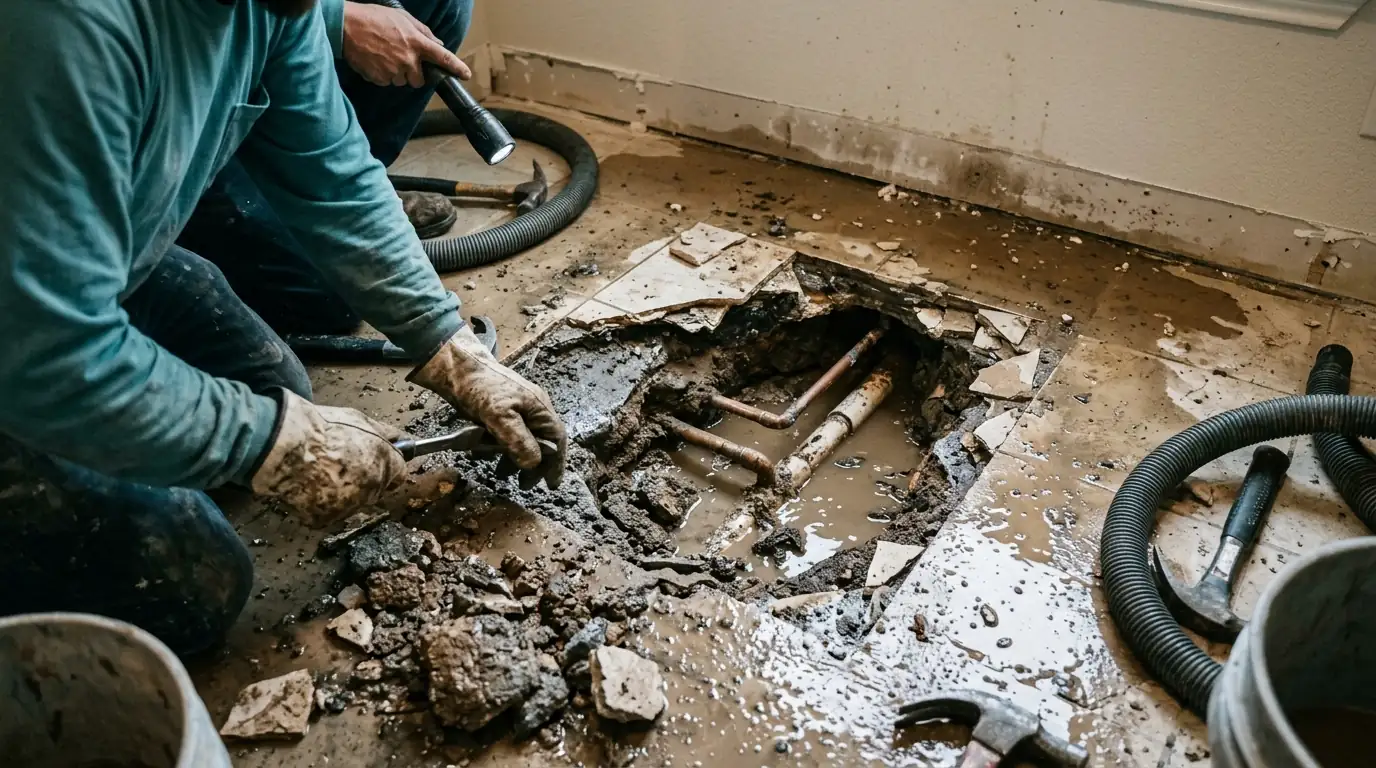
Water at the slab surface rises into the bottom plate of interior walls and wicks up the drywall, sometimes a foot or more. You'll see swollen MDF baseboards, peeling paint at the bottom of the wall or a faint stain line. We pull baseboards, read the drywall at several heights and drill or cut along the bottom where needed so air moves through the cavity. Wet insulation in an exterior wall comes out. Walls usually dry within a few days once the source is fixed; the slab beneath them takes longer.
Drying After the Plumber's Repair
Concrete dries slowly. A slab that's been wet for weeks can keep reading high for days after the line is repaired, and new flooring laid over it too soon can fail. If the plumber opened the slab, the trench is patched first, then drying starts. Dehumidifiers pull moisture out of the room air while air movers or drying mats work the concrete surface, and readings are logged until the slab matches dry standard. The wet area, the slab's condition and how long the leak ran set the number of days.
Water Still Moving Through the House?
Shut it off if you can and call. Every hour it sits, water travels further into drywall, pad and framing.
Slab Homes from the 1970s Around Fort Worth
Fort Worth field note
Plenty of Fort Worth's slab homes date from the 1970s. Summerfields, north of I-820, was developed in that decade, and the brick ranch homes in Candleridge went up between 1975 and 1981. Houses of that age may still have original supply lines under the slab, and a leak there usually shows first as a warm floor or a damp carpet edge rather than a puddle. When we dry these homes, flooring and baseboards often come out together, because water under a slab rarely stays under one room.
What Our Slab Leak Water Damage Work Covers
- Moisture grid readings across floors and walls near the leak
- Photos and readings before and after the plumbing repair
- Careful flooring removal at the plumber's access point
- Removal of wet pad, floating floors and swollen baseboards
- Dehumidifiers, air movers and slab drying mats as needed
- New flooring, baseboards and paint matched to nearby rooms
What Shapes the Cost of Slab Leak Water Damage?
The plumbing repair and the water damage are two separate jobs with separate bills. On our side, price follows the size of the wet footprint, the flooring on it and how long the concrete takes to dry. You get a written scope once the readings are done, so the numbers rest on what's actually wet.
- Wet footprint sizeA leak caught early may wet one bathroom. One that ran for weeks can reach across a kitchen, a hallway and the bedrooms on either side of it.
- Flooring over the slabCarpet lifts and goes back down. Floating plank floors usually need replacing in the wet area, and tile depends on whether it stayed stuck to the slab.
- Repair accessIf the plumber opens the slab inside the house, flooring around the trench comes out, and the concrete patch needs time before drying can finish.
- Walls and cabinetsWater that wicked into interior walls or ran under kitchen cabinets adds baseboard, drywall and toe-kick removal to the scope of the job.
Every job is priced after we see the damage and take readings; these factors explain why two jobs that look alike can cost very different amounts.
Slab Leak Water Damage Questions From Fort Worth Homeowners
Not usually. Concrete that's been wet holds moisture for days or weeks, and flooring laid over it traps that water. Vinyl plank and laminate can grow mold underneath, and adhesives can let go. Flooring goes back once the slab matches dry standard.
Pinpointing a leak under a slab is plumbing work done with pressure tests and listening equipment, so a plumber locates and repairs the line. What we can do is map moisture in floors and walls, which often shows where water is surfacing and helps narrow the search.
That's a plumbing decision based on where the leak is and the condition of the other lines. On the water damage side, a reroute through the attic means fewer floors opened inside, while a slab repair needs flooring removed at the trench.
It can. Water held under vinyl plank, laminate or pad at room temperature gives mold what it needs within a couple of days, so we lift those floors instead of drying through them. Our guide on how fast mold grows after a leak explains the timeline.
A long-running leak wets the soil under the house, and expansive clay swells when wet and shrinks as it dries. That movement can stress a slab. If you see new drywall cracks or sticking doors near the leak, have a foundation professional look after the repair.
Related Work We Handle
Slab Leak Found? Let's Dry What It Soaked
Once the plumber has the line fixed or rerouted, the concrete and walls still need to dry before anything goes back. Call us any hour and we'll set up the readings and the plan.
Updated October 2026