Quick answer
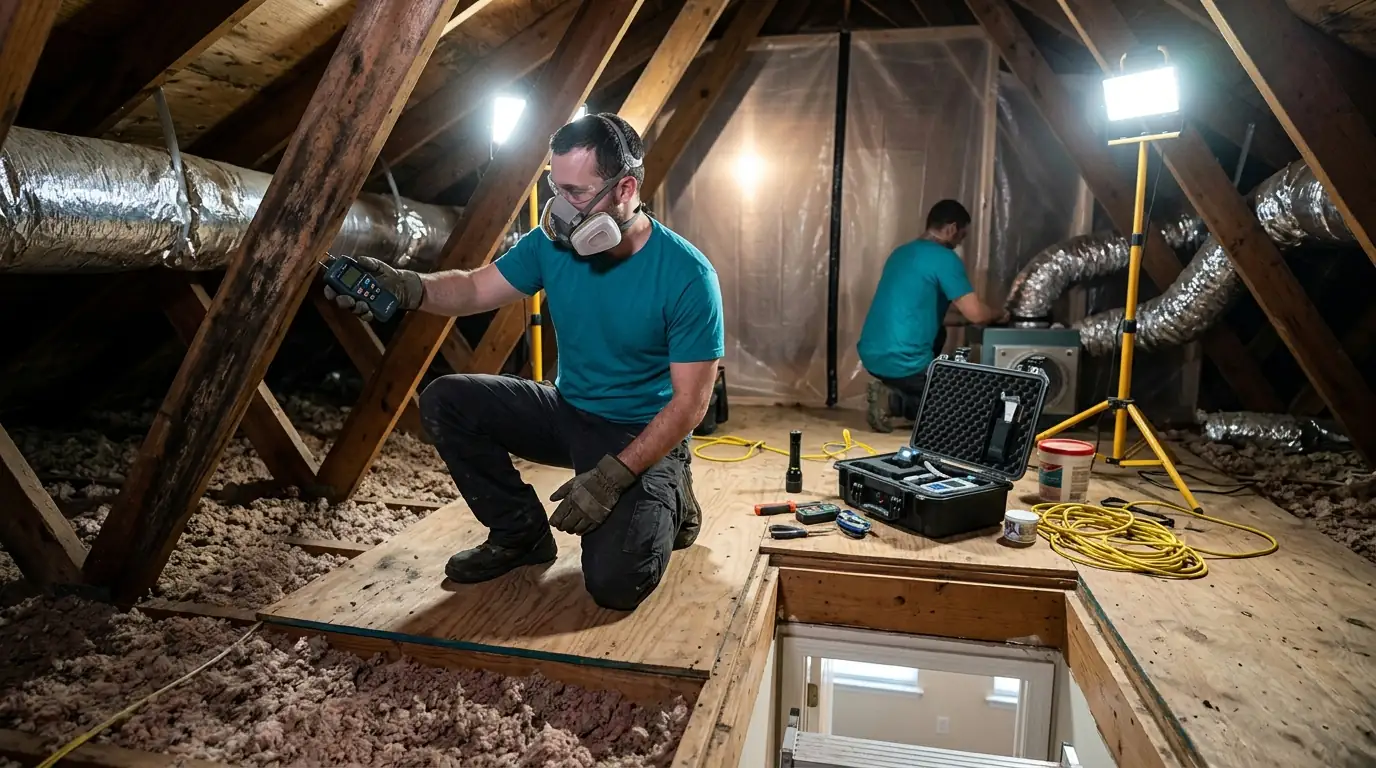
Attic mold removal in Fort Worth homes usually traces to one of three sources: a roof leak, an AC condensate leak from the attic air handler, or poor ventilation trapping warm, humid air under the roof deck. Mold grows on wood within days once it stays damp. We fix the cause, remove or clean growth, and restore airflow.
What Attic Mold Removal Involves
Attics in North Texas take a beating. They're well over 120 degrees in summer, hold the HVAC equipment in most slab homes, and sit right under roofs that face hail every spring. When moisture gets in, through a damaged roof, a sweating duct or an overflowing drain pan, it collects on the underside of the decking and on rafters where nobody sees it until there's a stain on the ceiling below.
We start by finding the moisture source, then remove wet or moldy insulation, HEPA vacuum and clean the decking and framing, and treat the wood. If the cause is ventilation, we'll point out where soffit or ridge vents are blocked so a roofer can correct it. For larger areas, Texas requires an independent assessor's protocol, explained on our mold remediation page.
Mold on Roof Decking and Rafters
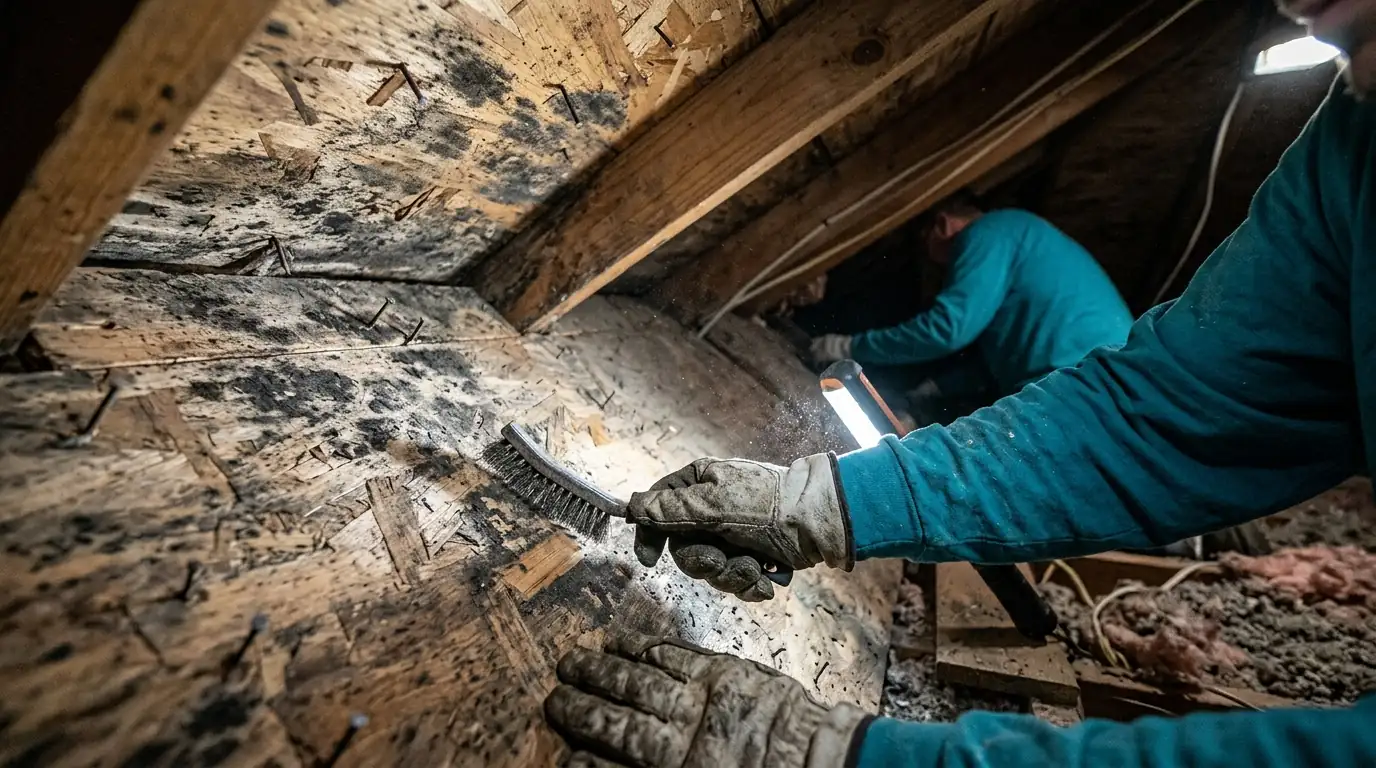
Mold on roof decking shows up as gray, black or white spotting on the underside of the plywood or OSB, often heaviest near the eaves or around roof penetrations. It's usually caused by warm, humid air hitting the cooler deck and condensing, or by a slow roof leak. If the decking is still solid, we HEPA vacuum and clean the surface, sand or blast heavier growth, and treat the wood with an antimicrobial. Decking that's soft, delaminated or rotted needs replacement by a roofer. The area affected and whether the wood is still structurally sound decide the cost and approach.
Leaks From the Attic Air Handler
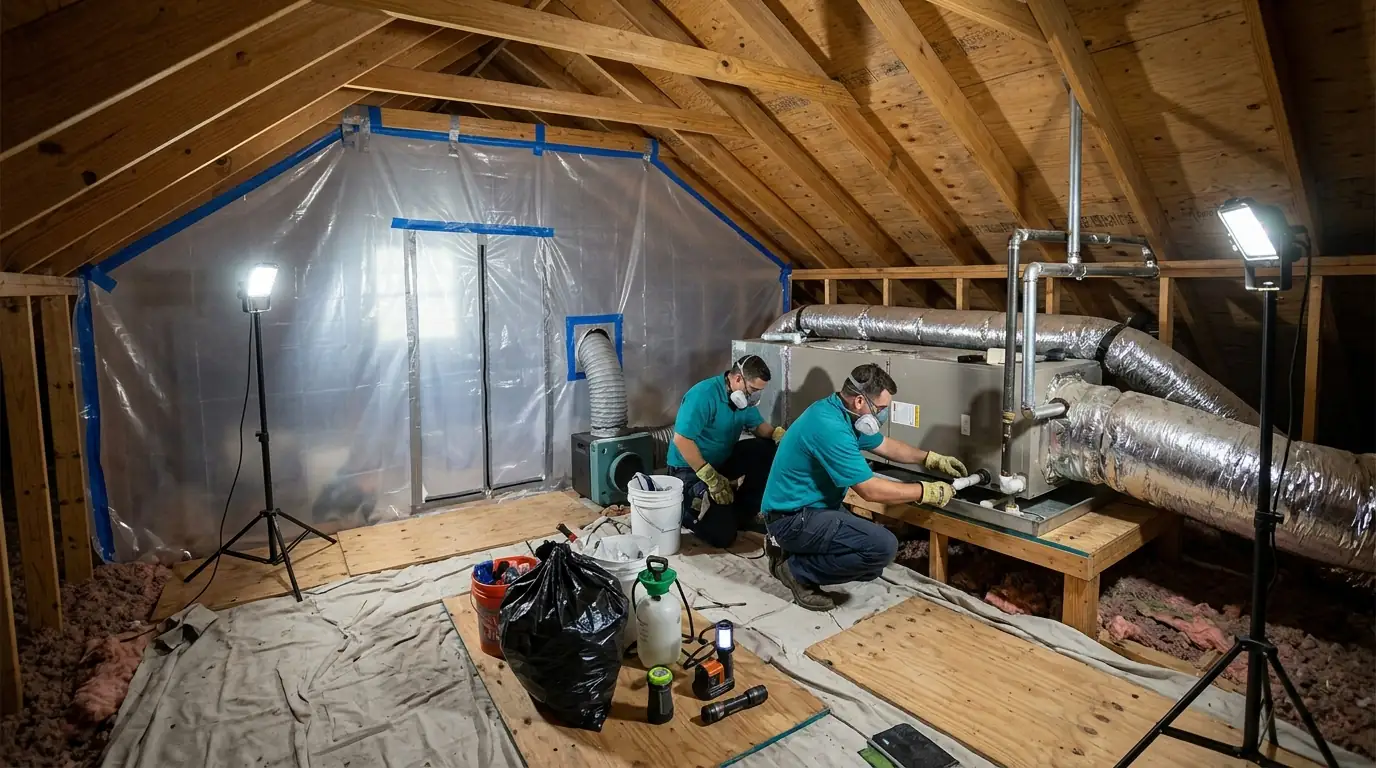
In most Fort Worth slab homes, the air handler sits in the attic with a primary drain line and a secondary pan underneath. When the line clogs with algae or the pan rusts through, water drips onto the ceiling drywall, insulation and framing below. You'll often notice a water stain on the ceiling under the unit or a musty smell when the AC runs. We remove wet insulation and ceiling drywall below the leak, clean and treat framing, and dry the area. An HVAC technician clears or replaces the drain line and pan. How long the leak ran before it was noticed decides how much material comes out.
Ventilation Problems Trapping Moisture
Attics need air moving in at the soffits and out at the ridge or roof vents. When soffit vents are covered by insulation, bath fans vent into the attic instead of outside, or ridge vents are missing, warm humid air stays trapped under the deck. Over time, mold spreads across large areas of decking even without a single leak. We clean and treat the affected wood and remove damaged insulation, then show you exactly where airflow is blocked. Fixing the ventilation, like rerouting bath fans or clearing soffits, is what keeps the mold from returning. The size of the affected roof area drives most of the cost.
Smoke, Soot or Water Damage Tonight?
The line is answered around the clock. Tell us what you see and we will tell you what to do first.
How Much Does Attic Mold Removal Cost?
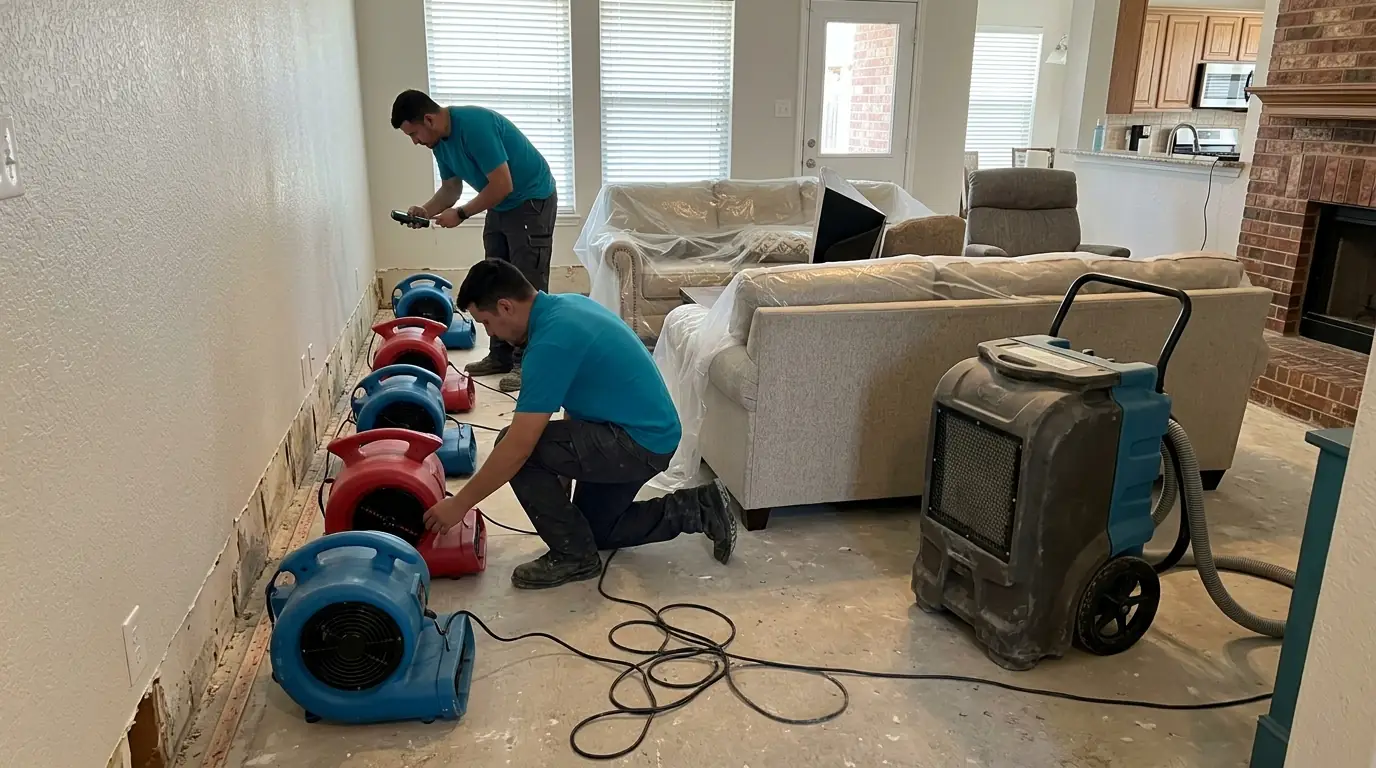
This Old House's cost guide puts attic mold removal at $1,000-$4,000 as a national planning range. Small areas near a single leak fall at the lower end, while growth across most of the decking costs more. Roof repairs, ventilation changes and insulation replacement are usually separate from the mold work.
- Area of affected deckingA few square feet near a roof vent is a small job. Growth across most of the deck takes far more cleaning and treatment time.
- Insulation removalWet or moldy blown-in insulation has to be removed and replaced, which adds labor and material to the job.
- Decking conditionSolid wood can be cleaned and treated. Soft or rotted decking needs to be replaced by a roofer, which changes the scope a lot.
- Attic access and heatLow-pitch roofs, tight spaces and summer attic temperatures slow the work and may mean early-morning scheduling to keep the job safe.
Range cited from a national cost guide (source, 2026-03-11). It is a planning figure, not a quote; your job is priced after we see it.
What Attic Mold Removal Includes
- Inspection of decking, rafters, insulation and attic HVAC
- Moisture readings and photos of affected areas
- Containment at the attic hatch and ceiling openings
- Removal and bagging of wet or moldy insulation
- HEPA vacuuming and cleaning of decking and framing
- Antimicrobial treatment of cleaned wood surfaces
- Notes on blocked soffits and misrouted bath fan vents
- New insulation installed after clearance
Hail, Roof Leaks and Attic Mold in Tarrant County
Fort Worth field note
A March 2024 Star-Telegram report on a Roof Gnome study ranked Tarrant County third in the nation for hail risk among more than 600 counties studied. Hail damage doesn't always show from the ground. Cracked or bruised shingles can let small amounts of water reach the decking for months before a ceiling stain appears. When we find mold on decking in one section of an attic, the next question is whether a hailstorm opened the roof above it. The hail storm leak check guide covers what to look for.
How We Clear Mold From an Attic
- 01
Inspect and find moisture
We check decking, rafters, insulation, the air handler, ducts and bath fan vents, and take moisture readings to see what's still wet and what caused it.
- 02
Fix the source
A roofer repairs leaks, an HVAC technician fixes drain lines and pans, and ventilation problems are noted so they can be corrected before cleanup is done.
- 03
Contain the attic
We seal the attic hatch and any ceiling openings and set up negative air so spores don't drift down into the living space during cleaning.
- 04
Remove, clean and treat
Moldy insulation is removed and bagged inside containment. Decking and framing are HEPA vacuumed, cleaned, sanded where growth is heavy and treated with an antimicrobial.
- 05
Restore insulation
After the wood is dry, and after the consultant clears larger jobs, new insulation goes back in at the right depth without blocking the soffit vents.
Signs of Mold in the Attic
Ceiling stains below the attic
A brown or yellow ring on a ceiling, especially near the air handler, often means water dripped onto insulation and framing above.
Dark spotting on the decking
Look up from the attic hatch with a flashlight; dark patches on plywood near eaves or vents point to condensation or a leak.
Musty smell at the attic hatch
If opening the attic releases an earthy smell, there's likely damp insulation or growth on the wood.
Frost or dripping on nails
On cold mornings, frost or water drops on roofing nails mean warm, moist air is condensing under the deck.
Attic Mold Removal Questions From Fort Worth Homeowners
Usually not at first. Surface mold on solid plywood or OSB can be cleaned and treated. If moisture has been present long enough to soften, delaminate or rot the wood, the decking loses strength and should be replaced. We test the wood's firmness before deciding.
Yes, it's a common cause. Each shower sends warm, humid air into the attic, where it condenses on the cooler decking. Over months, mold grows around the fan outlet and spreads. The fix is rerouting the fan duct to vent outside through the roof or a wall.
It can, especially if the HVAC ducts or return are in the attic and pull in attic air through leaks, or if ceiling openings let air move between the attic and the living space. That's why we seal openings during cleanup and check ducts and the air handler.
A new roof fixes leaks, but it won't remove existing mold or fix ventilation problems. Mold on the old decking that stays should be cleaned before or during the roof replacement. Proper ventilation should be included in the new roof so moisture doesn't build up again.
Yes. Blown-in and batt insulation that's wet or moldy can't be cleaned effectively, and it holds moisture against the framing. We remove it, clean the attic, and replace it once the wood is dry and the area has passed clearance on larger jobs.
Related Work We Handle
Seeing Stains Under the Attic or Spots on the Decking?
Attic mold grows quietly until it shows up on your ceiling. We'll find the cause and clean it out. Call us today to schedule an attic inspection.
Updated October 2026