Quick answer
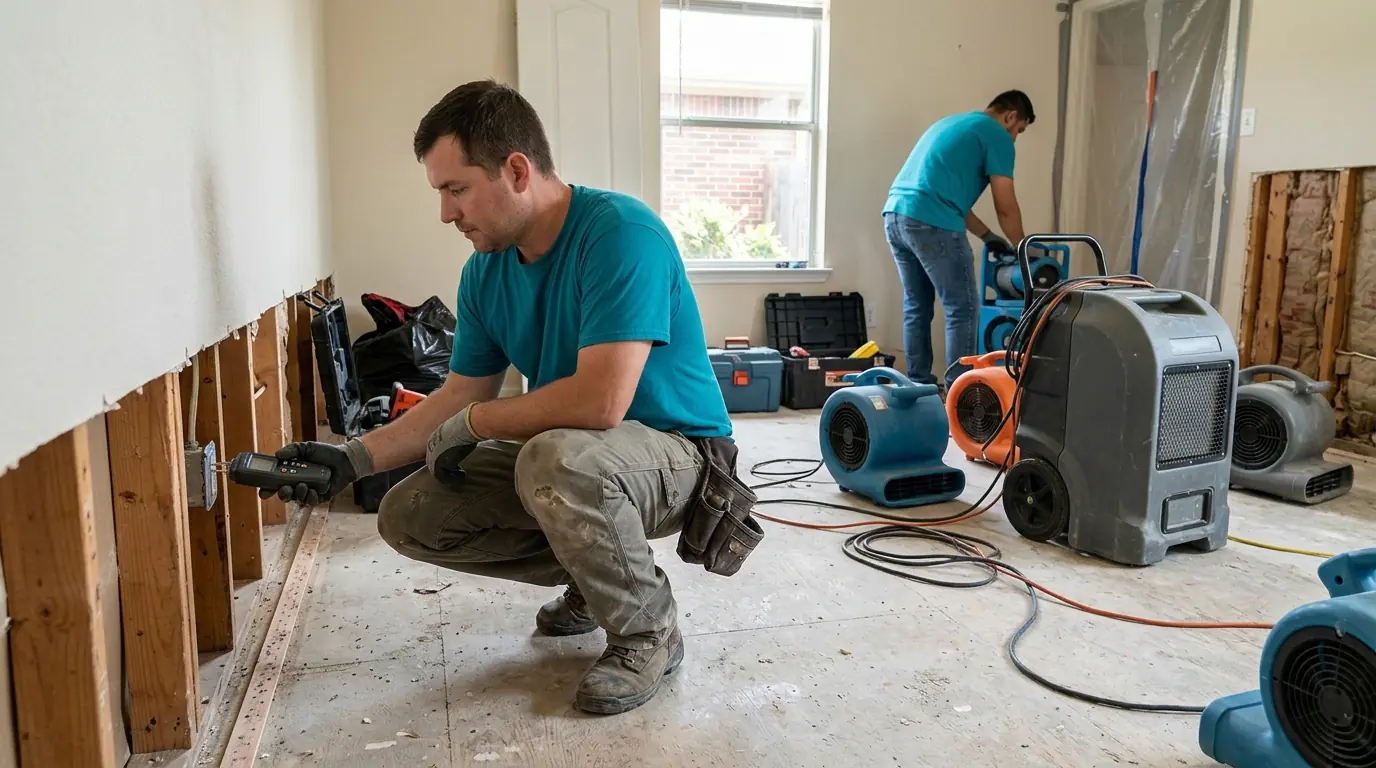
Mold prevention after water damage in Fort Worth comes down to drying the structure fully and fast, since mold can start growing on wet drywall and wood within 24 to 48 hours. Surfaces that feel dry can still hold moisture inside. We verify dryness with meters, treat exposed framing with an antimicrobial and control humidity until readings are normal.
What Mold Prevention After Water Damage Involves
Mold needs three things: moisture, food and time. Drywall paper, wood framing and carpet backing are food, and every house has plenty of it. Fort Worth's warm weather keeps indoor temperatures in the growing range most of the year. The only one you can really control is moisture, and that's why prevention after a leak is mostly about drying fast and proving it.
We take moisture readings at marked points in walls, floors and framing, dry the structure with air movers and dehumidifiers, and record readings until materials reach normal dry levels. Exposed framing and subfloor get an antimicrobial treatment before walls close up. If drying started late or readings stay high, we check behind baseboards and cabinets for hidden growth. If growth has already started, mold remediation takes over. The guide on how fast mold grows after a leak covers timing in more detail.
What Mold Prevention Includes
- Moisture mapping of walls, floors and framing
- Marked reading points checked every day
- Removal of materials that can't dry in place
- Antimicrobial treatment of exposed framing and subfloor
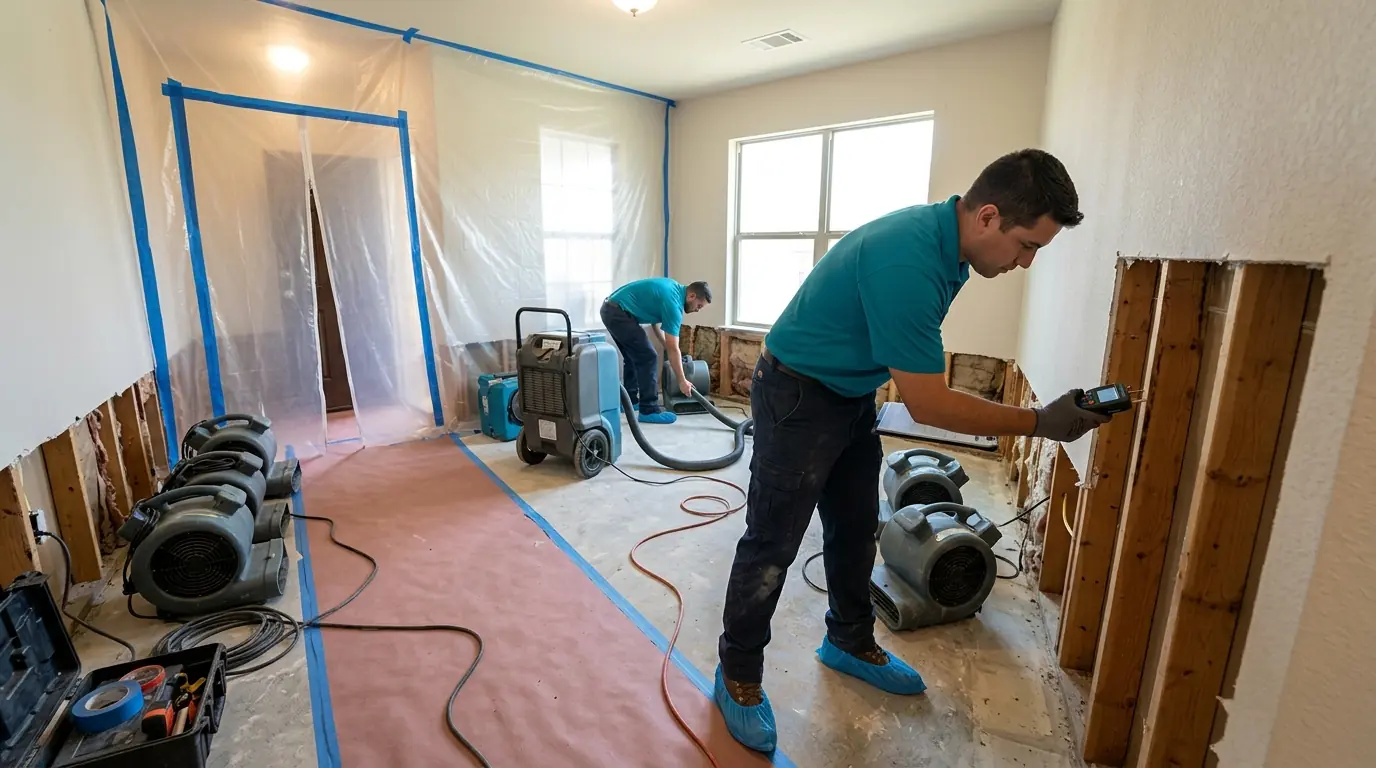
- Dehumidifiers and air movers sized to the space
- Daily humidity and temperature monitoring
- A dry-standard check before equipment leaves
- A moisture log and photos for your records
How Long Drying Takes Before Mold Is a Risk
Most clean-water losses usually reach dry standard in 3 to 5 days with proper equipment, once wet pad and insulation are removed. Dense materials like hardwood, subfloor and thick framing can take longer. Mold risk goes up quickly after 24 to 48 hours of continuous wetness, so the first two days matter most. High outdoor humidity, closed wall cavities and late starts usually add days. Drying ends when readings match unaffected materials, not on a set calendar.
Antimicrobial Application on Exposed Framing
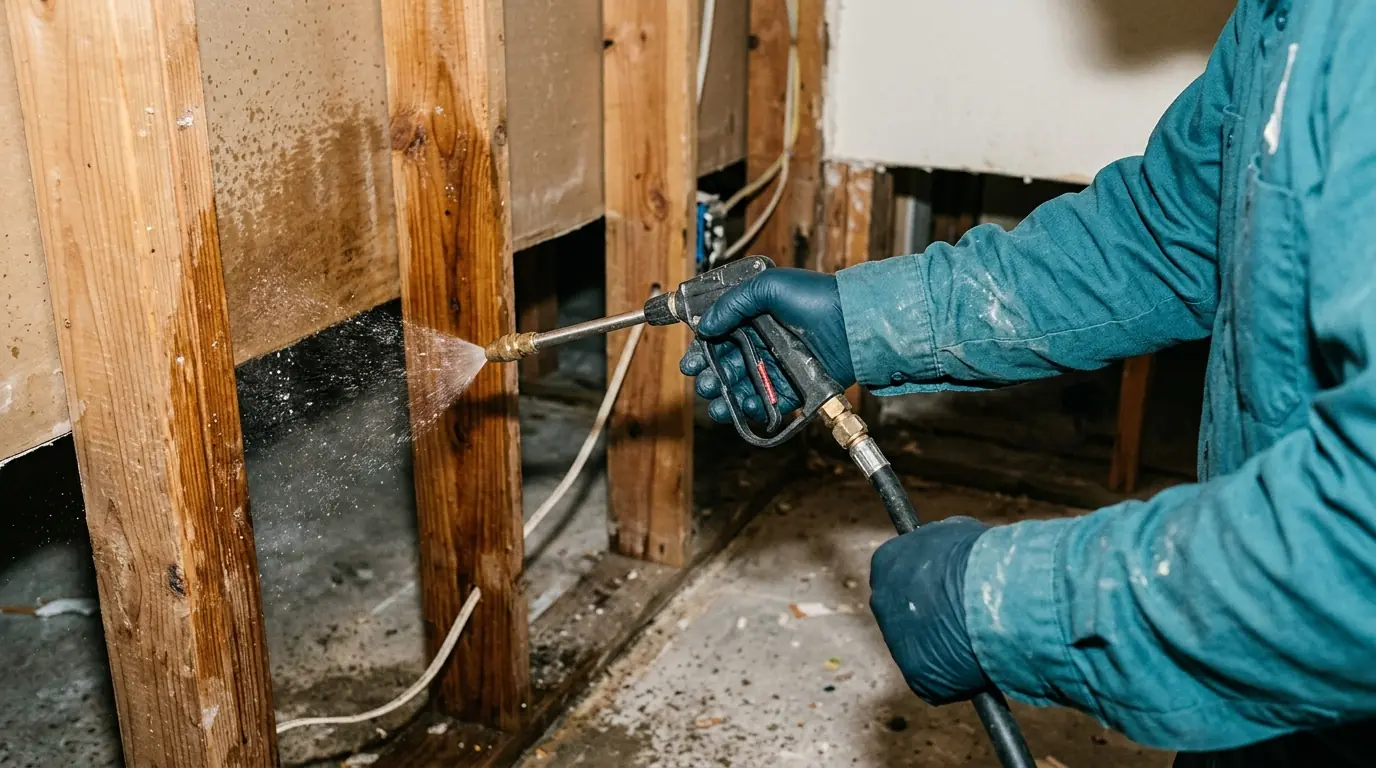
Antimicrobials are applied to framing, subfloor and other structural surfaces exposed during water cleanup. They don't dry anything or replace removal of contaminated materials, but they help prevent growth on clean surfaces while drying finishes. We apply them after wet drywall, insulation and flooring come out and the framing is cleaned, using a sprayer or wipe depending on the surface. They're especially useful after gray or black water, or when drying started more than a day after the leak. The area to treat and the type of water involved decide when an antimicrobial makes sense and how much is needed.
Drying Verification With Moisture Readings
A wall that feels dry to the hand can still hold enough moisture inside to grow mold. We verify drying with pin and pinless moisture meters at marked points on drywall, framing, subfloor and cabinets, and compare them to readings on unaffected areas of the same material. Thermal cameras help find cool, damp spots that need closer checks. We log readings every day, so you can see the numbers moving toward normal. Equipment stays until each point reaches dry standard. This record also matters for insurance, since it shows the structure was dried before rebuild. Larger areas and denser materials take more days of readings.
Humidity Control During and After Drying
Even after liquid water is gone, high indoor humidity keeps materials damp and slows drying. Dehumidifiers pull moisture out of the air so wet materials can release theirs. We size dehumidifiers for the space and the amount of wet material, monitor temperature and relative humidity daily, and adjust equipment as conditions change. After drying, keeping indoor humidity below about 50 to 60 percent helps prevent growth, especially in closed rooms and closets. A properly working AC system usually handles that in North Texas summers. Cost depends on the number of dehumidifiers and how many days they run.
Water Still Moving Through the House?
Shut it off if you can and call. Every hour it sits, water travels further into drywall, pad and framing.
Wet Spring Weather and Mold Risk Near Joe Pool Lake
Fort Worth field note
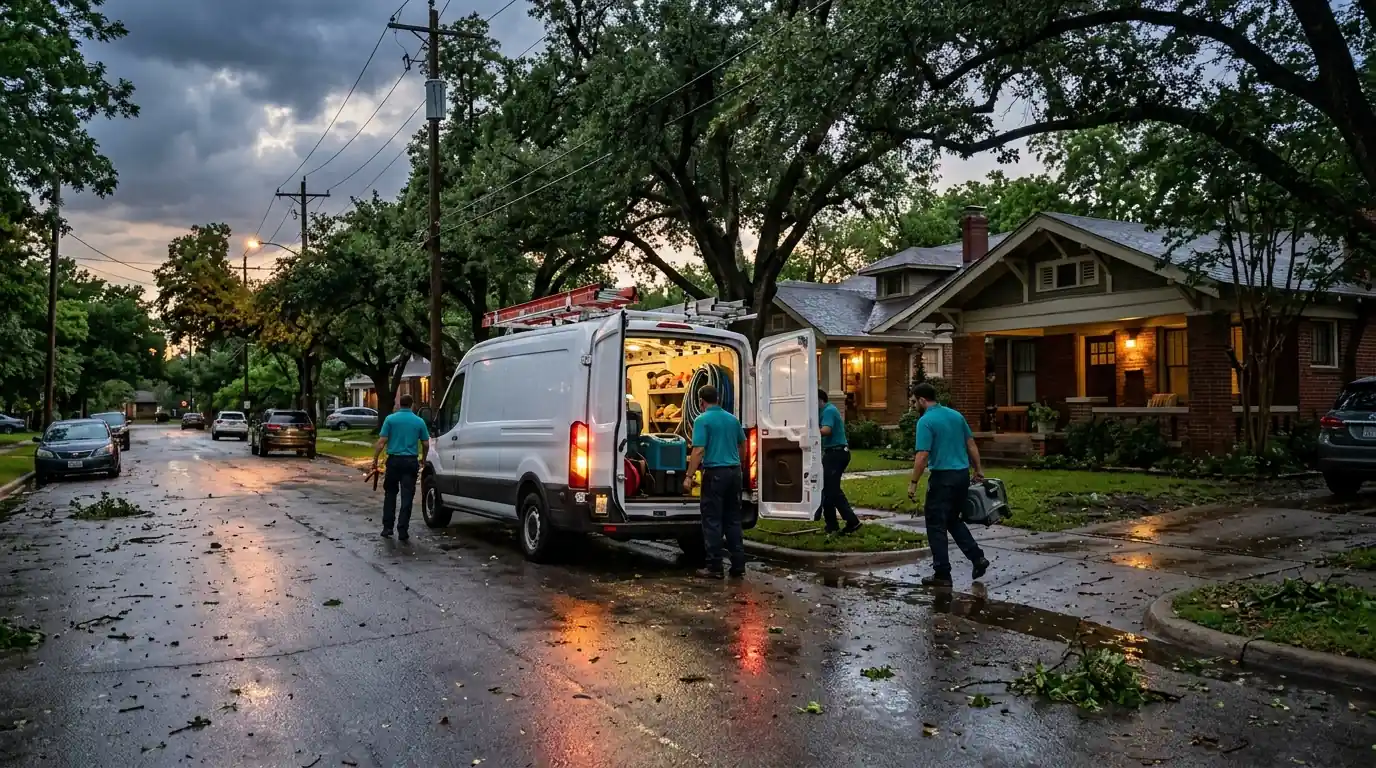
In October 2018 Joe Pool Lake rose at least 9 feet above normal, spreading more than 100 yards past its banks at Lynn Creek Marina in Grand Prairie, after the lake had also flooded in 2015. Water levels like that come with long stretches of wet weather, high humidity and soggy ground around homes in the area. Under those conditions, a leak that might dry quickly in August can stay damp for days. That's when drying verification and humidity control matter most.
How We Keep Mold From Starting After a Leak
- 01
Map the moisture
We take readings in walls, floors and framing and mark each point so it can be rechecked. Thermal imaging shows where water traveled that isn't visible from the surface.
- 02
Remove what can't dry
Wet insulation, carpet pad and drywall that can't dry in place are removed and photographed, which opens the cavities so moving air can reach the framing.
- 03
Treat exposed surfaces
Framing and subfloor get cleaned and an antimicrobial is applied, especially after gray or black water or when drying started more than a day after the leak.
- 04
Dry and control humidity
Air movers and dehumidifiers run around the clock, with temperature and humidity checked daily and equipment moved or added as needed to keep drying on track.
- 05
Verify and hand over records
We compare each marked point to dry standard before removing equipment, and you get the full moisture log and photos for your records and your adjuster.
What Drives the Cost of Mold Prevention After a Leak?
HomeGuide's cost guide puts water damage restoration at $2,000 to $6,000 as a national planning range, and mold prevention is part of that drying work rather than a separate project. Antimicrobial treatment and extra drying days add to it. Fixing growth that has already started costs more.
- How fast drying startedDrying that starts within a day keeps the scope small. Late starts often mean more antimicrobial treatment and removal of materials that began growing mold.
- Type of waterClean water from a supply line needs less treatment than gray water from a washer or black water from a sewer, which call for antimicrobials.
- Amount of wet materialMore wet drywall, framing and subfloor means more equipment, more reading points and more days before everything in the affected area reaches dry standard.
- Days of equipmentEach extra day of air movers and dehumidifiers adds cost, so drying quickly and verifying daily usually saves money overall.
Range cited from a national cost guide (source, 2026-02-06). It is a planning figure, not a quote; your job is priced after we see it.
Mold Prevention After Water Damage Questions From Fort Worth Homeowners
No. It helps keep clean surfaces from growing mold while they dry, but it doesn't remove moisture or existing growth. Without drying, mold can still grow. That's why we use antimicrobials together with moisture removal and verification, not instead of them.
You can't tell by touch. Moisture meters read inside drywall and wood and compare it to dry areas of the same material. We log readings at marked points until they match normal levels, then leave the equipment off for a day to confirm.
In North Texas, opening windows often lets in more humid air, which can slow drying. Fans help move air, but without dehumidifiers the moisture stays in the room. For anything beyond a small, quick leak, professional dehumidifiers are usually needed.
Keeping indoor relative humidity below about 50 to 60 percent helps prevent mold. An inexpensive hygrometer lets you check. A working AC usually keeps humidity in that range during warm months; closed rooms and closets may need extra airflow.
Usually yes, if the water reached inside walls, under flooring or under cabinets. Those hidden areas are where mold grows unnoticed for weeks. A quick moisture check and a few days of drying cost much less than opening walls for remediation later.
Related Work We Handle
Had a Leak in the Last Few Days?
The first 48 hours are the window to keep mold from starting. We'll check what's still wet and get it dry. Call us right away so drying can start.
Updated October 2026