Quick answer
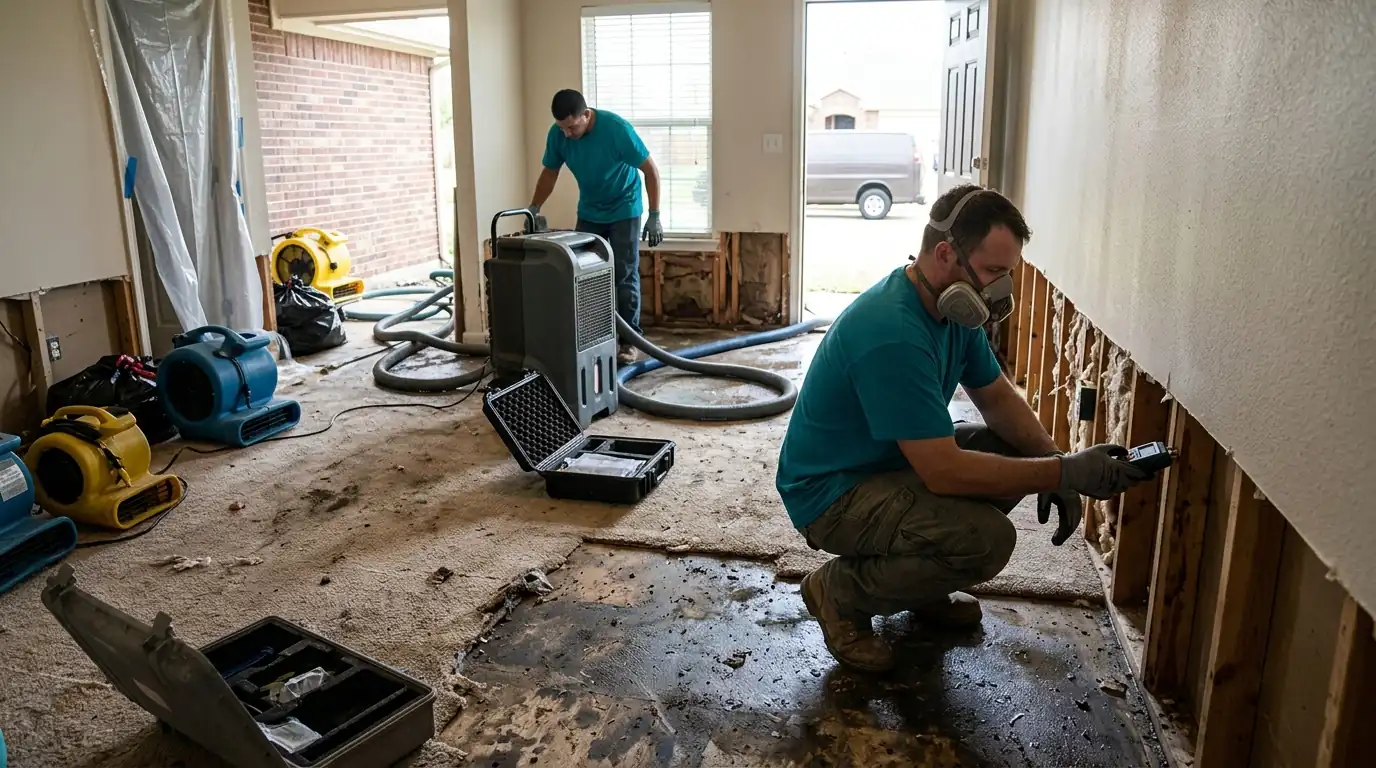
Sewage cleanup in Fort Worth homes follows Category 3 rules, because toilet and sewer water carries bacteria and viruses into every porous surface it touches. Carpet, pad and wet drywall from a backup usually can't be saved. We contain the area, remove contaminated materials, disinfect what stays and dry the structure before anything goes back in.
What Sewage Cleanup Involves
A sewage backup comes from one of two places. Either a single fixture overflowed, like a toilet with a blocked trap, or the main line to the street stopped flowing and wastewater pushed up through the lowest drain in the house. The second kind is worse, because it often shows up in a tub, shower or floor drain at the same time and keeps coming back each time someone runs water.
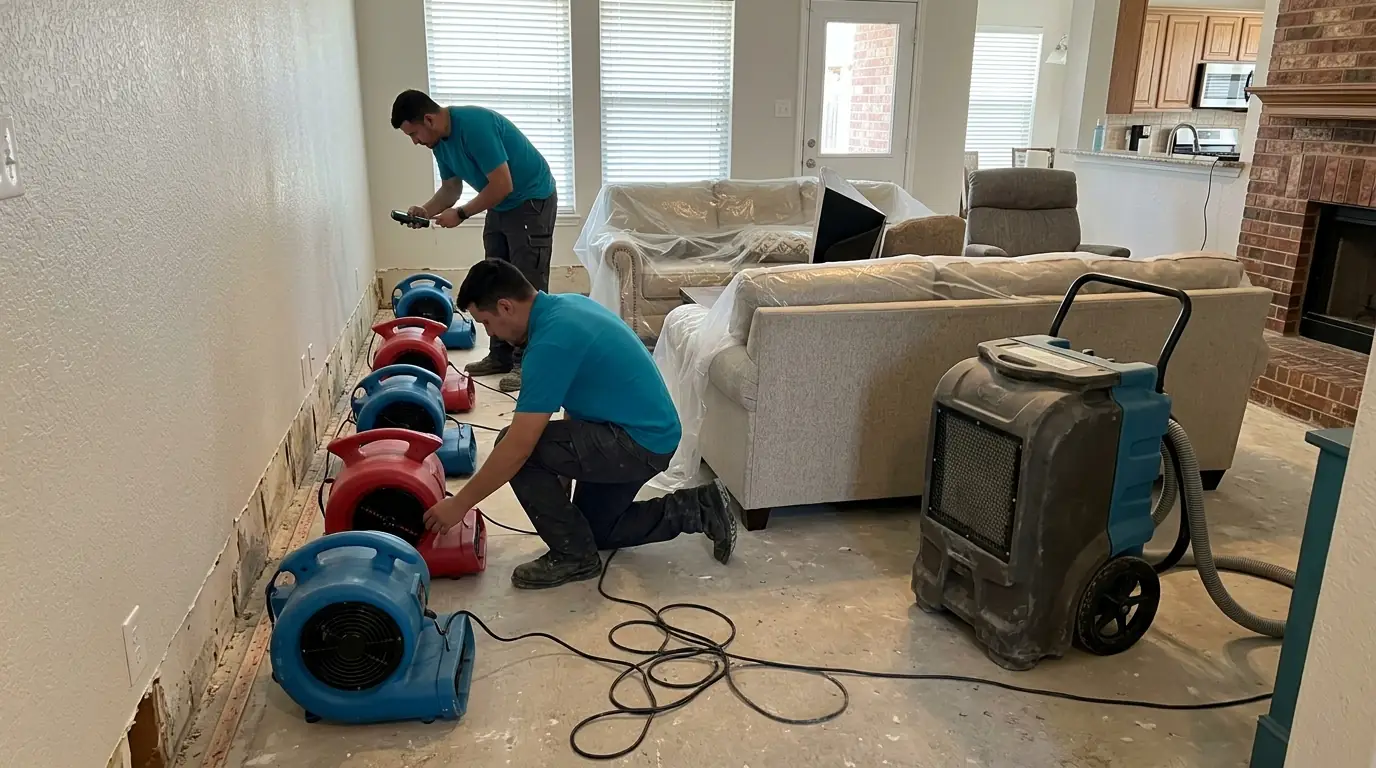
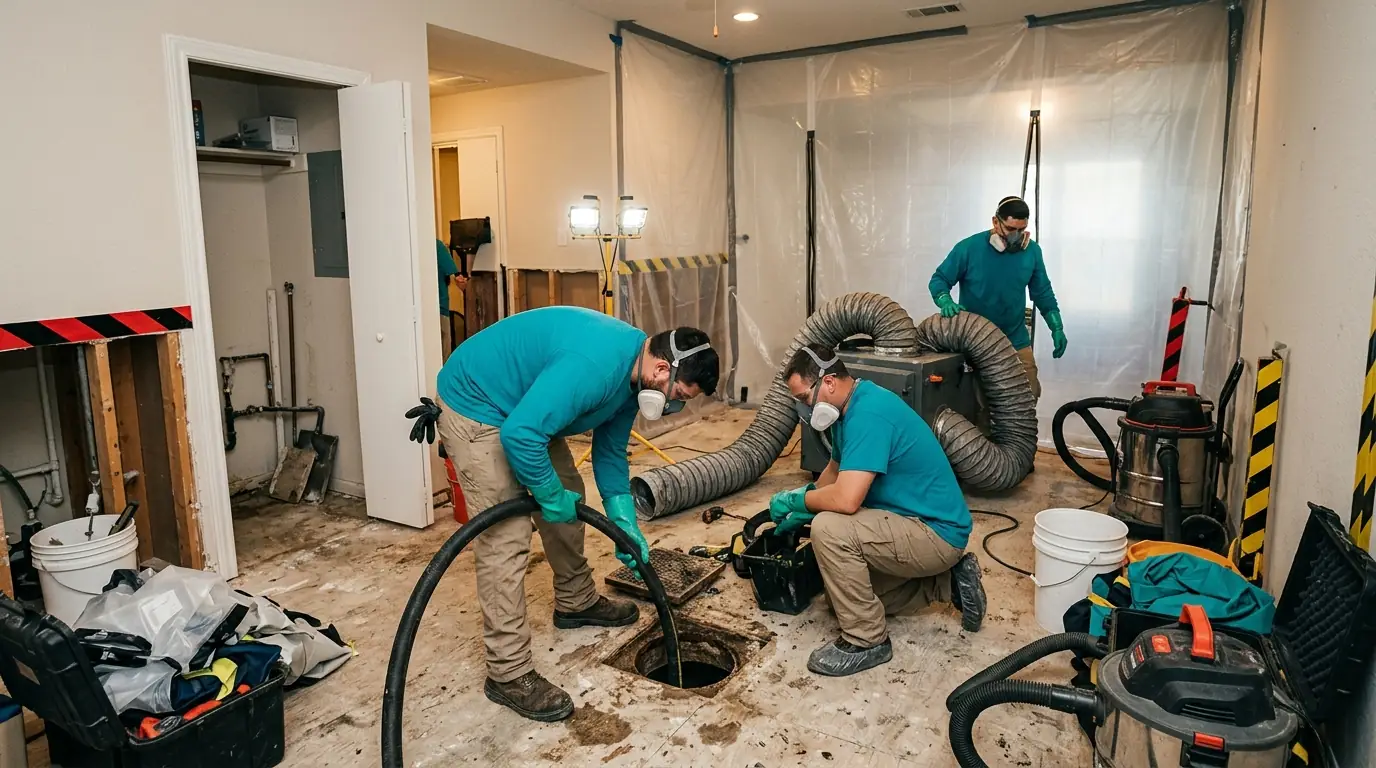
Our job starts once the plumber has the line flowing again. We set up plastic containment and, where the layout allows, negative air with HEPA filtration so contamination doesn't move into clean rooms. Then we extract, remove porous materials that the water touched, clean every hard surface, apply a disinfectant, and dry the structure with air movers and dehumidifiers. After the area reads dry, mold prevention treatment and the rebuild finish the job.
How We Work a Sewage Backup, Start to Finish
- 01
Line cleared first
A plumber clears the blockage so the backup stops. We can start containment and extraction while that's happening, but drying waits until no more water is coming up.
- 02
Contain and protect
We wear protective suits, respirators and gloves, hang plastic sheeting at doorways, and set up negative air where the layout allows so clean rooms stay clean.
- 03
Extract and remove
We extract standing water, then remove carpet, pad, wet drywall, insulation and trim that the water touched, bagging contaminated debris in heavy sacks as it comes out.
- 04
Clean and disinfect
Hard surfaces, studs, slab and fixtures get scrubbed, HEPA vacuumed and treated with a disinfectant. We pay attention to tile grout lines, toilet bases and cabinet interiors.
- 05
Dry, deodorize and log
Air movers and dehumidifiers dry the structure while we record readings daily. Once dry, we deodorize if needed and hand over photos and logs for your records.
Toilet Overflows That Reached the Floor
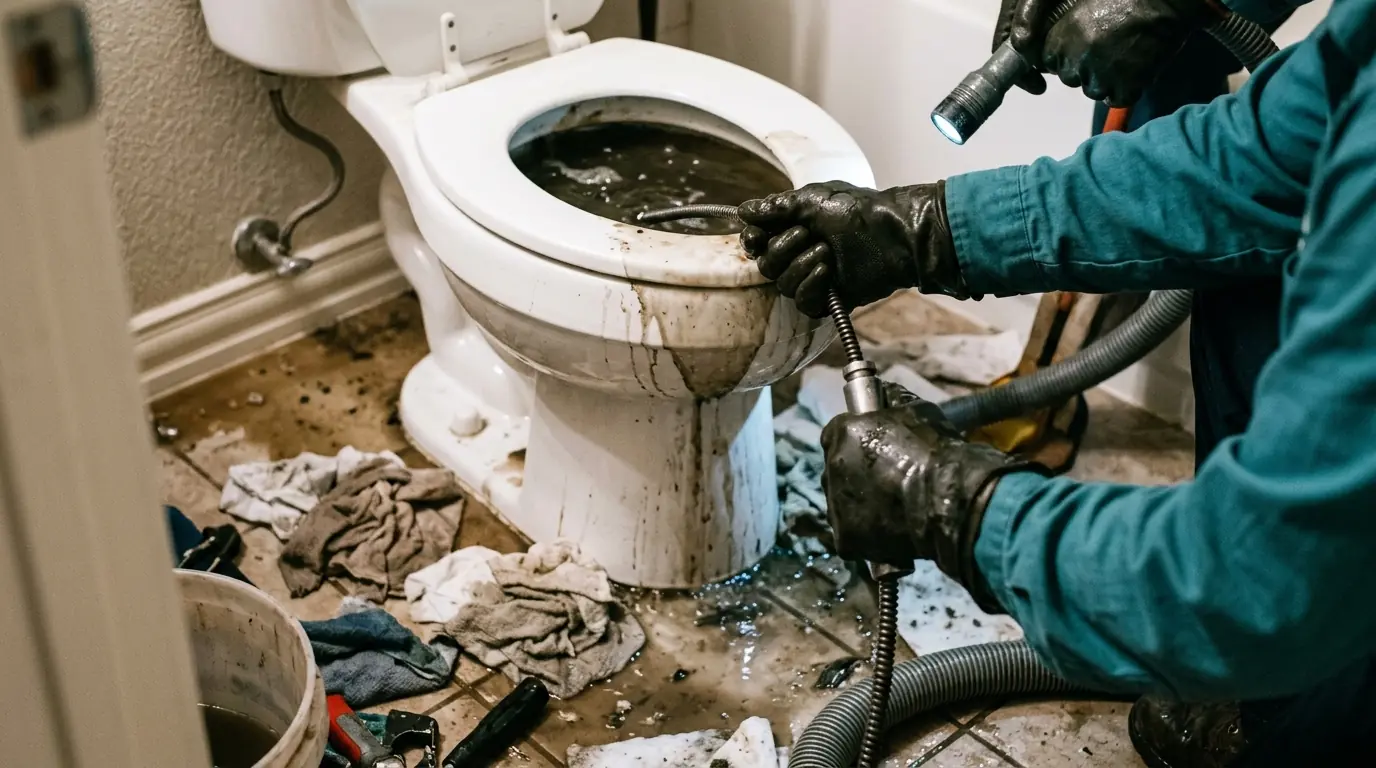
A toilet overflow seems small until you see where the water went. On tile, it runs to the nearest wall and soaks the bottom of the drywall and the baseboard. On vinyl plank or laminate, it slips into the seams and sits on the slab or subfloor. Water that left the bowl after flushing waste is Category 3, so we remove wet baseboards and the bottom of the drywall, lift flooring that took water at the seams, disinfect and dry. A quick one-bathroom job is far smaller than one where water crossed into a bedroom carpet, so the spread decides most of the scope.
Main Sewer Line Backups
When the main line clogs, wastewater has nowhere to go and comes up through the lowest fixture in the house, often a shower drain or a ground-floor toilet. You might notice gurgling, several slow drains at once, or water rising in the tub when the washing machine empties. Roots, grease buildup and cracked cast iron or clay pipe are common causes in older houses. A plumber clears the line and often runs a camera to find the break. We clean up everything that came out of it: extraction, removal of contaminated flooring and drywall, disinfection and drying. Cost depends on how many rooms the water reached and whether it ran under walls into finished spaces.
Contaminated Drywall Removal
Drywall that touched sewage can't be disinfected well enough to keep, because the gypsum core and paper face soak up the water and hold it. We measure above the visible wet line, since drywall wicks upward, and cut a clean line a few inches past the last wet reading. Insulation inside that cavity comes out too. Studs and plates stay in place, get cleaned and treated with an antimicrobial, and then dry. How many linear feet of wall took water, and how high it wicked, is the main driver of time and cost here.
Water Still Moving Through the House?
Shut it off if you can and call. Every hour it sits, water travels further into drywall, pad and framing.
Older Drain Lines Northeast of Fort Worth
Fort Worth field note
Haltom City's population quadrupled between 1950 and 1960, and North Richland Hills began in 1952 with a first section of 188 brick and masonry homes. Houses from that building wave are now about seventy years old, and homes of that age often still drain through original cast iron or clay pipe under the slab. Those lines scale up inside, crack and let roots in. In an older house there, a slow tub or a gurgling toilet is worth a plumber's camera before it becomes a backup across the bathroom floor.
Safe Steps for You, and the Ones Better Left to Us
| Task | What you can do | What we do |
|---|---|---|
| Water use | Stop running water, flushing and using the dishwasher or washer until the line is cleared. | We coordinate timing with your plumber so drying doesn't start while the line can still back up. |
| Mopping it up | Skip the mop and shop vac. They spread contamination into the air and onto clean floors. | We extract with sealed equipment and dispose of the waste water properly. |
| Bleach | Don't pour bleach on the mess. It doesn't penetrate porous materials and can react with other cleaners. | We remove porous materials first, then apply a disinfectant made for this kind of contamination. |
| Laundry and rugs | Bag soiled clothing and towels and keep them separate from household laundry. | We sort what can be professionally cleaned from what should be discarded and photograph it all. |
Sewage can carry E. coli, hepatitis A and other pathogens, so anyone with a weak immune system, young children and pregnant family members should stay out until cleanup is done.
What Our Sewage Cleanup Includes
- Protective gear and containment sheeting at doorways
- Negative air with HEPA filtration where the layout allows
- Extraction of standing sewage water
- Removal and bagging of contaminated carpet, pad and drywall
- Cleaning and disinfection of studs, slab, tile and fixtures
- Structural drying with daily moisture readings
- Photo documentation for your records and your adjuster
What Goes Into the Cost of a Sewage Cleanup?
Bob Vila's cost guide puts sewage backup cleanup at $2,000 to $10,000 as a national planning range. The spread is wide because a single bathroom overflow and a main-line backup that ran into three rooms are very different jobs. The plumbing repair that stops the backup is a separate bill from the cleanup itself.
- How far it traveledWater that stayed on bathroom tile is a small cleanup. Water that crossed a threshold into carpeted rooms multiplies the flooring, drywall and disinfection work.
- Porous materials lostCarpet, pad, drywall, insulation and particleboard cabinet bases that touched sewage come out. The more of them in the path, the bigger the removal and rebuild.
- Containment setupA closed-off bathroom needs little containment. Open floor plans need plastic walls and negative air to keep contamination out of the rest of the house.
- Time before cleanupSewage that sits for a day or two soaks deeper into subfloor and wall cavities, and odor becomes harder to remove completely.
Range cited from a national cost guide (source, 2024-02-15). It is a planning figure, not a quote; your job is priced after we see it.
Sewage Cleanup Questions From Fort Worth Homeowners
Call both, but the plumber's work has to happen first. Until the line flows, every flush or shower can push more wastewater into the house. Cleanup can start as soon as the backup stops. If you call us first, we'll tell you to stop using water and get a plumber out, and we can begin containment while they work.
Often only if your policy has a water backup or sewer backup endorsement. Many base policies exclude damage from water that backs up through drains unless you added that coverage. Check your policy or call your agent. Either way, our photos, moisture readings and list of removed materials give your adjuster a clear record of the damage.
Usually yes. Ceramic and porcelain tile on a slab can be cleaned and disinfected, grout lines included. The exception is water that got under loose or cracked tiles or into a wood subfloor. Wood, laminate and vinyl plank with open seams are more likely to come out.
Gurgling at a toilet when another fixture drains usually means air can't move freely through the drain or vent system, often because the main line is partly blocked. It's an early warning sign of a backup. Have a plumber check the line, and possibly camera it, before wastewater starts coming up through the lowest drain.
It shouldn't if the job is done right. A lingering odor almost always means contaminated material stayed behind, like pad under a threshold or drywall that wicked higher than it looked. Once that's removed and the area is disinfected and dried, a hydroxyl treatment usually clears what's left.
Related Work We Handle
Sewage on the Floor? Stop the Water and Call
Turn off the water, keep everyone out of the room and get the line cleared. We answer 24/7 and will handle the extraction, tear-out and disinfection from there. Call us and tell us where the water came up.
Updated October 2026