Parker County, TX
Storm and Water Damage Repair Around Parker County
Phones answered 24/7 for Parker County homes and businesses.
Quick answer
Storm and water damage repair in Parker County is mostly a hail story. Reports near Weatherford include 3-inch hail in Hudson Oaks and 2.5-inch hail in Weatherford on June 1, 2025, so roof openings that soak attics and ceilings are what we handle most.
Restoration Work Around Parker County
Most homes in Parker County are lived in by the people who own them: owner-occupancy stood at 79.3 percent in 2020, and the population rose from about 117,000 to over 148,000 in ten years. That adds up to newer slab homes with attic air handlers beside older rural houses on pier-and-beam. Both take hail the same way at the roof and very differently below it.
On these jobs, our work starts above the ceiling. We cover the opening, pull wet blown-in insulation that has packed down against the drywall, and check the decking and rafters with a moisture meter. Then we dry the framing and replace what the water ruined, from insulation replacement to ceiling drywall and texture, keeping a moisture log your adjuster can read.
Hail Sizes Reported Near Weatherford, Hudson Oaks and Millsap
Hail reports for the area read like a roofer's worry list. On June 1, 2025, 3-inch hail fell in Hudson Oaks and 2.5-inch hail in Weatherford. On April 28, 2026, 2.5-inch hail hit Millsap. Stones that size crack shingles, split ridge caps and can punch through skylights and vent caps. The leak often waits for the next rain. Water runs along the decking to a low point, soaks a patch of insulation and leaves a brown ring on the ceiling. If your roof took a hit, have the attic checked before that stain appears.
Brazos Side or Trinity Side: How Parker County Drains
Parker County splits down the middle. The west sits on Cross Timbers sandy loam drained by the Brazos River, while the east and center sit on the Grand Prairie, drained by upper tributaries of the Trinity. Sandy soil lets rain soak in fast, which can push water into crawl spaces under older homes. Grand Prairie clay sheds water across the surface and toward foundations. Lake Weatherford supplies the county seat's water. Knowing your side of the county tells us whether to look under the floor or along the slab edge first.
Calls We Get From Parker County
How a Call From Parker County Runs
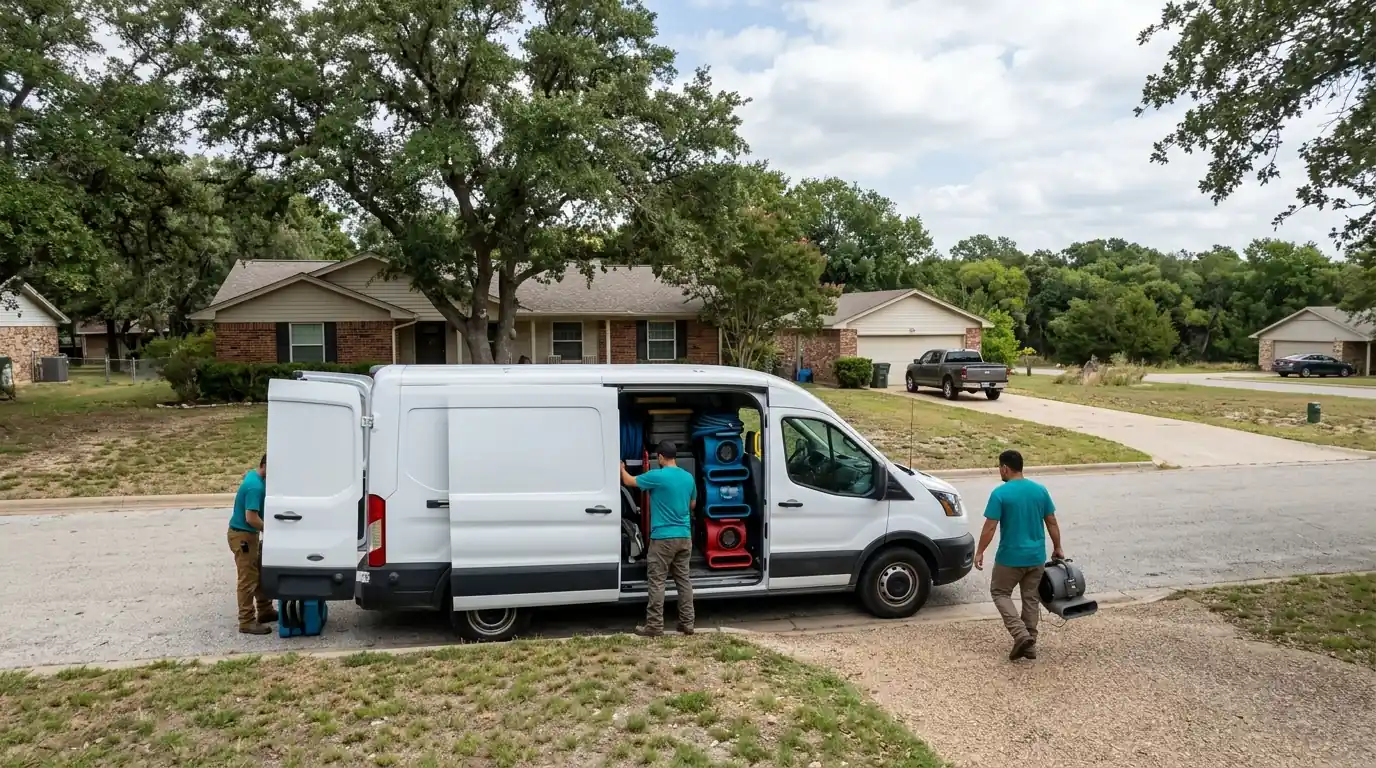
We answer 24/7 for Parker County calls and begin by asking where the water is showing: a ceiling stain, a wet wall or water across the floor. If the roof is open, the tarp goes on first. We bring extractors, air movers, dehumidifiers, a thermal camera and moisture meters, and we open the attic to see how far wet insulation spreads before setting equipment.
Parker County Restoration Questions
Hail often cracks shingles without opening a clear hole. A later rain finds the crack, runs along the decking and soaks insulation before it reaches the drywall. By the time the stain appears, the insulation above may have been wet through several rains.
Usually only the wet area plus a margin. We use moisture meters to find the edges, remove soaked and packed-down insulation, dry the ceiling drywall and framing, then blow new insulation to match the depth of what's left.
It can, especially on sandy ground where water soaks in quickly. Standing water or a wet vapor barrier under the house keeps the joists damp. We pump it out, pull wet insulation and barrier, and dry the space until the wood reads normal.
Yes, and waiting usually makes things worse because mold can start. We photograph everything before we remove materials and log moisture readings each visit, so your adjuster can review the record even after work began.
Nearby Areas We Cover
Water, Fire or Storm Damage in Parker County?
Tell us what happened and where the water or smoke went. We will walk you through the first steps on the phone.
Updated October 2026