Quick answer
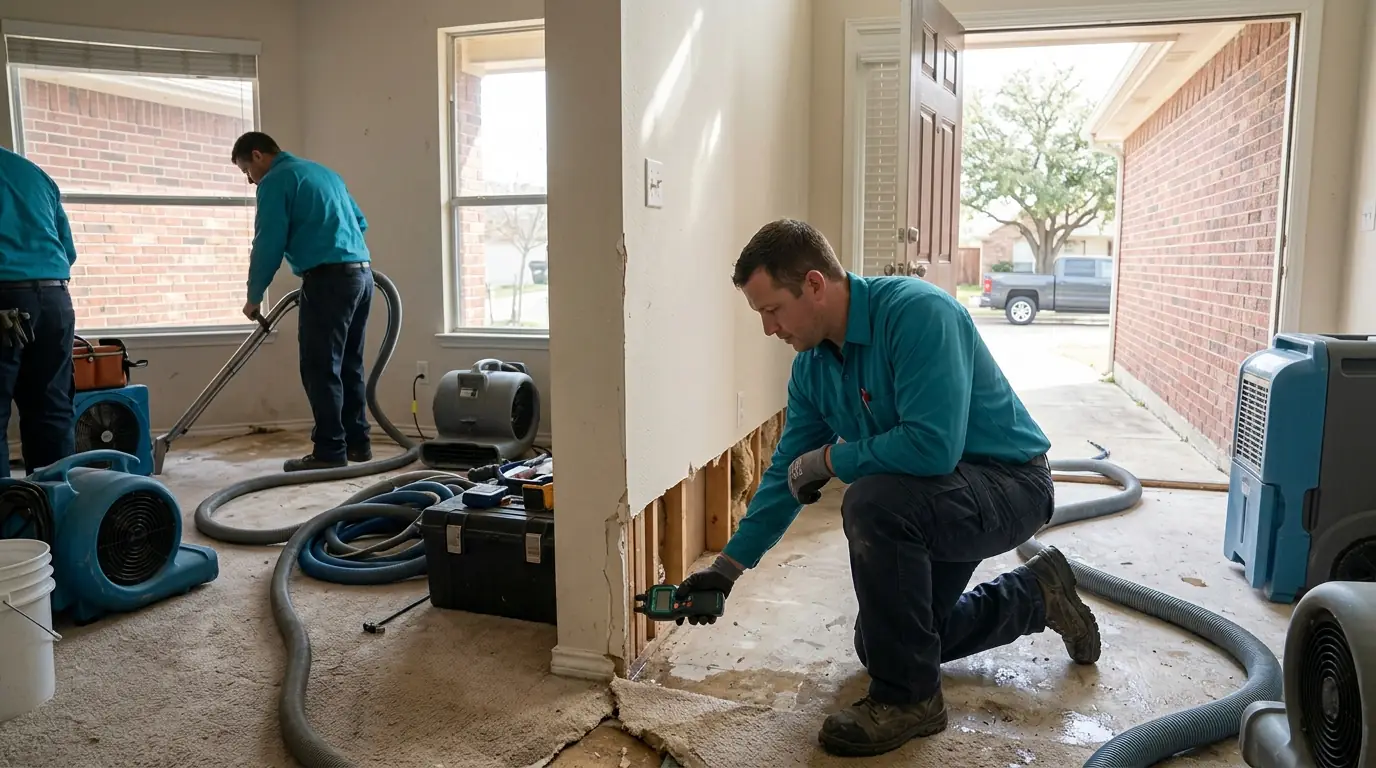
Emergency water extraction in Fort Worth means getting liquid water out before it soaks deeper. Extraction removes far more water in an hour than air movers can evaporate in a day, so it's the step that shortens every other step. We pump standing water, extract carpet and pad, squeegee and vacuum hard floors, then set drying equipment.
What Emergency Water Extraction Involves
Water on the floor keeps moving. It runs to the low side of the room, under the bottom plate of walls, beneath cabinets and into the next room's pad. Every hour it sits, the drying job grows. Extraction is about stopping that spread: remove as much liquid as possible, as fast as possible, so the air movers and dehumidifiers only deal with what's left inside the materials.
The tool depends on the floor. Deep water gets a submersible pump first. Carpet gets a weighted extraction tool or a stand-on wand that presses the pad and pulls water up through both layers. Tile, vinyl and sealed concrete get squeegees and wet vacuums. After that, readings show where water traveled, and that becomes the structural drying plan.
From the First Call to Dry Floors
- 01
Safety check on the phone
We ask where the water is, whether outlets or cords are near it and whether the source is stopped, then walk you through the breaker and the shutoff.
- 02
Pump the deep water
Standing water gets a submersible pump or a high-capacity wet vacuum first, so we aren't dragging a carpet wand through inches of water in the room.
- 03
Extract each floor type
Carpet gets weighted or stand-on extraction in slow, overlapping passes. Hard floors get squeegeed and vacuumed, and the seams and edges are checked with a meter.
- 04
Trace it and set drying
We read walls and the rooms next door for water that slipped under bottom plates, then place air movers and dehumidifiers and log starting readings.
Standing Water Removal
An inch or more of water across a room, a flooded laundry or a garage that took water under the door. Before anyone wades in, power to outlets near the floor needs to be off at the breaker. We set a submersible pump where the water pools, then follow with wet vacuums for the last half inch. Furniture legs and anything sitting in water get lifted or blocked so stains don't transfer. Depth, area, whether the water is clean or contaminated, and whether it's still coming in decide the time and cost.
Carpet Extraction
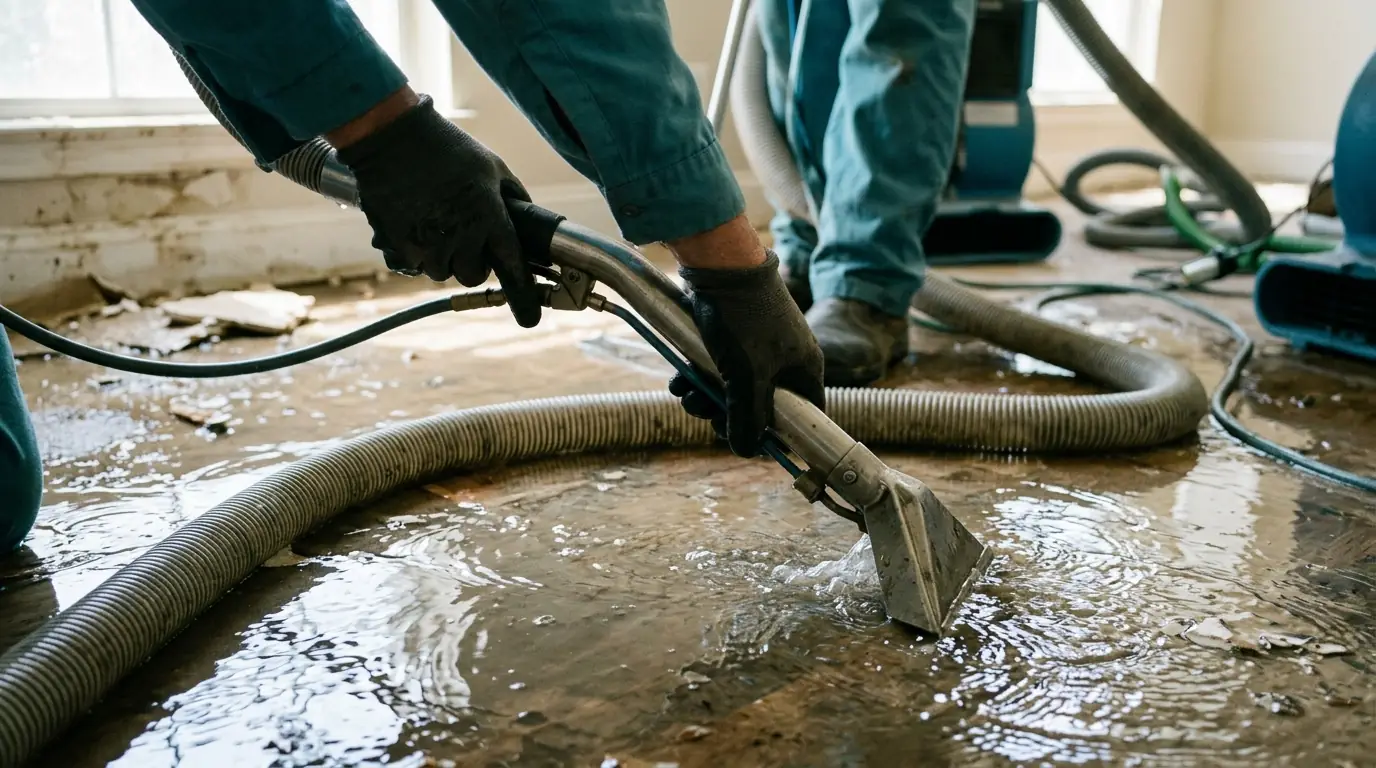
Carpet looks wet on top, but the pad underneath holds most of the water and passes it down to the slab or subfloor. Pressing with your foot and seeing water rise is the tell. We use a weighted extractor or a stand-on wand that compresses carpet and pad together and pulls water up through both, in several slow passes. With clean water caught early, the carpet can often stay. With gray water, the pad comes out. Room size, carpet backing and whether the pad can stay decide the time and cost.
Hard-Floor Extraction
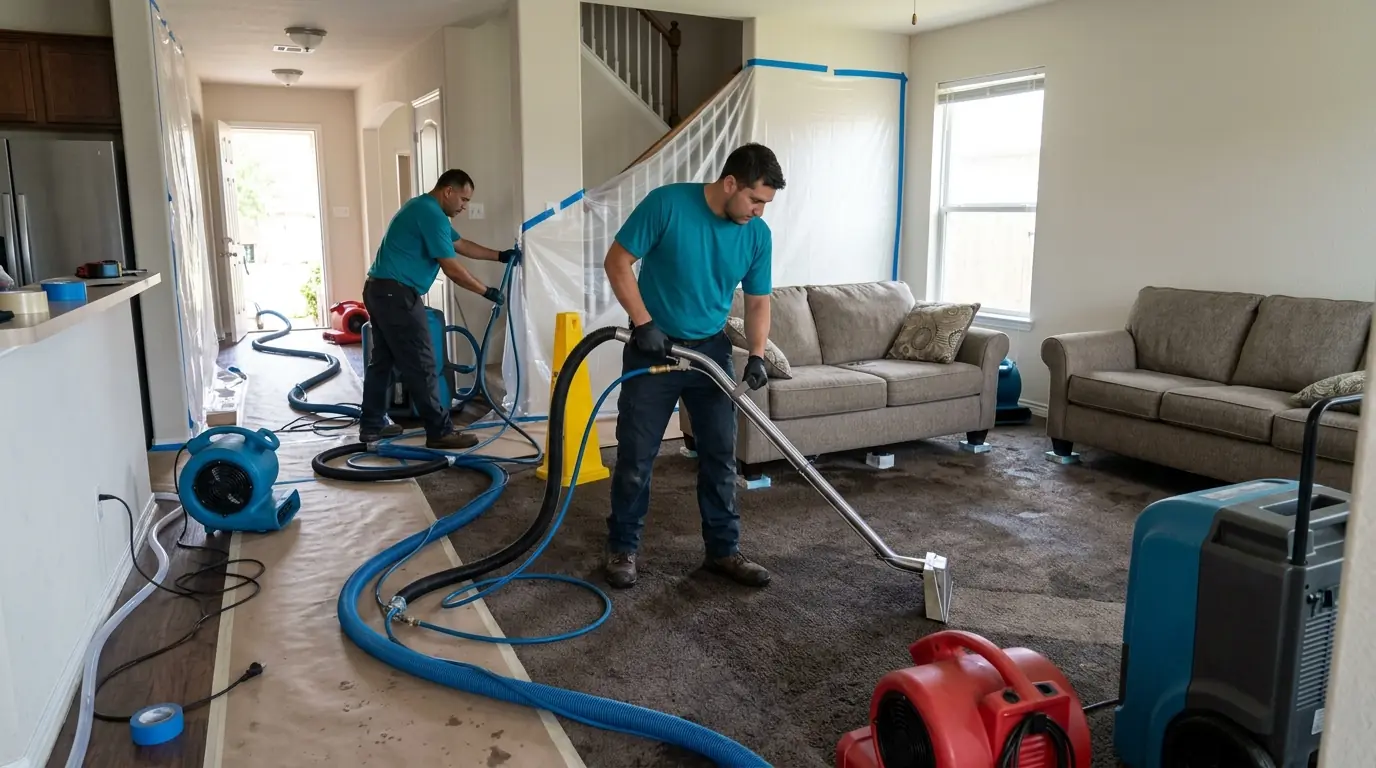
Tile, sheet vinyl, luxury vinyl plank and sealed concrete shed water on top, but seams and grout lines let it down. On floating floors, water spreads under the planks across the whole room. We squeegee and wet-vac the surface, then check along walls and seams with a meter. Floating laminate or click vinyl usually has to come up so we can reach the water below. Glued vinyl and tile can sometimes dry in place with mats and air. Flooring type, installation and time under water decide the outcome.
Smoke, Soot or Water Damage Tonight?
The line is answered around the clock. Tell us what you see and we will tell you what to do first.
Extraction Calls Around Our Mansfield Office
Fort Worth field note
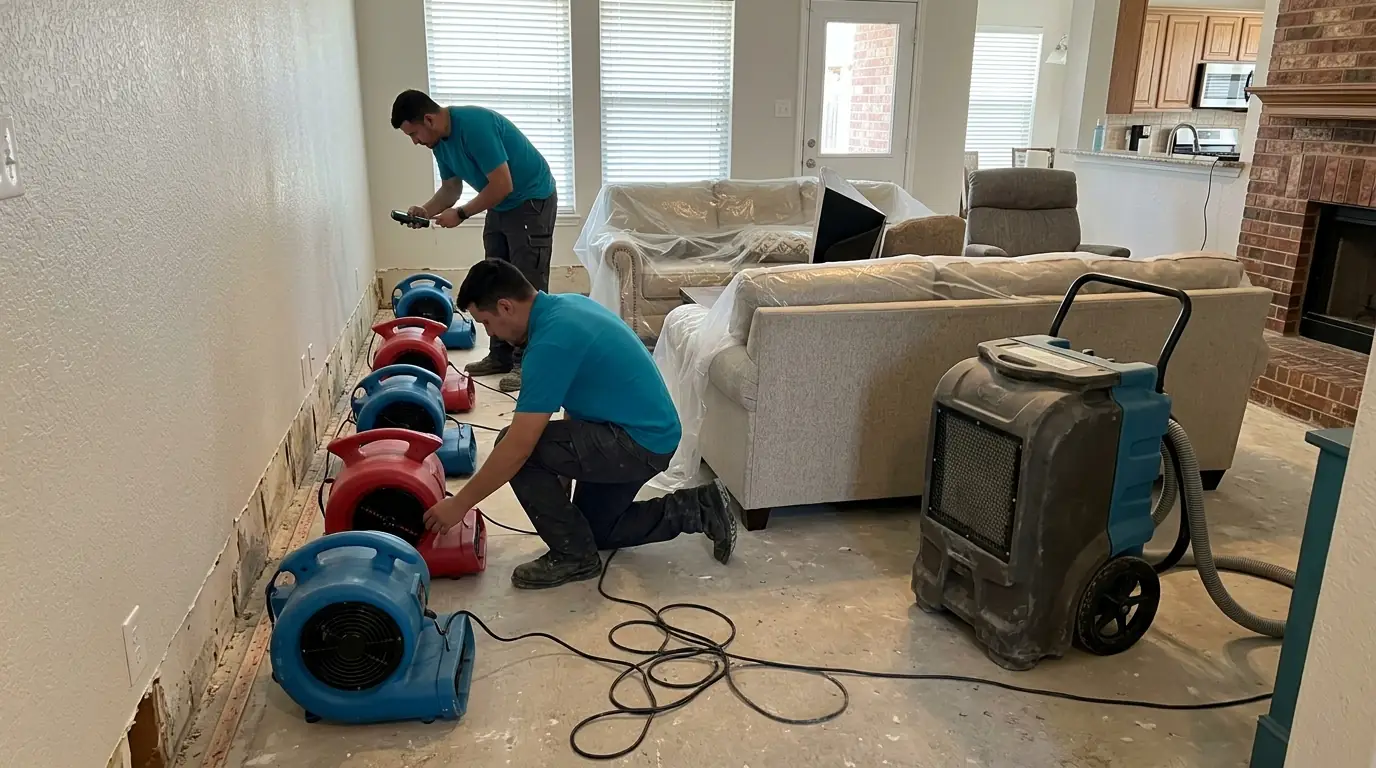
Our Mansfield office sits in a city that lies mainly in southeastern Tarrant County, with parts reaching into Johnson County and Ellis County, about 15 miles southeast of Fort Worth. Mansfield's population roughly doubled between 2000 and 2010, so much of its housing is recent construction. Newer homes here tend to mix carpet with tile or vinyl plank, and that mix shapes extraction: carpeted rooms need pad extraction, while plank floors usually need to come up so the slab can be reached.
How Long Water Extraction Takes
Extraction for one or two rooms of clean water usually takes a few hours, including moving furniture and checking where the water spread. A whole floor, deep water, or a mix of carpet and floating plank floors can take most of a day. Drying is the longer part and usually runs three to five days afterward. Contaminated water adds time for pad and material removal before drying can start.
What You Can Do Before We Get There
| Task | What you can do | What we do |
|---|---|---|
| Stopping the water | Close the fixture valve or the main shutoff, usually in the meter box near the street. | We confirm the source is really stopped and look for a second leak point. |
| Electrical safety | Turn off breakers to rooms with water near outlets or cords, if the panel is in a dry spot. | We check outlets and appliance locations before running pumps and extractors. |
| Small puddles | Mop or towel clean water off tile and vinyl. | We extract carpet and pad and pull water from under floating floors. |
| Furniture and contents | Move papers and electronics off the floor and put foil under furniture legs. | We lift and block heavy furniture and set aside rugs that need separate cleaning. |
Never walk into standing water if power to that room is still on or you can't reach the panel safely; wait outside and call.
What Drives the Cost of Water Extraction?
HomeGuide's cost guide lists water extraction and drying at $4 to $12 per square foot ($4 to $6 clean, $6 to $9 gray, $9 to $12 black water) as a national planning range. Extraction itself is usually a small part of the bill; the wet area and the water category matter more.
- Wet square footageExtraction and the drying that follows scale with the area, so a hallway and an open-plan living room take very different time and equipment.
- Water categoryClean water often allows carpet to stay. Gray or black water adds pad removal, disposal, antimicrobial treatment and protective gear for the crew.
- Flooring typeCarpet extracts from the top. Floating plank floors usually have to come up so the slab below can be reached, which adds labor and replacement.
- Depth and sourceSeveral inches of water, or a source that's still flowing, means pumping first and more passes before the drying setup can even start.
Range cited from a national cost guide (source, 2026-02-06). It is a planning figure, not a quote; your job is priced after we see it.
Emergency Water Extraction Questions From Fort Worth Homeowners
Yes, in most clean-water cases. A weighted extraction tool compresses carpet and pad and pulls water up through both. We follow with meter readings. If the pad stays wet, or the water was gray, we lift the carpet back, remove the pad and dry both sides.
It soaks the bottom plate, the lower drywall and sometimes insulation in the next room. Extraction can't reach it, so we find it with a meter and dry it with directed air, weep holes behind the baseboards or, with wet insulation or contaminated water, a low cut.
Extraction removes liquid water, not the moisture held inside materials. Carpet backing, pad, wood and concrete still hold water in their pores, and air movers and dehumidifiers evaporate it over the next few days. Damp right after extraction is normal; the readings tell us if drying is on track.
No. Water that ran across soil, mulch or a driveway before coming inside is treated as contaminated, even if it looks clear. Pad and porous materials it touched usually come out. Rising water from outside is covered on our flood damage cleanup page.
We'd say no. Wet carpet is heavy, and pulling it off the tack strip can tear or delaminate the backing so it can't be re-stretched. The tack strip pins are sharp, too. Leave it down, keep the AC running and let us lift it properly.
Related Work We Handle
Get Standing Water Off Your Floors
Every hour water sits, it moves into more pad, more drywall and more subfloor. We answer 24/7. Call and we'll start with the shutoff and the breaker, then get extraction going.
Updated October 2026