Quick answer
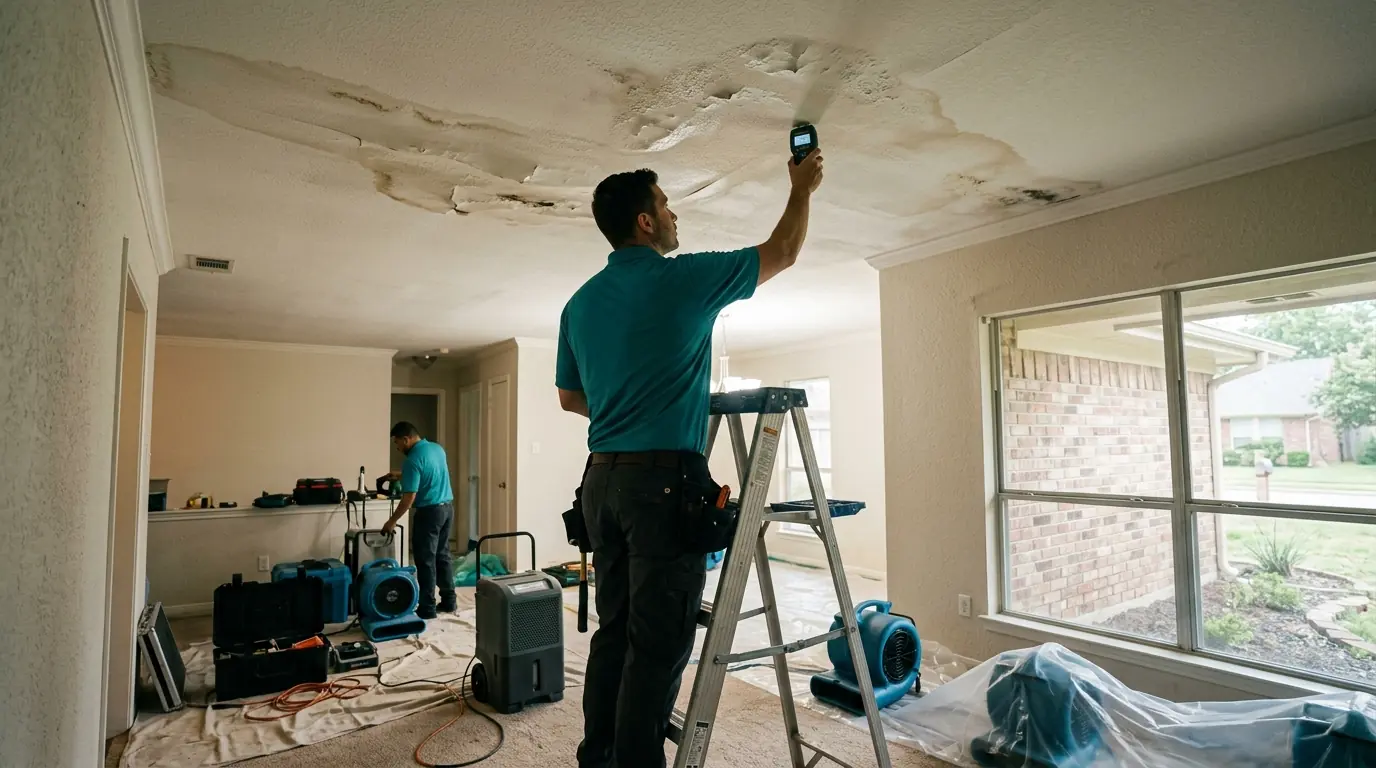
Ceiling water damage in Fort Worth usually comes from one of three places: an attic AC drain, a bathroom above, or the roof. A wet ceiling holds the water's weight plus soaked insulation, and saturated drywall can drop without warning. We trace the source, drain and remove the wet section, dry the framing above and patch to match.
What Ceiling Water Damage Involves
A brown ring on the ceiling is the last stage of a leak, not the first. By the time it shows, water has usually soaked the insulation, run along a joist and spread across the back of the drywall. The stain's size says little about the wet area, so we read the ceiling with a meter and a thermal camera, then look from the attic side.
The source decides the fix. An overflowing condensate pan, a failed wax ring and a hail-damaged roof leave the same stain but need an HVAC tech, a plumber or a roofer. Ceilings that only stained can be dried, sealed with stain-blocking primer and painted. Ceilings that sagged come down and get new drywall, with texture matched as our drywall repair page describes.
How We Take Care of a Wet Ceiling
- 01
Make the ceiling safe
We check for lights and fans in the wet area, have that circuit shut off if needed, and drain a bulging ceiling into a bucket before it can drop.
- 02
Trace the source
From the attic or the floor above, we follow the water trail to the AC pan, the plumbing fixture or the roof penetration and photograph what we find.
- 03
Remove and dry
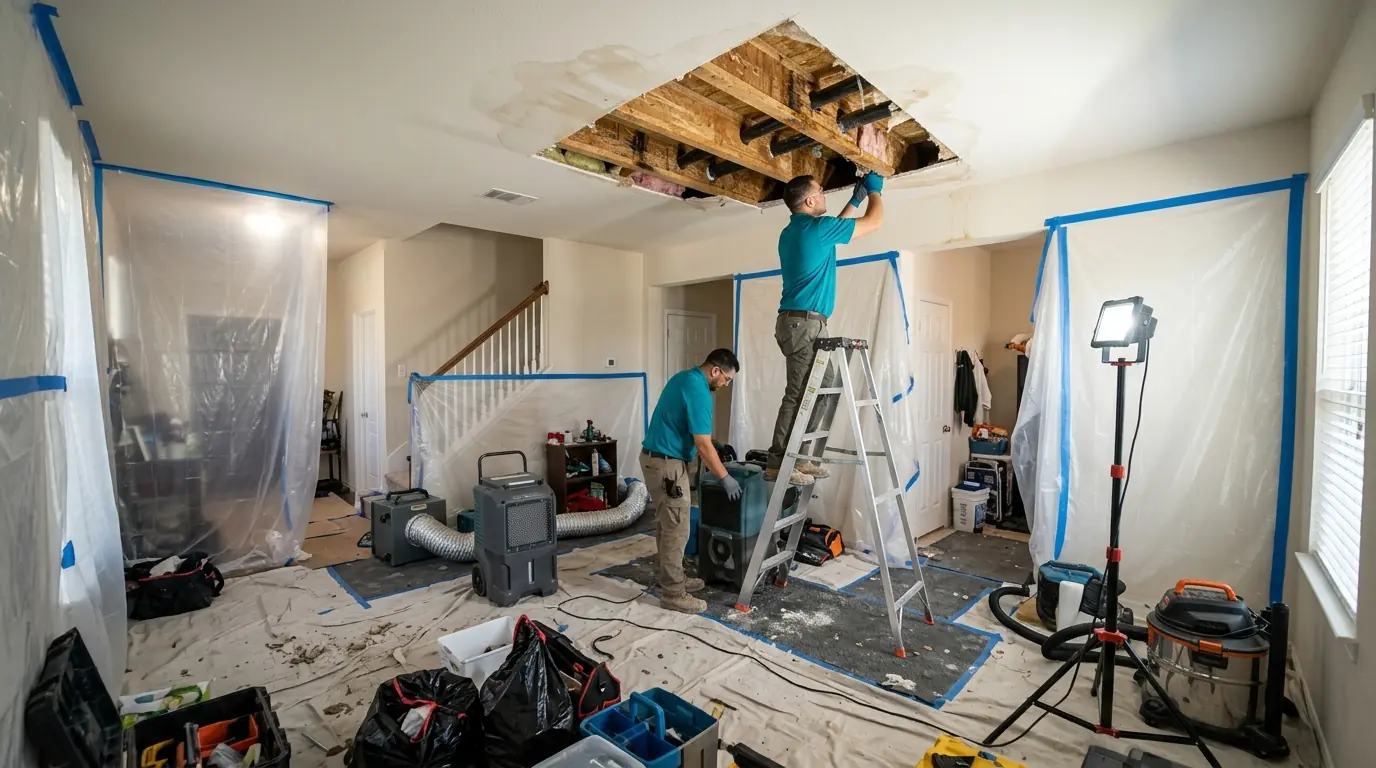
Sagging drywall and wet insulation come out of the affected bay. Air movers and a dehumidifier dry the joists and decking, with readings logged each visit.
- 04
Patch, texture, paint
New drywall goes up, joints are taped and the texture is matched. A stain-blocking primer goes on before the finish coat so nothing bleeds through.
Ceiling Warning Signs to Take Seriously
Yellow or brown rings
Concentric rings mean the leak has wetted and dried more than once, typical of an AC pan or a roof leak that acts up with each rain.
Bulge or sag
A ceiling that bows downward is holding water or wet insulation. Keep people out from under it until it's drained.
Drips at a light fixture
Water follows wiring to fixture boxes, so drips from a light or fan mean that circuit should be off before anyone touches it.
Musty smell in a hallway
A musty smell near the attic hatch or HVAC return can mean a pan overflow is soaking insulation out of sight.
AC Drain Line Overflows
With the air handler in the attic, the coil makes gallons of condensate a day in summer. It drains through a PVC line, with a secondary pan underneath as backup. When algae clogs the line and the float switch is missing or failed, the pan overflows onto the ceiling below, often in a hallway or closet near the unit, usually in July or August. Once the drain is cleared, we remove wet insulation around the pan and dry or replace the drywall. Our AC drain line overflow guide covers prevention.
Upstairs Bathroom Leaks
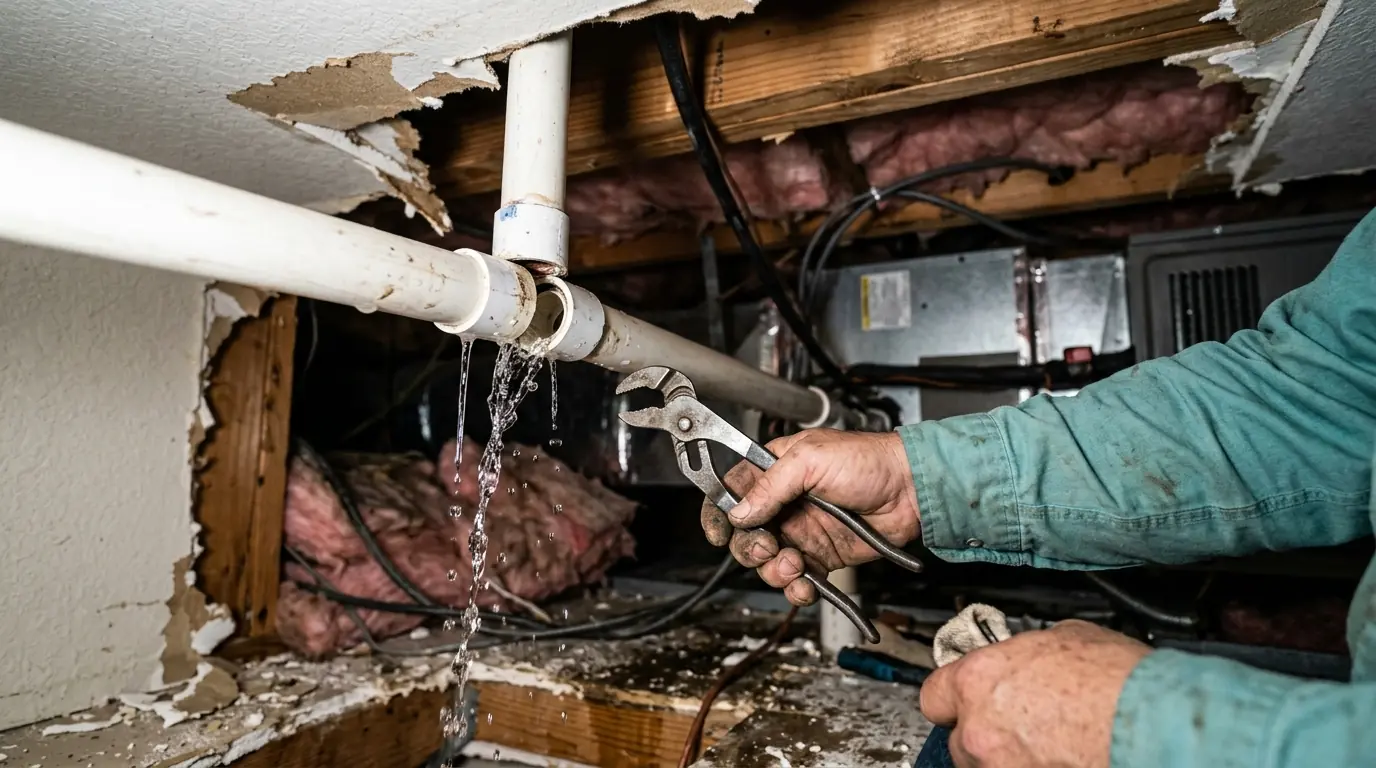
A stain under a second-floor bathroom points to a failed toilet wax ring, a leaking shower valve, a cracked drain fitting or water getting past a tub surround. The stain may grow only when someone showers. We cut an inspection opening at the stain to see the joist bay, read the subfloor from below and check the trap and drain fittings. Drain leaks carry soap, hair and waste, so the ceiling cavity gets cleaned and treated, not just dried. The bathroom is repaired first, then we dry the floor system and close the ceiling.
Roof Leak Ceilings
Roof leaks show up after rain, near a valley, a vent pipe boot, a chimney or a skylight, and often a few feet from the entry point because water runs down the rafters first. After a hailstorm, fractured shingles may not leak until the next heavy rain. We check the attic for wet decking and insulation, follow the trail to the entry point and photograph it for the roofer and your adjuster. If the roof can't be fixed right away, we can tarp it. See our hail storm leak check guide.
Smoke, Soot or Water Damage Tonight?
The line is answered around the clock. Tell us what you see and we will tell you what to do first.

Ceiling Leaks in Fort Worth Ranch Homes
Fort Worth field note
Westcliff, just south of TCU, was built mostly in the 1950s and 1960s with single-story homes on lots full of mature trees. In a single-story ranch house the ceiling sits directly under the attic, so an overflowing AC pan, a cracked vent boot or a roof leak near an overhanging limb lands straight on the drywall over a living space. When we work houses like these, we check the whole attic around the source, because water often runs along a ceiling joist before it stains.
Wet Ceiling: What's Safe for You and What to Leave
| Task | What you can do | What we do |
|---|---|---|
| Catching drips | Set a bucket and towels under the drip and move furniture and electronics away. | We find how far the water spread above the drywall and where it entered. |
| Draining a bulge | With the circuit off, poke a small hole at the low point into a bucket. | We remove the failed section with debris contained and insulation bagged. |
| AC pan overflow | Turn the system off at the thermostat to stop condensate. | We dry the ceiling and attic once an HVAC tech has cleared the drain. |
| Roof leak during rain | Stay off a wet roof; keep catching water and photograph the stain. | We tarp the roof when it's safe and dry the attic and ceiling. |
Never stand on a ladder under a sagging ceiling with a light fixture or fan in it while that circuit is still on.
What Goes Into the Cost of a Ceiling Leak Repair?
HomeAdvisor reports a national range of $600-$1,550 for drywall repair after water damage, which covers many single-room ceiling patches. The full bill depends on how far the water spread above the ceiling, whether insulation comes out and how much texture and paint matching it takes. The source repair is separate.
- Stain or collapseA stained ceiling that dries out can often be primed and painted. A sagging or failed ceiling means removing the section and hanging new drywall.
- Wet insulation aboveBlown insulation over the wet area usually has to be bagged out and replaced, which adds attic labor, disposal and new material to the job.
- Texture and paintPopcorn, knockdown and orange peel each take a different matching method, and a large patch may mean repainting the whole ceiling plane.
- Water sourceToilet and drain leaks call for cleaning and antimicrobial treatment of the joist bay, while a clean supply leak or roof leak usually needs only drying.
Range cited from a national cost guide (source, 2026-06-17). It is a planning figure, not a quote; your job is priced after we see it.
Ceiling Water Damage Questions From Fort Worth Homeowners
Only after the source is fixed and the drywall and insulation above read dry. Regular paint lets the stain bleed back through, so the spot gets a stain-blocking primer first. If the drywall softened or sagged, painting won't hold and that section is replaced.
Timing helps. A stain that grows after rain points to the roof. One that appears on hot, dry days near the attic air handler points to the condensate pan. A stain under a bathroom that changes with showers is plumbing. A look from the attic usually settles it.
It can be. Saturated drywall and wet insulation are heavy, and a ceiling can drop all at once. Keep people and pets out from under it, shut off any light or fan circuit in that area and put a bucket at the low point. Don't push on it.
The goal is that it doesn't. We match the existing popcorn, knockdown or orange peel texture and prime before painting. On older ceilings with yellowed paint, a patch blends better if the whole ceiling plane is repainted, and we'll tell you before we start.
A recurring stain means an intermittent source: a roof leak that shows only in wind-driven rain, an AC pan that overflows on the hottest days or a shower leak that appears with long showers. The source has to be fixed for good before the ceiling is repaired.
Related Work We Handle
Get the Wet Ceiling Opened, Dried and Closed
A stain today is wet insulation and drywall tomorrow, and a sag can drop without warning. We answer around the clock. Call and we'll trace the source and make the ceiling safe.
Updated October 2026