Quick answer
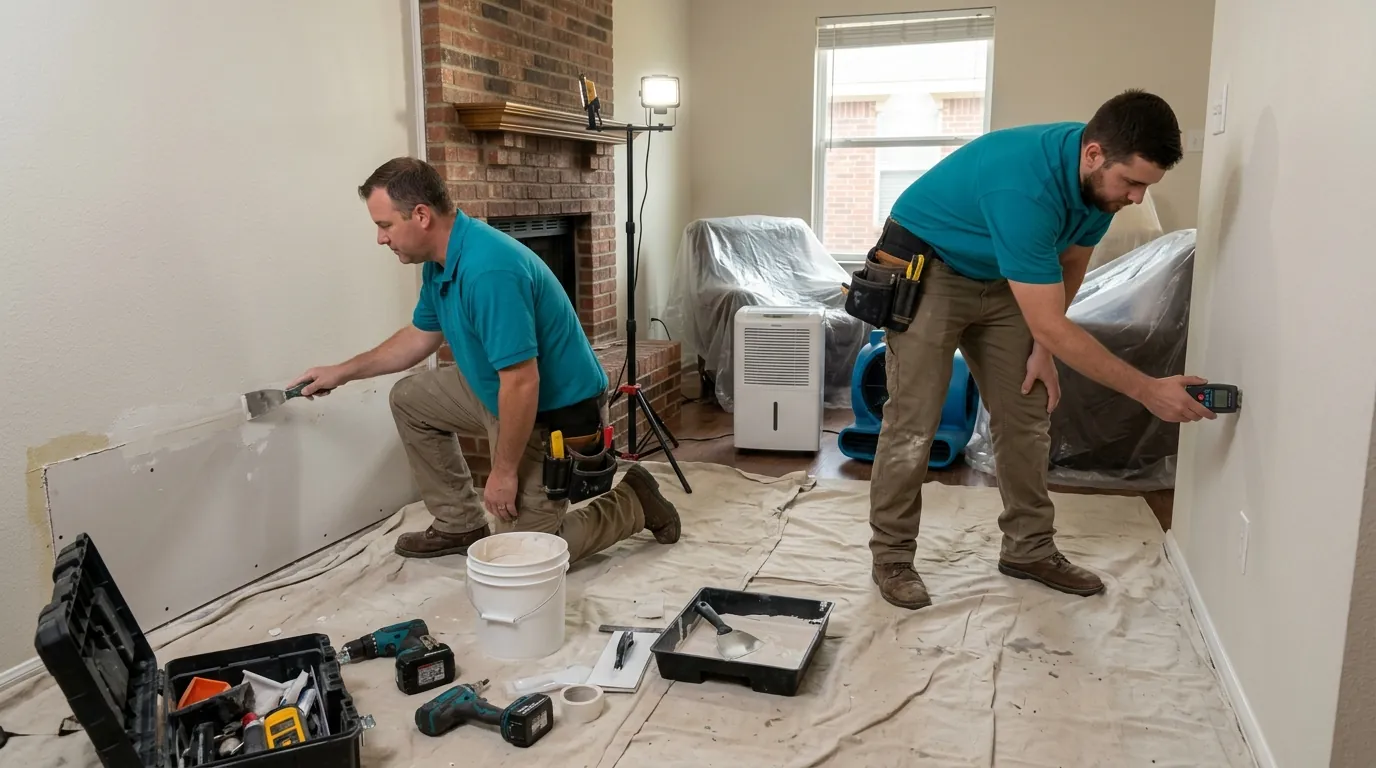
Drywall repair after water damage in Fort Worth starts with cutting out board that stayed wet, because drywall wicks water upward a foot or more above the waterline. We confirm the studs and insulation are dry with a moisture meter, hang new board, tape, mud, match the texture and prime the patch so paint looks even across the wall.
What Drywall Repair After Water Damage Involves
Drywall is paper over a gypsum core, and both parts fail when they stay wet. The paper face feeds mold, and the core turns soft and crumbly. After a leak, the board above the visible stain is often wet too, because water climbs through the gypsum. That's why we take readings up the wall before we decide where to cut, and why most repairs start with a straight cut above the wet line rather than a patch over the stain.
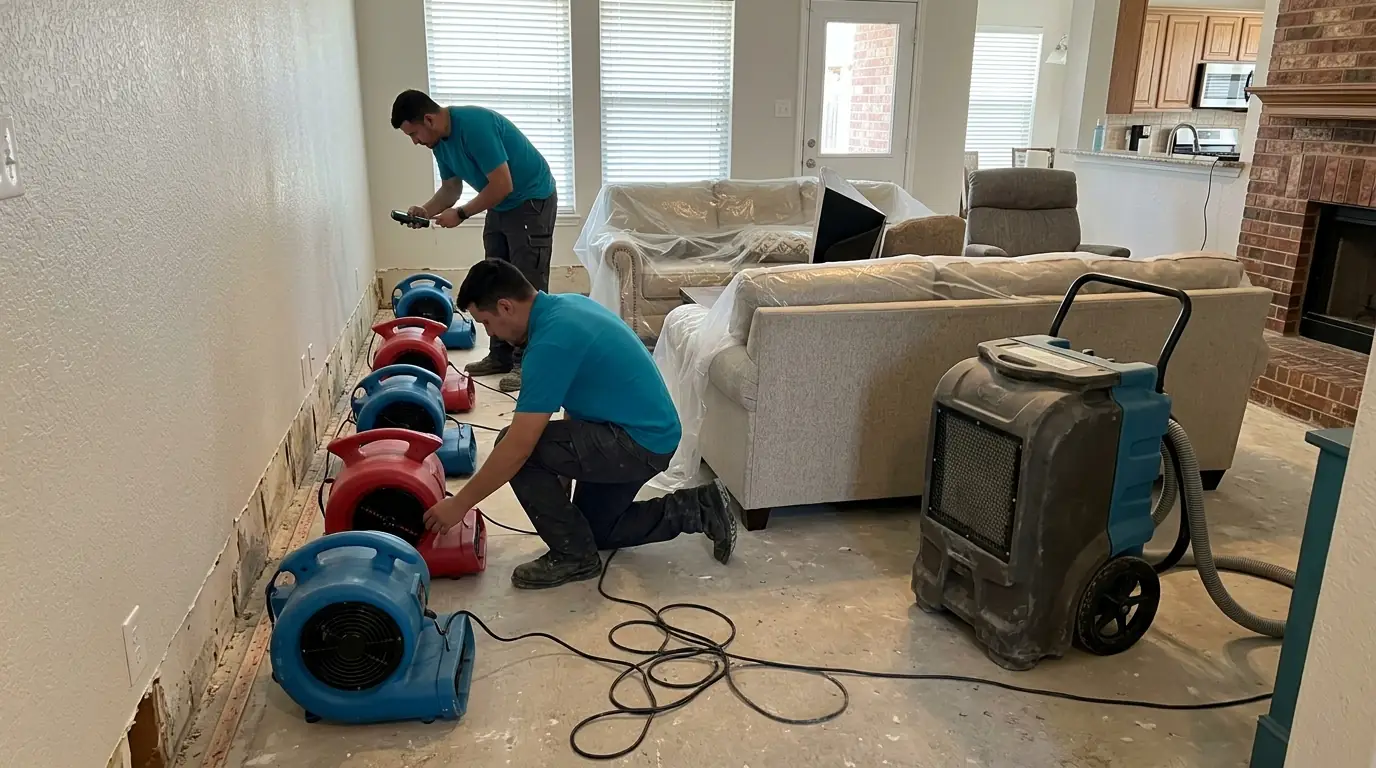
Repair comes after drying, not before. If the wall cavity is still wet when new board goes up, the moisture gets trapped and the patch fails, often with mold behind it. When the cavity hasn't been dried yet, we handle structural drying first, then come back to hang, tape and finish. Ceiling repairs follow the same rule. If the insulation above was soaked, insulation replacement happens before the new ceiling goes up.
Flood Cuts on Lower Walls
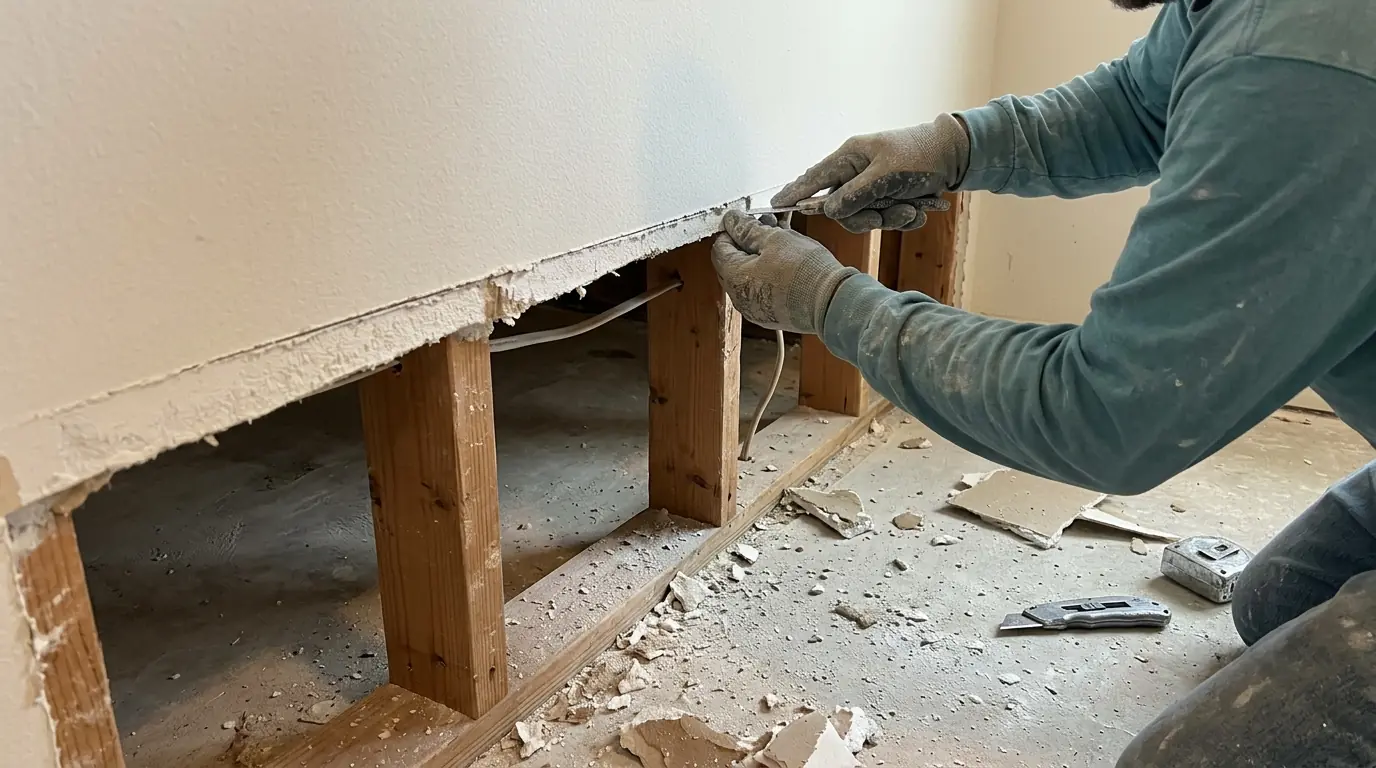
After water on the floor, drywall soaks up from the bottom edge and wicks higher than the water ever reached. You'll notice swollen baseboards, peeling paint near the floor or a musty smell along the wall. We pull baseboards, read moisture up the wall, and cut the drywall in a straight line above the wet zone, often at 2 or 4 feet so new pieces fit standard sheet sizes. Wet insulation comes out, the cavity dries, then new board goes in. The height of the cut and the number of walls affected set most of the cost and time.
Ceiling Drywall
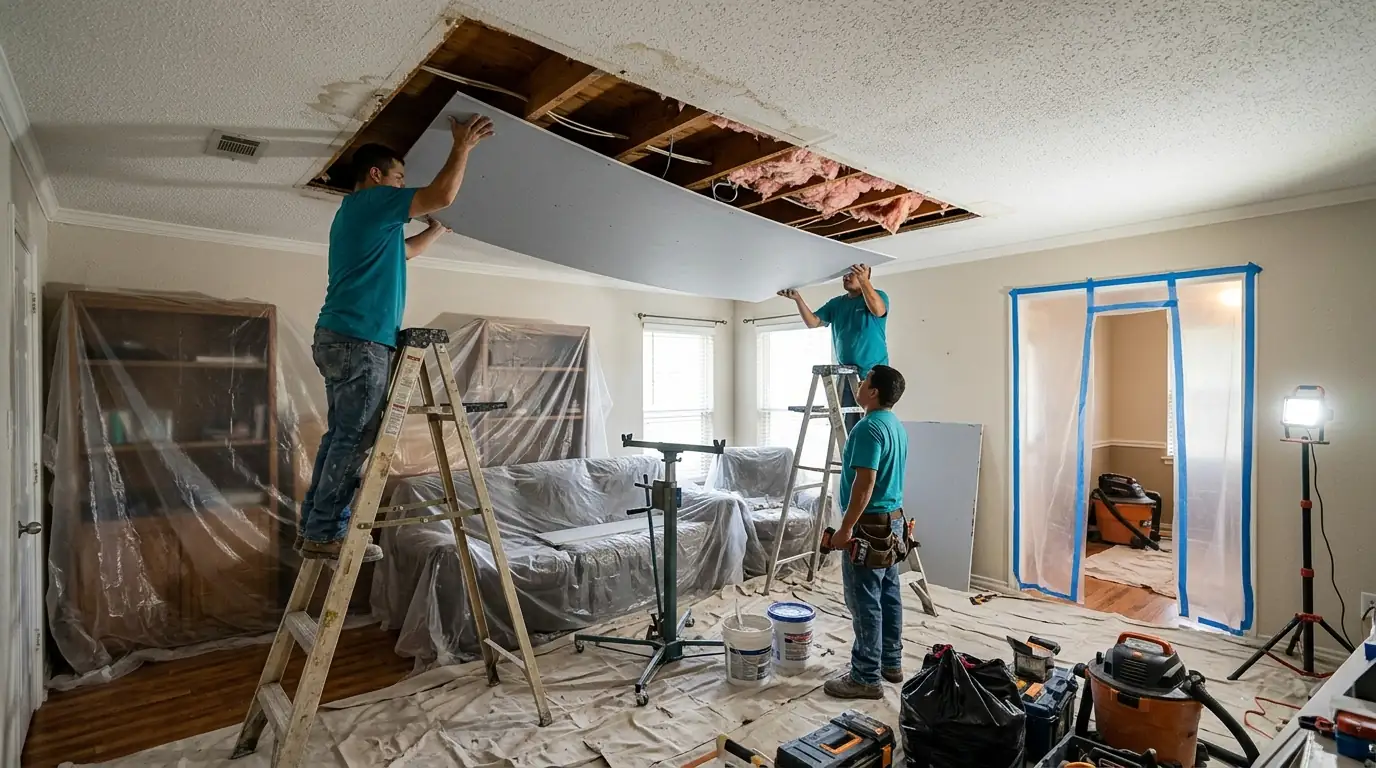
Ceiling drywall shows water as a stain, a sag, or nail heads popping through the paint. A sagging ceiling holds water and can drop without warning. We drain and remove the wet section back to solid board, ideally to the nearest joist on each side, and check the insulation and framing above. Once everything reads dry, we hang new board, screw it to the joists, tape, mud and texture it. Cost depends on the size of the opening, ceiling height, and whether the ceiling has a texture like popcorn or knockdown that needs matching.
Texture Matching
A patch that is flat and smooth stands out on a textured wall, especially under side light from a window. The common wall textures are orange peel, knockdown and smooth, and each has its own technique. We look at the surrounding wall, test our spray or hand texture on scrap board, then apply it to the patch and feather it into the old surface. Primer goes on before paint so the patch doesn't flash. Time and cost depend on the texture type and how large the patch is, since bigger areas are easier to blend than small ones.
Patch the Damaged Section or Replace the Whole Wall?
| Factor | Patch the damaged section | Replace full sheets |
|---|---|---|
| Best fit | Stains or wet board limited to the lower wall or one ceiling area | Water reached most of the wall, or the board is moldy across a wide area |
| Seams to hide | One horizontal seam along the cut line | Standard sheet seams, often easier to finish flat |
| Texture blending | Patch has to blend into old texture | Whole wall textured at once, so it matches itself |
| Material and labor | Less board, more care at the edges | More board and disposal, simpler finishing |
| Hidden damage | Only part of the cavity is seen | The whole cavity is open for inspection and drying |
If readings show the wet zone stops partway up, a flood cut and patch is usually enough; if most of the wall reads wet or moldy, full sheets often cost little more and finish better.
Smoke, Soot or Water Damage Tonight?
The line is answered around the clock. Tell us what you see and we will tell you what to do first.
How Much Does Drywall Repair After Water Damage Cost?
HomeAdvisor's drywall repair cost guide puts drywall repair after water damage at $600-$1,550. That is a national planning range from HomeAdvisor, not our price and not a quote. Where a given wall or ceiling lands in that range depends on the factors below.
- Square footage removedA two-foot flood cut along one wall is a small repair. Four-foot cuts around a whole room or a large ceiling section take more board, mud and time.
- Ceiling vs wallCeiling work is slower than wall work. Board is heavier overhead, and texture has to blend across a surface you see from every angle.
- Texture typeSmooth walls need more sanding to hide seams. Knockdown and popcorn need careful application to match the pattern around them.
- Insulation behind the wallWet batts or blown insulation in the cavity have to be replaced before the wall closes, adding material and labor.
- Paint and trimMatching paint, replacing swollen baseboards and resetting outlets, switches and cover plates all add to the finish stage of the repair after the board is up.
Range cited from a national cost guide (source, 2026-06-17). It is a planning figure, not a quote; your job is priced after we see it.
Drywall in Fast-Growing Towns South of Fort Worth
Fort Worth field note
Much of the drywall we repair sits in fairly new houses. Midlothian's housing units nearly doubled from 6,138 in 2010 to 11,978 in 2020, and newer homes like those are built with drywall over wood framing and a sprayed texture across most walls and ceilings. When a supply line or water heater leaks in a house that age, the damage usually stays in the drywall, baseboards and flooring rather than old plaster. That makes clean flood cuts and a careful texture match most of the job.
How We Repair Water-Damaged Drywall
- 01
Read the wall
We take moisture readings up the wall and across the ceiling to find where the wet board actually ends, not just where the stain stops.
- 02
Cut clean lines
We cut straight above the wet zone or back to joists and studs, so new board has solid backing and seams fall in sensible places.
- 03
Confirm the cavity is dry
Studs, plates and any insulation that stays are checked with a moisture meter before anything closes. If they still read wet, we finish drying first and come back.
- 04
Hang, tape and mud
New board is screwed to the framing, the seams are taped and coated with joint compound in several thin passes, then sanded flat so no edges show through paint.
- 05
Texture, prime and paint
We match the texture on scrap first, apply it to the patch, then prime and paint so the repair blends into the wall and ceiling around it.
Drywall Jobs You Can Do vs When to Call Us
| Task | What you can do | What we do |
|---|---|---|
| Small dry stain on a wall | Once the leak is fixed and the spot reads dry, seal it with a stain-blocking primer and repaint. | We check with a moisture meter first so you're not painting over a wall that's still wet inside. |
| Soft or crumbly drywall | Don't paint or patch over it. Soft board is wet or damaged through the core. | We cut it out back to sound board and dry the cavity before new board goes up. |
| Sagging ceiling | Keep everyone out from under it and put a bucket below. Don't poke it. | We drain and remove it safely, then check the insulation and joists above. |
| Musty smell behind a wall | Note where it's strongest and whether a bathroom or kitchen is on the other side. | We open the wall where readings point and check for mold before deciding the repair. |
Closing a wet wall cavity under new drywall traps moisture, and that is one of the most common ways mold gets started behind a fresh repair.
Drywall Repair After Water Damage Questions From Fort Worth Homeowners
Gypsum acts like a sponge and pulls water upward. After a few hours of standing water, the board is often wet well above the visible line. We read moisture up the wall and cut above the highest wet reading, usually at 2 or 4 feet so new sheets fit without odd seams.
Only if the leak is fixed, the board reads dry and it's still firm. In that case a stain-blocking primer and paint will cover it. If the board is soft, sagging or moldy, or the cavity behind it is still wet, paint will hide the problem for a short time and then fail.
A careful repair should be hard to spot from normal viewing distance. Texture matching and priming are what make the difference. Very old paint can be hard to match exactly, so sometimes we paint the full wall to a corner so the color reads even across it.
We compare moisture readings in the repaired area to a dry wall elsewhere in the house, checking the studs, bottom plate and any insulation that stays. When the wet area reads close to the dry reference, it's ready. We note those readings so you have them with the repair record.
Not always. Mold on the face of a small area of board that dried quickly can come out with the section around it. Mold across a large area, or on the back of the board inside the cavity, usually means removing more. In Texas, visible mold under 25 contiguous square feet can be cleaned by people who aren't licensed.
Related Work We Handle
Get the Wet Drywall Out and the Wall Finished
If your walls or ceiling took water, the first question is whether the cavity behind them is dry. We'll read it, cut where it needs cutting and finish the wall so it matches. Call to book a visit.
Updated October 2026