Quick answer
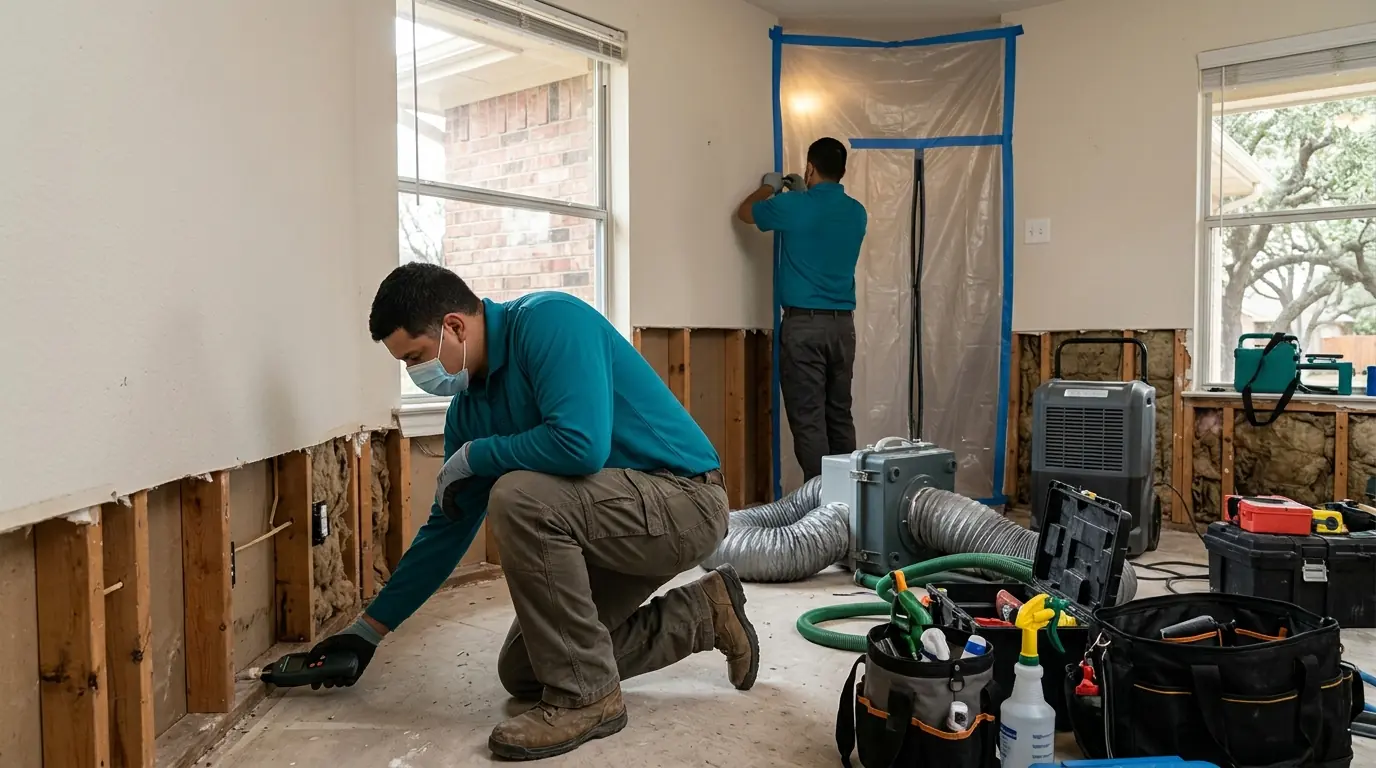
Mold remediation in Fort Worth homes has to start with the moisture, because mold can begin growing on wet drywall within 24 to 48 hours and comes right back if the leak isn't fixed. We contain the area under negative air, remove moldy materials, HEPA vacuum and clean the framing, dry it, and get it ready for clearance.
What Mold Remediation Involves
Mold is a symptom. Somewhere there's a leak, a condensation problem or water that never dried after an earlier loss. Spraying the visible spots buys a few weeks, then the stain returns because the growth inside the drywall paper and the moisture feeding it are still there. Real remediation removes the contaminated material and the conditions that grew it.
Texas splits larger mold jobs in two. A licensed Mold Assessment Consultant, an independent firm the homeowner hires or we can point you to, inspects and writes a protocol. The remediation side follows that protocol: containment, removal, cleaning and drying. The consultant then comes back for clearance, and a Certificate of Mold Damage Remediation is issued once it passes. Our role is the remediation side. The guide to Texas mold remediation rules explains the steps in more detail.
Black Mold on Drywall and Trim
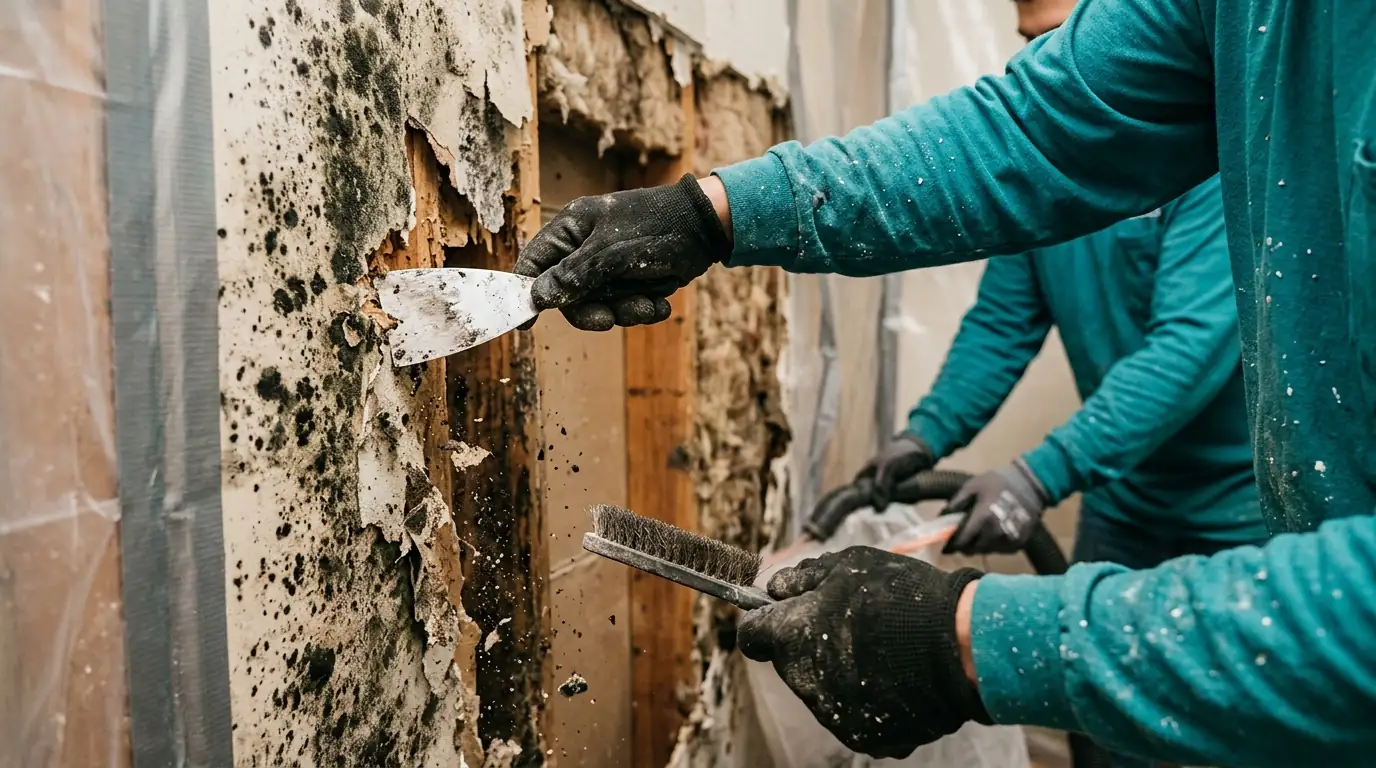
Most people say black mold when they see dark spotting on a wall, and many molds are dark. Color alone doesn't tell you the species or the risk, and testing isn't usually needed to decide the fix. What matters is how much is there and what's feeding it. Dark growth along the bottom of a wall usually means water at floor level. Spotting on a ceiling usually points to a roof, attic or AC leak above. We contain the area, remove the affected drywall and trim, HEPA vacuum and clean the framing, and dry it before anything is closed up. The size of the affected area and the source of moisture decide the scope.
Mold After a Leak That Wasn't Dried
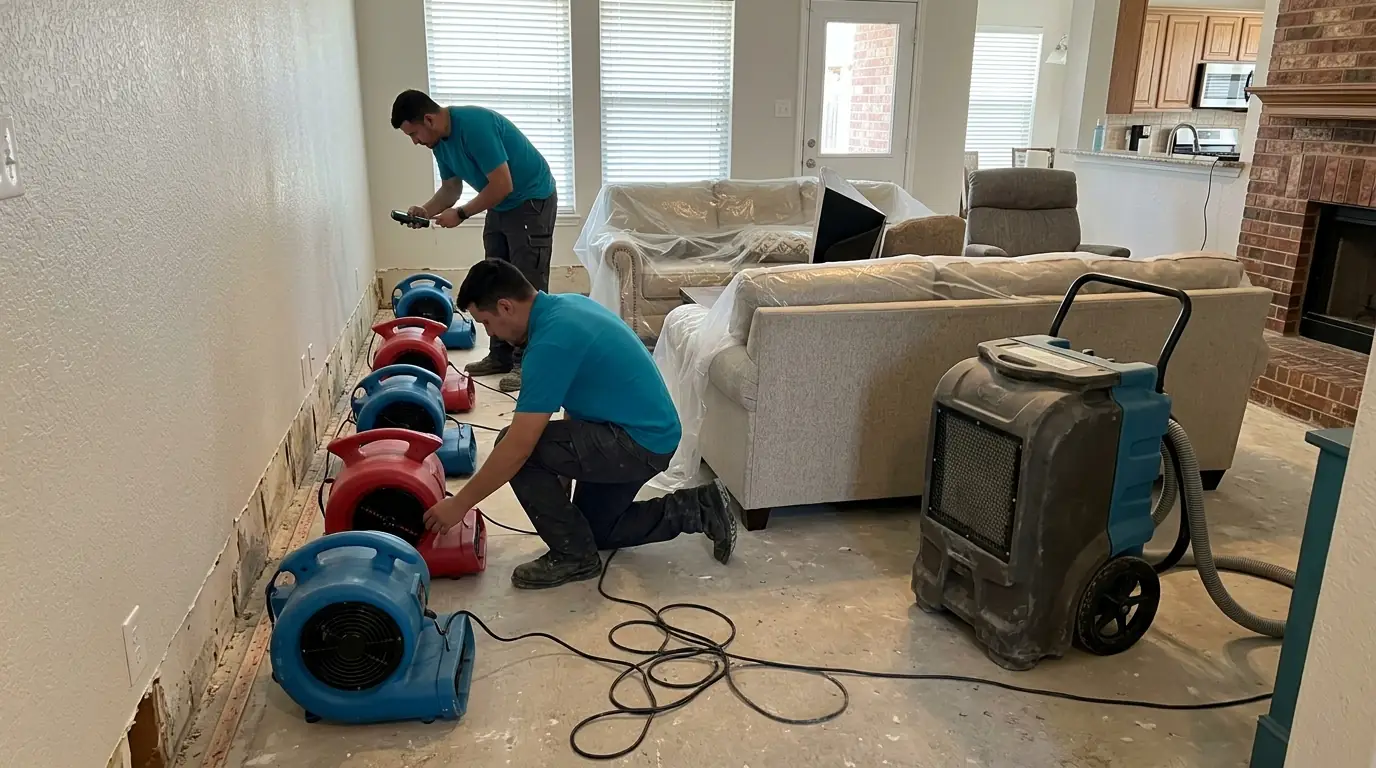
Mold after a leak usually means the visible water was cleaned up but the structure underneath wasn't dried. A dishwasher leak mopped up off tile, a ceiling stain that was painted over, or a wet carpet that dried on top while the pad stayed damp. A few weeks later, there's a musty smell or spotting at baseboards. We check moisture readings first, since active moisture means the source or the old water is still present. Then we remove the materials with growth, clean the framing, and dry everything to normal readings. Cost depends on how long the water sat, how far it spread and what has to be replaced afterward.
Mold Behind Drywall You Can't See
Hidden mold behind drywall usually shows up as a smell before anything is visible: musty, earthy, stronger in one room or near one wall. Paint may bubble or peel, baseboards may look stained, or a wall may read damp on a moisture meter even though the surface looks fine. We use moisture meters and a thermal camera to narrow the location, then open a small inspection hole inside containment rather than tearing out a whole wall on a guess. If growth is found, we open the area fully, remove affected drywall and insulation, and clean the cavity. The size of the hidden area isn't known until it's opened, which is why first estimates often change.
Do Not Wait for the Stain to Spread
Most of what we remove is material that stayed wet too long. Calling early keeps the job smaller.
What Does Mold Remediation Cost?
This Old House's cost guide puts mold remediation at $1,200-$3,750 (average $2,300) as a national planning range. Small, contained areas sit at the low end. Larger jobs with an independent assessor's protocol, wider containment and rebuild cost more. The assessor's fee is separate from the remediation.
- Size of the affected areaA few square feet behind a sink cabinet is a small job. Growth across a whole wall or ceiling needs more removal, containment and cleaning.
- Location and accessMold in an open room is easier to reach than mold in an attic, crawl space or behind built-in cabinets, which take more time to contain and remove.
- Moisture sourceThe leak or condensation causing the mold has to be fixed. A plumbing, roof or HVAC repair is usually billed separately by that trade.
- Rebuild after removalDrywall, insulation, trim and paint that come out during remediation have to go back in, and that work is often a separate line.
Range cited from a national cost guide (source, 2026-03-11). It is a planning figure, not a quote; your job is priced after we see it.
What Our Remediation Work Covers
- Moisture mapping to locate the source and spread
- Containment with plastic barriers and zipper doors
- HEPA negative air throughout the removal
- Removal and bagging of moldy drywall, insulation and trim
- HEPA vacuuming and cleaning of exposed framing
- Antimicrobial treatment of cleaned surfaces
- Drying to normal readings before the area is closed
- Photo records for the consultant and your file
Why Mold Shows Up in Fort Worth Homes
Fort Worth field note
Most mold we see in Fort Worth traces back to one of a few sources: an AC condensate line or drain pan dripping in the attic, a slow plumbing leak inside a wall or under a sink, roof leaks after a spring hailstorm, or an earlier water loss that was cleaned up but never fully dried. Summer humidity and heat speed growth once moisture is present. That's why the first question we ask on any mold call is where the water came from and when.
From First Look to Clearance
- 01
Find the water
We take moisture readings and use a thermal camera to locate the source and see how far moisture spread. A plumber, roofer or HVAC technician fixes the cause.
- 02
Protocol for larger areas
If visible mold covers 25 contiguous square feet or more, an independent Mold Assessment Consultant inspects and writes a protocol first. Our work plan follows that protocol.
- 03
Contain and set negative air
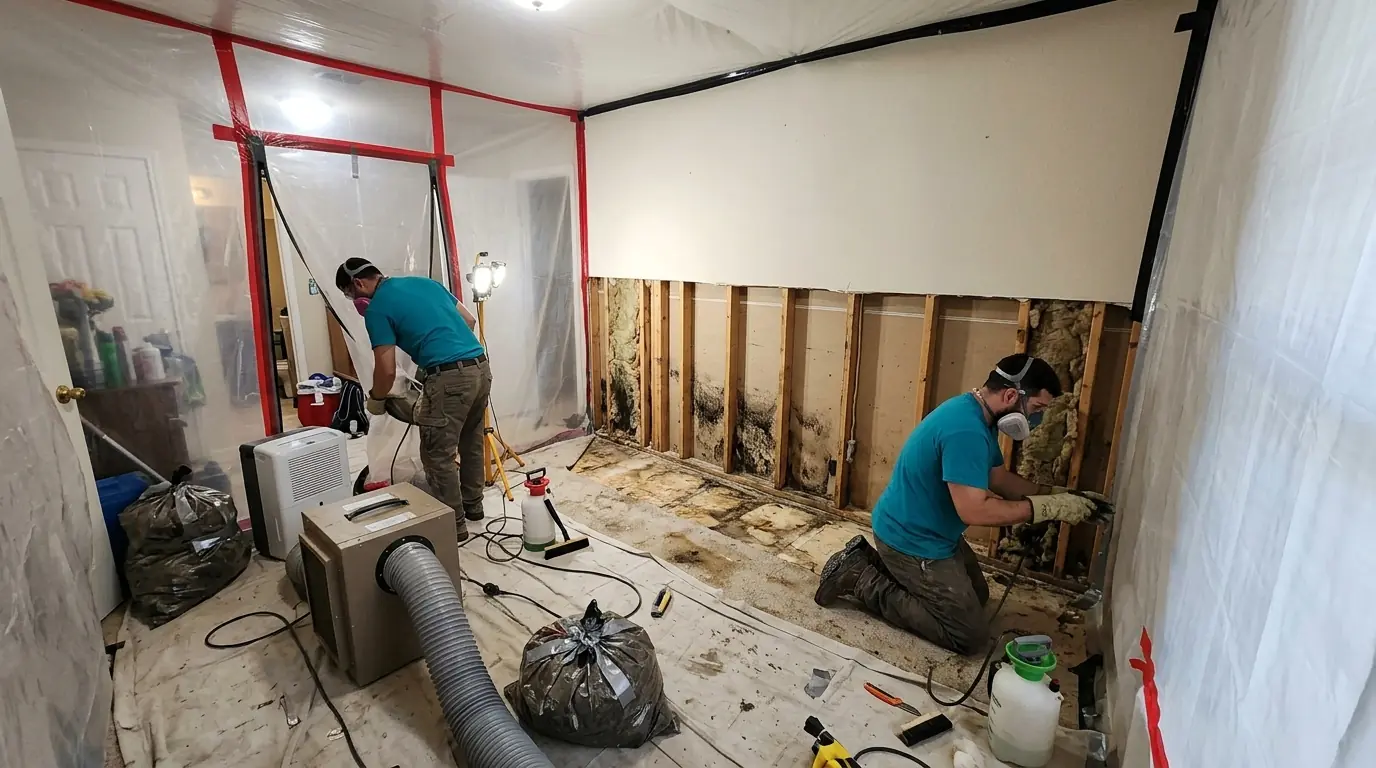
Plastic containment walls and a HEPA negative air machine keep spores inside the work area and exhaust filtered air, so the rest of the house stays clean.
- 04
Remove and clean
Moldy drywall, insulation and trim come out, bagged inside containment. Framing gets HEPA vacuumed, cleaned and treated, and the area is dried to normal readings.
- 05
Clearance and rebuild
The consultant returns for a post-remediation assessment. After the area passes clearance, it can be rebuilt, and a Certificate of Mold Damage Remediation is issued.
Signs Mold Is Growing Where You Can't See
A musty smell in one spot
An earthy smell that's stronger in one room, closet or cabinet often means growth behind a wall or under a floor.
Peeling or bubbling paint
Moisture behind drywall pushes paint off the surface, and that damp drywall is where mold starts.
Stains that return after painting
A ceiling or wall stain that comes back after paint means the moisture or growth behind it is still active.
Soft or crumbling drywall
Drywall that's soft at the base of a wall has been wet for some time, which is a common place for hidden mold.
Small Mold Spots You Can Clean and Jobs That Need Containment
| Task | What you can do | What we do |
|---|---|---|
| Spots on tile and grout | Clean with detergent and water, dry the area and improve ventilation. | Not usually needed unless spotting keeps returning after cleaning. |
| A small patch on drywall | Areas under 25 contiguous square feet can be handled without a license in Texas, with care and protection. | We help when the patch is soft, keeps returning or you'd rather have it contained. |
| Growth across a wall or ceiling | Leave it alone and don't disturb it, which spreads spores. | We contain the area, follow the consultant's protocol and remove the growth. |
| Bleach on drywall | Skip it. Bleach doesn't kill growth inside porous drywall and adds moisture. | We remove porous materials with growth and clean the framing instead. |
If you clean a small area yourself, wear an N95 mask, gloves and eye protection, and fix the moisture source or it will come back.
Mold Remediation Questions From Fort Worth Homeowners
For areas of 25 contiguous square feet or more, Texas requires an independent licensed Mold Assessment Consultant to inspect and write a protocol before remediation starts. The assessor and the remediation company can't be the same firm on one project. Smaller areas can be cleaned without that process.
Usually not to decide the fix. Visible mold needs removal whatever the species, and air tests can vary a lot with conditions. Testing helps when mold is suspected but hidden, when someone in the home has health concerns, or as part of a consultant's assessment and clearance.
Yes, if the moisture returns. Remediation removes existing growth, but mold spores are always present in the air. If a leak isn't fully repaired or humidity stays high, new growth can start. Fixing the source and keeping the area dry is what prevents a repeat.
It's the document issued in Texas after a remediation project passes the post-remediation assessment by the independent consultant. It shows the mold problem was addressed according to the protocol. Homeowners often keep it for insurance and for disclosure when selling the home.
In most cases, yes. Containment and negative air keep spores inside the work area and pull air out through HEPA filtration. People with asthma, allergies or weakened immune systems may want to stay elsewhere during removal, especially for larger jobs.
Related Work We Handle
Found Mold Behind a Wall or Under a Sink?
Leave it undisturbed and tell us what you're seeing. We'll find the moisture, explain the Texas steps and plan the removal. Call us to talk it through.
Updated October 2026