Quick answer
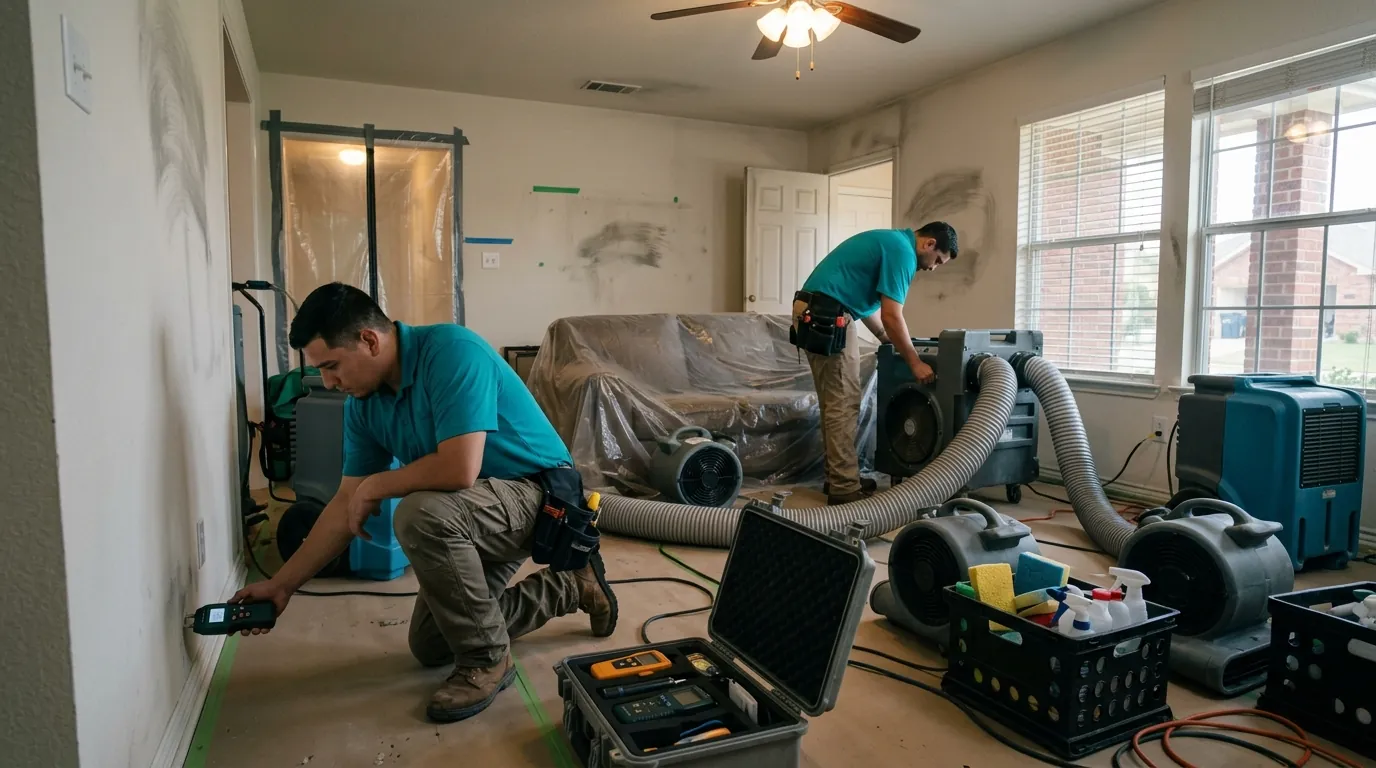
Smoke odor removal in Fort Worth homes only works after the residue causing the smell is cleaned out, because odor molecules keep releasing from soot, insulation and fabrics. Air fresheners just mask it for a day or two. We clean or remove the source, then use thermal fogging, hydroxyl generators or ozone to break down what's left.
What Smoke Odor Removal Involves
Smoke odor is physical. Tiny particles and gases from the fire settle into porous materials like drywall paper, carpet, upholstery, insulation and unsealed wood, and they keep releasing smell as temperature and humidity change. That's why a house can seem fine on a cool morning and smell strongly by a hot afternoon. Deodorizing equipment works on what's in the air and on surfaces it can reach, but it can't fix residue that's still sitting in place.
So the order matters: soot removal and cleaning first, then removal of anything too saturated to save, then sealing of framing and stained drywall, and only then the odor treatment. We pick the method based on what burned, whether the home is occupied, and what materials are left. Lingering odor often traces back to the ducts, which air duct cleaning addresses.
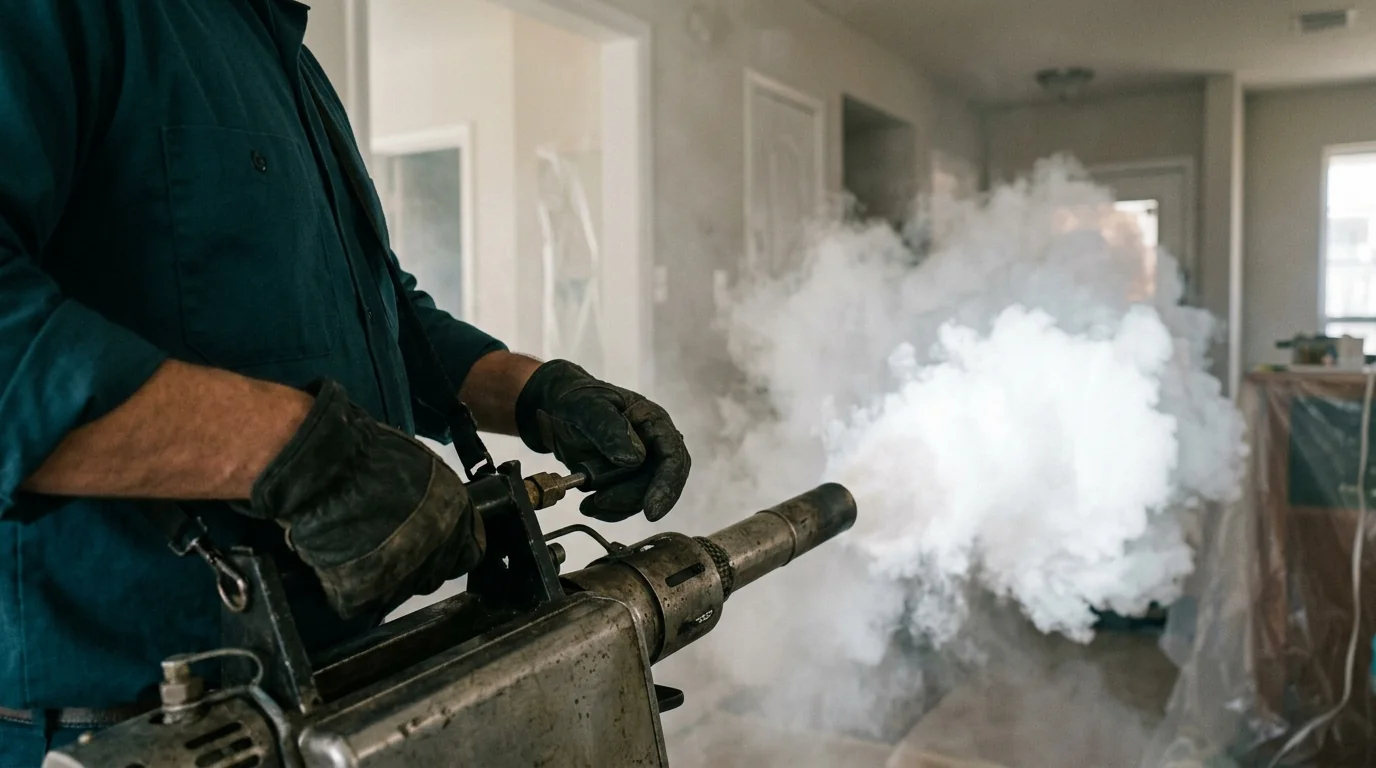
Thermal Fogging for Odor in Hidden Gaps
Thermal fogging heats a deodorizing solution into a fine fog that behaves a lot like the original smoke. It drifts into gaps around outlets, behind trim, into wall cavities and through fabric, reaching the same places the smoke went. It works well after protein fires and in houses with lots of nooks where odor hides. The home has to be empty during fogging and for a short time after, and smoke detectors need to be covered or disabled. Fogging usually follows cleaning, not replaces it. Cost depends on the size of the space and how many treatments it takes, since heavier odors sometimes need a second round.
Hydroxyl Generators You Can Live Around
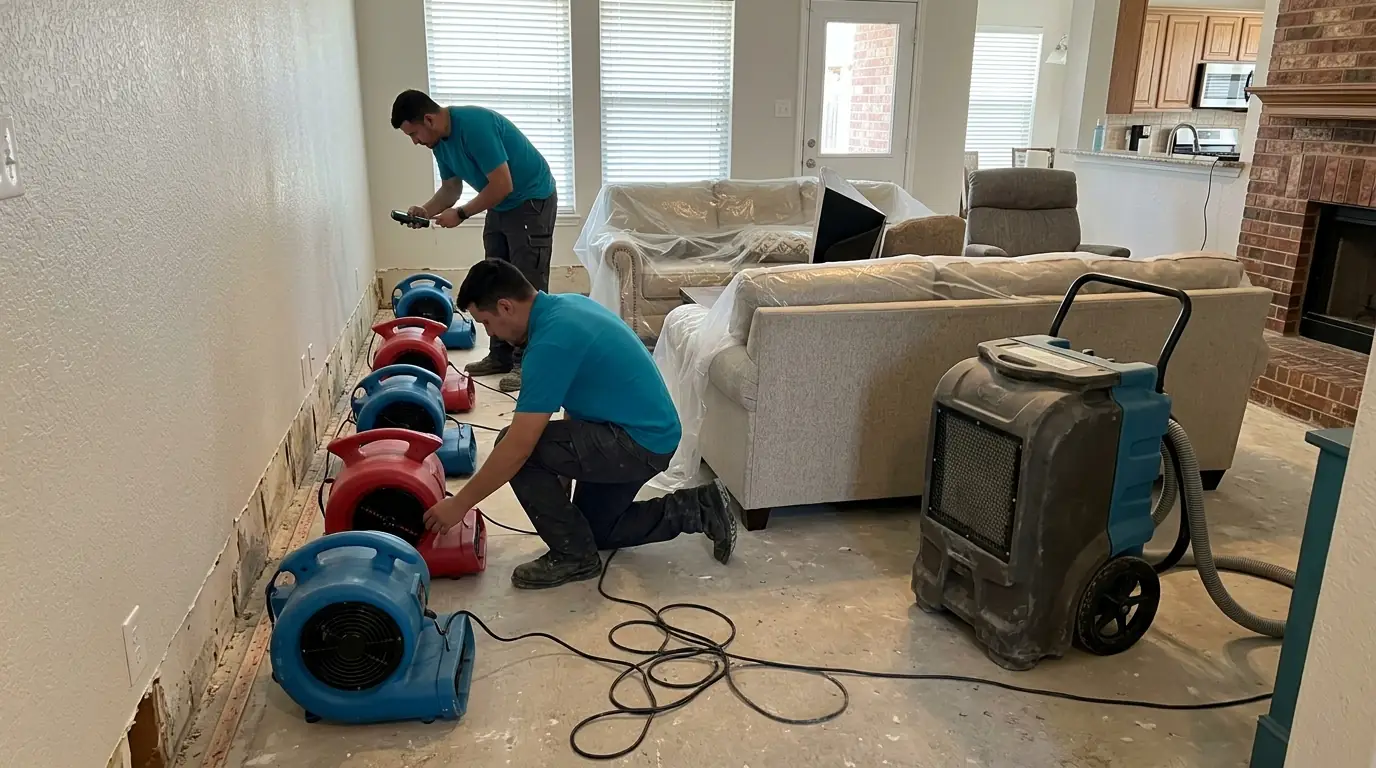
Hydroxyl generators use UV light to create hydroxyl radicals, which break down odor molecules in the air and on surfaces. They're slower than ozone but safe around people, pets and plants, so the family can stay in the house while they run. That makes hydroxyl the go-to choice for occupied homes, offices that can't close and lighter odors that remain after cleaning. Units usually run for several days, moving from room to room. They also don't damage rubber, fabric or electronics the way high ozone levels can. The number of units needed and how long they run decide the cost, and both depend on the odor level and square footage.
Ozone Treatment in an Empty House
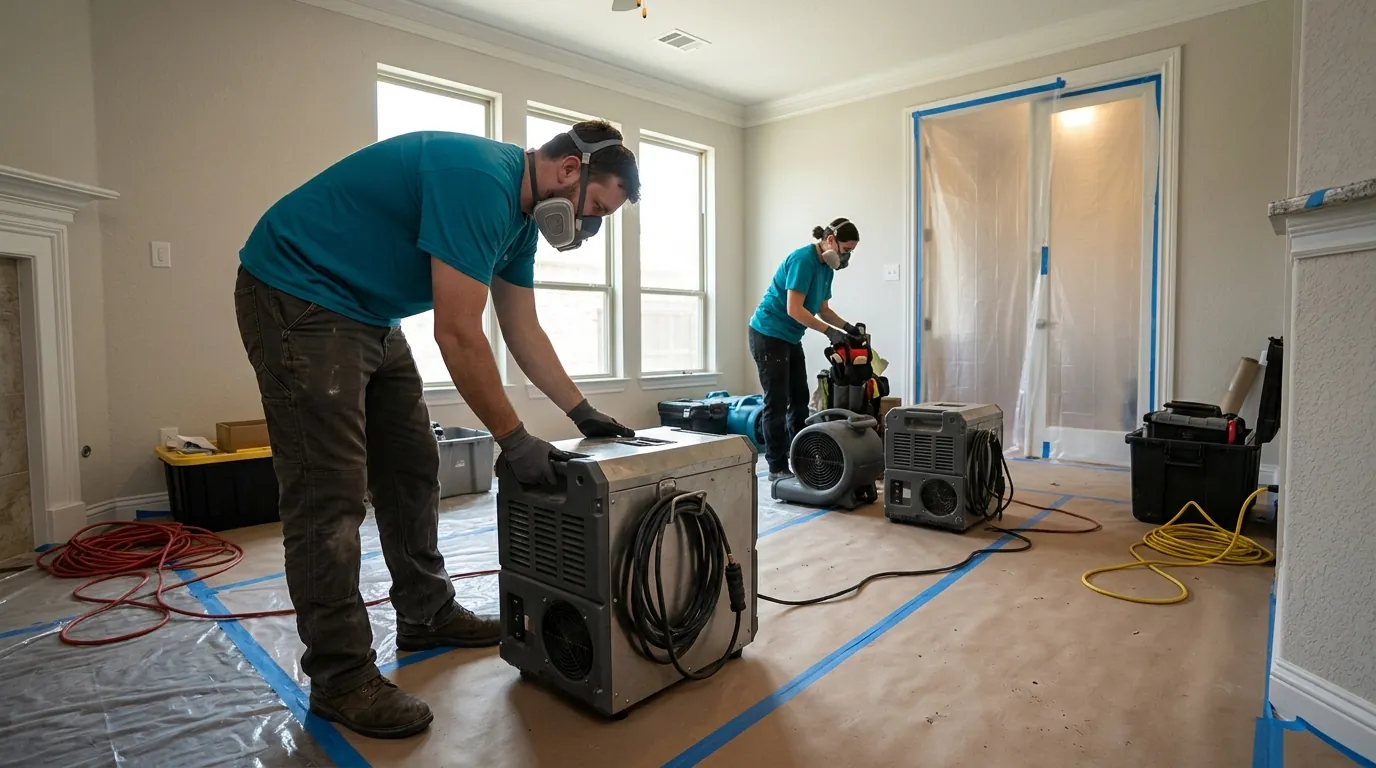
Ozone generators produce high concentrations of ozone gas, which oxidizes odor molecules quickly. It's strong and can clear heavy smoke smell in a day or two, but nobody, including pets and houseplants, can be inside while it runs or until the ozone breaks down and the space is aired out. Long or repeated exposure can also harden rubber seals and fade some fabrics, so we limit run times and remove sensitive items first. Ozone is best for vacant houses, cars and closed rooms after cleaning is done. Cost depends on the number of rooms, how many cycles it takes, and how much prep is needed to protect contents.
Thermal Fogging, Hydroxyl or Ozone?
| Factor | Hydroxyl generators | Ozone or thermal fogging |
|---|---|---|
| Can people stay home? | Yes, safe around people and pets | No, the house must be empty during treatment |
| Speed | Slower, usually several days | Faster, often one to two days |
| Best for | Occupied homes and lighter odor | Vacant homes and heavy odor after cleaning |
| Effect on materials | Gentle on rubber, fabric and electronics | High ozone can harden rubber and fade some fabrics |
| Reach | Works on air and exposed surfaces | Fog reaches gaps and cavities like smoke did |
If you need to stay in the house, hydroxyl is the safe choice; if the house is empty and the odor is heavy, ozone or fogging gets there faster.
Do Not Wait for the Stain to Spread
Most of what we remove is material that stayed wet too long. Calling early keeps the job smaller.
What Does Smoke Odor Removal Cost?
Bob Vila's cost guide puts odor removal at $200 and $1,000 (ozone treatment $200 to $400) as a national planning range. That's for deodorizing alone. If residue still needs cleaning or materials have to come out first, that work is separate and usually larger than the odor treatment itself.
- What burnedProtein smoke from food and synthetic smoke from plastics are harder to deodorize than dry wood smoke and may need more than one method or round.
- Residue still presentIf soot or saturated materials remain, deodorizing won't hold. Cleaning or removal has to come first, and that work adds to the scope.
- Occupied or vacantOccupied homes usually need hydroxyl, which runs longer. Vacant homes can use ozone or fogging, which work faster but require full clearance.
- Square footage and layoutLarger homes and open floor plans need more equipment or more run time, and closed rooms with poor airflow can need a separate treatment.
Range cited from a national cost guide (source, 2024-06-12). It is a planning figure, not a quote; your job is priced after we see it.
What Our Odor Removal Service Covers
- Walk-through of living space, attic and HVAC for odor sources
- Removal of smoke-saturated insulation and porous items
- Odor-blocking primer on stained framing and drywall
- Thermal fogging, hydroxyl or ozone matched to the home
- Smoke detector protection during fogging
- HVAC shutdown or filtration during treatment
- Follow-up odor check after warm weather
Why Smoke Smell Comes Back on Hot Fort Worth Days
Fort Worth field note
Homeowners across Fort Worth tell us the same thing: the smell seemed gone in the spring, then came back in July. That's not imagination. Heat and humidity make residue in drywall, attic insulation and closed-up wall cavities release odor again, and a hot attic over an HVAC system can push it through the vents. On a summer job, we check attic insulation and duct runs as well as the living space, because that's where returning odor most often starts.
How We Get Smoke Smell Out for Good
- 01
Find every odor source
We walk the house, attic and HVAC, checking insulation, fabrics, closets and ductwork. Smell that seems everywhere usually traces back to a few saturated materials.
- 02
Clean or remove residue
Soot gets cleaned off surfaces, and items too saturated to deodorize, like smoky attic insulation or foam cushions, are removed and listed for your records before treatment.
- 03
Seal stained surfaces
Cleaned framing and drywall that still carry staining get an odor-blocking primer, which locks in any residue that can't be cleaned out of the material completely.
- 04
Treat the air and surfaces
We run thermal fogging, hydroxyl or ozone based on the home, its occupants and the odor level, sealing off the HVAC or running it as the method requires.
- 05
Recheck after warm days
We return after the house has gone through a few warm afternoons. Odor that comes back with heat tells us a source still needs attention.
Smoke Odor Removal Questions From Fort Worth Homeowners
It depends on the method. With hydroxyl generators, yes, they're safe around people and pets. With ozone or thermal fogging, no, the house has to be empty during treatment and until it's aired out. We'll tell you which method fits before we schedule it.
Regular paint doesn't seal in odor molecules or soot. Residue bleeds through and the smell continues, sometimes within weeks. Walls need cleaning first, then an odor-blocking primer designed for smoke, and only then a finish coat.
Check whether the smell gets stronger when the HVAC kicks on, and look for gray residue around supply registers and on the return filter. Either one suggests smoke got into the system. Treating rooms without cleaning the ducts often means the odor comes back each time the air runs.
At short, controlled exposures, damage is rare. Long or repeated ozone runs can harden rubber seals and gaskets, fade some dyes and affect certain plastics. That's why we limit run times, remove sensitive items when needed, and use hydroxyl when the contents are delicate.
The approach is similar: clean the nicotine film off walls and ceilings, replace or deep-clean carpet and pad, seal stained surfaces, then deodorize. Years of cigarette smoke can be more stubborn than a single fire because residue built up in every layer, including attic insulation and ductwork.
Related Work We Handle
Still Smelling Smoke Weeks Later?
Lingering smell usually means a source is still in the house. We'll find it and treat it with the right method for your home. Call us to set up a walk-through.
Updated October 2026