Quick answer
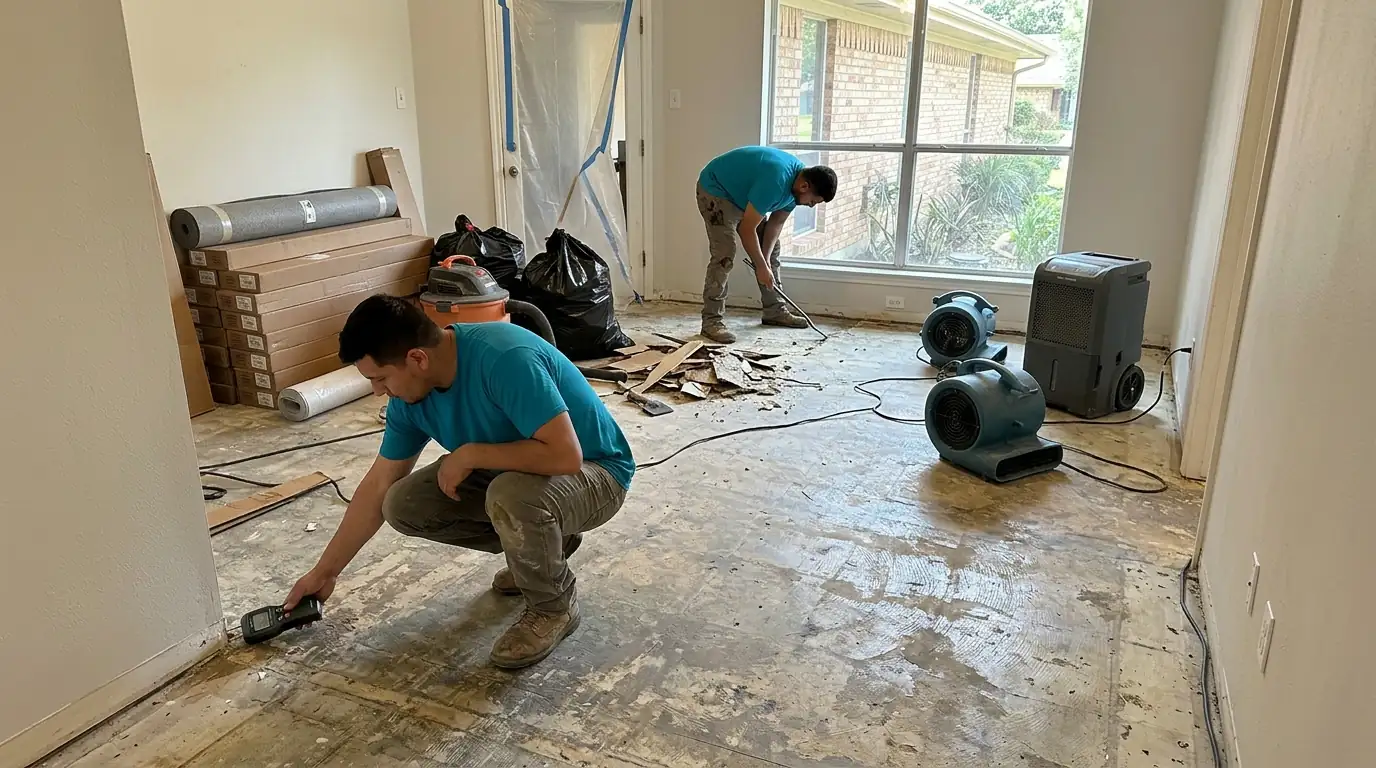
Flooring replacement after water damage in Fort Worth starts with drying what's under the floor, because laminate and vinyl plank can't go down over a slab or subfloor that still holds moisture. We remove swollen planks, loose tile or soaked pad, confirm the base reads dry, then install new flooring and reset the baseboards and transitions.
What Flooring Replacement After Water Damage Involves
Most floors we work on sit on a concrete slab or, in older houses, a wood subfloor over a crawl space. Water that gets under the finish floor soaks into whichever base is there, and it stays long after the surface looks dry. Laminate swells at the seams and won't go back flat. Tile can lose its bond as the thinset gets wet. Carpet pad holds water like a sponge. The repair always starts below the finish floor, with readings, and only then moves to new material.
We look at how far the water traveled, because it often runs under cabinets and through doorways into rooms that look fine. If the slab or subfloor hasn't been dried, structural drying happens first. If the water came up the walls too, drywall repair and baseboard replacement are usually part of the same project. Matching existing flooring can be hard, so we talk through where a clean transition can go before anything gets ordered.
Laminate and Vinyl Plank
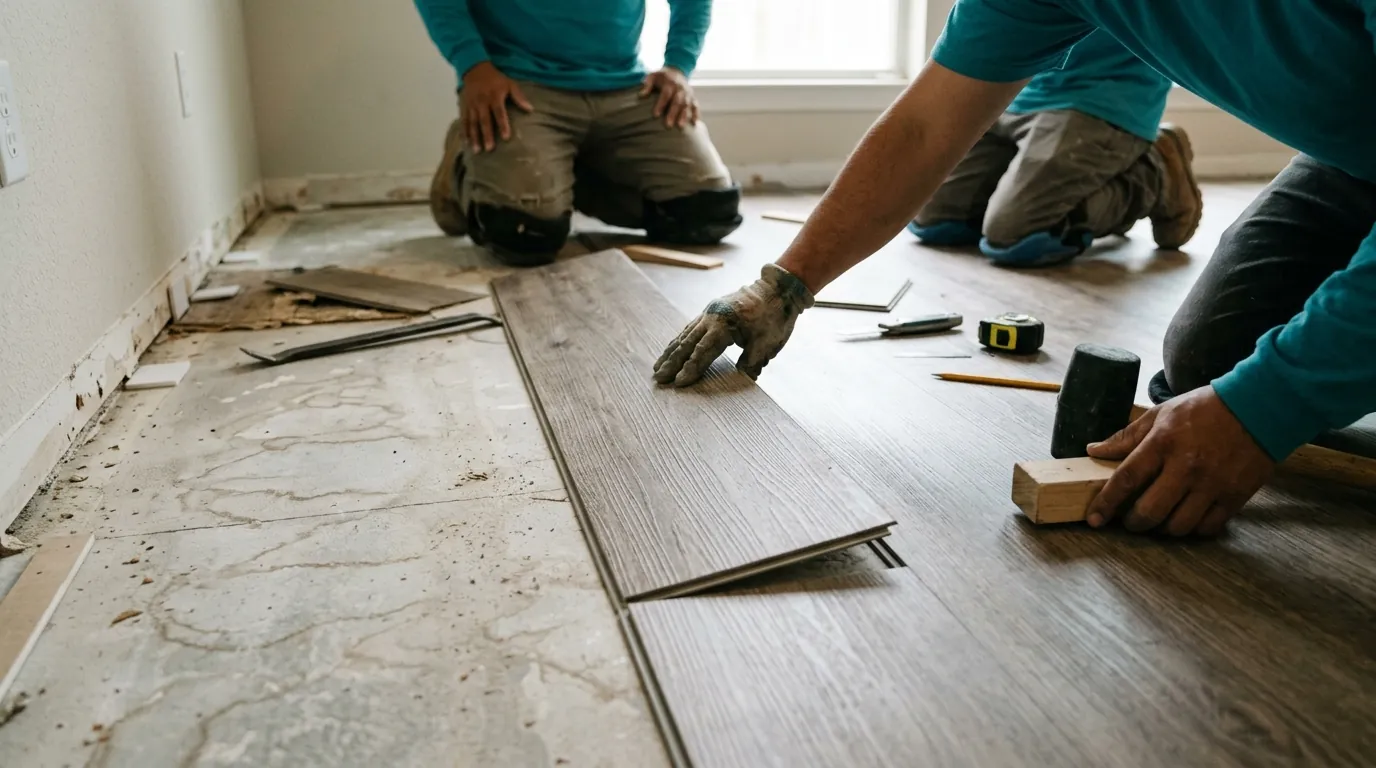
Laminate has a fiberboard core that swells when water reaches its edges, so the seams peak and the planks won't lie flat again. Vinyl plank holds up to water better, but water trapped under it sits against the slab and the underlayment and can grow mold. You'll notice raised seams, a soft or hollow feel, or a musty smell. We pull the planks back past the wet area, remove wet underlayment and dry the slab. New planks go down once the base reads dry. Cost depends on the square footage and whether the old product is still available to match.
Tile Over a Slab
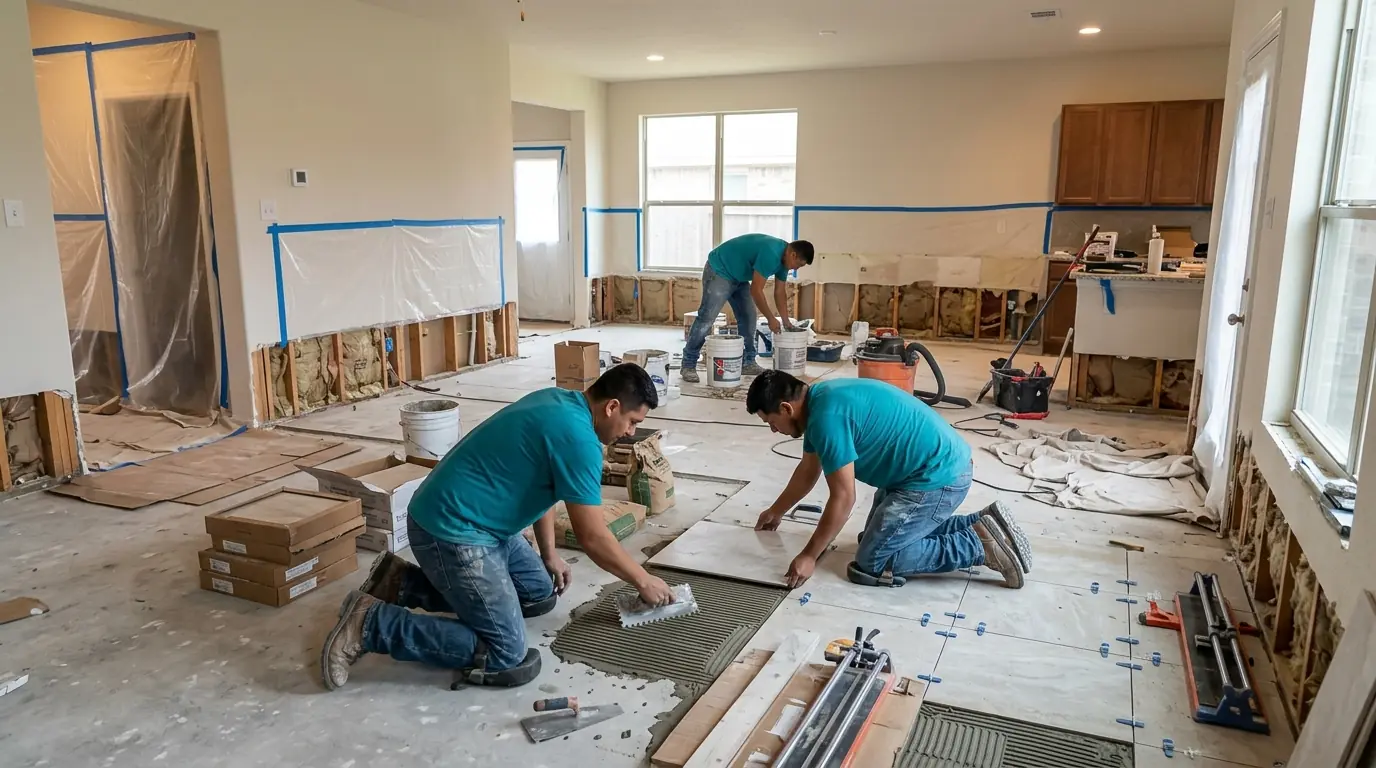
Tile itself doesn't absorb much water, but the grout and the thinset under it can. A slab leak or a long supply-line leak can loosen tiles so they sound hollow when tapped, crack as the slab moves, or show dark grout lines that never dry out. We tap and read across the floor to map the damage, remove loose tile, and dry the slab before setting new tile in fresh thinset. Matching discontinued tile is often the hardest part, so the room layout and where a transition can go decide much of the cost.
Carpet Replacement
Carpet often looks dry on top while the pad and the slab under it stay wet. Clean water from a supply line sometimes allows the carpet to be dried and relaid with new pad. Gray or sewage water, or carpet that's been wet for days, means the carpet and pad both go. You'll notice a smell, a damp feel near walls, or carpet that has come loose from its tack strip. We remove the wet material, dry the slab, replace the tack strip if needed and install new pad and carpet. Room size and the water category set the scope.
Replace Only the Wet Rooms or Run Flooring Through?
| Factor | Replace only the wet area | Replace to a natural break |
|---|---|---|
| When it works | Flooring is still sold and the wet area ends at a doorway | Product is discontinued or the floor runs continuously through rooms |
| Visible transition | A threshold or strip at the doorway | No mismatch, since the whole run is new |
| Material needed | Less flooring and less removal | More flooring, often through halls and adjoining rooms |
| Color and wear match | New boards may look brighter than the worn ones next to them | Even color and wear across the space |
| Time out of rooms | Shorter, fewer rooms affected | Longer, more rooms emptied for install |
If you can still buy the same flooring and a doorway gives a clean edge, replace only the wet area; otherwise running new flooring to the next natural break usually looks better.
Do Not Wait for the Stain to Spread
Most of what we remove is material that stayed wet too long. Calling early keeps the job smaller.

What Changes the Cost of Replacing a Water-Damaged Floor?
Our cost sources don't publish a range that fits flooring replacement across laminate, tile and carpet, so we won't put a dollar figure here. Flooring cost is driven by the material you choose and how much of it has to come up, and the factors below explain how.
- Square footage removedWater rarely stops at a doorway. Floating floors run continuously between rooms, so replacing one room can mean pulling flooring through the hall too.
- Material chosenCarpet, vinyl plank, laminate and tile each differ in material cost and install time, and tile takes the longest to set and grout.
- Matching existing floorsDiscontinued products may mean replacing a larger area so the floor matches, or placing a transition at a natural break.
- Base conditionA slab that needs drying or a subfloor that needs patching adds time and material before the new floor can go in.
- Water categoryClean water may let some carpet be saved. Gray or black water means more removal and cleaning of the base before install.
Every job is priced after we see the damage and take readings; these factors explain why two jobs that look alike can cost very different amounts.
Slab Floors in Burleson and Johnson County Homes
Fort Worth field note
Most of Burleson is in Johnson County, and its population grew from 20,976 in 2000 to 36,690 in 2010. Much of the housing from a boom like that sits on slab foundations with laminate, vinyl plank, tile or carpet laid straight over the concrete. Johnson County's eastern side has deep clayey Blackland Prairie soils, one of three soil belts in the county. When a leak runs under flooring on a slab like that, we dry the concrete itself before any new floor goes down.
How We Replace Flooring After a Leak
- 01
Map the wet floor
We read moisture across the floor and into the neighboring rooms, closets and cabinet bases to find where the water actually spread under the surface, not just where it pooled.
- 02
Remove damaged flooring
Swollen planks, loose tile, wet pad and soaked underlayment come up, along with baseboards that wicked water. We photograph the floor before and after removal for your records.
- 03
Dry the slab or subfloor
Dehumidifiers and air movers run until the concrete or wood base reads dry against a dry reference area of the same floor, and we log those readings each visit.
- 04
Prepare the base
We clean, patch or level the slab or subfloor and replace any damaged tack strip, so the new flooring sits flat, bonds properly and doesn't telegraph old damage.
- 05
Install and finish
New flooring goes in with transitions, baseboards and shoe molding reset, and we clean the rooms so furniture can go back and you can use the space again.
How Long Flooring Replacement Takes After Water Damage
Drying the base usually takes two to five days for a slab or wood subfloor, longer if water sat for days or soaked deep into concrete. Install time depends on the material: carpet and vinyl plank in a few rooms usually go in within a day or two, while tile usually takes several days because thinset and grout need time to cure. Ordering can be the longest wait, especially when matching a specific product, so we confirm material availability early in the job.
Flooring Replacement After Water Damage Questions From Fort Worth Homeowners
Usually not. Laminate has a fiberboard core that swells when water reaches the edges, and once the seams peak, they rarely flatten. If water only touched the surface and was wiped up quickly, it may be fine. If you see raised seams or soft spots, the affected planks need replacing.
We take moisture readings across the slab and compare them with a dry area of the same floor. The wet area needs to read close to that reference before flooring goes down. Some flooring makers also list their own moisture limits, which we check before install.
If the same product is still sold, it can match closely, though new boards may look slightly brighter than worn ones at first. If it's discontinued, we look for a close match and plan the transition at a doorway or other natural break so the change looks intentional.
The rooms getting new flooring need to be empty, including large furniture and anything on the floor. We can move furniture within the house as part of the job. Fragile items, valuables and electronics are best moved by you ahead of time.
A long leak can soften the thinset bed under tile so it loses its bond, and tiles that aren't fully supported crack under foot traffic. A hollow sound when you tap a tile is a common sign. Loose tiles need to come up, the slab needs to dry, and new tile goes back in fresh thinset.
Related Work We Handle
Get New Floors Down Over a Dry Base
New flooring over a wet slab is a repeat repair waiting to happen. Tell us what's on the floor and where the water came from, and we'll dry the base and put the floor back. Call us today.
Updated October 2026