Southlake, TX
Water Damage and Mold Removal Serving Southlake
Phones answered 24/7 for Southlake homes and businesses.
Quick answer
Water damage and mold removal in Southlake usually involves larger homes with more places for water to hide. Most houses here went up after the 1980s, with long plumbing runs, multiple bathrooms and big attics. A slow leak can soak drywall for weeks before anyone sees a stain or smells mold.
Restoration Work Around Southlake
Southlake grew from about 2,800 residents in 1980 to over 21,000 by 2000, after DFW Airport opened nearby. The homes from that boom tend to be large, with two or three HVAC systems, several bathrooms and wet bars. Every one of those is a possible leak point. We trace water with thermal imaging and moisture meters, open only where readings point, and dry in place when we can.
Mold here usually follows a hidden leak. A shower pan cracks, an ice maker line drips behind cabinetry, or an attic air handler pan overflows. Mold starts on the back of drywall or on roof decking. We contain the area, remove affected materials under negative air and treat the framing. For larger jobs, mold remediation follows an independent assessor's protocol as Texas requires.
Why Southlake's Boom-Era Homes Hide Leaks
Southlake stayed rural until DFW Airport was completed in the 1970s, then grew through the 1980s, 1990s and 2000s. Homes from those decades are now old enough that original water heaters, supply lines and shower pans are failing. Larger floor plans also mean longer pipe runs through walls and ceilings. A leak in an upstairs bathroom over a formal dining room might go unnoticed for weeks. Stains in a big house also tend to show far from the leak, because water follows joists and pipes before it drops. We trace it from the stain to the source, dry the cavity and check for mold before closing anything back up.
Grapevine Lake, Hail and Wet Attics
Southlake takes its name from its position near Grapevine Lake, which was completed about four years before the city incorporated in 1956. Hail tracking lists 226 reports within 10 miles of the city since 2004. Hail damage often leads to slow attic leaks, and in a large attic with several air handlers, damp decking can stay wet long enough to grow mold. Mold on decking usually looks like gray or black speckling on the underside of the plywood. We check the sheathing and rafters with moisture meters and treat any growth before the roof repair closes the area.
Calls We Get From Southlake
How a Call From Southlake Runs
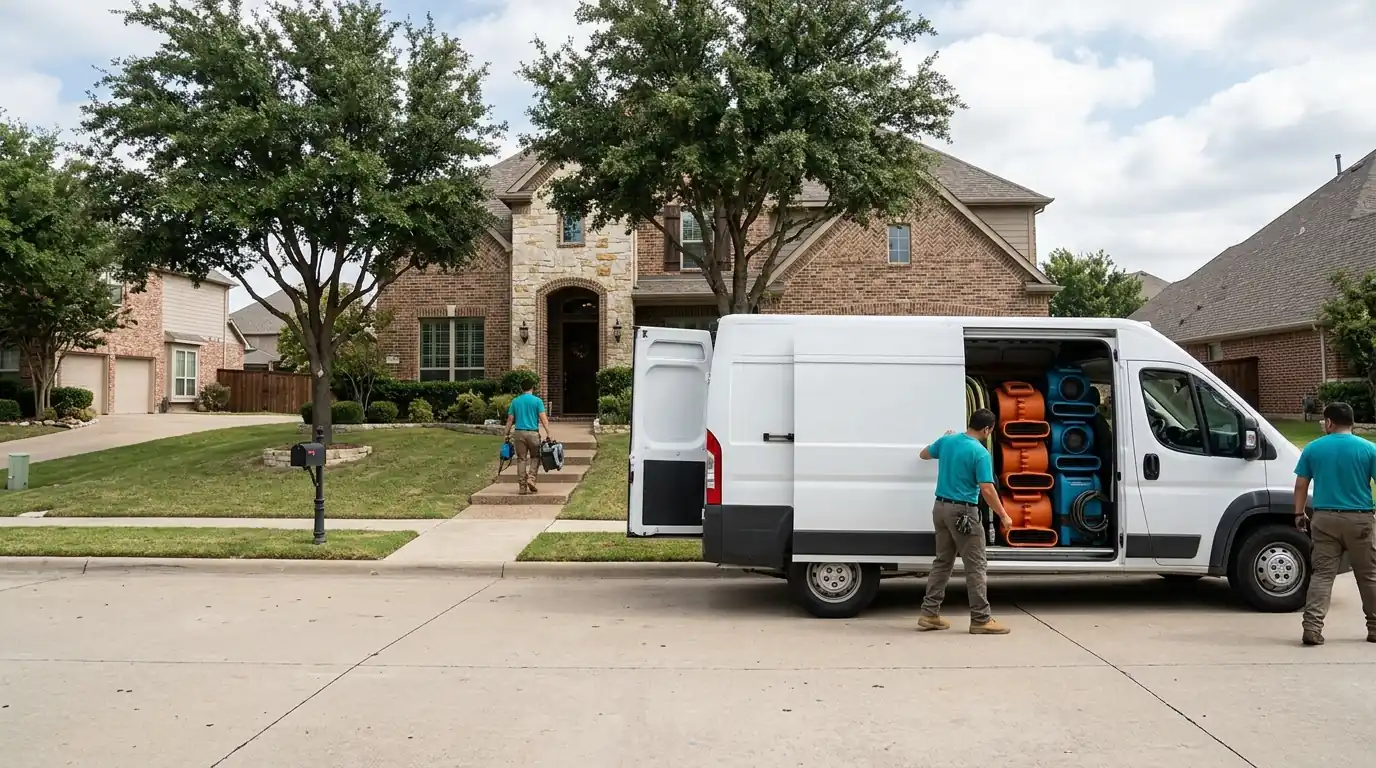
We answer Southlake calls 24/7, and on the phone we ask where you see water or smell must, which fixtures sit nearby. We bring a thermal camera, moisture meters, containment plastic, a negative air machine, HEPA vacuums and dehumidifiers. If mold is suspected, containment goes up before we open any wall.
Southlake Restoration Questions
Water can run inside a wall or under a floor in a room that's rarely used. Dining rooms, guest suites and closets under bathrooms are common spots, and paint may not stain until the drywall behind it is soaked.
For large areas in Texas, an independent mold assessment consultant tests and writes a protocol before removal begins. For small visible patches, testing isn't always needed. We can talk through which applies once we see the area and readings.
Check the ceilings under each air handler and the secondary drain pipes outside; a float switch may have shut off the leaking unit. We open each attic access and meter pans, lines and insulation to find it.
Spores can travel through ceiling openings, light fixtures and return air ducts. Mold on decking is mostly an attic problem, but if the air handler sits in that space, spores can enter the ductwork. We check returns as part of the job.
Nearby Areas We Cover
Water, Fire or Storm Damage in Southlake?
Tell us what happened and where the water or smoke went. We will walk you through the first steps on the phone.
Updated October 2026