Quick answer
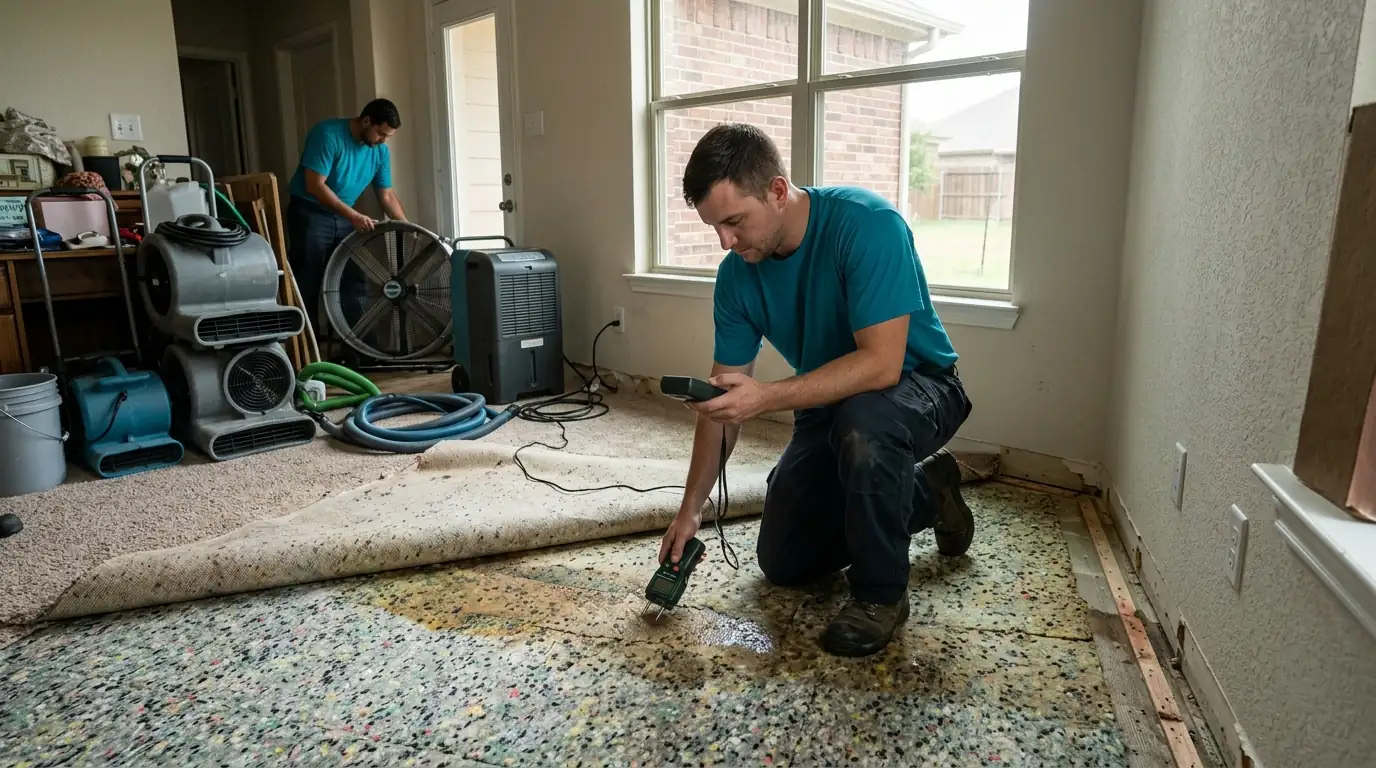
Wet carpet cleanup in Fort Worth comes down to the pad underneath. Carpet sheds water fairly well, but the pad acts like a sponge and holds moisture against the slab or subfloor, where mold can start in a day or two. We extract, decide what can stay, replace pad when needed, dry the floor below and re-stretch the carpet.
What Carpet and Pad Water Damage Involves
Most of the water in a wet carpeted room is in the pad. The carpet itself, especially a synthetic one with a sound backing, can often be dried and reinstalled after clean water. The pad usually can't: it holds water for a long time and is hard to clean, so soaked pad is replaced in most cases.
Water category and time decide the rest. Clean water caught early gives the most options. Gray water means the pad goes and the carpet is cleaned and treated. Sewage or floodwater means both go, as our sewage cleanup page explains. When the carpet stays, we dry what's below, lay new pad and re-stretch so the room lies flat.
How We Handle Wet Carpet, Step by Step
- 01
Identify the water
We confirm where the water came from and how long it sat, which sets the category and decides whether the carpet itself can stay in the room.
- 02
Extract carpet and pad
A weighted extractor pulls water up through carpet and pad together in slow overlapping passes, removing most of it before any drying equipment is set in the room.
- 03
Lift, remove pad, dry
We release the carpet from the tack strip, cut out soaked pad, and float the carpet on air movers while a dehumidifier dries the slab underneath.
- 04
Re-pad and re-stretch
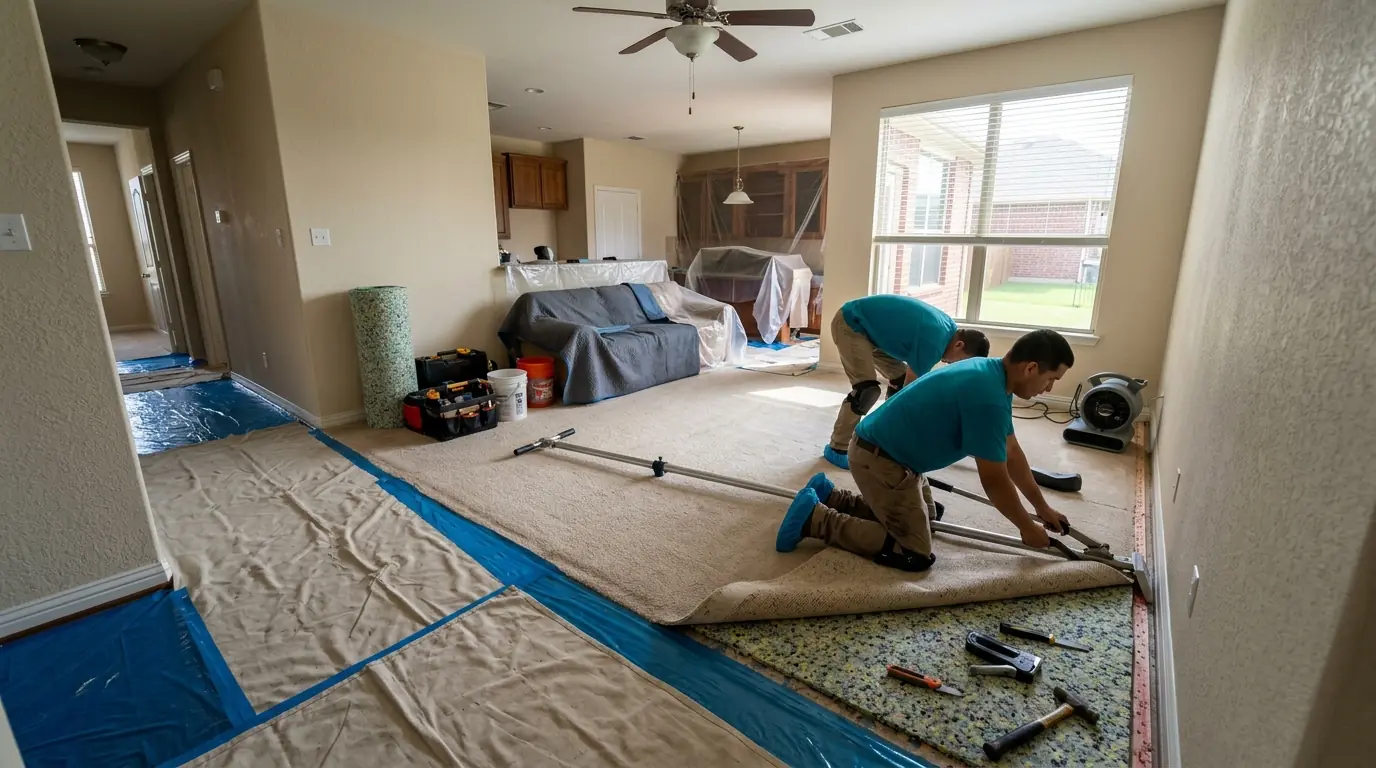
New pad goes down, the carpet is power-stretched back onto the tack strip, and seams are rejoined so the room lies flat and tight again.
Pad Replacement
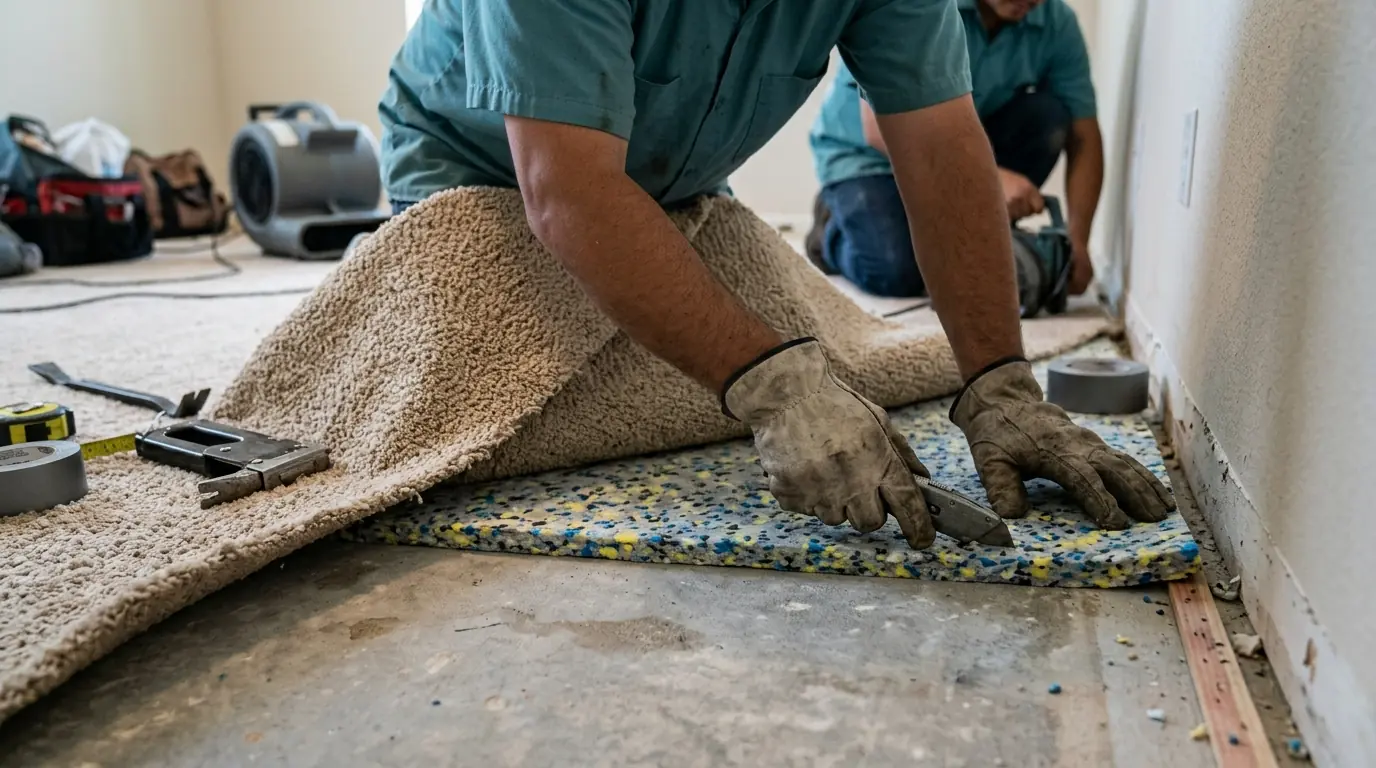
Pad that's been soaked loses its structure and holds water against the slab. You'll feel it squish underfoot or see water rise when you press down. We fold the carpet back from the tack strip, cut out the wet pad in sections and bag it, then dry the slab or subfloor with air movers and a dehumidifier. Tack strip that's wet or rusted gets replaced too. New pad is matched to the type and thickness in the rest of the room so nothing feels different underfoot. Square footage drives the cost.
Carpet Re-Stretching
Carpet that got wet and was dried in place can shrink, stretch or ripple as it dries, especially if it came off the tack strip. Ripples wear faster and can trip people. After the floor below and the carpet backing read dry, we lay new pad, then use a power stretcher to pull the carpet tight across the room and lock it back on the tack strip, rejoining any seams that separated. Stretching a room usually takes a few hours. Carpet whose backing has separated from the fibers can't be stretched and needs replacing.
Contaminated Carpet
Carpet that took water from a sewer backup, a toilet overflow with waste or floodwater from outside is Category 3, and both carpet and pad come out. The fibers trap bacteria and debris that cleaning can't reliably remove. Carpet that sat wet with clean or gray water for several days can also become contaminated. We cut carpet and pad into strips, bag them, clean and disinfect the slab or subfloor, and dry it. Valuable rugs can go out for specialty cleaning. Area and contamination type decide the scope.
Do Not Wait for the Stain to Spread
Most of what we remove is material that stayed wet too long. Calling early keeps the job smaller.

Why Pad on a Fort Worth Slab Stays Wet
Fort Worth field note
Most of the wet carpet we handle in Fort Worth sits on a concrete slab, often in bedrooms beside a bathroom or along a hallway. Concrete takes water slowly, so pad on a slab stays wet longer than you'd expect, and the moisture has nowhere to go but back up into the carpet backing. That's why we fold the carpet back and dry the slab itself. On pier-and-beam homes the subfloor is wood, so we also look under the house to see whether water drained through to the crawl space.
Wet Carpet Jobs You Can Handle and the Ones to Leave
| Task | What you can do | What we do |
|---|---|---|
| Small damp spot | Blot it, run a fan and the AC, and press down to see if the pad is soaked. | We read the pad and slab to confirm it's dry below, not just on top. |
| Moving furniture | Move light pieces and put foil or blocks under heavy legs. | We move and block heavy furniture so the carpet can be lifted safely. |
| Lifting carpet | Leave it down; pulling wet carpet can tear the backing. | We release it from the tack strip correctly and fold it back intact. |
| Removing wet pad | Skip it beyond a small area; wet pad is heavy and tack strip is sharp. | We cut out and bag the pad, then dry the slab before new pad goes in. |
Carpet that took sewage or floodwater should only be handled with gloves and eye protection, and it should not be saved.
Save the Carpet or Replace It?
| Factor | Dry and reinstall | Remove and replace |
|---|---|---|
| Water source | Clean water from a supply line or sink | Sewage, floodwater, or water that sat several days |
| Carpet backing | Intact, no separation from the fibers | Delaminated or falling apart when lifted |
| Odor after drying | None, or gone after cleaning | Lingers after cleaning |
| Cost | Usually lower: new pad, drying and stretching | Higher: carpet, pad, disposal and install |
If the water was clean and the backing is sound, saving the carpet is usually worth it; otherwise replacement is the cleaner choice.
What Affects the Price of Wet Carpet Cleanup?
The cost of a wet carpet job depends mostly on whether the carpet can stay and how much pad has to be replaced. Saving the carpet keeps costs down. You'll get a scope in writing once we've extracted and taken readings, showing which rooms are drying and which need replacing.
- Water categoryClean water usually allows the carpet to be saved. Gray water means the pad goes, and Category 3 water means both carpet and pad are removed.
- Time sitting wetCarpet that sat wet for days may start to smell, delaminate or grow mold, which shifts the job from drying the carpet to replacing it.
- Rooms and square footagePad replacement, drying and re-stretching are done room by room, so a whole floor of carpet costs more than a single bedroom.
- What's under itA slab only needs drying. A plywood subfloor or hardwood hiding under the carpet adds drying time and possibly repair work.
Every job is priced after we see the damage and take readings; these factors explain why two jobs that look alike can cost very different amounts.
Carpet and Pad Water Damage Questions From Fort Worth Homeowners
For a small spill on top of the carpet, fans and AC may be enough. If the pad got soaked, fans won't reach it or the slab below. The surface feels dry while the pad stays wet, and that's when musty smells and mold start. A meter reading settles it.
A smell after drying usually means the pad or the floor beneath stayed wet long enough for bacteria or mold to grow, or the water carried soil or waste. The pad usually has to come out, and the slab needs cleaning and an antimicrobial before new pad goes down.
Some carpets shrink a little as they dry, especially if they came off the tack strip or were dried with too much heat. Others stretch and ripple. Either way, re-stretching with a power stretcher after the room is dry usually brings it back to a flat, tight fit.
It depends on its condition and your plans. If the carpet was due for replacement anyway, drying it may not be worth the cost. If it's fairly new with a sound backing, saving it is usually much cheaper. You'll see what we find when it's lifted.
Sometimes, if the water was clean, the area is small and drying starts right away. In most real cases soaked pad is replaced, because it's inexpensive, holds water for a long time and is hard to sanitize. Replacing it removes a common source of lingering odor.
Related Work We Handle
Wet Carpet? Let's Check the Pad
Whether the carpet can be saved depends on the water and the first day or two. We answer 24/7. Call now and we'll extract, read the pad and get it drying.
Updated October 2026