Quick answer
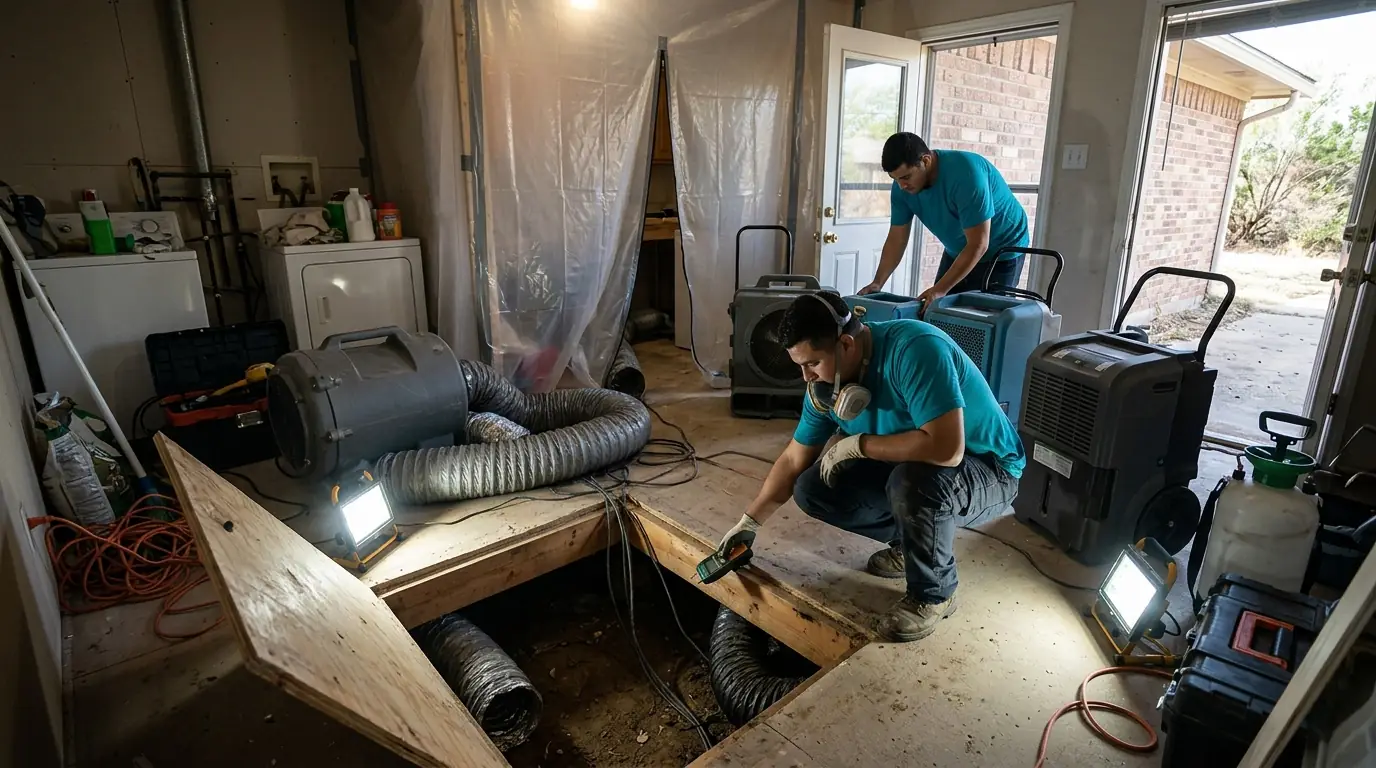
Crawl space mold removal in Fort Worth applies to pier-and-beam homes, where damp soil and humid air under the floor keep wood joists above about 19 percent moisture, which is enough for mold to grow. We clean and treat affected joists and beams, replace torn or missing vapor barrier, and seal the space so moisture stays out.
What Crawl Space Mold Removal Involves
A crawl space is the gap between the ground and the floor of a pier-and-beam house. Moisture comes from the soil, from rain that drains toward the foundation, and from humid outdoor air pulled in through vents. When wood framing stays damp, mold grows on joists, beams and subfloor, and the musty air can rise into the house through gaps in the floor.
We start by checking moisture levels in the wood and soil, then HEPA vacuum and clean affected framing, treat it with an antimicrobial, and remove damaged insulation. The long-term fix is controlling moisture with a proper vapor barrier, drainage and sometimes full encapsulation. If water is standing under the house, crawl space water removal comes first.
Mold on Joists and Beams
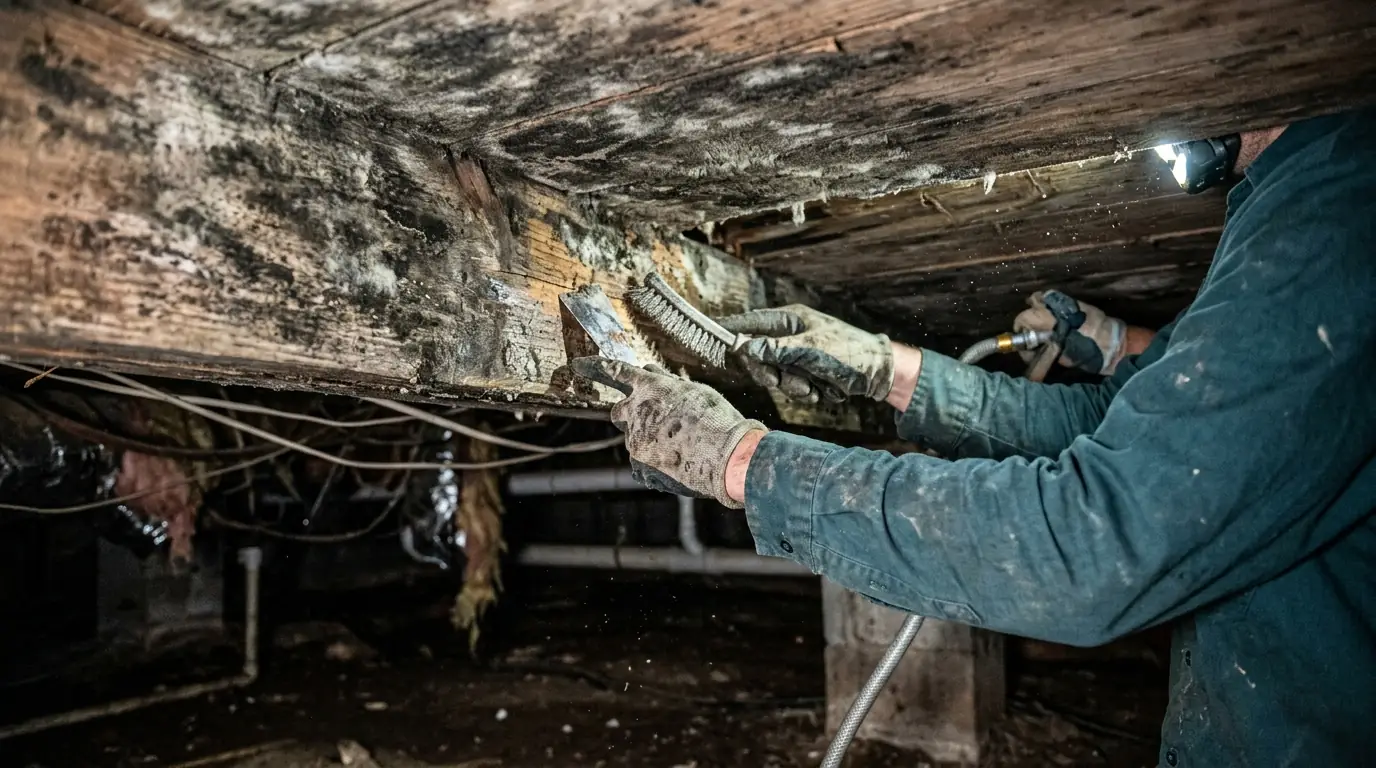
Mold on crawl space framing appears as white, gray or black spotting on joists, beams and the underside of the subfloor, often heaviest near foundation vents or low spots where water collects. You might notice a musty smell inside the house, soft spots in the floor or higher indoor humidity. We check the wood with a moisture meter and probe for softness. Solid framing gets HEPA vacuumed, cleaned and treated. Damaged or rotted members may need sistering or replacement by a carpenter. The amount of framing affected, how low the crawl space is and whether the wood is still sound decide most of the cost.
Vapor Barrier Replacement
A vapor barrier is a plastic sheet laid over the soil to stop ground moisture from rising into the crawl space. Many older homes have none, or have a thin sheet that's torn, displaced or covered in debris. Without it, moist soil keeps the air and wood damp all year. We remove the old barrier and debris, lay new polyethylene sheeting over the soil with overlapped and taped seams, and run it up the foundation walls a short distance. A good barrier is the most cost-effective step for controlling crawl space moisture. Crawl space size, access and how much debris has to be cleared decide the price.
Crawl Space Encapsulation
Encapsulation goes beyond a vapor barrier. The floor and walls of the crawl space are covered with heavy reinforced polyethylene, seams are sealed, foundation vents are closed, and the space is conditioned with a dehumidifier or a small supply of conditioned air. It turns the crawl space into a dry, controlled area instead of one that follows outdoor humidity. Encapsulation makes the most sense when mold returns despite a vapor barrier, when humidity stays high or when you want a long-term fix. Size, wall height, drainage needs and dehumidifier choice decide the cost.
Vapor Barrier or Full Encapsulation?
| Factor | Vapor barrier | Full encapsulation |
|---|---|---|
| What it covers | Plastic sheet over the soil floor | Soil, walls and piers sealed with heavy liner |
| Foundation vents | Stay open | Closed and sealed |
| Humidity control | Reduces ground moisture only | Dehumidifier or conditioned air keeps the space dry |
| Cost | Lower upfront cost | Higher upfront cost |
| Best fit | Mild moisture and first-time fixes | Recurring mold, high humidity or long-term goals |
If mold has come back after a vapor barrier was installed, encapsulation is usually the next step.
Do Not Wait for the Stain to Spread
Most of what we remove is material that stayed wet too long. Calling early keeps the job smaller.
How Much Does Crawl Space Mold Removal Cost?
This Old House's cost guide puts crawl space mold removal at $500-$2,000 as a national planning range. Encapsulation is a separate, larger project. Carpentry for damaged framing and drainage corrections are usually additional, and the final number depends on what we find under the house.
- Crawl space heightA crawl space with two or three feet of clearance is far easier to work in than one with 18 inches. Tight access slows every step.
- Extent of growthSpotting near one vent is a small job. Mold across most of the joists and subfloor needs much more cleaning and treatment.
- Framing damageRotted or soft joists, beams and sill plates need carpentry repairs such as sistering or replacement, which go beyond cleaning and treatment.
- Moisture controlA new vapor barrier is the affordable option. Full encapsulation with a dehumidifier costs more up front but gives better long-term control of humidity.
Range cited from a national cost guide (source, 2026-03-11). It is a planning figure, not a quote; your job is priced after we see it.
Older Pier-and-Beam Homes in Arlington Heights
Fort Worth field note
Most Arlington Heights homes were built between the 1920s and the late 1940s, north of I-30 and southeast of Camp Bowie Boulevard, and houses from that era often sit on pier-and-beam foundations. Some streets there also carry extra water risk: in June 2016 about 3.7 inches of rain in one hour flooded homes on Carleton Avenue and Western Avenue, where houses sit on an old creek bed. After rain like that, water collects under raised floors and can keep joists damp for weeks. We check crawl spaces there after heavy storms even when the floors look fine.
How We Treat Mold Under a Pier-and-Beam House
- 01
Inspect and measure
We check wood moisture, soil conditions, vents, drainage and existing barrier, and photograph growth so you can see what's under the house without crawling in.
- 02
Clear debris and old barrier
Torn plastic, wet insulation and construction debris come out of the crawl space first, so the framing and soil can be reached and cleaned properly.
- 03
Clean and treat framing
Joists, beams, sill plates and the underside of the subfloor are HEPA vacuumed, scrubbed or sanded where needed, and treated with an antimicrobial once dry.
- 04
Control the moisture
We install a new vapor barrier or full encapsulation, and point out drainage problems, like short downspouts or poor grading, that send water under the house.
- 05
Recheck moisture levels
After treatment, we return to read wood moisture and humidity levels, confirming the crawl space is staying dry enough to keep mold from coming back.
Signs of Mold Under Your Floor
Musty smell in the house
An earthy smell that's strongest near floor vents or closets on exterior walls often rises from a damp crawl space.
Soft or bouncy floors
Floors that feel soft or flex more than they used to can mean damp or decaying joists and subfloor below.
Cupping in hardwood floors
Wood floors that cup, with edges higher than the center, are absorbing moisture from below.
Sagging insulation underneath
Batts hanging down or falling from between joists are usually wet and heavy, and they hold moisture against the wood.
Crawl Space Mold Removal Questions From Fort Worth Homeowners
Rain that drains toward the foundation can collect under the house and raise humidity in the crawl space. That damp air carries mold and soil odor up through gaps in the floor. Checking gutters, downspouts and grading often fixes much of the problem.
It depends on the setup. In a vented crawl space with a vapor barrier, vents usually stay open. In an encapsulated crawl space, vents are sealed and the space is dried with a dehumidifier. Closing vents without encapsulation can trap humidity and make mold worse.
Not easily. Signs inside the house, like musty smells, cupping floors or high humidity, suggest a problem. We go under the house and photograph the framing, insulation and barrier, so you can see what's there.
Usually yes. Sealing the crawl space keeps outdoor humidity out, but moisture still needs to be removed. A dehumidifier made for crawl spaces, or a small supply of conditioned air, keeps humidity low enough that mold can't grow.
Usually very little. Most of the work happens under the house through the access hatch or a foundation opening. You may hear equipment and see us coming and going, but the living space generally stays in normal use throughout.
Related Work We Handle
Musty Smell Coming Up Through the Floor?
Mold under a pier-and-beam floor usually announces itself as a smell first. We'll go under the house, show you photos of what's there and treat the framing. Call us to set up a crawl space inspection.
Updated October 2026