Tarrant County, TX
Water and Fire Damage Restoration Across Tarrant County
Phones answered 24/7 for Tarrant County homes and businesses.
Quick answer
Water and fire damage restoration in Tarrant County starts with the house you actually have. Hail is the factor that matters most here: a 2024 study ranked the county third in the nation for hail risk, so roof leaks that soak attic insulation and ceiling drywall fill a steady share of our calls.
Restoration Work Around Tarrant County
Tarrant County holds pre-war frame houses near downtown Fort Worth, brick ranches from the postwar decades and newer two-story builds on the edges. Each fails differently. A pier-and-beam bungalow holds water in the crawl space, a slab ranch pushes it into the baseboards, and a two-story with an attic air handler drops it through a ceiling. We find where the water went before we set a fan.
Fire work follows the same basic rule here. Smoke rides the return air and settles on the coolest surfaces, so we clean the whole air path, then dry whatever the hoses soaked. After a kitchen fire we pair soot cleaning with smoke odor removal. After a hail-torn roof we tarp, extract, map the moisture and rebuild what the water ruined.
Why Tarrant County Hail Keeps Ending Up Inside Ceilings
A Roof Gnome study reported by the Star-Telegram in March 2024 put Tarrant County third in the nation for hail risk among more than 600 counties. The ranking has history behind it: the Mayfest storm of May 5, 1995 dropped softball-size hail on the Trinity River bank. Hail rarely floods a home the day it falls. It cracks shingles and bruises decking, then a later spring rain finds the gap, wets the attic insulation and stains the drywall below. By the time a ring shows, the insulation above has usually been damp for a while.
What Blackland Clay and Limestone Do Under a Slab
The county's soils change as you drive across it. Blackland Prairie clay covers the southeast, while the Grand Prairie belt runs shallow clay over limestone and marl. Clay swells after rain and shrinks in a dry August, and that movement stresses slabs and the copper or PEX lines under them. A pinhole beneath the floor can wet tile grout and laminate seams for weeks before anyone in the house notices. We trace the wet zone with thermal imaging and moisture meters, then handle slab leak drying after your plumber makes the repair.
Calls We Get From Tarrant County
How a Call From Tarrant County Runs
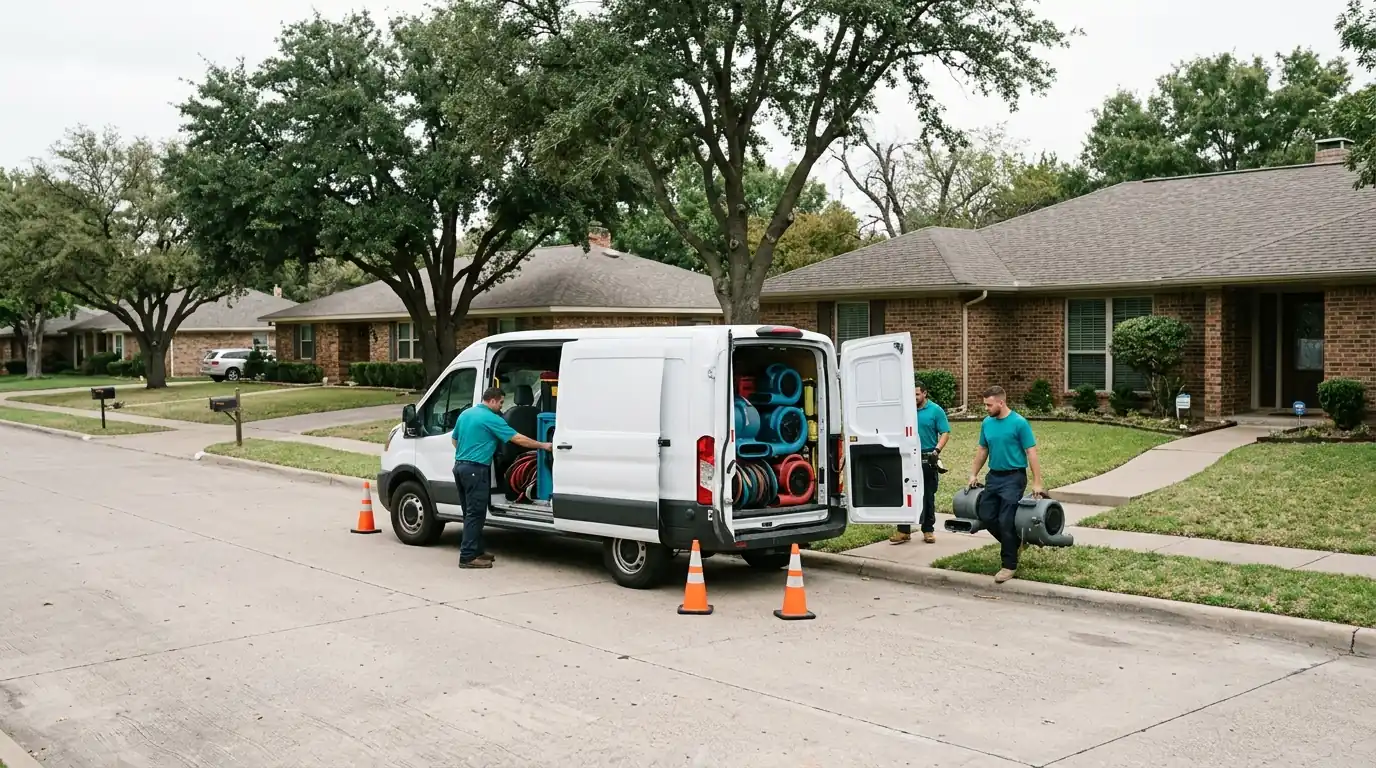
When you call from anywhere in Tarrant County, we pick up 24/7 and ask where the water or smoke came from, whether it has stopped, and which rooms it reached. We arrive with extractors, air movers, dehumidifiers and moisture meters, and log readings at each visit so your adjuster sees our numbers.
Tarrant County Restoration Questions
Roofs here take more hits than in most of the country, and the damage often hides. Cracked shingles may not leak until a later rain, so after a spring storm, check the attic and the ceilings below.
It can stress the lines. Clay swells after rain and shrinks in drought, so slabs flex slightly over the years and fittings under them can crack. A plumber fixes the leak; we map the wet area, pull damaged flooring and dry the slab and walls.
Wait until the system is checked. The air handler pulls soot through the returns and spreads it into every room on that system. Turn it off, keep doors to the burned area closed, and let us inspect the returns first.
No. A 1920s frame house may have plaster, a crawl space and hardwood over joists. A 2010s two-story often has an attic air handler and laminate over a slab. Equipment goes where your house holds water.
Nearby Areas We Cover
Water, Fire or Storm Damage in Tarrant County?
Tell us what happened and where the water or smoke went. We will walk you through the first steps on the phone.
Updated October 2026