Grand Prairie, TX
Flood and Water Damage Cleanup Throughout Grand Prairie
Phones answered 24/7 for Grand Prairie homes and businesses.
Quick answer
Flood and water damage cleanup in Grand Prairie starts with knowing the water's source. The city has a long history of Johnson Creek flooding, and Joe Pool Lake rose at least 9 feet above normal in October 2018. Floodwater is Category 3, so porous materials it soaked usually have to go.
Restoration Work Around Grand Prairie
Floodwater differs from a burst pipe in one important way: it carries whatever it crossed. Mud, lawn chemicals, sewage from overwhelmed lines and animal waste all end up on the floor. That's why we always treat every flood as contaminated. We extract, scrape out silt, cut wet drywall above the waterline and apply antimicrobial before any drying equipment goes into the room.
Grand Prairie also sees ordinary water losses, from slab leaks to water heater failures. Those start as clean water and get dried in place when we catch them early. A clean leak left for days, though, turns gray and then grows mold. We pull the pad, set dehumidifiers and air movers and run emergency water extraction whenever water is still standing.
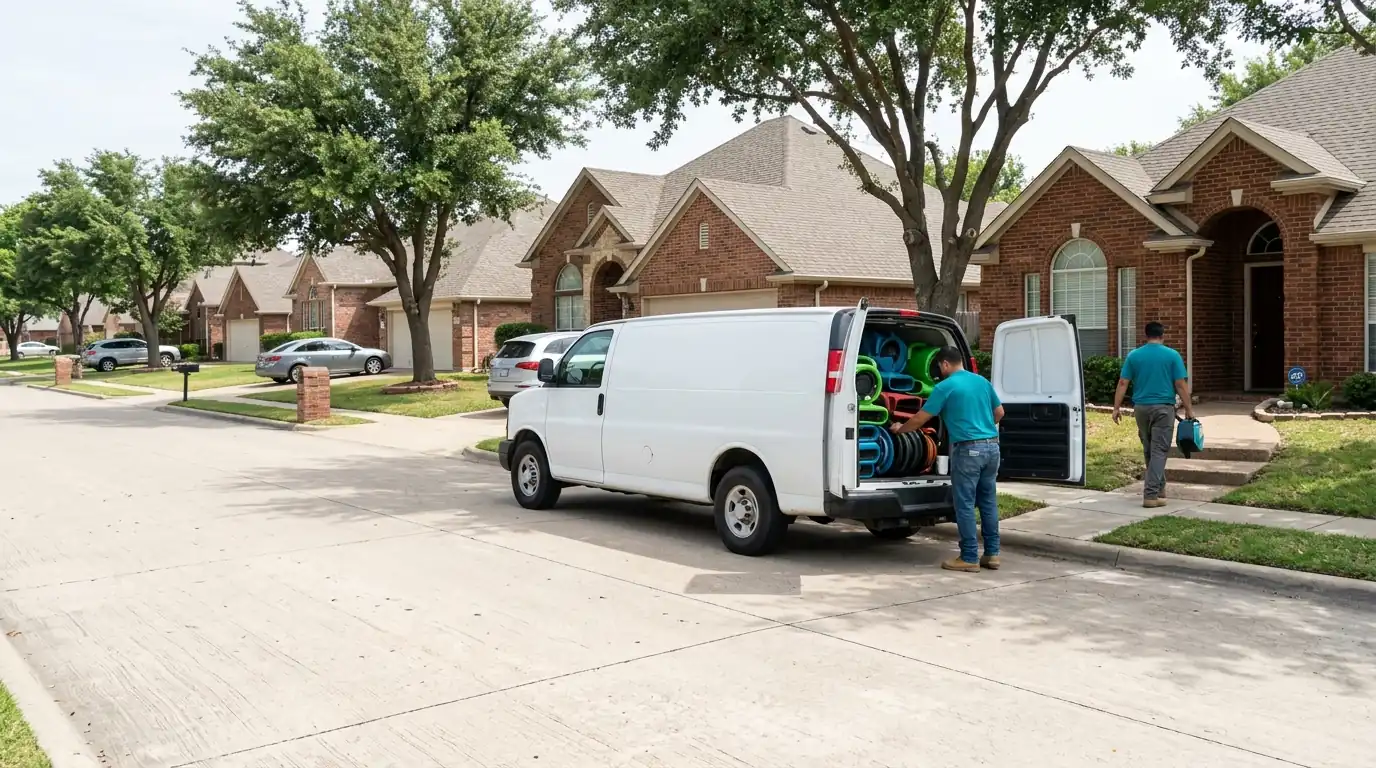
How Johnson Creek Shaped Flooding in Grand Prairie
Grand Prairie has dealt with Johnson Creek flooding for a long time. An Army Corps of Engineers project begun in the 1980s straightened the channel to reduce flood damage, and the creek drains toward the West Fork of the Trinity. A straighter channel moves water faster, but a hard spring storm can still overwhelm streets and yards. When muddy water reaches a living room, it soaks carpet pad, wicks into drywall and leaves silt along the baseboards. We shovel and vacuum that silt out first so it doesn't feed mold during drying.
When Joe Pool Lake Rose at Lynn Creek Marina
In October 2018, Joe Pool Lake rose at least 9 feet above normal, spreading more than 100 yards past its banks at Lynn Creek Marina, after flooding there in 2015 as well. The city sits mostly in Dallas and Tarrant counties, with smaller pieces reaching beyond them. It grew from about 127,000 to 196,000 residents between 2000 and 2020. More homes near high water means more cleanup calls when the lake or creeks rise. We handle the cleanup and sanitizing, then dry the framing and slab before any flooring replacement.
Calls We Get From Grand Prairie
How a Call From Grand Prairie Runs
Grand Prairie flood calls start with safety. We ask whether water is still rising, whether power is off to wet rooms and whether sewage is involved. We answer 24/7. Our gear includes extractors, pumps, HEPA vacuums, antimicrobials, air movers and dehumidifiers. We photograph the waterline on every wall before anything comes out, which helps your adjuster.
Grand Prairie Restoration Questions
Usually yes, though not far. Drywall wicks water upward, so two inches on the floor often means wet gypsum a foot up. We meter each wall and cut just above the wet line, typically at two or four feet.
Often, if the flooded area is closed off and power to wet rooms is off. If sewage reached living spaces or there's no working bathroom, staying elsewhere for a few days is wiser. Children, older adults and anyone with breathing problems should stay away from the work.
Photograph every room before moving anything, including the waterline on walls. Keep a list of damaged items. We photograph each room, record moisture readings and log drying progress, and you can share that record with your adjuster.
Standard homeowners policies usually exclude rising water from outside, while flood policies cover it. A burst pipe inside the house is a different kind of loss. Read your policy or ask your agent; we document the source either way.
Nearby Areas We Cover
Water, Fire or Storm Damage in Grand Prairie?
Tell us what happened and where the water or smoke went. We will walk you through the first steps on the phone.
Updated October 2026