Water, fire, mold and storm damage
Water and fire damage cleanup in Fort Worth, with someone on the line any hour
Pipe split, ceiling sagging, smoke in every room? We extract the water, map where it went, dry the structure and put the rooms back, for homes and businesses across Fort Worth and Tarrant County.
- Answered 24/7
- Fort Worth & Tarrant County
- Readings logged daily
Where the damage goes in a typical one-story Fort Worth house
Supply line split behind the bath vanity. Water ran under the hall wall and into Bedroom 1 carpet.
First hour
- Close the main shutoff or the fixture valve
- Kill power to wet rooms at the breaker if it is safe
- Lift rugs and furniture legs off wet carpet
- Call us so extraction starts before the drywall wicks
Quick answer
Water damage in a Fort Worth home needs extraction and drying within 24 to 48 hours, because that is the window before mold starts on wet drywall and pad. Call us the moment you find it. We answer around the clock, pull the standing water, map the wet areas with meters and a thermal camera, and run drying equipment until the readings say the structure is dry.
What Happened at Your House?
Pick the closest match. Each one leads to the jobs we run for it most often.
Burst pipes, slab leaks, ceiling drips, appliance floods and the drying that follows.
Flash flood water, sewer backups and sprinkler discharges, handled as the dirty water they are.
Char, soot, smoke odor and the water the fire department left behind.
Containment and removal after a leak, in attics, bathrooms and crawl spaces.
Hail and wind openings tarped, boarded and dried before the next rain.
Drywall, flooring, cabinets and insulation put back once the structure is dry.
Why Fort Worth Houses Take Water the Way They Do
Most of the calls we take start with one of three things: a pipe that gave out, a storm that found a way in, or a fire. Fort Worth gets all three. Our rain comes hard between March and June, the city's February 2021 freeze produced more than 700 water main breaks, and the March 2000 tornado tore through River Oaks and downtown before it crossed the Trinity River. Houses here are built for heat, so a hard freeze or a hailstorm tends to catch them unprepared.
The houses themselves matter too. Neighborhoods like Fairmount were built mostly between 1905 and 1920, and wood-frame bungalows there hold water differently from a newer slab home in the far north of the city. A slab house sends water sideways under baseboards and into the next room. A raised floor lets it drain into the crawl space, where it can sit unseen. We read the house before we set a single fan, which is why Allied Full Restoration starts every job with a moisture map.
What Happens After You Call Allied
- 01
We answer and triage
A person picks up, any hour. We ask what happened, where the water or smoke went and whether the source is stopped, then tell you what to do before we arrive.
- 02
Stop the damage spreading
We extract standing water, cover openings with tarp or board, and protect what can still be saved by moving furniture and blocking legs off wet floors.
- 03
Map and photograph
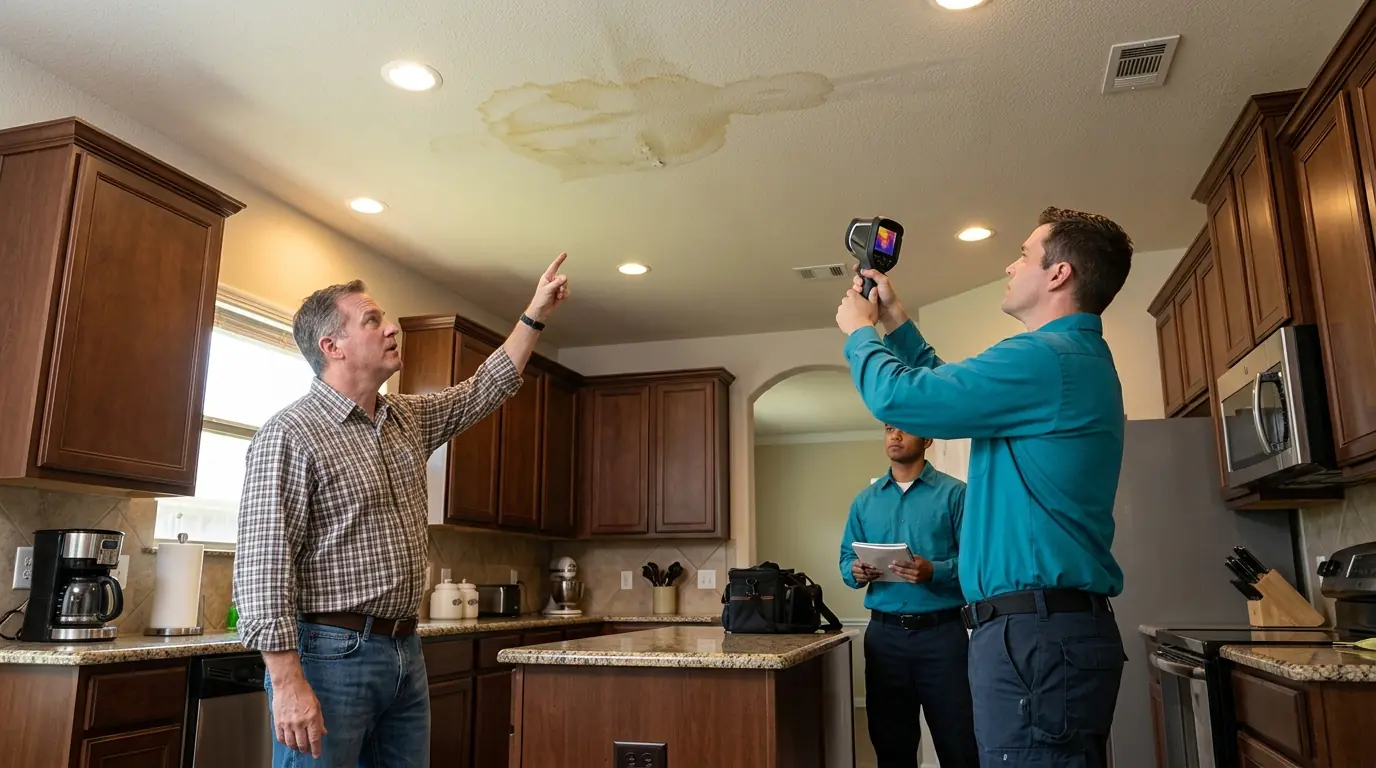
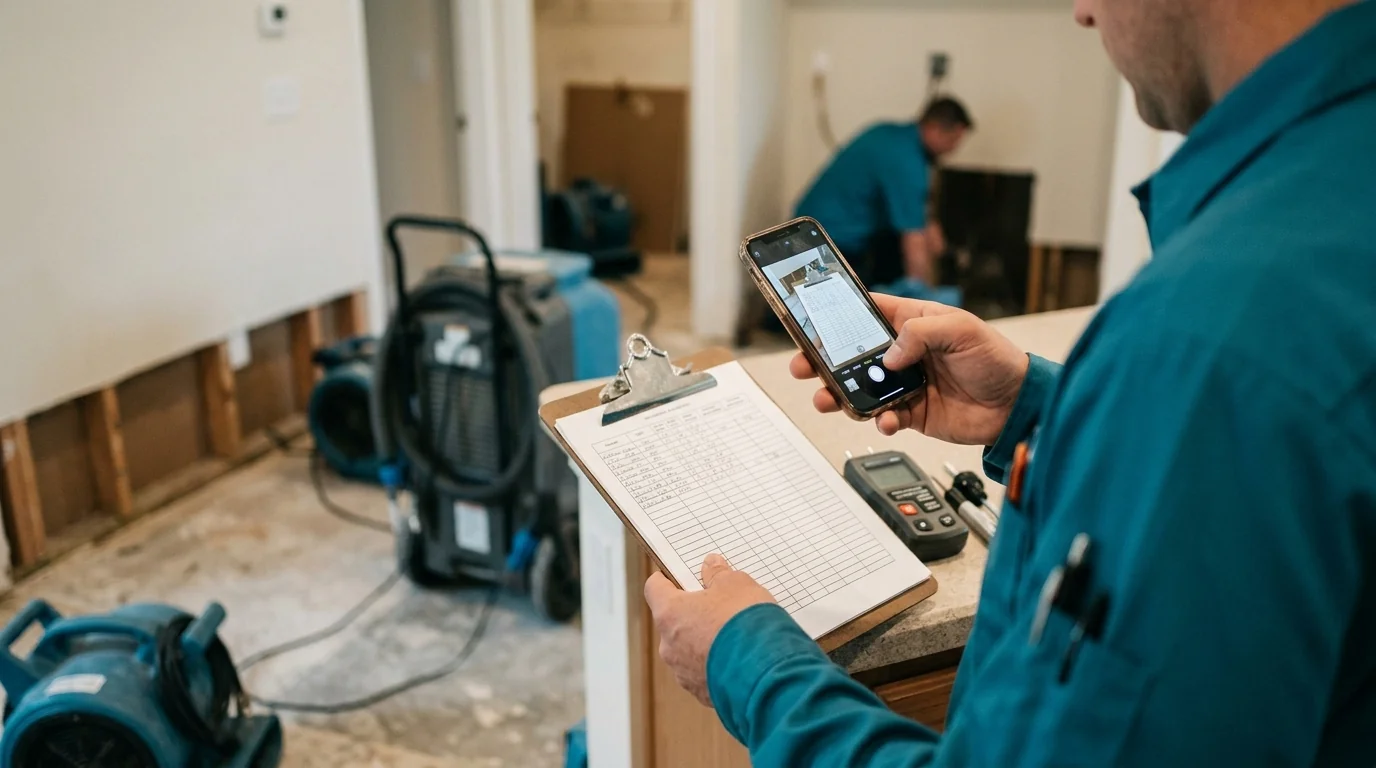
We take moisture readings room by room, scan walls and ceilings with a thermal camera, and photograph everything before anything is removed.
- 04
Remove only what has to go
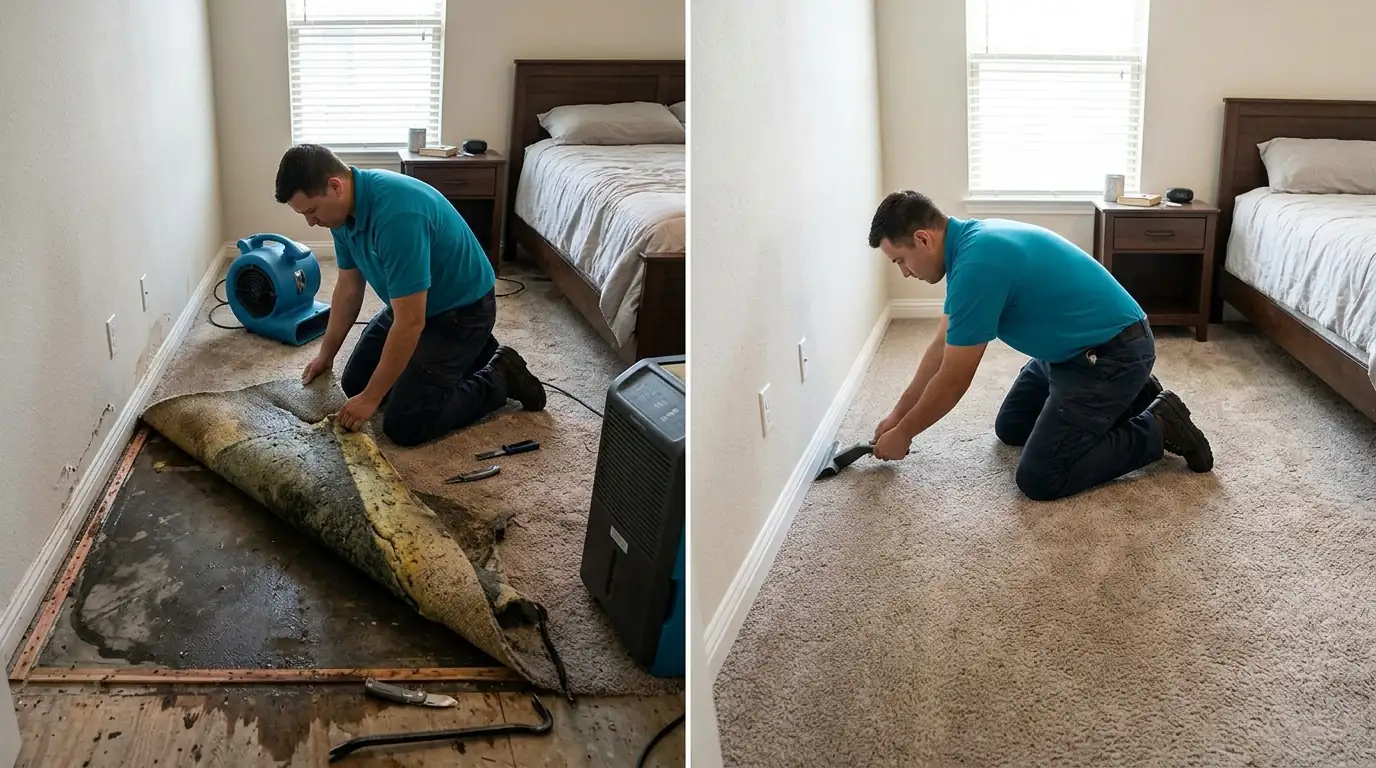
Wet pad, swollen baseboards and drywall above the safe line come out. Clean-water materials that read dry enough stay and dry in place.
- 05
Dry and verify
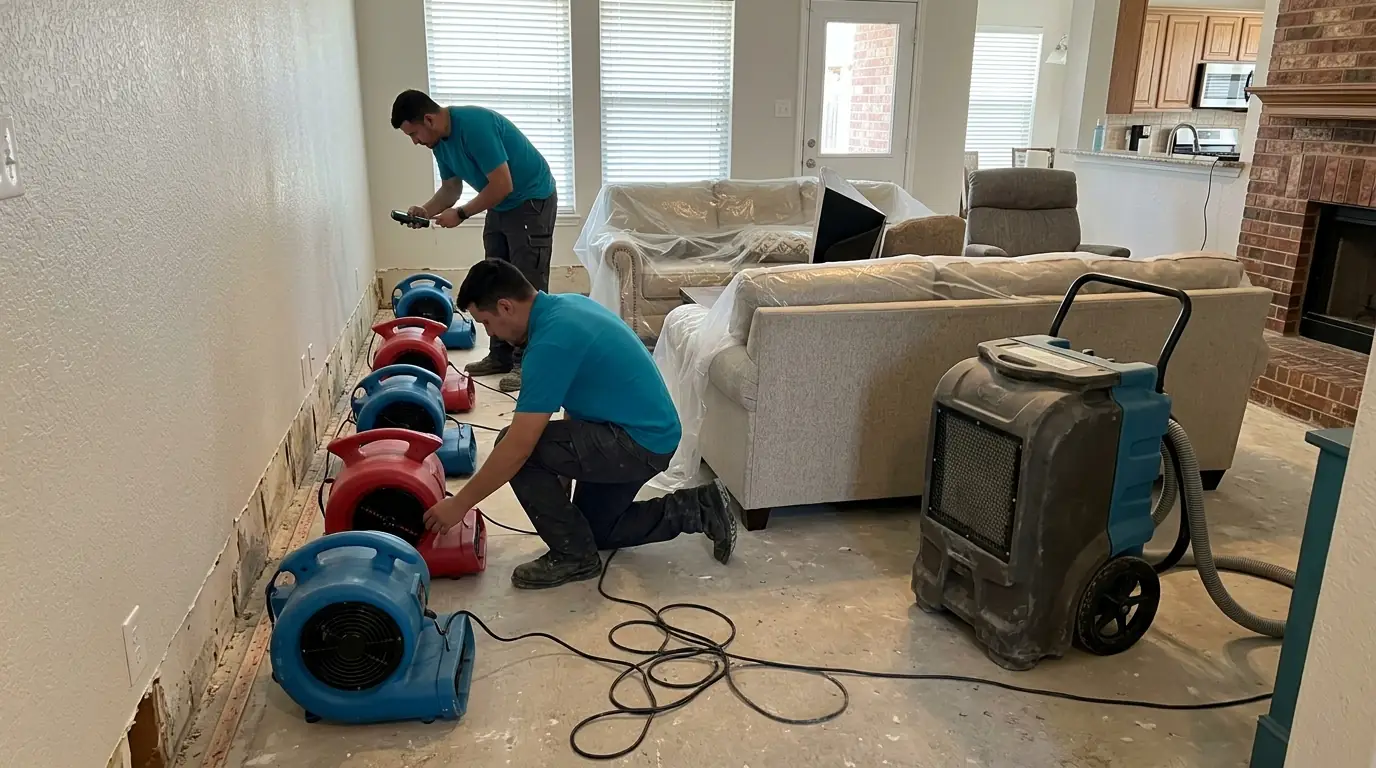
Air movers and dehumidifiers run on a plan. We check readings daily and log them, and the equipment leaves only when the numbers reach dry standard.
- 06
Put the rooms back
Drywall, texture, paint, flooring and trim go back in once the structure is dry, so you are not living around open walls longer than needed.
How We Decide What Dries and What Comes Out
Two jobs that look the same from the doorway can need very different work. A supply line that split an hour ago leaves clean water, and most of what it touched can dry where it sits if we start quickly. A toilet overflow that ran overnight is gray or black water, and the pad, the lower drywall and anything porous it reached usually comes out. Water category and time decide most of it.
So we measure before we cut. A pin meter tells us what the drywall and baseboards are holding, a non-invasive meter scans across the floor, and the thermal camera shows the cool trails water leaves inside a wall. We mark the wet line on the plan, cut a little above it, and save everything below the line that reads dry. You see the readings and the photos, and you know why each piece came out.
Found Water Where It Should Not Be?
Shut off the source if you can, then call. Every hour the water sits, it travels further into drywall, pad and framing.
Where We Work Around Fort Worth
The office is in Mansfield, south of Arlington, and the work runs across Fort Worth and the cities around it. That covers the older neighborhoods south and west of downtown, the newer master-planned streets toward AllianceTexas in the far north, and the suburbs east toward Arlington and Grand Prairie.
We also take calls from nearby parts of Johnson, Parker and Ellis counties, where storms and freezes bring the same kind of damage. Our areas we serve page explains the coverage region by region, with a page for each county, city and Fort Worth neighborhood we work in most.
What Our Documentation Looks Like
Insurance or not, you should be able to see what was done and why. Every job gets dated photos of the damage before removal, a moisture map showing which rooms and which walls were wet, and a drying log with readings taken each visit until the structure reaches dry standard.
If you are filing a claim, that record is what an adjuster asks for. We hand it over in a format you can forward. If you are paying directly, the same log shows you exactly when the drying was done, so equipment is not sitting in your living room a day longer than the readings require.
Questions Fort Worth Homeowners Ask First
Yes. The line is answered 24 hours a day, every day of the year, including holidays. Water and smoke damage get worse by the hour, so a 2 a.m. call is a normal part of this work. Tell us what happened and we will talk you through the first steps while the job is scheduled.
Stop the source if you can do it safely: the fixture valve, the main shutoff at the meter box, or the water heater cold inlet. Turn off breakers to wet rooms if you can reach the panel without standing in water. Then call. Our first-hour guide covers the rest.
It depends on the water and the time. Clean water caught early often dries in place with extraction, air movers and dehumidifiers. Gray or sewage water, swollen particleboard and drywall that stayed wet for days usually come out. We decide with moisture readings, not guesswork, and we show you the numbers.
We document every job the way adjusters expect to see it: photos before and during the work, a moisture map, daily drying readings and a scope of what was removed. You can share all of it with your carrier. Coverage decisions belong to your policy and your adjuster, so read our guide to documenting water damage.
Texas splits larger mold projects into two roles. An independent mold assessment consultant writes the protocol and checks clearance at the end, and a separate remediation company does the containment and removal. We handle the removal, cleaning and rebuild side and can explain the steps. Our Texas mold rules guide has the details.
Fort Worth and its neighborhoods, plus Arlington, Mansfield, Burleson, Grand Prairie and the rest of Tarrant County, along with nearby parts of Johnson, Parker and Ellis counties. Our office is in Mansfield. The areas we serve page explains where coverage runs and where it ends.
Guides Worth Reading Before You Need Them
Water, Smoke or Storm Damage Right Now?
Call and tell us what you are seeing. We answer 24/7 and can usually tell you on the phone what to do in the next ten minutes.