Quick answer
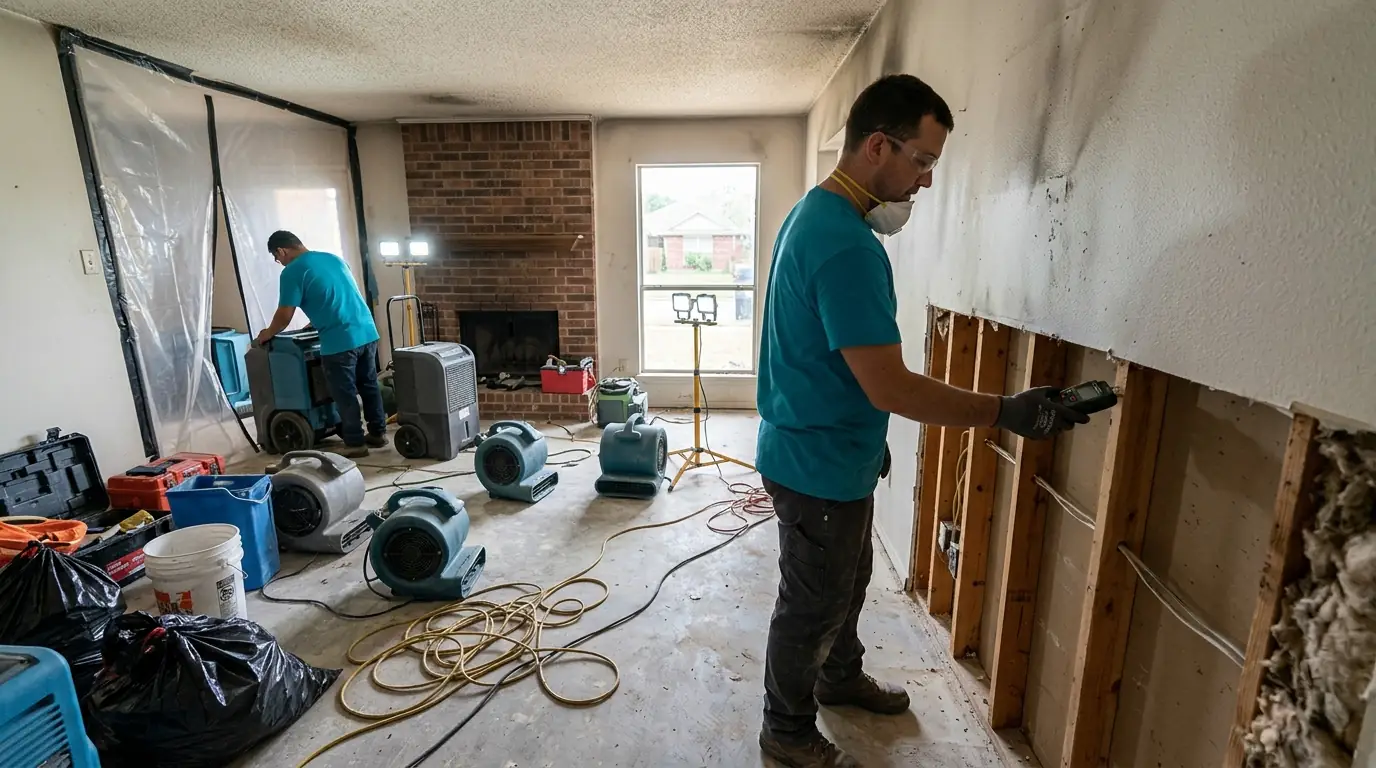
Fire damage restoration in Fort Worth starts the day the fire department leaves, because hose water and soot keep damaging the house after the flames are out. Acidic soot can etch metal and glass within days. We secure openings, extract firefighting water, remove charred materials, clean smoke residue, and then rebuild what came out.
What Fire Damage Restoration Involves
A house fire leaves three different problems in one building. The burned area has charred framing and a hole in the roof or wall. The rooms around it are coated in soot and smell of smoke. And almost everything below the fire is wet, because firefighters may put thousands of gallons into a structure fire. Each of those needs a different fix, and they have to happen in the right order or the water turns into mold while everyone focuses on the char.
We start with board-up and tarping, then extraction and drying, then tear-out of burned materials, then soot removal and odor work, and finally the rebuild. Everything is photographed and inventoried as it comes out, so your adjuster sees the full picture. The guide on what to keep after a house fire helps with the first hard decisions.
Fire Restoration in the Order It Has to Happen
- 01
Secure the property
Once the fire department releases the house, we board broken windows and doors and tarp roof openings so rain, animals and trespassers stay out while you sort out next steps.
- 02
Extract and dry
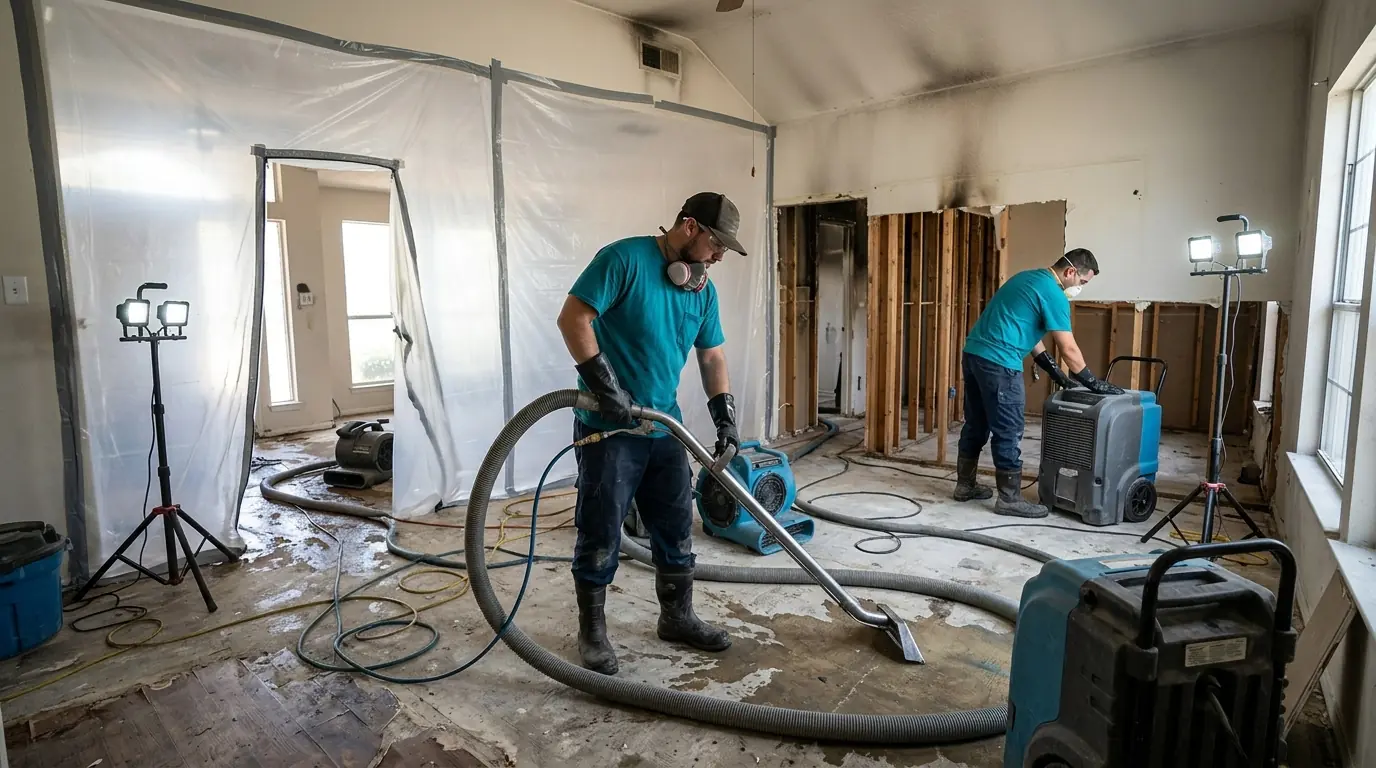
We remove firefighting water, pull wet insulation and ceiling drywall, and start air movers and dehumidifiers. Drying starts early because it can't wait for the soot work.
- 03
Inventory and pack out
Contents are photographed, sorted into salvageable and non-salvageable, and packed out for cleaning where it makes sense. You get the list for your claim.
- 04
Tear out burned materials
Charred drywall, insulation, flooring and framing come out. We probe framing to decide what can be cleaned and sealed and what has to be replaced.
- 05
Clean, seal and deodorize
Remaining surfaces get soot cleaning, cleaned framing gets a stain-blocking primer, and odor treatment runs before walls close up so smell doesn't get trapped inside.
- 06
Rebuild
Framing, drywall, insulation, flooring, cabinets and paint go back in. The rebuild follows the documented scope, so the finished house matches what was there before the fire.
Charred Framing and Roof Structure
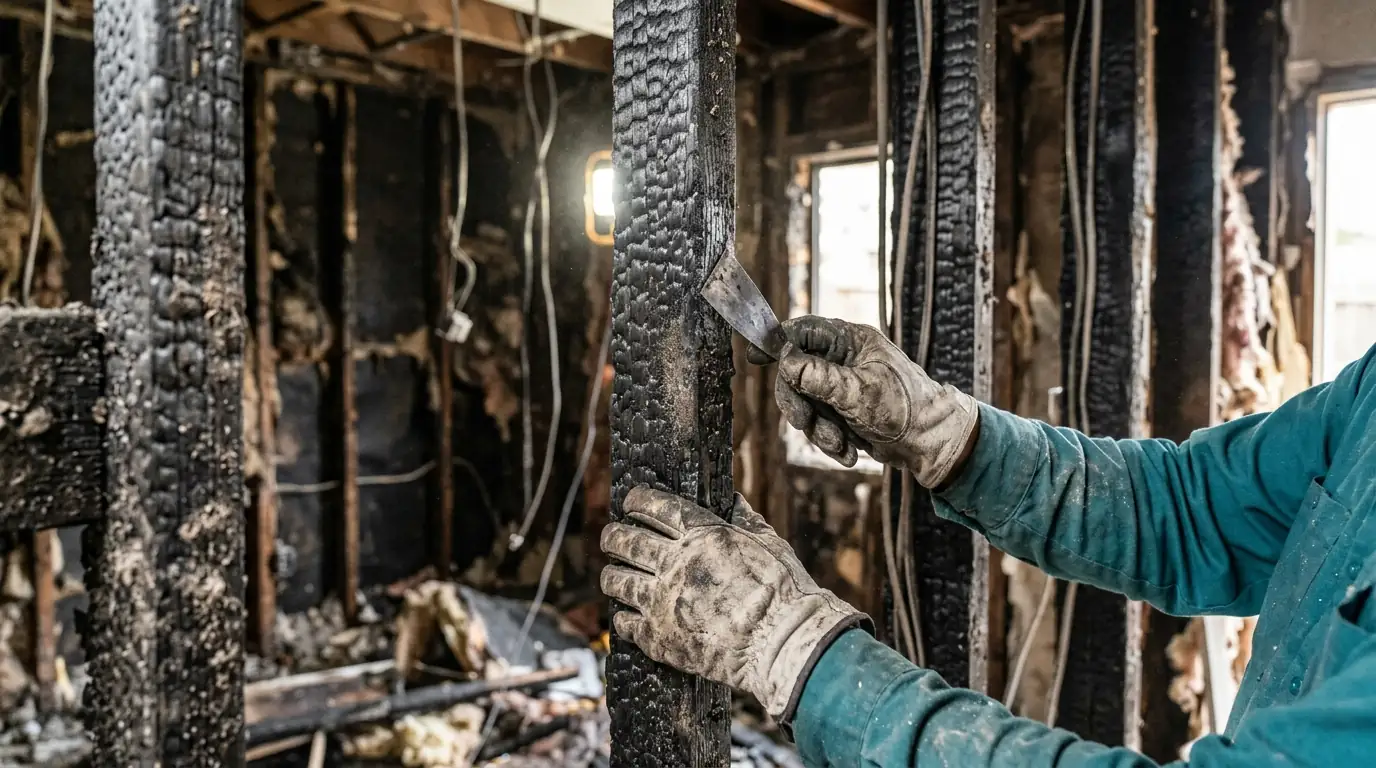
Studs, joists and rafters near the fire often look worse than they are, and sometimes the reverse. We probe charred wood to see how deep the burn goes. Light surface char can be wire-brushed or soda-blasted, then sealed with a stain-blocking primer so odor doesn't bleed back through new drywall. Members charred deep enough to lose strength come out and get replaced, sometimes with an engineer's input on load-bearing pieces. You'll usually see this work in the room where the fire started and the attic above it. The amount of framing that has to be replaced, rather than cleaned and sealed, is one of the biggest swings in cost and schedule.
Water Left Behind From Firefighting
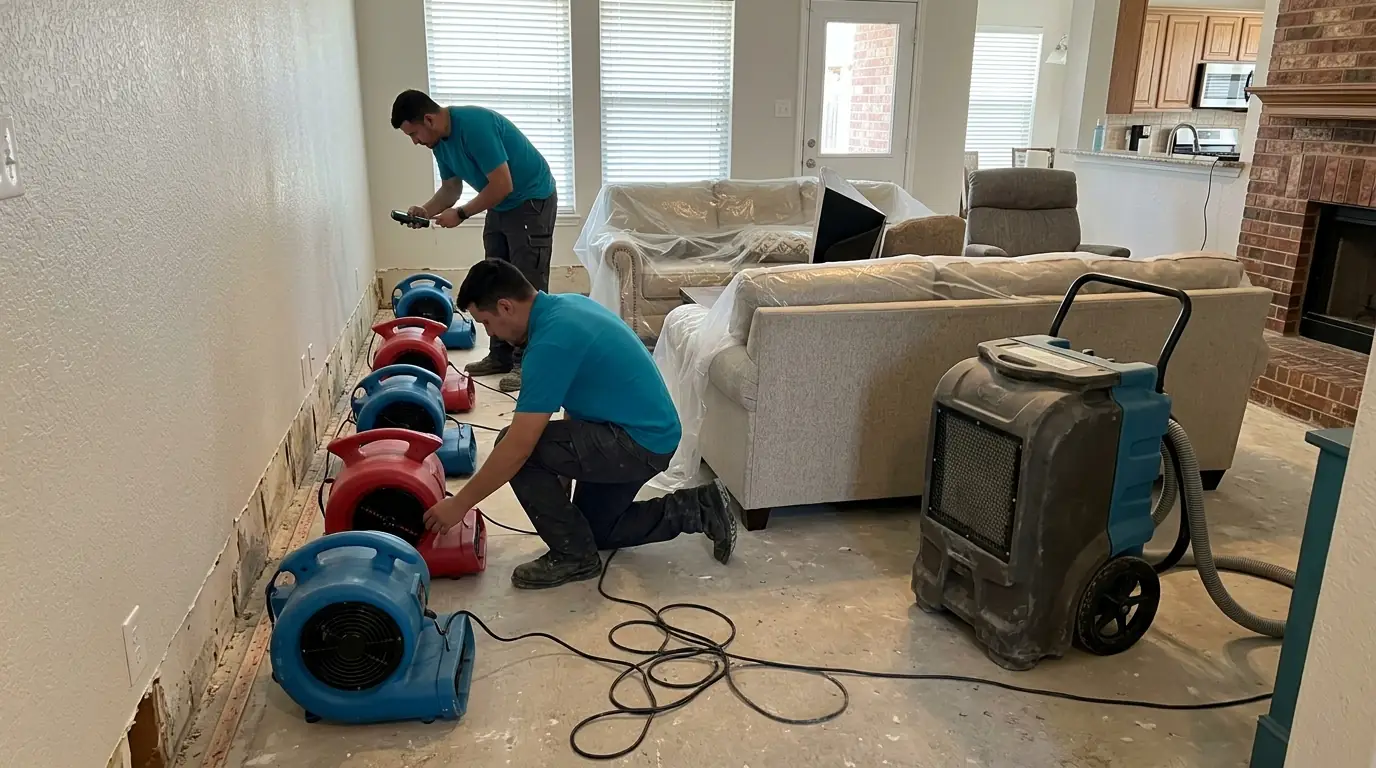
The water damage after a fire often covers more square footage than the burn. Hose streams soak ceilings, insulation, wall cavities and floors, and on a slab house that water spreads under flooring into rooms the fire never reached. Mixed with soot and ash, it's dirty water, not clean. We extract it, remove wet insulation and ceiling drywall, open walls where readings are high, and run air movers and dehumidifiers with daily moisture logs. This has to start within the first few days, because wet drywall behind smoke-stained walls can grow mold while the house sits waiting for an adjuster. How far the water traveled decides most of this part of the job.
Salvage Decisions: Clean, Restore or Replace
Not everything that smells of smoke is ruined. Hard surfaces like tile, sealed wood, metal and glass usually clean up. Many textiles come back with the right wash or dry-cleaning process. Electronics, mattresses, food and anything that was heat-damaged or soaked in dirty water usually don't. We sort contents room by room, pack out what's worth cleaning and list what isn't with photos. The structure follows the same logic: smoke-stained drywall far from the fire may clean and seal, while drywall near the fire comes out. These calls change the scope more than anything else, so we make them with you and document each one.
Do Not Wait for the Stain to Spread
Most of what we remove is material that stayed wet too long. Calling early keeps the job smaller.
Fire and Water Go Together Here
Fort Worth field note
Lake Worth was impounded in 1911 to improve Fort Worth's fire-fighting supply, and that link between fire and water still shows up on every structure fire we work. Burleson learned the other side of it in 1895, when a fire burned most of its business district because hydrants fed by a deep well couldn't put it out. Today the water arrives in volume, which is why a one-room fire can soak half a slab house. Drying has to start in the first days after a fire, before the soot cleanup, or the water turns into a second problem.
How Long Fire Restoration Takes
Securing the house and starting water extraction usually happens in the first day or two after the fire department releases it. Drying, tear-out and cleaning usually take one to three weeks for a single-room or kitchen fire. Rebuild time depends on how much was removed: a few weeks for one room, often several months for a fire that reached the roof or several rooms. Claim approval, waiting on materials and permit reviews for structural work are the usual reasons a timeline stretches.
What a Fire Restoration Job Includes
- Board-up of broken windows and doors after release
- Roof tarping over burned openings
- Extraction and structural drying of firefighting water
- Contents inventory with photos and pack-out
- Removal of charred drywall, insulation and flooring
- Soot cleaning on surfaces that can be saved
- Stain-blocking sealer on cleaned framing
- Odor treatment before walls are closed
- Rebuild of framing, drywall, flooring and finishes
Clean and Seal or Tear Out and Replace?
| Factor | Clean and seal | Tear out and replace |
|---|---|---|
| Framing | Surface char only; wood is solid when probed | Char is deep enough to reduce strength |
| Drywall | Light smoke film in rooms away from the fire | Heat damage, blistered paper, heavy soot or wet from hoses |
| Insulation | Rarely kept after a real fire | Smoke-saturated or wet insulation always comes out |
| Hardwood floors | Smoke residue on a sealed finish | Cupped from hose water or scorched |
| Cabinets | Solid wood with surface soot | Particleboard that got wet or heat-warped doors |
If a cleaned surface would still hold odor or doesn't read dry, replacement usually costs less than cleaning it twice.
What a House Fire Restoration Usually Costs
HomeGuide's cost guide puts fire damage restoration at $8,000 to $18,000 ($4 to $7 per square foot) as a national planning range. Small kitchen fires can land well below it and whole-house fires far above it. The figure is for planning only; your scope comes from what we measure and document on site.
- Burned versus smoke-only areaRooms with structural char need tear-out and framing. Rooms with smoke only need cleaning, sealing and odor work, which costs far less per square foot.
- Firefighting waterHow much water went into the house, and how long it sat, decides the drying, insulation and flooring work that sits on top of the fire repair.
- Roof and structural repairA hole in the roof or a damaged load-bearing wall adds framing, decking and roofing, and sometimes an engineer's review before rebuild can start.
- Contents volumeA full house of furniture, clothing and electronics takes more pack-out, cleaning and inventory time than a lightly furnished one.
Range cited from a national cost guide (source, 2025-12-01). It is a planning figure, not a quote; your job is priced after we see it.
Fire Damage Restoration Questions From Fort Worth Homeowners
Only after the fire department or fire marshal releases the property. Even then, avoid rooms with sagging ceilings, burned floors or standing water, and don't turn on power until an electrician checks it. Wear a mask if you go in to retrieve medications, documents or keys, and keep the visit short.
Firefighting water doesn't stay in the room that burned. It runs through ceilings, walls and under flooring, and on a slab-on-grade house it can reach rooms on the opposite side. Wet drywall and insulation behind smoke-stained walls can start growing mold within a couple of days, so drying has to start early.
Only after it's cleaned and sealed with a stain-blocking primer made for smoke. Regular paint lets soot stains and odor bleed back through, sometimes within weeks. Drywall near the fire with heat damage, blistering or heavy soot usually needs to be replaced rather than painted.
Every item that was damaged or destroyed, with a description, approximate age and replacement cost where you can find it. Photos of each item help. We photograph and inventory contents during pack-out, so a lot of the list is built as we sort, and you can add what we couldn't see.
Structural repairs, roof framing, and electrical or plumbing replacement usually need a permit from the city, while cosmetic work like paint and flooring often doesn't. Rules vary between Fort Worth and nearby cities, so check with the local building department before rebuild starts.
Related Work We Handle
Fire Department Just Left? Start Here
The first days after a fire decide how much of the house can be saved. We answer 24/7 and can secure the house and start drying right away. Call us when you're ready to talk through next steps.
Updated October 2026