Grapevine, TX
Water and Smoke Damage Cleanup for Grapevine Homes
Phones answered 24/7 for Grapevine homes and businesses.
Quick answer
Water and smoke damage cleanup in Grapevine covers two kinds of loss with one thing in common: both spread past the room where they start. Grapevine's record low is minus 12 degrees, so frozen pipe bursts are a real winter risk, and smoke from even a small fire travels through ductwork.
Restoration Work Around Grapevine
Grapevine grew from about 11,800 residents in 1980 to over 42,000 by 2000, after DFW Airport opened in 1974. Most homes date from that growth, with slab foundations, attic air handlers and plumbing now thirty or more years old. In these homes, water losses come from frozen pipes in winter, failed supply lines year-round and attic leaks after spring storms, and each starts in a different part of the house.
Smoke work starts with figuring out what burned. Protein smoke from a kitchen fire leaves a thin, sticky residue that smells strong. Synthetic smoke from plastics and furniture leaves black, oily soot. Each needs different cleaning agents and methods, and the wrong one can set the stain. We clean surfaces, change filters, check ductwork and run smoke damage cleaning room by room before deodorizing the whole house.
Minus 12 Degrees and Grapevine's Pipes
Grapevine's record low is minus 12 degrees Fahrenheit, recorded in February. North Texas houses aren't built for that kind of cold. Pipes in exterior walls, attics and garages freeze first, and when they thaw, split copper and burst PEX fittings release water at full pressure. A burst line in an attic can soak insulation, ceiling drywall and the walls below within minutes. Insulating exposed lines and dripping faucets on hard-freeze nights prevents most damage. If a pipe does burst, shut off the main and call us, and we'll start extraction and drying while the plumber handles the repair.
Grapevine Dam and Denton Creek
Grapevine Dam on Denton Creek was built by the Army Corps of Engineers between January 1948 and June 1952 for flood control and navigation as part of the Trinity River floodway system. The dam holds back Grapevine Lake and helps protect downstream areas from flood surges. For homes in the city, most water damage comes from inside, through plumbing failures and roof leaks, rather than from the lake. Even so, a heavy spring storm can push runoff under doors in low spots. We dry, clean and rebuild after those everyday losses, and treat any runoff that came inside as contaminated water.
Calls We Get From Grapevine
How a Call From Grapevine Runs
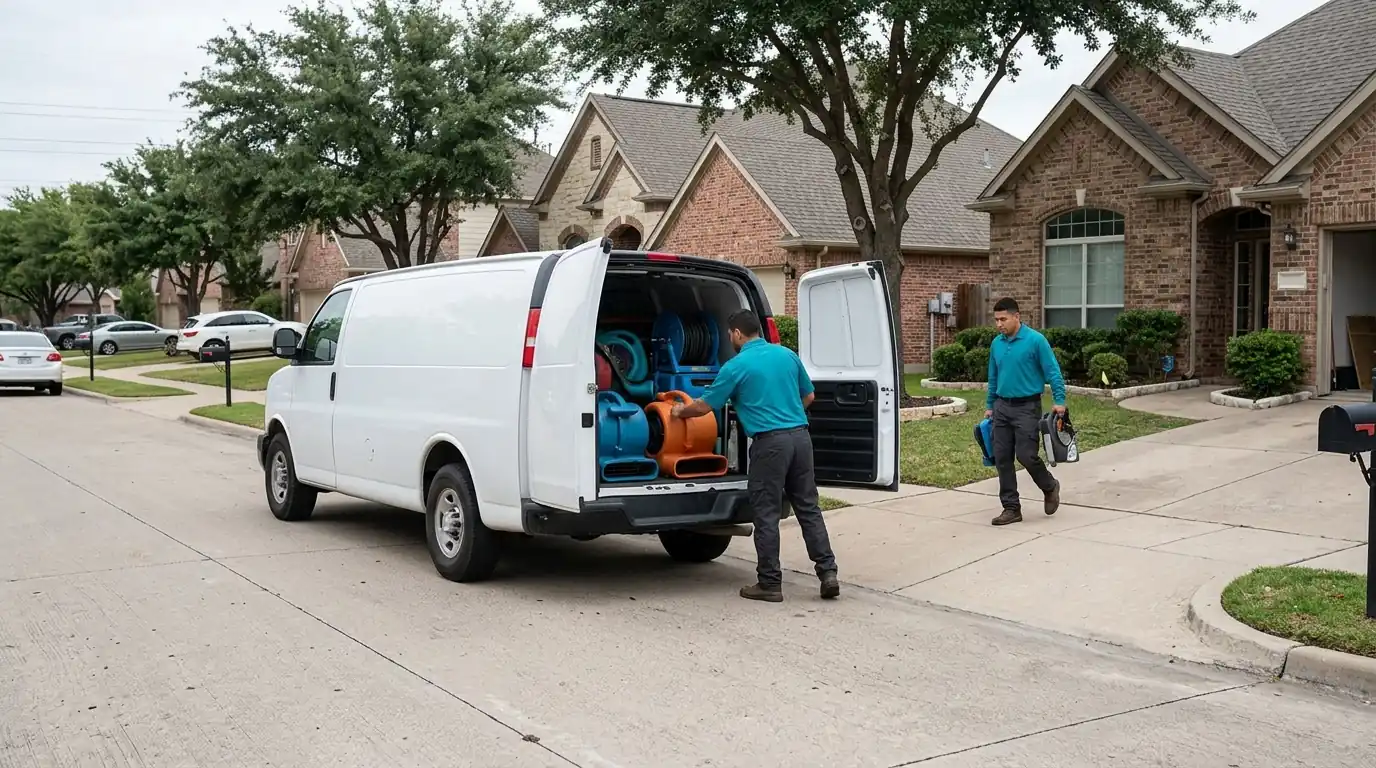
We answer Grapevine calls 24/7. For water, we ask whether it's still running and help you find the shutoff. For smoke, we ask what burned and whether the HVAC ran during or after the fire. We bring extractors, dehumidifiers, HEPA vacuums, dry sponges for soot and deodorizing equipment matched to the residue.
Grapevine Restoration Questions
Smoke gets into porous materials, wall cavities and ductwork. If any of those weren't cleaned or sealed, odor returns, especially on humid days. We clean ducts, treat cavities and deodorize the whole house, not just the burned room.
Avoid it. Wiping oily soot with a wet cloth smears it into the paint and can set the stain. Dry chemical sponges lift soot first, then we use cleaning agents matched to the residue type before any repaint.
Shut off the main water valve. Turn off power to rooms where water is near outlets or fixtures. Move valuables away and call us. Don't use a household vacuum on standing water, since that risks shock and damages the vacuum.
Smoke residue carries fine particles and chemicals from burned materials, which can irritate lungs and eyes. Ventilate the house, keep children and pets away from heavily affected rooms, and leave cleaning of oily residue to equipment meant for it.
Water, Fire or Storm Damage in Grapevine?
Tell us what happened and where the water or smoke went. We will walk you through the first steps on the phone.
Updated October 2026