Quick answer
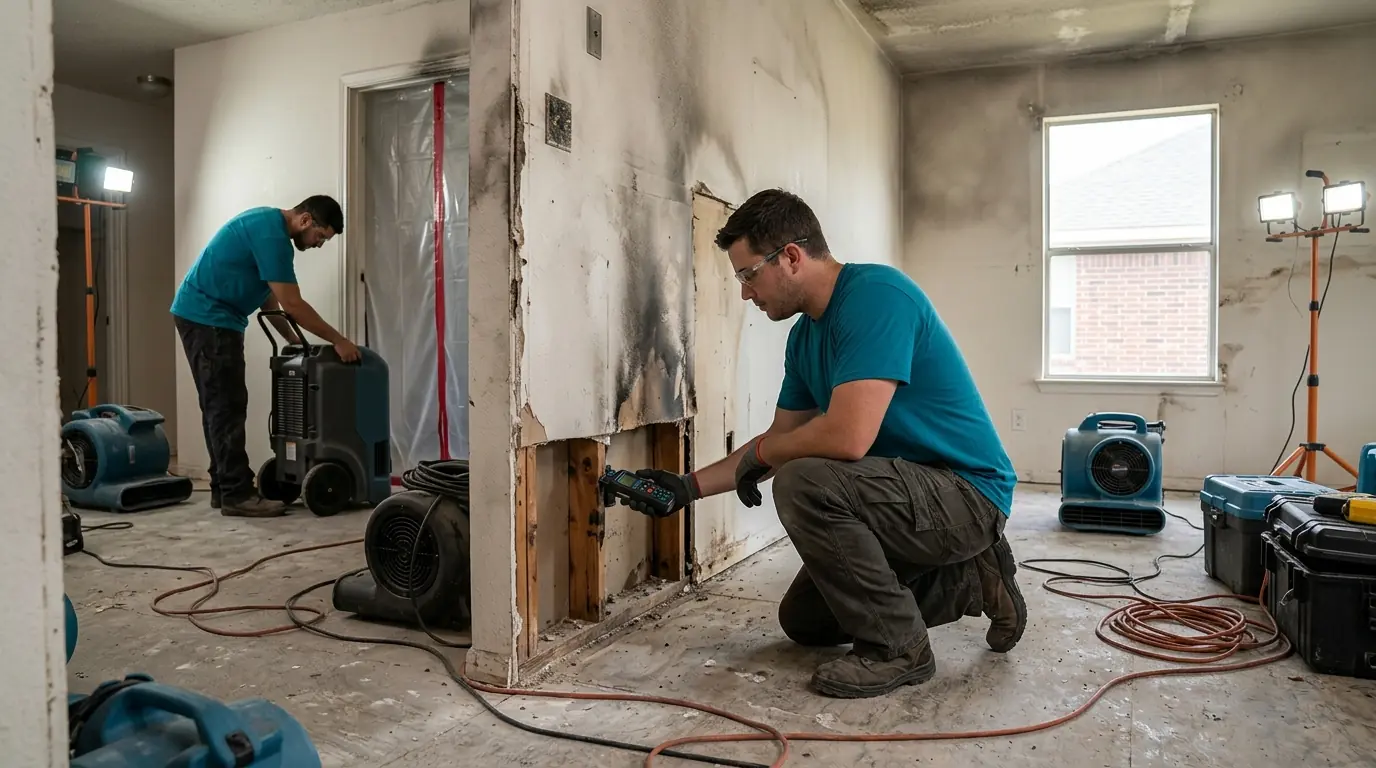
Commercial fire damage cleanup in Fort Worth has one more goal than a house fire: getting the business open again, often in phases. Soot on stock, equipment and ceilings, plus hose water in walls and floors, keeps doors closed. We secure the building, dry it, clean what can be saved, and sequence the work so areas reopen as they're ready.
What Commercial Fire Damage Involves
In a commercial building, a small fire can close everything. Smoke spreads through open ceilings and shared HVAC, sprinklers or hose lines wet the floor and the space below, and the fire marshal or health department may need to sign off before customers return. Each day closed costs revenue, so the cleanup plan has to account for what needs to reopen first.
We start with board-up and securing the space, then extraction and drying. Next comes soot cleaning of structure, fixtures and equipment, odor work, and finally rebuild. We document every area with photos, moisture readings and inventory lists, which helps owners, tenants, landlords and adjusters see the same record. For a sprinkler-only discharge, fire sprinkler water cleanup covers that part of the job.
Getting a Business Back Open After a Fire
- 01
Secure and assess
After the fire marshal releases the building, we board openings, check for water and walk the space with the owner or manager to map affected and unaffected areas.
- 02
Isolate clean areas
Plastic barriers and air scrubbers separate unaffected areas so they can keep operating or reopen first, while the soot cleanup goes on in the damaged section.
- 03
Extract and dry
Water from sprinklers and hose lines gets extracted and dried, with moisture readings logged by area or suite so tenants, owners and adjusters see the same numbers.
- 04
Clean structure and contents
Ceilings, walls, racking, fixtures and equipment get cleaned with methods matched to the residue on each. Inventory is sorted, photographed and documented with the owner.
- 05
Deodorize and rebuild
Odor treatment runs after cleaning. Damaged ceilings, walls and finishes are then rebuilt in the order that gets each area of the business back in use soonest.
Restaurant Fires and Kitchen Exhaust
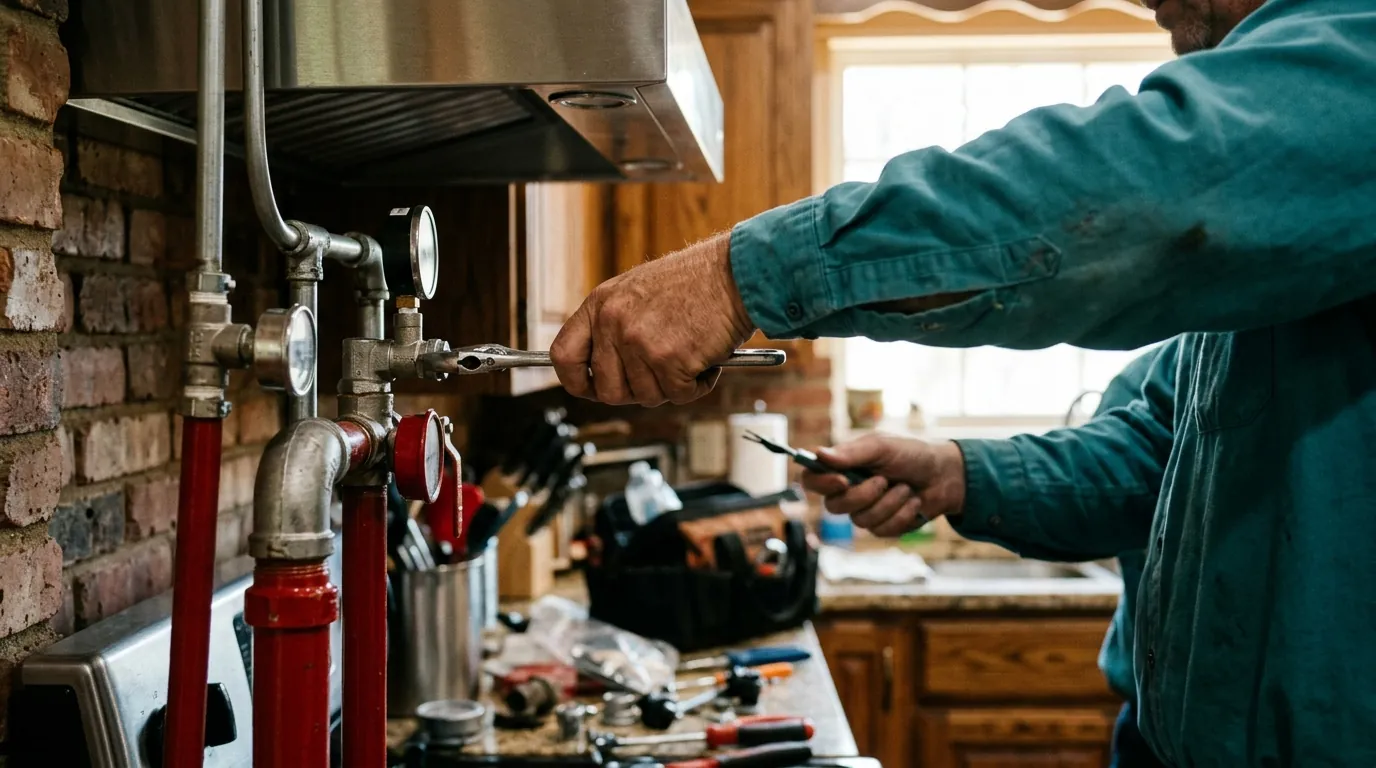
Most restaurant fires start at the cooking line, often in the hood or exhaust duct where grease builds up. The suppression system usually puts out the flames, but it leaves chemical residue across the cooking line. Smoke and grease spread into the dining room ceiling, seating and walls. We clean the suppression residue, degrease hoods and nearby surfaces, clean the dining area and handle any water from sprinklers or hoses. The health department typically has to inspect before reopening. The hood and exhaust cleaning is usually done by a hood-cleaning contractor. Cost depends on how far smoke reached beyond the kitchen and how much food-contact equipment needs cleaning or replacement.
Office and Retail Fires
Office and retail fires are often electrical: a breakroom appliance, a storage room or a light fixture. Smoke usually travels through the space above a drop ceiling and spreads across suites that share the same plenum. You'll notice stained ceiling tiles, soot on light fixtures and smoke smell in areas far from the fire. We replace or clean ceiling tiles, clean the plenum space and HVAC, wipe down walls, workstations and fixtures, and deal with smoke-affected stock or files. Retail stock with smoke odor may not be sellable even when it looks clean. Cost depends on the size of the shared plenum and how much inventory or equipment was exposed.
Warehouse and Industrial Smoke
Warehouses have high ceilings, open bays and large amounts of stored inventory, which means smoke can cover a huge area even from a small fire. Soot settles on racking, roof deck, overhead doors and the top of every pallet. Synthetic materials like packaging, tires and plastics produce oily soot that's harder to clean. We use lifts for high-ceiling cleaning, HEPA vacuums and detergents on structure, and air scrubbers to capture airborne particles while work continues. Inventory is sorted with the owner or adjuster. Cost depends mostly on the square footage of affected ceiling and racking and the amount of inventory that needs cleaning or disposal.
Smoke, Soot or Water Damage Tonight?
The line is answered around the clock. Tell us what you see and we will tell you what to do first.
Commercial Corridors Around DFW Airport
Fort Worth field note
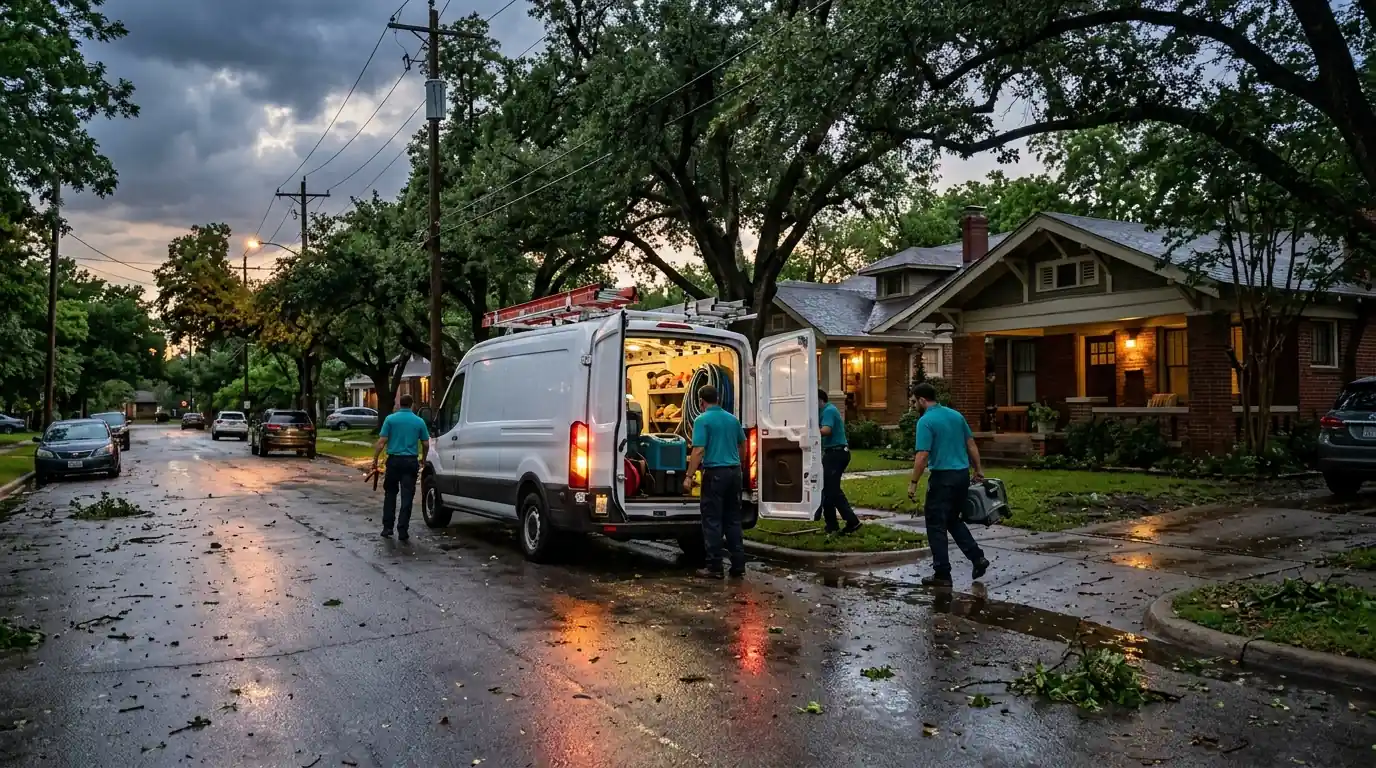
Euless grew quickly in the 1950s and 1960s after Amon Carter Field opened, and the southwestern part of DFW Airport now lies inside its city limits. Growth tied to the airport brought warehouses, distribution buildings, hotels and restaurants to the cities around it. Those buildings share a pattern after a fire: big open spaces, shared ceiling plenums and inventory stacked high. On jobs like that, the first priority is often isolating undamaged areas so the business can keep operating while the affected section is cleaned.
How Long Commercial Fire Restoration Takes
Board-up, isolation and water extraction usually happen in the first one to two days after release. Cleaning a single office suite or small retail space usually takes one to two weeks. Restaurants often need two to four weeks once health inspections and kitchen equipment are included. Warehouses and larger buildings can take several weeks to months. Inspection schedules, inventory decisions and access to the building outside business hours are the usual factors that stretch the timeline.
What Our Commercial Fire Cleanup Covers
- Board-up and securing the building after release
- Barriers and air scrubbers to isolate unaffected areas
- Extraction and drying of sprinkler and hose water
- Soot cleaning of ceilings, walls, racking and fixtures
- Cleaning of drop-ceiling plenums and HVAC components
- Inventory sorting with photos and disposal lists
- Odor treatment matched to occupancy and schedule
- Phased rebuild to return areas to use
What Shapes the Cost of Commercial Fire Restoration?
Angi's cost guide puts fire damage restoration at $3,083 to $52,031 (average $27,477) as a national planning range. Commercial jobs can fall anywhere in that range or above it, because building size, inventory and downtime vary so much. Use it only as a rough planning reference.
- Area affected by smokeOpen ceilings and shared plenums let smoke spread across large areas. The total square footage of ceiling, walls and racking to clean drives most of the cost.
- Inventory and equipmentStock, food, files and electronics exposed to smoke need cleaning or disposal. The volume and value of those items often equal the structure cost.
- Water from suppressionSprinklers and hose lines add water damage, sometimes to floors below. Extraction and drying sit on top of the soot cleanup.
- Phasing and after-hours workWorking in phases or overnight so part of the business can stay open adds coordination and labor, but often saves more in lost revenue.
Range cited from a national cost guide (source, 2026-09-25). It is a planning figure, not a quote; your job is priced after we see it.
Commercial Fire Damage Questions From Fort Worth Homeowners
Often yes. Unaffected areas can be sealed off with barriers and air scrubbers, and the cleanup can be phased so customer areas reopen first. Whether that's possible depends on the fire marshal, the building's layout and whether shared HVAC can be isolated.
The local health department usually has to inspect before food service resumes, and the fire marshal may need to sign off if suppression systems discharged or were damaged. The suppression system also has to be recharged and inspected. We clean to the point where those inspections can happen.
It depends on the product. Sealed goods in plastic may only need surface cleaning. Clothing, fabrics and porous items often hold odor even after cleaning and may not be sellable. We sort and document inventory with you and your adjuster so decisions are recorded.
That usually depends on the lease. Often the landlord handles the building structure and the tenant handles their own improvements, inventory and equipment. We keep records separated by area and owner so each party can see what applies to them.
Yes, much of the cleaning can be scheduled at night or on weekends so the business can operate during the day where it's safe. It takes more coordination, and some tasks like structural repairs may still need daytime access.
Related Work We Handle
Fire at Your Business? Let's Plan the Reopening
We answer 24/7 and can secure the building and start drying while you sort out next steps. Call now and we'll map out which areas can open first.
Updated October 2026