Quick answer
Emergency roof tarping in Fort Worth stops rain at the opening, and a tarp has to extend well past the damage on every side to hold. We fasten it over wood battens, run it over the ridge where we can, and photograph the damage first. A good tarp buys the weeks it takes to schedule a roof repair without new water inside.
What Emergency Roof Tarping Involves
A tarp is the first repair on most storm and fire jobs, because nothing inside the house can dry while rain still reaches the decking. The goal is simple: cover the opening so water sheds off the roof instead of into the attic. Doing that well takes more than throwing a sheet over the hole. The tarp has to lap over the ridge or under the shingles above the damage, so water can't run under its top edge, and it has to be fastened to battens so wind can't lift it.
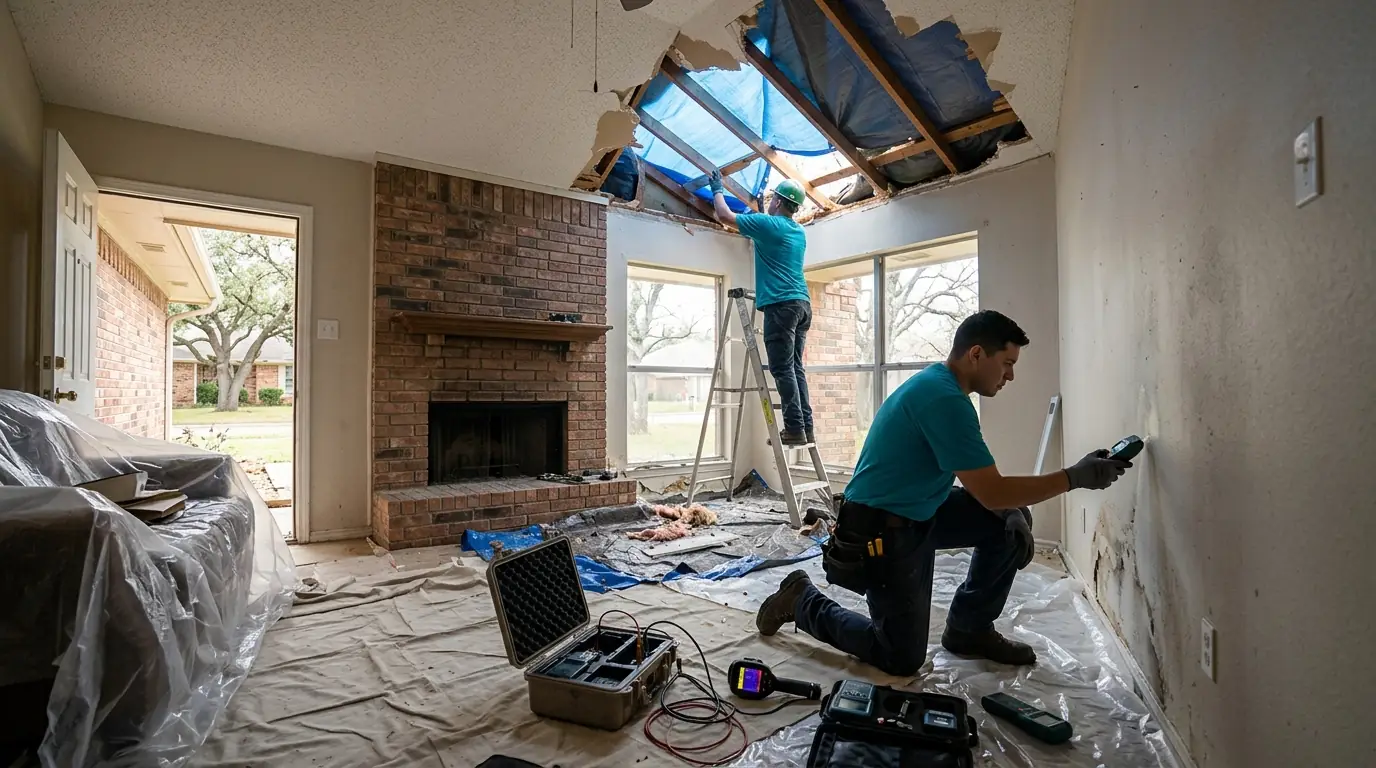
Before the tarp goes on, we photograph the damage from the roof and from the attic, so your adjuster can still see what happened. After it's on, we check the attic for water that already got in. If the ceiling below is stained or the insulation is wet, the job moves into storm damage restoration and drying. If a tree is still on the roof, the tarp waits until the weight is off and the opening is safe to cover.
How We Tarp a Damaged Roof
- 01
Check the roof is safe
We look for weak decking, live wires near the roofline and wind conditions before anyone goes up. If it's not safe tonight, we cover from inside the attic and return at first light.
- 02
Photograph the damage
We shoot the opening from the roof and from the attic before covering it, along with any shingles or debris in the yard, so the damage stays on record for your claim.
- 03
Close large holes first
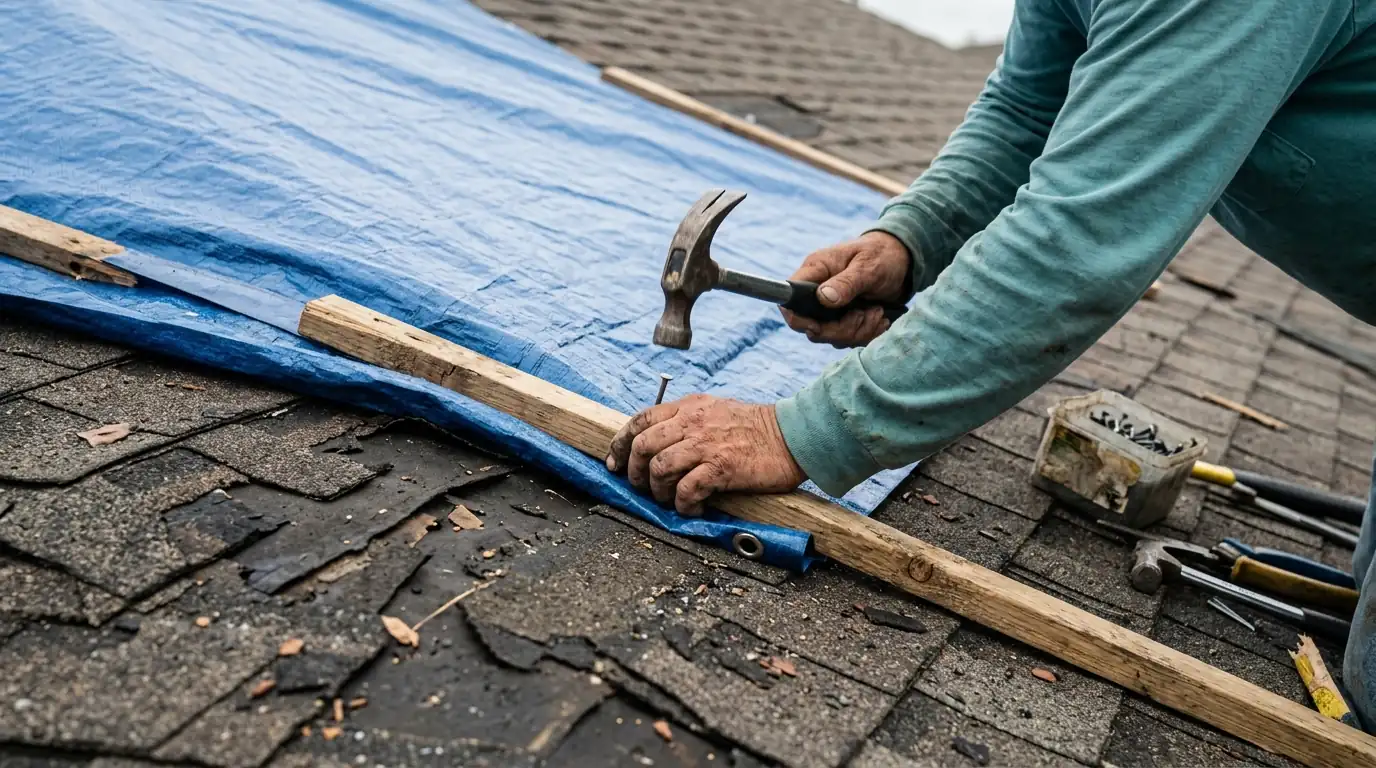
Punctures and burned spots get plywood fastened to the rafters first. That gives the tarp a solid surface to lie on and stops it from sagging into the hole and collecting water.
- 04
Fasten the tarp over battens
We run the tarp over the ridge or under the course above the damage, then screw it down through wood battens so wind can't peel it back.
- 05
Check the attic below
We look for wet insulation and decking that already took water, take moisture readings on the ceiling below, and tell you plainly whether interior drying is needed now.
Hail and Wind Openings
Wind tears shingles loose along the edges and ridge, and hail breaks shingles and vent caps across whole slopes. You may see shingles in the yard, bare decking from the street, or a new stain on a bedroom ceiling. For a lifted strip, we cover that slope from the ridge down past the damage. For a broad hail area, we cover the slopes that are actually letting water in, which we confirm from the attic side with a light and a moisture meter. Size of the area and roof pitch decide the cost, since a steep roof takes more time and more safety setup.
Limb Punctures
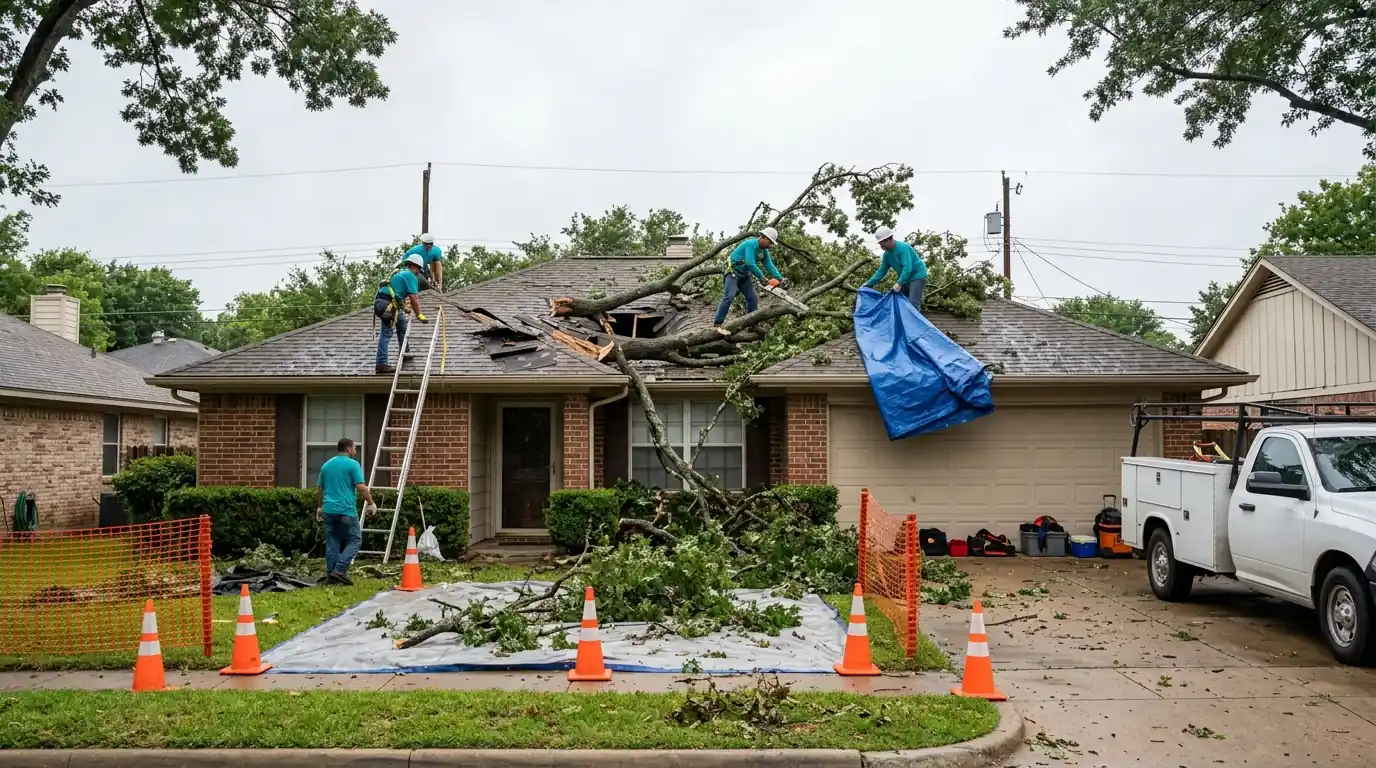
A falling limb can drive through shingles and decking and leave a jagged hole, sometimes with the branch still in it. Rain runs straight into the attic and onto the ceiling below. We remove the branch if it's small enough to handle by hand, cut back torn shingles, and close the hole with plywood fastened to the rafters before the tarp goes over it. That extra layer keeps the tarp from sagging into the opening and pooling water. Cost depends on the size of the hole, whether rafters are cracked, and how far the limb pushed debris into the attic.
Tarping After a Fire
Firefighters often vent a roof by cutting holes through it, and burned decking may be too weak to walk on. Once the fire department releases the house, rain becomes the next threat to everything the fire didn't reach. We work from ladders and solid sections, frame over the burned area, and cover it so the attic and rooms below stay dry while the fire and smoke work is planned. The size of the burned area and how much decking is safe to stand on decide the time and cost. We photograph the vent cuts and burn area before we cover them.
Water Still Moving Through the House?
Shut it off if you can and call. Every hour it sits, water travels further into drywall, pad and framing.
Why Roofs Around Fort Worth Need Tarps So Often
Fort Worth field note
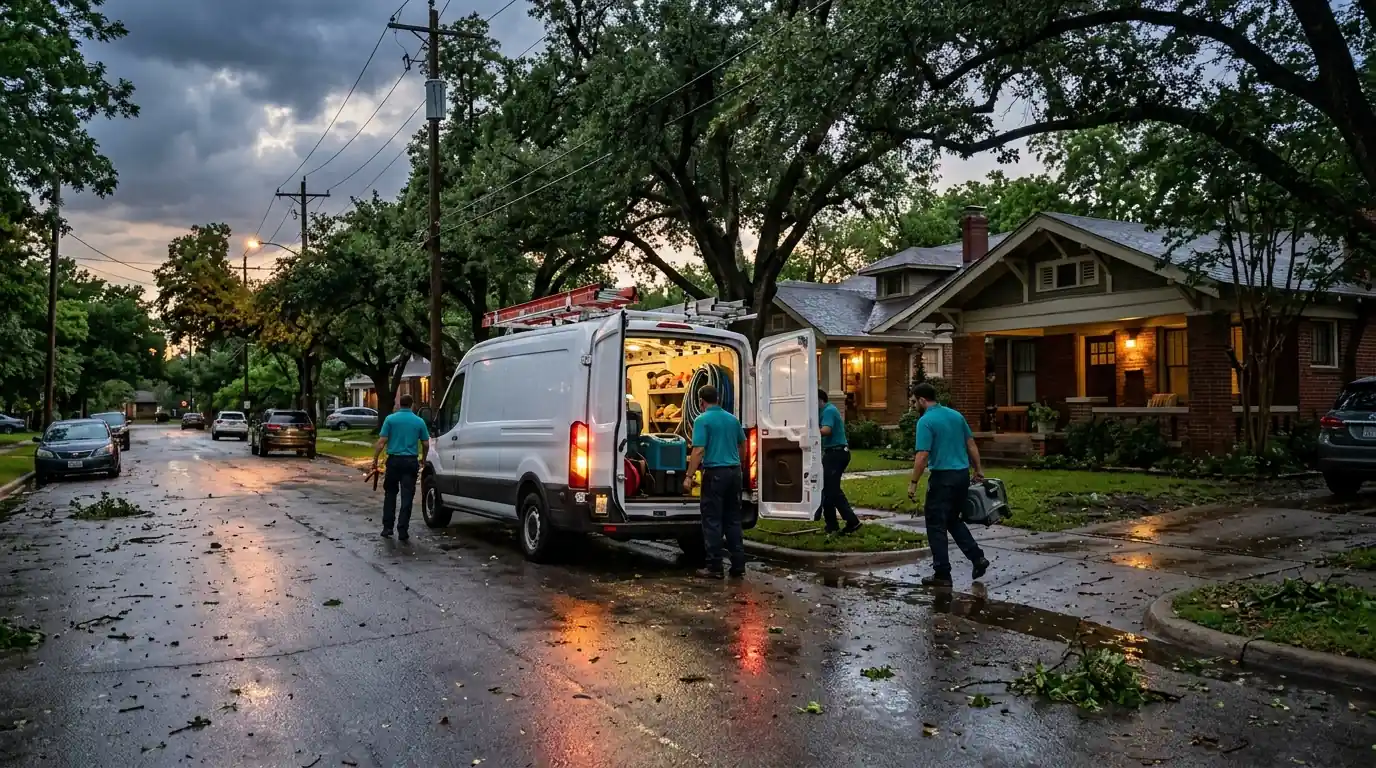
Hail is the main reason. Hail tracking lists 249 reports within 10 miles of Keller since 2004, including baseball-size hail in nearby Hurst on May 27, 2024. Closer in, the St. Patrick's Day hailstorm of March 17, 2016 was described as a $600 million day of hail damage in Tarrant County, ruining thousands of Fort Worth roofs. After storms like that, roofers are booked for weeks, and a tarp is what keeps the attic dry until a crew can get to the house.
How Long a Roof Tarp Takes and How Long It Lasts
Most tarps on a single slope usually take one to three hours once we're on the roof. A large hail area, a steep pitch or a fire vent cut that needs plywood first can push that toward a half day. How long the tarp holds depends on the material, how well it's fastened and the weather it sees. A tarp fastened over battens is usually meant to hold for weeks to a few months while the permanent roof is scheduled. We recheck it on drying visits and after any strong wind.
What You Can Do Before We Arrive, and What to Leave
| Task | What you can do | What we do |
|---|---|---|
| Catch dripping water | Set buckets under drips and move furniture and electronics out of the room. | We trace where the water enters from the attic and cover that point from outside. |
| Climb onto the roof | Stay off it, especially in rain, wind or the dark. Wet shingles and weak decking cause bad falls. | We go up with ladders, harnesses and footing suited to the pitch, only when conditions allow. |
| Relieve a bulging ceiling | Keep people out from under it. Don't push on it or stand beneath it. | We drain and remove the wet section in a controlled way so it can't drop on anyone. |
| Document the damage | Photograph stains, drips, debris in the yard and the date and time from the ground. | We add roof-level and attic photos and keep them with the job record for your adjuster. |
A tarp nailed straight through its face into shingles can tear in the first gust and add new holes, so fastening over battens matters.
How Much Does an Emergency Roof Tarp Cost?
Angi's roof tarp cost guide puts tarping at $150 to $3,300, with an average of $450, and lists emergency professional tarping at between $1.00 and $2.80 per square foot. That is a national planning range from Angi, not our price. The factors below explain where a given roof falls in that range.
- Square footage coveredTarps are priced partly by area. A small vent leak needs a modest cover, while a whole slope after hail or a fire vent cut needs much more material.
- Roof pitch and heightSteep or two-story roofs take more time, ropes and harness setup to work safely, and that labor shows up in the cost.
- Decking repair underneathA puncture or burned area may need plywood fastened to the rafters before the tarp goes on, so the cover doesn't sag and pool water.
- Time of the callNight and storm-day calls mean working in poor light or wind. We wait for safe conditions, and the setup for those visits takes longer.
- Roof materialTile and metal roofs need different fastening than composition shingles, and tile has to be lifted and set aside carefully to avoid breaking more of it.
Range cited from a national cost guide (source, 2026-08-03). It is a planning figure, not a quote; your job is priced after we see it.
Emergency Roof Tarping Questions From Fort Worth Homeowners
Covering the opening is generally what policies ask you to do to prevent further damage. The concern is losing evidence, so we photograph the damage from the roof and attic before the tarp goes on. Keep any receipts for the tarp work with the rest of your claim paperwork, and share the photos with your adjuster.
We answer the phone any hour and can often come out the same night. Whether we go up depends on wind, lightning and how solid the decking is. If the roof isn't safe, we work from the attic to catch and divert water, then do the outside cover as soon as conditions allow.
Water runs downhill under anything it can reach. A tarp that ends just above the hole lets rain run under its top edge and straight into the opening. Lapping it over the ridge, or tucking it under the shingle course above the damage, sends water over the tarp instead of under it.
We don't tarp under a tree's weight. The trunk or large limbs have to come off first so the decking can be checked and the cover can sit flat. Once the weight is off, we close the hole with plywood, tarp over it and check the attic and ceilings below for water.
Yes, but the fastening changes. On tile, we lift and set aside tiles where needed so we don't crack more, and fasten in ways that avoid breaking the ones that stay. On metal, we secure the tarp along seams and edges. Both take longer than a composition shingle roof.
Related Work We Handle
Cover the Opening Before the Next Rain
A storm that opened your roof usually isn't the last one of the season. Tell us where the damage is and whether water is already inside, and we'll get the roof covered and check the attic below. Call us day or night.
Updated October 2026