Quick answer
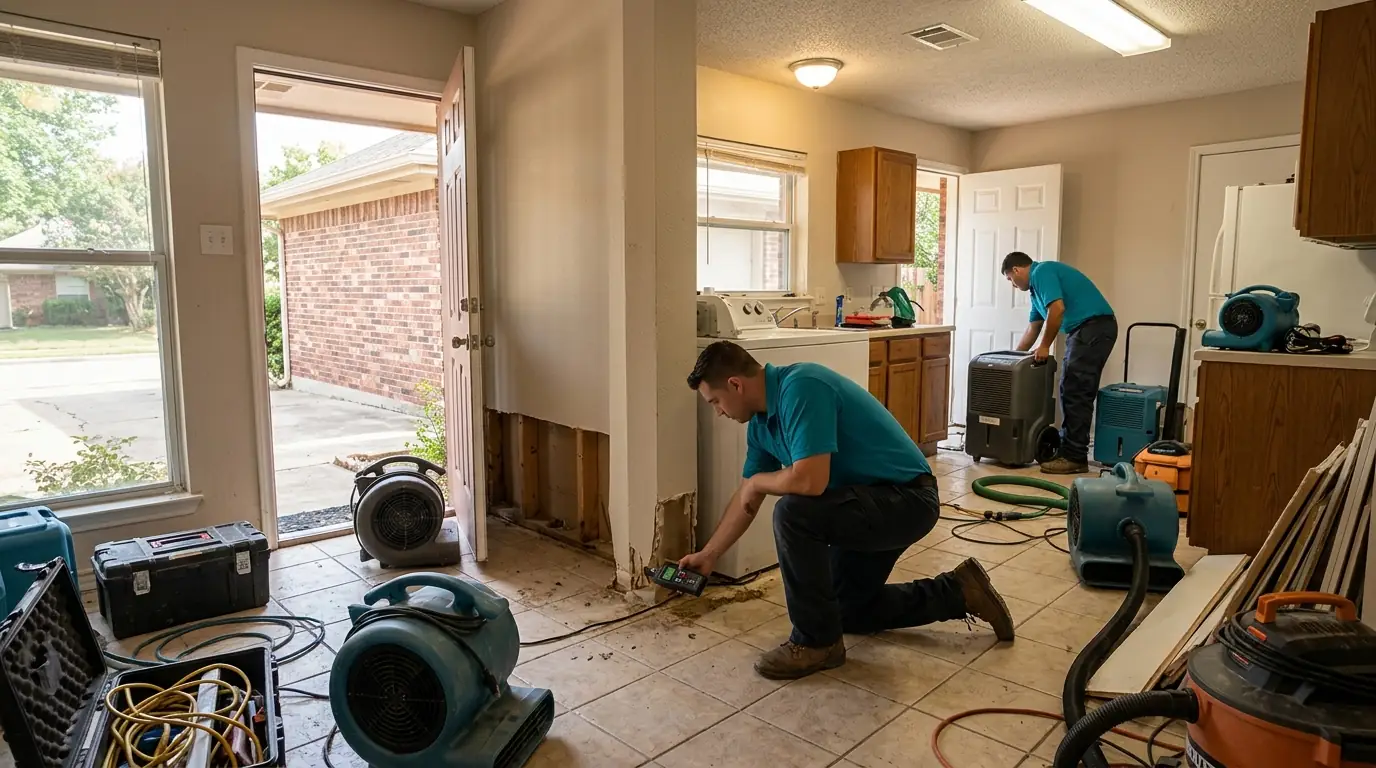
Appliance leak cleanup in Fort Worth homes usually means drying more than the floor. A washer hose or ice maker line leaks under the machine and runs beneath cabinets and walls where you can't see it, and a slow drip can go on for weeks. We pull the appliance, map the moisture, open toe-kicks where needed and dry it all.
What Appliance Leak Cleanup Involves
Appliances fail loudly or quietly. A burst washer hose or a split water heater tank puts water across the floor. A dishwasher pump seal that drips each cycle, an ice maker line seeping at the fitting or a relief valve weeping into a closet goes unnoticed. The loud ones spread wide; the quiet ones go deep into subfloor, cabinet bases and the bottom of drywall.
Our first step is moving the appliance, because the worst of the water is usually under or behind it. Then we read the floor, the cabinet bases and the walls on both sides. Kitchen leaks often need the toe-kicks pulled so air reaches under the boxes. If the cabinets took water, see water-damaged cabinet repair.
How an Appliance Leak Job Runs
- 01
Shut off and unplug
We have you close the valve behind the appliance or the main, and unplug or switch off power to the unit before anyone moves it out of place.
- 02
Pull the appliance
The washer, dishwasher or refrigerator comes out with the floor protected, so we can see and photograph the subfloor, the wall and the valve behind it.
- 03
Read and open
We meter the subfloor, wall cavity, cabinet bases and the rooms next door, then pull toe-kicks, baseboards and wet flooring only where the readings say to.
- 04
Dry and close up
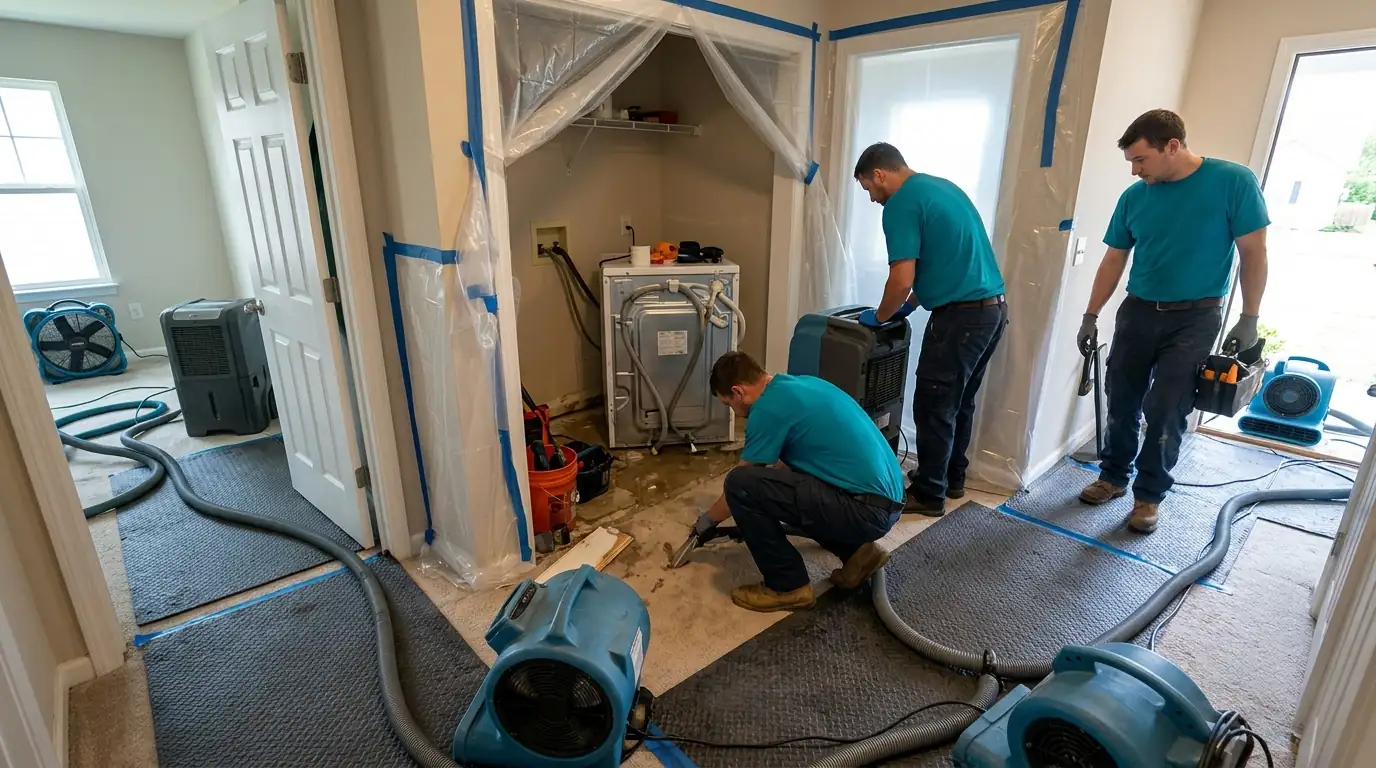
Air movers push air under the cabinets and into the wall cavities. When readings reach dry standard, the toe-kicks, baseboards and flooring go back on and the appliance returns.
Signs an Appliance Is Leaking Out of Sight
Swollen toe-kick
A toe-kick that bows or flakes at the bottom next to a dishwasher or sink means water has been pooling under the cabinets.
Soft floor in front
A spongy spot in front of the dishwasher or refrigerator often means wet subfloor or laminate swelling over the slab.
Rust under the heater
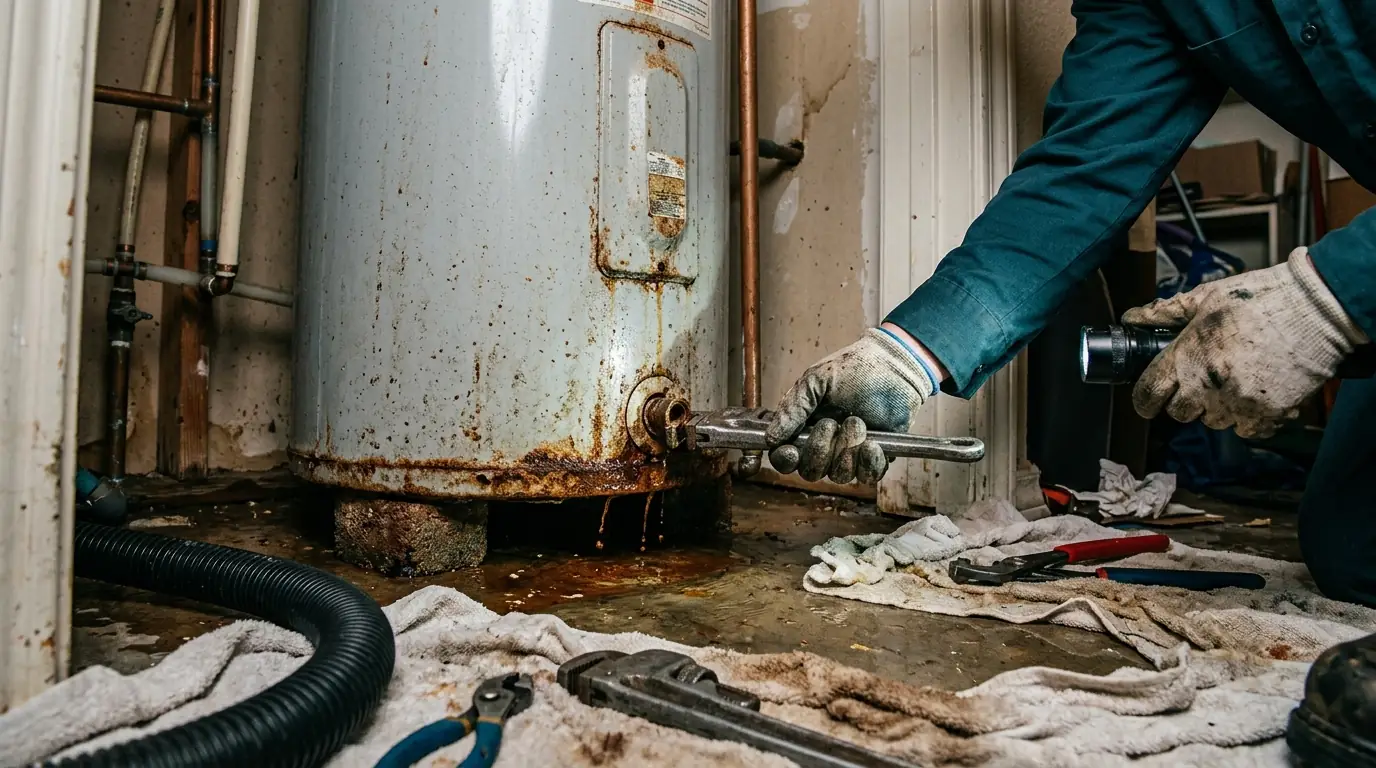
Rust streaks at the base of a water heater, or a damp drain pan, point to a tank or fitting that's starting to fail.
Odd smell near the fridge
A mildew smell at the base of the refrigerator that isn't from food often comes from a slow ice maker line leak.
Water Heater Leaks
A tank water heater leaks from the drain valve, the temperature and pressure relief valve, the supply connections or, at the end of its life, the tank itself. A rusted tank can let go fast and release the full tank plus whatever the supply line feeds until it's shut off. Heaters in garages mostly wet concrete. Heaters in an interior closet or attic soak drywall and the rooms around them. We dry the closet framing and nearby flooring, check for water under walls and, for attic units, check the ceiling and insulation below.
Washing Machine Floods
Rubber fill hoses crack with age, and a hose that lets go behind the washer can pour water until someone notices. A clogged standpipe can overflow every time the machine drains, which means gray water with detergent and lint. Laundry rooms often share a wall with a kitchen, bedroom or garage, so the water travels. We extract, pull baseboards, read the shared walls and remove pad in any carpeted room it reached. Washer water is usually Category 2, so porous materials it soaked are removed and the area gets an antimicrobial.
Dishwasher and Ice Maker Leaks
Dishwasher leaks hide under the unit and the cabinets beside it. You might see a warped toe-kick, swelling at the edge of laminate or a soft spot in front of the sink. Ice maker lines, especially thin plastic ones, crack at the valve behind the refrigerator and drip for weeks. Both soak particleboard cabinet bases, which swell and don't recover. We pull the appliance, remove toe-kicks, read the subfloor and wall behind, and direct air under the cabinets. How long it leaked decides whether drying is enough.
Do Not Wait for the Stain to Spread
Most of what we remove is material that stayed wet too long. Calling early keeps the job smaller.
Appliance Leaks in 1970s and 1980s Suburbs
Fort Worth field note
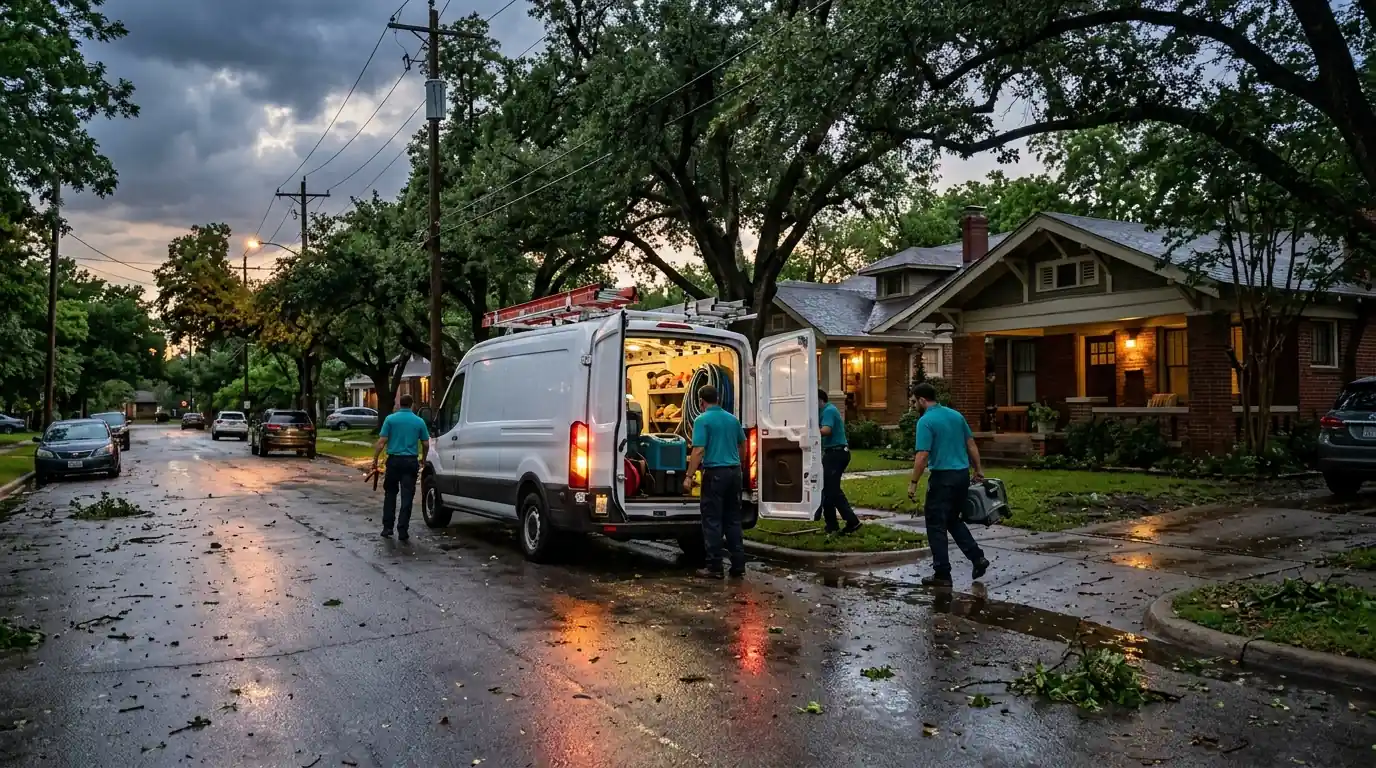
Bedford grew fast from the late 1970s to the mid-1980s, and Keller grew from about 4,000 residents in 1980 to more than 27,000 by 2000, so most of its homes date from the 1980s onward. Houses of that age are on their third or fourth water heater and washer, and the shutoff valves behind those machines are often the original multi-turn type that seize or drip when finally closed. Many leaks in these homes start right after an appliance swap, when an old valve is disturbed or a new hose is overtightened.
How Long Appliance Leak Drying Usually Takes
A washer or water heater leak caught the same day, on tile or concrete, usually dries in two to four days. Leaks under kitchen cabinets take longer because air has to work into the closed space under the boxes, usually four to six days. Slow leaks that ran for weeks can mean removing cabinet bases or flooring before drying starts, then a rebuild once readings are dry. You'll get a timeline after the first set of readings.
What Changes the Cost of an Appliance Leak Cleanup?
HomeAdvisor reports a national range of $3.50 and $7.50 per square foot for water extraction and drying. Appliance leaks often cover a small area but cost more per foot when cabinets, toe-kicks and the wall behind the machine are involved. Replacing the appliance is a separate cost.
- Fast flood or slow dripA burst hose wets a wide area that dries well if caught early. A slow leak wets a small area deeply, often with mold on the back of materials.
- Water categorySupply-line water is clean. Washer and dishwasher drain water is gray, which means removing porous materials instead of drying them in place.
- Cabinets involvedParticleboard bases that swelled need replacing. Toe-kick removal and drying under the boxes add labor even when the cabinets themselves survive.
- Appliance locationA water heater in a garage mostly wets concrete. One in an attic or an interior closet can bring down drywall and wet several rooms at once.
Range cited from a national cost guide (source, 2026-06-17). It is a planning figure, not a quote; your job is priced after we see it.
Appliance Leak Cleanup Questions From Fort Worth Homeowners
Rubber fill hoses crack with age, so many plumbers suggest braided stainless hoses replaced every few years. Turning the washer valves off when you leave for a trip stops the worst floods, and leak sensors behind the washer and water heater give early warning.
Plywood boxes usually dry well once the toe-kick is pulled and air is directed underneath. Particleboard that swelled at the edges won't shrink back, so those bases or sides get replaced. We read each cabinet and tell you which can stay before anything comes out.
If the water stayed on the garage slab, a wet vac and fans may be enough. Check the wall between the garage and the house, because water often runs under the bottom plate into drywall on the living side. If that wall reads wet, it needs real drying.
Yes. The leak is almost always at the valve or the line behind the unit, and the water pools under it where you can't see. Pulling it out lets us check the floor, the wall and the cabinets beside it, with the floor protected while it moves.
Yes, because slow leaks do their damage out of sight. A drip each cycle can soak the subfloor and cabinet base for months, and mold often starts underneath before anything shows. A quick moisture reading tells you whether it's a seal fix or a drying job.
Related Work We Handle
Appliance Leaked? Let's Check Under It
The water you can see is rarely all of it. We answer 24/7. Call and we'll pull the appliance, read the floor and cabinets and get the right areas drying.
Updated October 2026