Quick answer
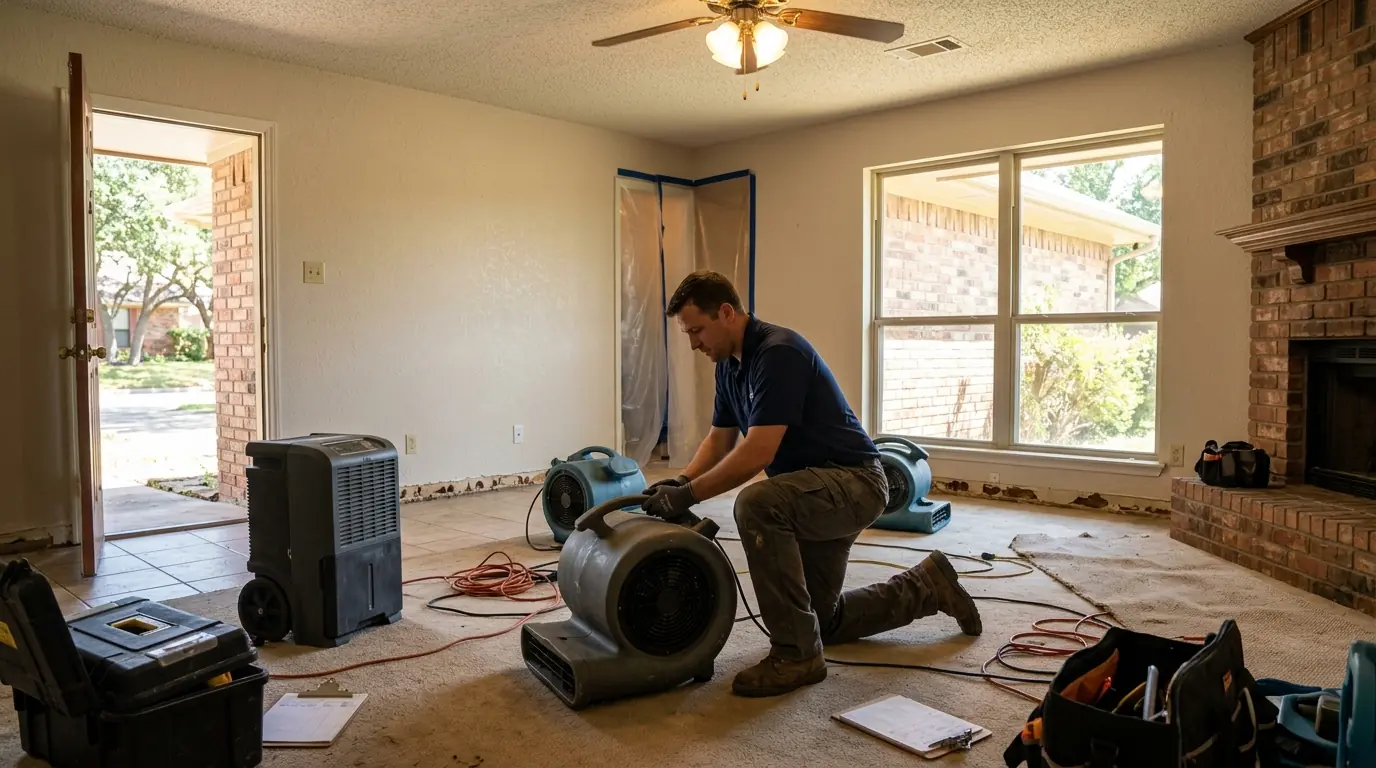
Commercial water damage cleanup in Fort Worth has to balance drying with keeping a business open. Water in a commercial building spreads through shared walls, ceiling plenums and under flooring, and every closed day costs money. We extract, map moisture across the affected units and dry in phases so unaffected areas can keep working.
What Commercial Water Damage Involves
Commercial buildings give water more paths than houses do. Suspended ceilings hide plenums where water runs along ducts and cable trays, demising walls pass it from one tenant to the next, and carpet tile and glued flooring hold it against the slab. One sprinkler head or rooftop drain can wet several spaces at once.
We map every affected space, not just the one that called, then plan with the owner or property manager: what closes, what stays open and where equipment can run overnight. Records are kept by space so each tenant has its own. Sprinkler discharges are covered on our fire sprinkler water cleanup page.
How We Handle Water in a Commercial Building
- 01
Talk to the decision maker
We confirm who manages the property, who the tenants are and what has to stay open, so the plan fits how the building actually operates.
- 02
Map every affected space
We read ceilings, walls and floors in the source space and in every neighboring unit, and we photograph each space separately so it has its own record.
- 03
Extract and dry in phases
Standing water comes out, wet ceiling tiles and flooring are removed, and the drying equipment is staged so it runs overnight or in closed areas first.
- 04
Restore and reopen
Once each space reads dry, ceilings, walls and flooring go back in, and owners and tenants get their drying logs and photos organized space by space.
Offices and Retail
In offices, water from a restroom, a break-room sink or a rooftop drain runs above the ceiling tiles and drops onto desks, carpet tile and electronics. In retail it often hits stockrooms and sales floors where inventory sits on the floor. We remove wet ceiling tiles, extract carpet tile and pull saturated tiles, and read the demising walls on both sides. Drying runs overnight where possible so the space works during business hours. Square footage, flooring and the number of tenants affected decide the scope.
Restaurants
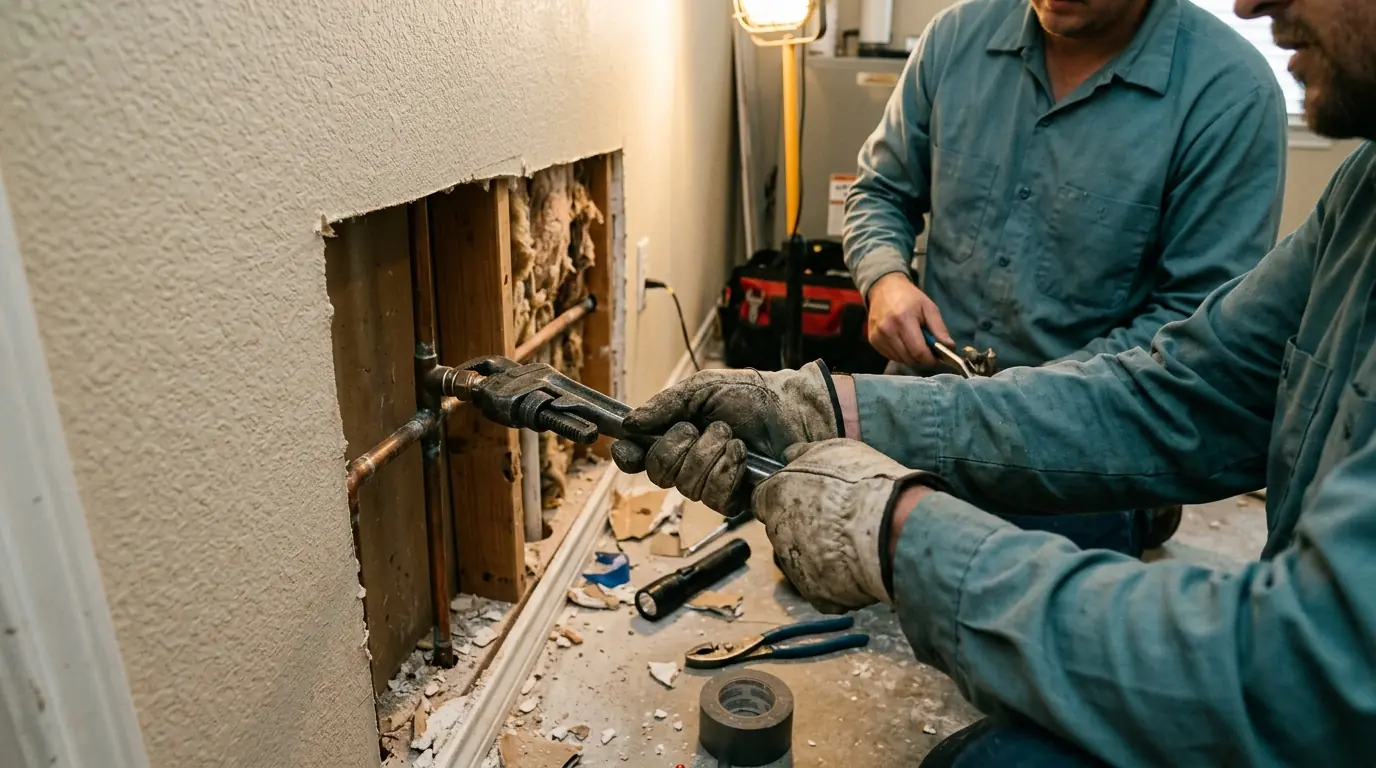
Restaurant losses often start at ice machines, dish areas, backed-up floor drains or walk-in coolers with failed drain lines. Anything that touched contaminated water has to be handled with food safety in mind, and the health department may need to sign off before reopening. We extract, remove wet materials behind cove base and under equipment, clean and disinfect, and dry the walls and slab while working around equipment that can't easily move. Water category and what's behind the line decide how fast the kitchen reopens.
Multi-Unit Buildings
In apartments, condos and townhome buildings, a leak in one unit rarely stays there. Water runs down through ceilings and floors and sideways through shared walls, so a failed water heater on the third floor can wet units on two and one. We read every unit that might be affected, not only those with visible damage, and keep separate records for owners, tenants and the association. Drying is staged so residents can stay where possible. Unit count, source and time before discovery set the scale.
Do Not Wait for the Stain to Spread
Most of what we remove is material that stayed wet too long. Calling early keeps the job smaller.
Older Commercial Space Near DFW Airport
Fort Worth field note
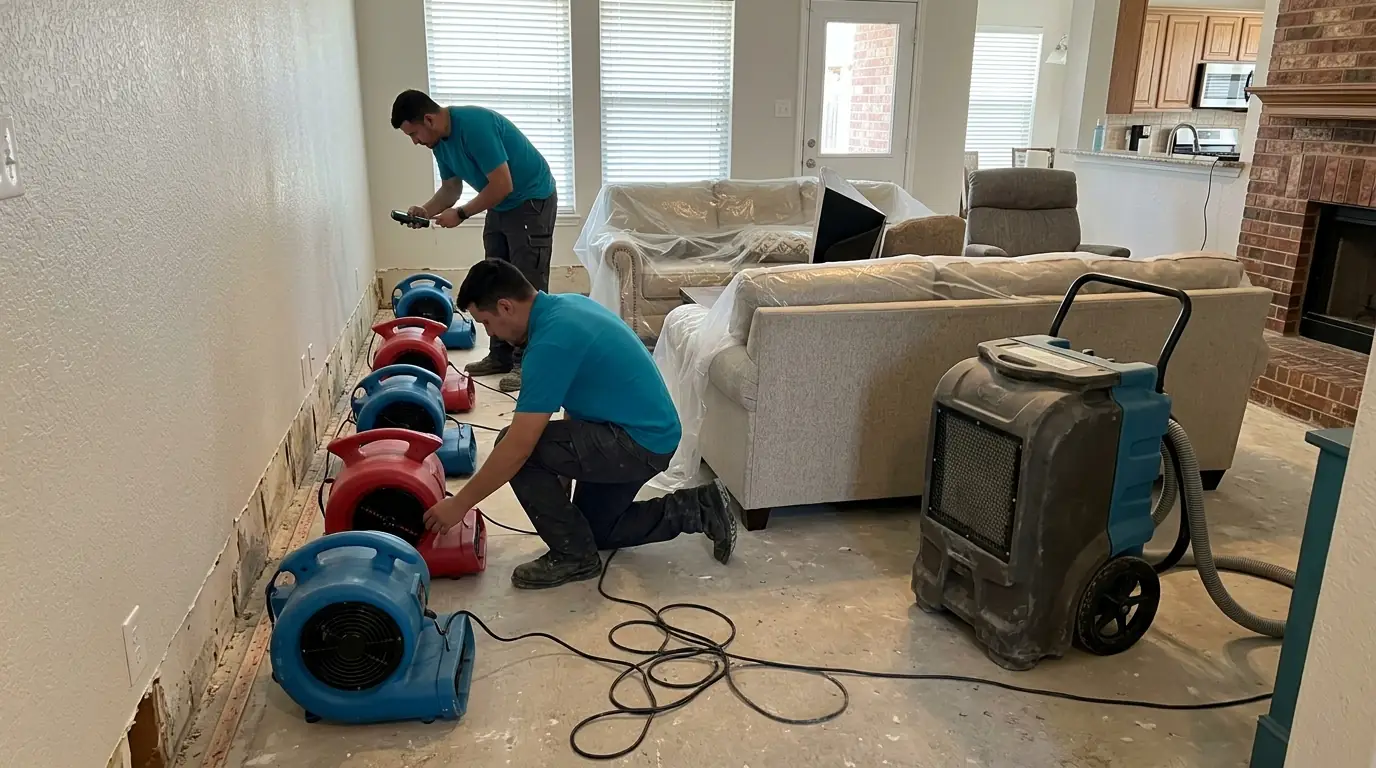
Euless grew quickly after Amon Carter Field opened in 1953 and American Airlines moved operations there in 1957, and the southwestern part of DFW Airport lies inside city limits. That history left mid-century commercial buildings alongside newer offices, hotels and service businesses that support the airport. In older commercial space, plumbing risers and roof drains have usually been repaired many times, and water from one tenant's suite can travel into the next through a shared ceiling plenum.
How Long Commercial Drying Takes
Drywall and framing in a commercial space usually dry in three to five days when caught early, about the same as a house. Scale and scheduling make commercial jobs longer: more spaces, more equipment and work that fits around business hours. Glued flooring on slab, restaurant kitchens and multi-unit buildings often take a week or more for drying alone. You'll get a phased schedule once the moisture map is done.
What Our Commercial Water Damage Work Covers
- Moisture mapping across the source space and neighboring units
- Separate photos and readings for each tenant or unit
- Removal of wet ceiling tiles and the insulation above them
- Cleaning and antimicrobial treatment after drain or restroom water
- Drying setups scheduled around business hours where possible
- Rebuild of ceilings, walls and flooring after drying
What Drives the Cost of Commercial Water Damage?
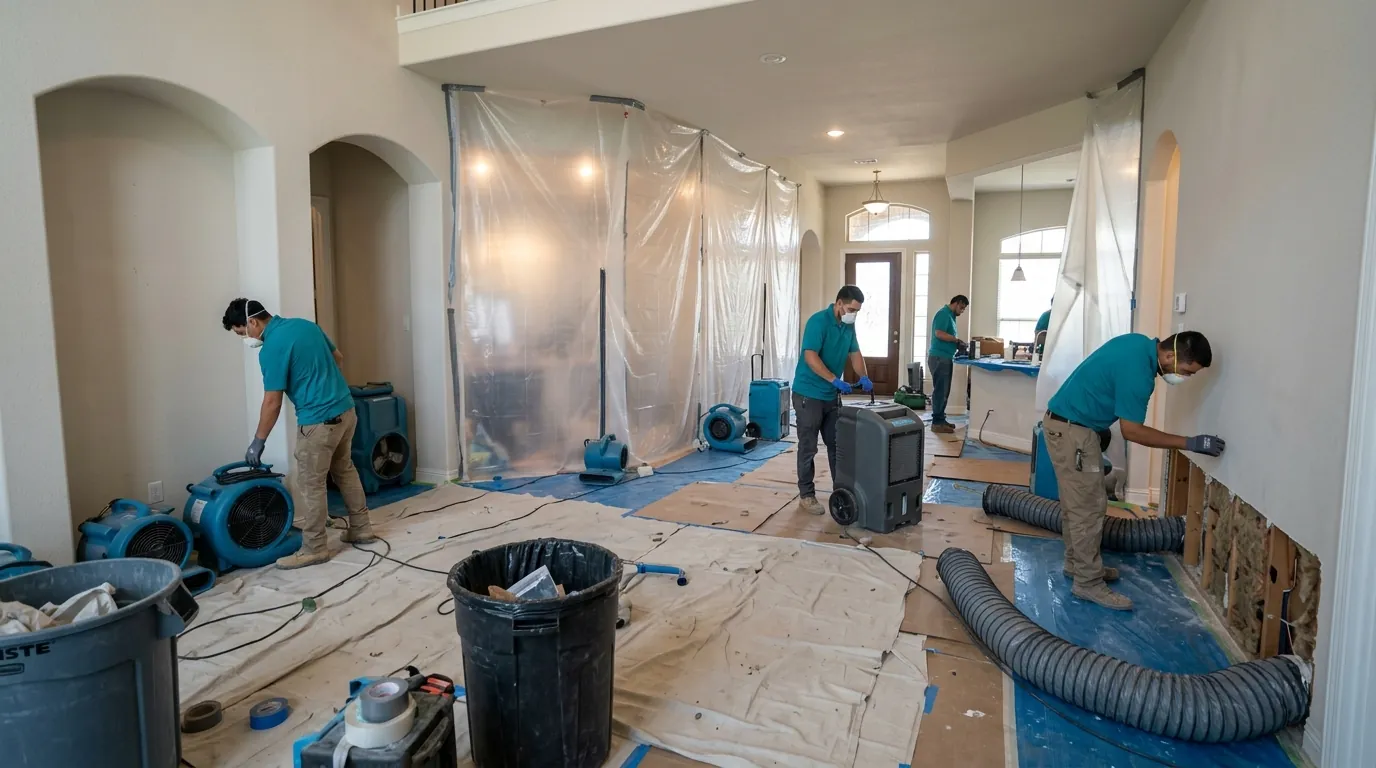
Commercial jobs are scoped by space and by schedule. Square footage matters, but so do after-hours work, the number of tenants, the flooring and what has to stay open. We write a scope for each affected space after the moisture map, so owners and tenants can see their portions.
- Affected spacesOne suite costs less than water spread through several tenants, and every space needs its own readings, photos and drying records.
- After-hours schedulingWorking nights or weekends to keep a business open changes labor costs, but it often saves far more in lost revenue and closed days.
- Ceilings and flooringWet ceiling tiles, insulation above them, carpet tile and glued vinyl each need their own removal, drying and replacement method.
- Water categoryRestaurant drains, restroom backups and sewage add cleaning, disinfection, protective gear and stricter handling to the job before drying can even start.
Every job is priced after we see the damage and take readings; these factors explain why two jobs that look alike can cost very different amounts.
Commercial Water Damage Questions From Fort Worth Homeowners
Often, at least in part. We stage the work so the worst areas dry first or overnight, and equipment stays out of customer areas where possible. Some spaces, like a restaurant kitchen after contaminated water, may have to close until cleaning and drying are done.
That depends on your lease, the association rules and the insurance policies involved, and adjusters sort it out. Our part is documenting the source and the damage in each space separately, with photos and readings, so everyone has a clear record of what happened where.
Usually. Mineral fiber ceiling tiles sag and stain when wet and don't recover. A tile with a small drip on one edge may be fine once dry, but anything soaked or stained is replaced. The insulation above the grid gets checked too, since it often holds the most water.
We don't touch equipment that may have taken water. We ask you to cut power to it and bring in your IT people, then work around it, dry the space and keep the area under a wet ceiling covered until the equipment has been checked.
Yes. Many commercial jobs run on that schedule so the space is usable during business hours. We answer 24/7, and the work plan is built around when your space is closed and when it has to be open for customers or residents.
Related Work We Handle
Keep Your Business Running Through a Water Loss
The faster the moisture map is done, the faster we can plan around your hours and tenants. Call us day or night and we'll get the spaces documented and drying.
Updated October 2026