Quick answer
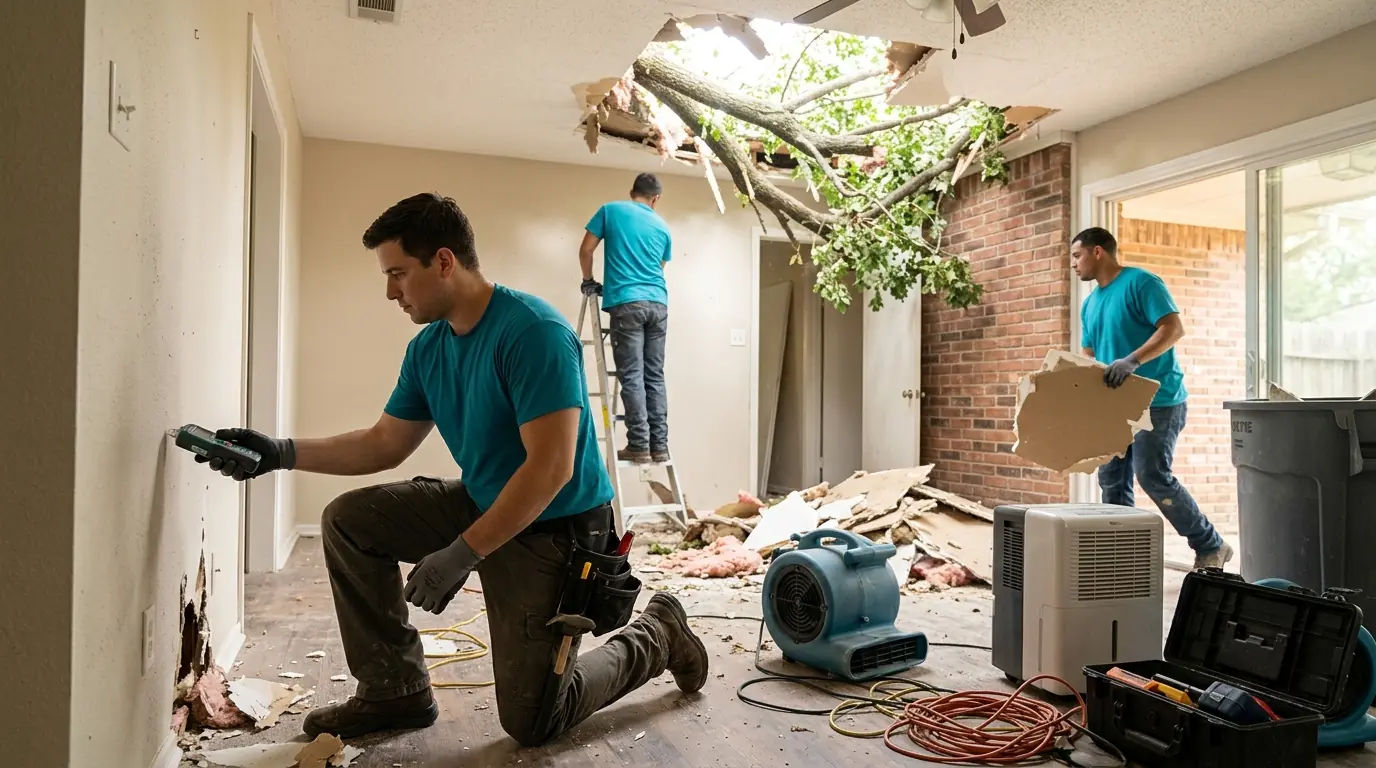
Fallen tree damage in Fort Worth is two jobs: closing the hole the tree made, then drying the rain that came through it before mold starts within 24 to 48 hours. Once the weight is off the roof, we frame over the opening, tarp it, remove wet insulation and ceiling drywall, and dry the rooms below with logged moisture readings.
What Fallen Tree Damage Involves
When a tree lands on a house, the damage usually reaches further than the hole you can see. The impact can crack rafters several feet from the trunk, push decking down into the attic, and break ceiling drywall in rooms that look fine from the hallway. Then the rain arrives. Heavy trunks often need a crane and a tree crew to lift them safely. Our work starts the moment the weight is off: we check the framing, cover the opening and look for every place water got in.
Inside, we treat the job as storm water. We pull wet insulation, take down ceiling drywall that is soaked or cracked, extract water from floors and run drying equipment until readings come back down. If windows broke on the way through, our board-up service closes them the same visit. Later, once the structure is dry and framing repairs are planned, home reconstruction puts the ceilings, walls and finishes back.
What Happens After a Tree Lands on Your House
- 01
Get everyone clear
Keep people out of rooms under the impact and away from downed lines. Call the utility about any wire touching the tree or the house.
- 02
Weight off the roof
The trunk and large limbs have to be lifted off before the framing can be checked safely. We plan our cover and our crew's arrival around when that lift happens.
- 03
Support and cover
We shore cracked rafters or joists with temporary framing, sheath the hole with plywood and tarp over it, so no more rain reaches the attic or the rooms below.
- 04
Open and dry inside
Wet insulation and ceiling drywall come out, standing water is extracted, and air movers and dehumidifiers run with moisture readings taken and logged on every visit.
- 05
Document for the claim
Photos of the impact, the framing damage and every wet room go into one record with the drying log, ready to share with your adjuster when they ask for it.
Tree Through the Roof
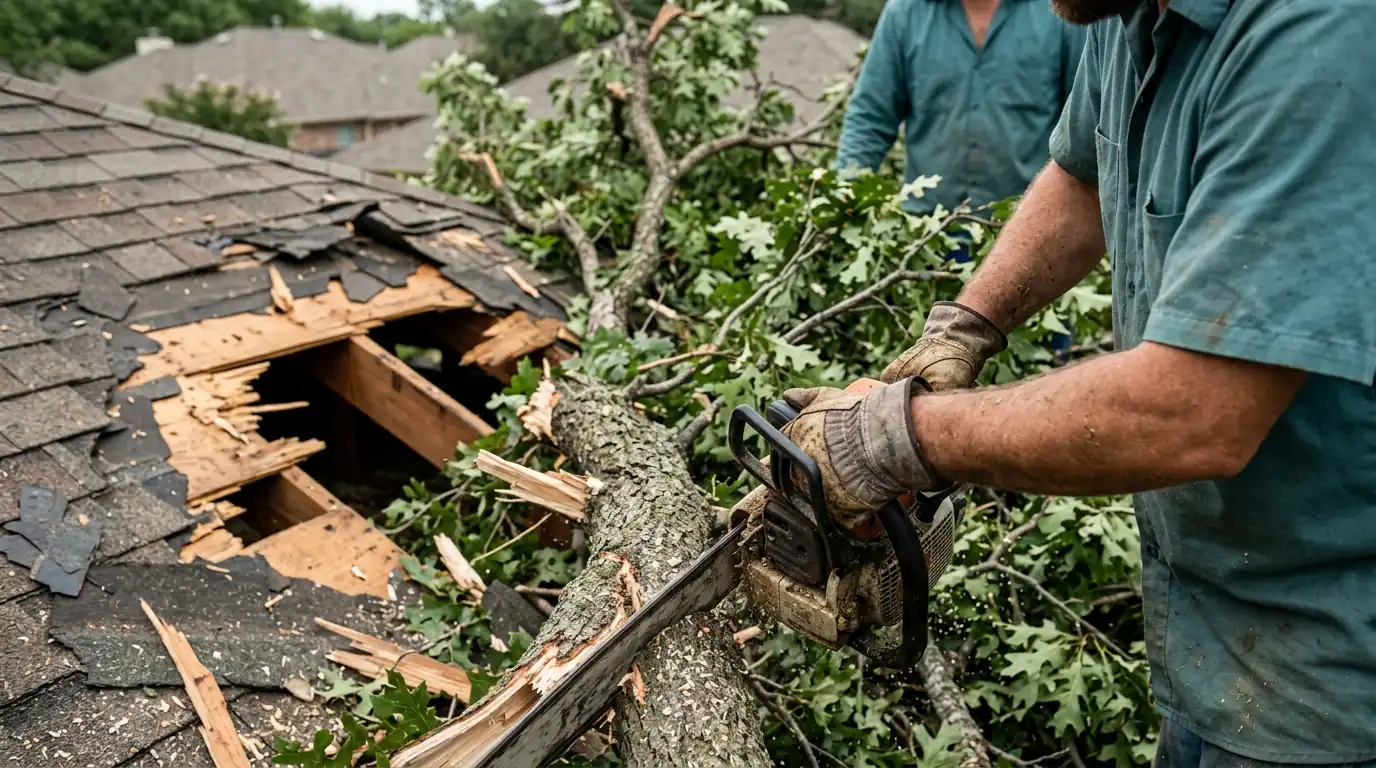
A trunk or heavy limb through the roof leaves broken decking, cracked rafters and sometimes a ceiling pushed into the room below. You may hear creaking or see daylight from the attic. Once the weight has been lifted off, we inspect the rafters and ceiling joists around the impact, add temporary framing where members are cracked, sheath the hole with plywood and tarp over it. Then we open the ceiling below and start drying. Cost depends on the size of the opening, how many rafters broke, and how much rain fell before the roof was covered.
Limb Damage to Walls
Limbs that hit the side of a house can punch through siding and sheathing, crack window frames and push wall studs out of line. You notice a dent or a hole outside and often a crack or bulge in the drywall inside. We cover the outside opening, open the drywall to check the studs and sheathing, and take moisture readings in the cavity. If rain got in, wet insulation comes out and the cavity is dried before anything is closed. The cost turns on how many studs need repair and whether a window or door frame was damaged too.
Rain Through the Opening
The water that follows a fallen tree often does more harm than the tree itself. It runs from the hole into the attic, soaks insulation, then spreads across ceilings and down interior walls into carpet and subfloor. You'll see sagging ceiling drywall, water at light fixtures and wet floors in rooms away from the impact. We drain and remove sagging ceilings, extract standing water and run air movers and dehumidifiers until framing and subfloor read dry. The amount of rain, how many rooms it reached, and how long it sat set the drying time.
Water Still Moving Through the House?
Shut it off if you can and call. Every hour it sits, water travels further into drywall, pad and framing.
Tornado Nights South of Fort Worth
Fort Worth field note
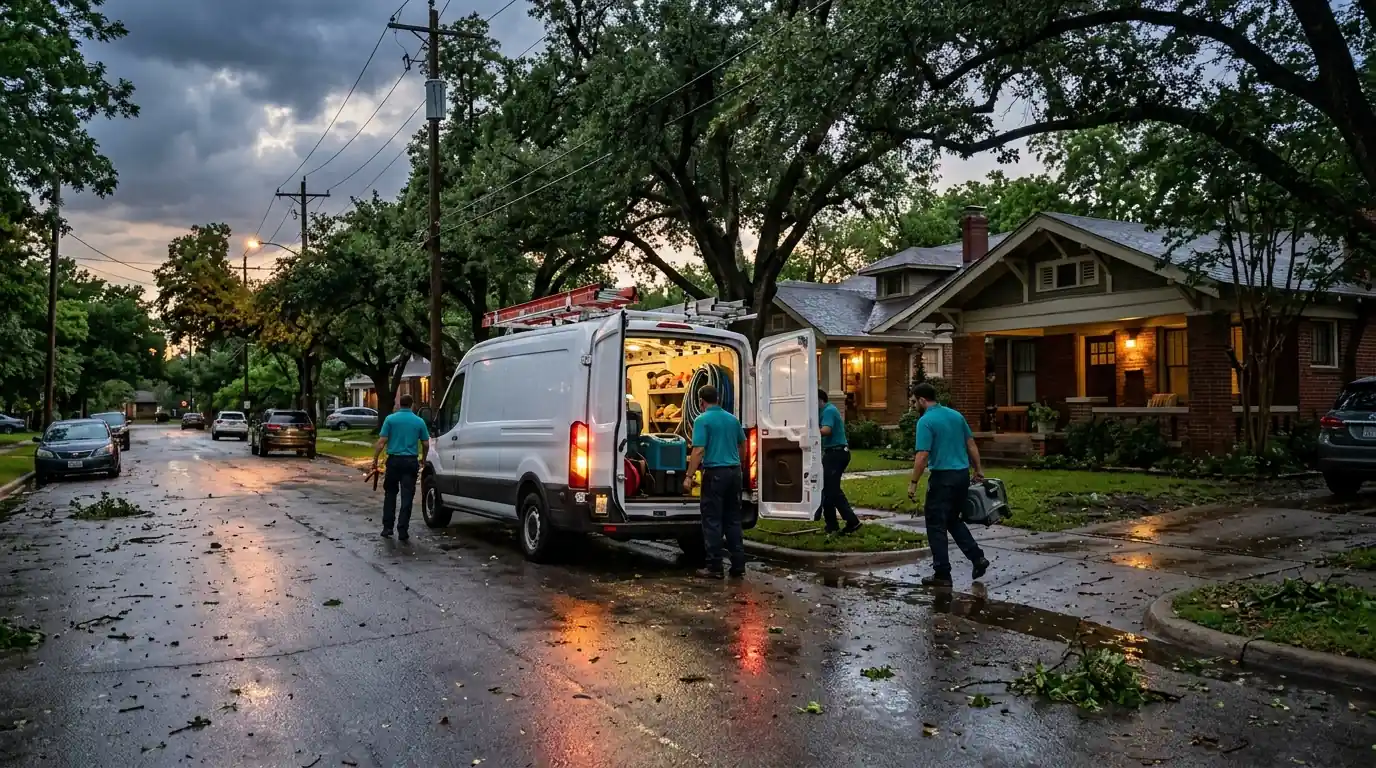
Wind strong enough to drop trees comes through this area in spring. During an April 2022 storm night, an EF-1 tornado with winds near 90 mph touched down near Midlothian, uprooting trees and tipping an 18-wheeler on U.S. 67. Of six tornadoes confirmed after that night, four were in Johnson County, and an EF-2 north of Egan plus an EF-0 in Keene together damaged about 90 structures. On nights like that, trees on roofs and rain through the openings arrive together.
How Long Fallen Tree Repair Takes
Covering the opening is usually same-day once the tree is off the roof, often a few hours of work. Drying the inside usually takes three to five days for ceilings and walls, longer if water reached hardwood or the subfloor. The longest part is the rebuild: replacing rafters, decking, roofing, ceilings and finishes can usually take a few weeks, depending on how much framing broke and how quickly materials and the roofing work can be scheduled.
What to Do Yourself When a Tree Hits the House
| Task | What you can do | What we do |
|---|---|---|
| Check for downed power lines | Stay far away from any wire on the tree or house and call the utility. | We don't start work near lines until the utility says the area is safe. |
| Remove the tree | Don't cut limbs resting on the roof. Weight can shift and drop through the ceiling. | Once the weight is lifted off, we shore the framing and cover the opening. |
| Protect belongings | Move valuables and electronics out of rooms near the impact if it's safe to enter. | We move, dry or pack out remaining contents before we take down wet ceilings. |
| Catch water | Set buckets under drips and lay towels to protect floors outside the wet area. | We extract water, remove wet materials and dry the structure with logged readings. |
| Take photos | Photograph the tree, the roof and each damaged room from where you can stand safely. | We add photos from the roof and attic and keep the full set with the job record. |
A tree resting on a roof stores a lot of force, and cutting the wrong limb can drop the trunk through the ceiling or swing it into a person.
What Drives the Cost of Fallen Tree Damage Repair?
None of our cost sources gives a range specific to tree-on-house repair, so we won't quote a figure. The cost of this work comes from three things: the size of the opening, the framing that broke, and the water that followed. Here's what moves it most.
- Size of the openingA limb through one section of decking is a small cover. A trunk that broke a ridge or crushed a corner needs more framing, plywood and tarp.
- Broken rafters or joistsCracked framing has to be supported before anyone can work under it, and later repaired or replaced before the roof and ceiling go back.
- How much rain got inA tree that fell in dry weather may leave the inside dry. One that fell in a storm usually means wet insulation, ceilings and floors.
- Rooms reached by waterWater travels along ceiling joists and down interior walls. Each extra room it reaches needs its own drying equipment, readings and removal of wet materials.
- Contents in the wayFurniture and belongings under the opening may need moving, drying or packing out before we can work on ceilings and floors.
Every job is priced after we see the damage and take readings; these factors explain why two jobs that look alike can cost very different amounts.
Fallen Tree Damage Questions From Fort Worth Homeowners
Large trunks resting on a house usually need a tree crew with rigging or a crane to lift them without dropping them through the ceiling. Our part starts once the weight is off: shoring cracked framing, covering the opening and drying the inside. If only small limbs are involved, we clear them by hand as part of the cover.
Stay out of rooms below or near the impact, and if you hear creaking, see a sagging ceiling or smell gas, leave the house. If the tree hit one corner and the rest of the house is dry and quiet, some families stay in the unaffected rooms. When in doubt, don't.
Sometimes. If the drywall is only damp and still firmly attached, it can often be dried in place. If it's sagging, cracked or soaked through, it comes down, because wet drywall loses strength and can fall. We check each section with a moisture meter before deciding.
The repair work is the same no matter whose tree it was. Who pays is between the policies involved and depends on the tree's condition and local rules, so talk with your own adjuster. We document the damage the same way either way, so the photos and drying log are ready for whoever reviews the claim.
Yes. Water from the opening often runs along joists and soaks insulation well beyond the room with the visible damage. A thermal camera and moisture meter in the attic show where it actually went, so we don't leave wet insulation sitting over a ceiling that looks fine.
Related Work We Handle
Close the Hole and Dry What Got Wet
Once the tree is off, the clock is on the water that came in with it. Tell us where it hit and which rooms are wet, and we'll cover the opening and start drying the same visit. Call any time of night.
Updated October 2026