Quick answer
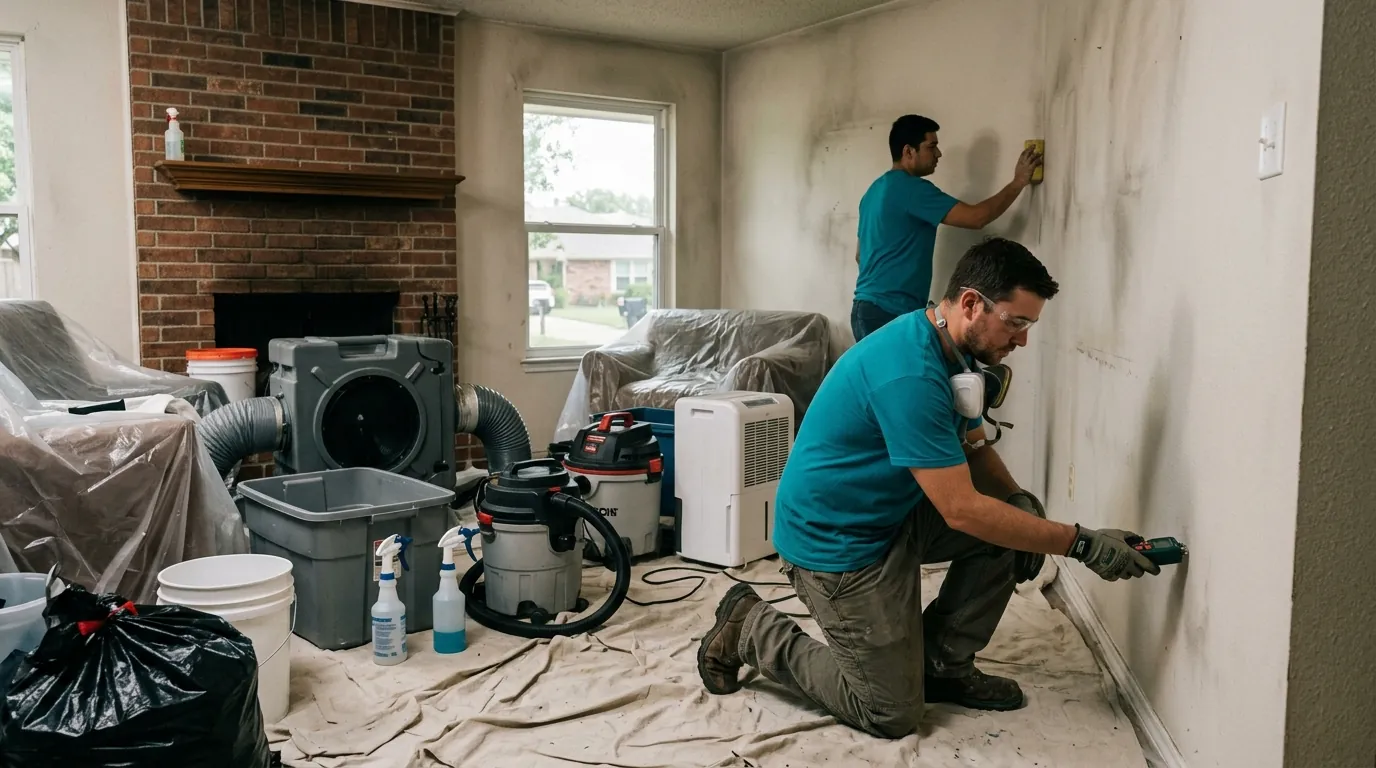
Smoke damage cleaning in Fort Worth homes starts with identifying the residue, because protein, synthetic and wood smoke each need a different method and the wrong one smears soot deeper into paint. Smoke travels to closets and rooms far from the fire. We test, dry-clean or wet-clean surfaces room by room, and seal anything that still stains.
What Smoke Damage Cleaning Involves
Smoke doesn't stay in the room that burned. Hot smoke rises, follows air currents to cooler surfaces, and gets pulled through return vents into every room the HVAC served. Even a pan fire can leave a film on bedroom ceilings, inside cabinets and on clothing in closets. That film is often acidic, and left on metal, grout and glass it can etch and discolor surfaces within days.
We start with a test: a dry chemical sponge across the wall tells us whether the residue lifts dry or smears, which decides the method for each room. Most jobs combine dry sponging, HEPA vacuuming, alkaline cleaners for greasy residue and a sealing primer for walls that keep staining. Odor is a separate step covered on our smoke odor removal page.
How We Clean Smoke From a House
- 01
Walk-through and residue test
We check every room, closet and cabinet for film, then test-wipe walls and ceilings to see whether residue lifts dry or smears. That test sets the method room by room.
- 02
Protect and set up
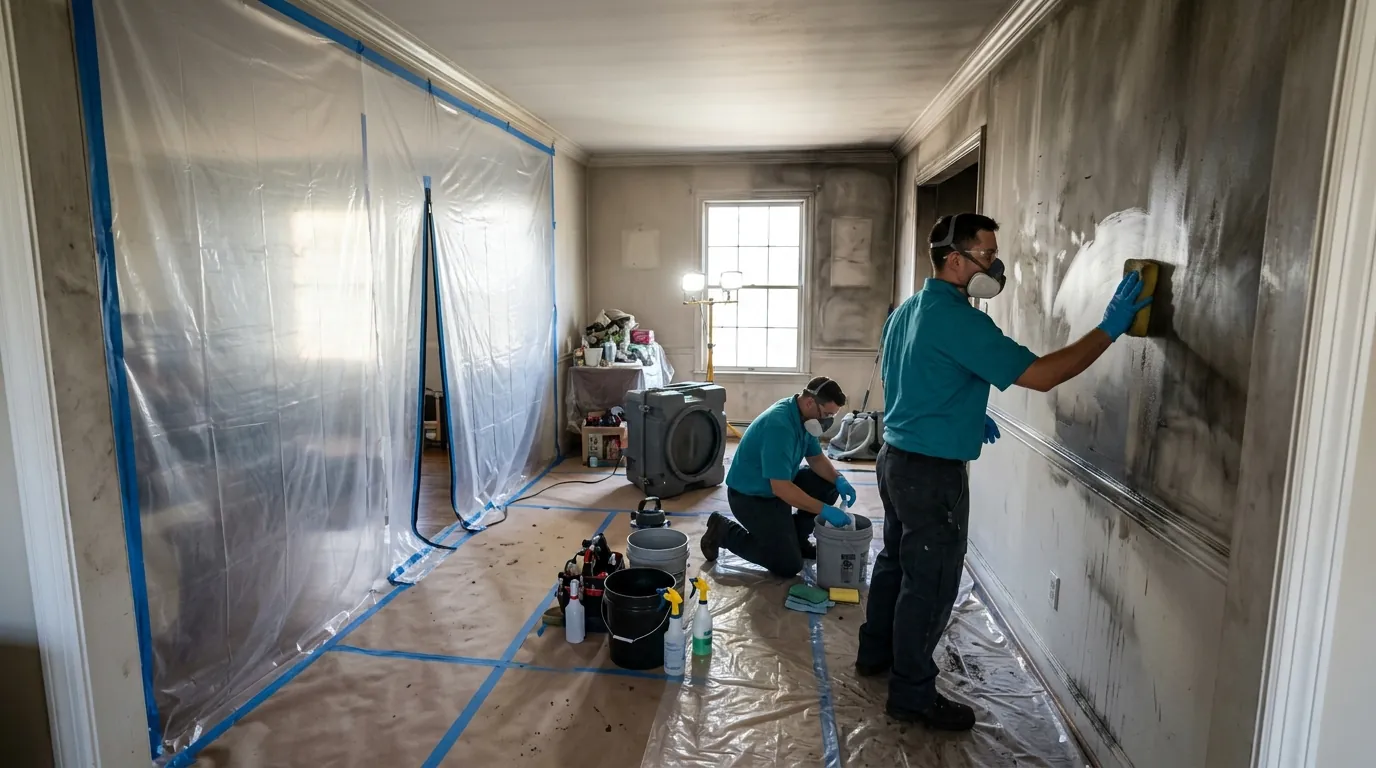
Floors and clean furniture get covered, and the HVAC is shut down or filtered so we don't pull soot through clean rooms while we work on the dirty ones.
- 03
Dry removal first
HEPA vacuums take down smoke webs and loose soot. Dry chemical sponges lift film from flat paint and ceilings without pushing it into the surface.
- 04
Wet cleaning where needed
Greasy and oily residue gets degreasers or alkaline cleaners matched to the surface, from ceiling down to floor so drips don't land on cleaned areas.
- 05
Seal and verify
Walls that still show shadows after cleaning get a stain-blocking primer. We check each room under good light, including closets and cabinet interiors, before calling it done.
Signs Smoke Reached More Rooms Than You Thought
Gray lines around outlets and switches
Air moving through gaps in wall plates leaves a ring of soot that shows smoke was in that wall cavity or room.
Film on the inside of window glass
A hazy gray film on windows in bedrooms or a back room means smoke circulated there, even if walls look clean.
Smell inside closed closets
If clothes in a closet down the hall smell of smoke, the HVAC or air pressure carried it through the house.
Dark streaks at return vents
Soot around return grilles means the system pulled smoke in and may have spread it to every supply register.
Protein Smoke Residue From Burned Food
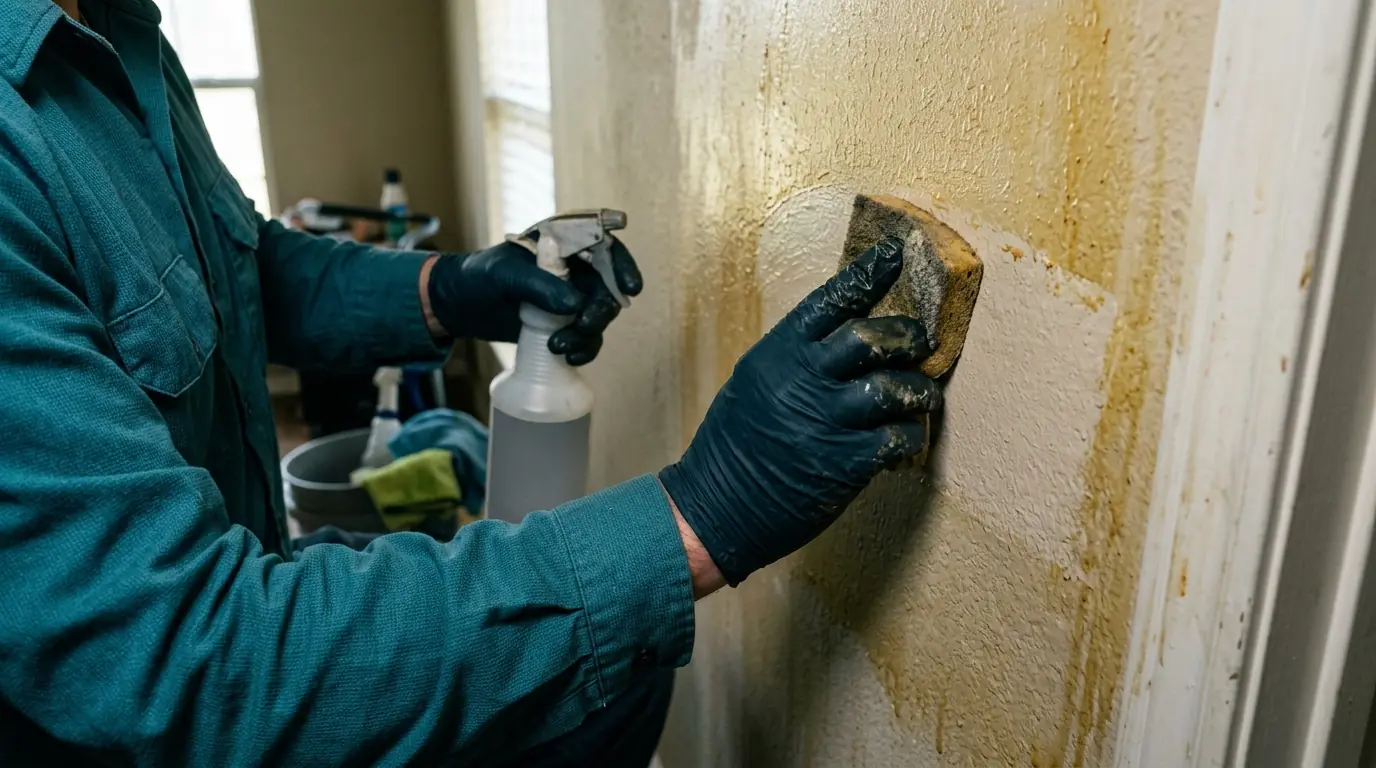
Protein smoke comes from burned meat, beans and other food left on a burner. It's almost invisible, a faint yellow-brown film, but it carries a sharp, greasy odor that clings to paint, cabinets and fabrics. Homeowners often say the kitchen looks fine but the whole house smells. Because the film is thin and sticky, dry sponging alone won't lift it. We wash surfaces with a degreasing cleaner, wipe cabinet interiors, clean range hood filters, launder or dry-clean fabrics, and follow with odor treatment. The size of the job depends mostly on how long the food burned and how far the HVAC carried it through the house.
Synthetic Smoke From Plastics and Furnishings
Synthetic smoke comes from burning plastics, carpet, foam cushions, electronics and vinyl. It's black, oily and smears when you wipe it, which is why the first instinct to grab a wet rag makes walls worse. You'll see dark shadows on ceilings, gray film on window glass, and webs of soot in corners. We remove loose residue with HEPA vacuums, then use solvent or alkaline cleaners matched to the surface, working from ceiling to floor. Heavily stained drywall gets a stain-blocking primer instead of repeated scrubbing. Cost depends on the square footage of affected wall and ceiling and how many surfaces need sealing rather than cleaning.
Smoke Webbing and Shadow Staining
Smoke webs look like cobwebs made of soot, hanging in ceiling corners and along walls. They form when charged soot particles link together in the air and settle in still spots. Shadow staining shows up as dark lines along ceiling joists or outlet covers, where cooler surfaces pulled soot toward them. Both tell us where smoke went and how heavy it was. Webs come down with a HEPA vacuum, never a duster or broom, which would break them and spread soot across the wall. Shadow lines usually need cleaning and then a sealing primer. The number of rooms showing webs is a good early sign of how big the cleanup will be.
Smoke, Soot or Water Damage Tonight?
The line is answered around the clock. Tell us what you see and we will tell you what to do first.
Smoke Cleaning in Older Homes
Fort Worth field note
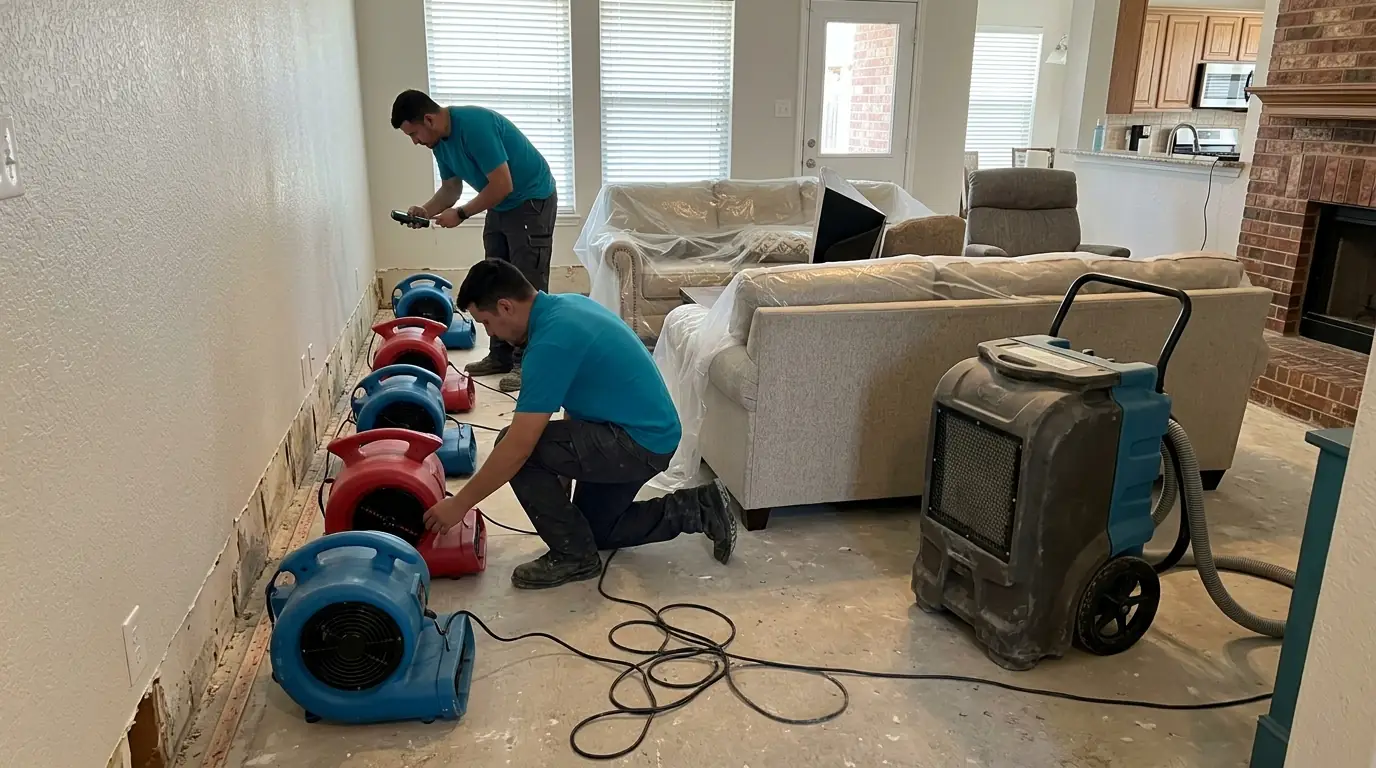
Several Queen Anne and Victorian homes in Weatherford were built around the turn of the 20th century, and houses from that period are a different smoke-cleaning job than a newer build. Original wood trim, old paint layers and plaster walls absorb smoke differently than drywall, and aggressive cleaners can lift old finishes. In older homes we test each surface before cleaning, rely more on dry sponging and gentle solvents, and seal only where staining remains, so original trim survives the cleanup.
Smoke Cleanup: What's Safe for You to Try
| Task | What you can do | What we do |
|---|---|---|
| Ventilation | Open windows when weather allows and change the HVAC filter once the system is cleared to run. | We set up air scrubbers and decide whether ducts need cleaning before the system runs full time. |
| Wiping walls | Don't use a wet rag or household cleaner on soot. It smears residue into the paint. | We test the residue and use dry sponges or the right cleaner so walls can often be saved. |
| Clothing and linens | Bag smoky fabrics and keep them sealed until they can be properly washed. | We sort textiles for the right cleaning process and list anything that can't be restored. |
| Food | Throw out open food, anything in porous packaging and anything near the heat. | We note discarded food and kitchen items on the contents list for your claim. |
Fine soot particles can irritate lungs, so wear an N95 or better mask in smoky rooms and keep children and anyone with asthma out until cleanup is done.
How Much Does Smoke Cleaning Cost?
Angi's cost guide puts smoke damage cleaning at $200 to $1,200 per room as a national planning range. The low end fits light film in a room far from the fire, while heavy synthetic residue that needs sealing lands near the top. Odor treatment and contents cleaning are usually separate lines.
- Type of residueDry residue from a fast-burning fire lifts easily. Oily synthetic residue and sticky protein film take more labor and different cleaners.
- Rooms affectedSmoke reaches rooms through hallways and ductwork. Ten rooms with light film can cost more than two rooms with heavy staining.
- Clean versus sealWalls that clean up only need labor. Walls that keep staining need a stain-blocking primer and repaint, which adds material and time.
- Surface typeTextured ceilings, unsealed wood, brick and stone hold residue in their pores and take more careful work than smooth painted drywall.
Range cited from a national cost guide (source, 2026-09-25). It is a planning figure, not a quote; your job is priced after we see it.
Smoke Damage Cleaning Questions From Fort Worth Homeowners
Soot sits on the surface as a fine powder or oily film. A damp rag pushes it into the paint's texture and spreads it into a gray smear that's harder to remove. Dry chemical sponges or a HEPA vacuum should come first, and wet cleaning only after testing what kind of residue it is.
Usually yes, because the film is often acidic and keeps releasing odor, especially on warm days. Left alone, it can discolor paint, tarnish metal fixtures and etch glass over time. Light film is also the cheapest smoke damage to clean, so it's worth handling while it's still light.
Not until someone checks the system. If soot reached the return, running the AC will pull residue through the ducts and blow it into every room. Turn the system off, replace the filter after cleaning, and have the ducts and air handler inspected if there's soot at the registers.
Usually not well. Acoustic or popcorn texture traps soot in its rough surface and tends to fall apart when washed. The common fixes are sealing it with a stain-blocking primer made for ceilings, or scraping and refinishing it. If the house was built before 1980, test the texture for asbestos before any scraping.
Smoke residue is often acidic, and on chrome, brass, aluminum and grout it can start to discolor and pit the surface within days. That's why we clean fixtures, hardware and tile early, even before walls. The longer it sits, the more likely the damage becomes permanent.
Related Work We Handle
Smoke Film on Your Walls? Don't Scrub It Yet
The wrong cleaner can lock smoke stains into paint. We answer 24/7 and will test the residue before anything is wiped. Give us a call and we'll walk the house with you.
Updated October 2026