Haltom City, TX
Flood Cleanup and Water Removal Serving Haltom City
Phones answered 24/7 for Haltom City homes and businesses.
Quick answer
Flood cleanup and water removal in Haltom City starts with Big Fossil Creek. In September 1962, up to 11 inches of rain fell on the upper creek near the city. Homes from Haltom City's 1950s boom sit close to that drainage, and heavy storms can still send water into low lots.
Restoration Work Around Haltom City
Haltom City's population quadrupled in the 1950s, from about 5,800 to over 23,000. Homes built then often sit on slabs with cast iron drains and galvanized supply lines. When heavy rain hits, water can come from outside through low doors or from inside through backed-up drains. Both bring contaminated water into the house, which changes how we clean and what we remove.
Flood cleanup follows a set order: pump or extract standing water, remove mud and silt, cut out wet porous materials, sanitize, then dry. Skipping any of these steps leaves bacteria and mold behind in the walls. We photograph waterlines, meter every wall and log readings daily. Once everything reads dry, drywall repair and new flooring bring the rooms back to use.
The 1962 Big Fossil Creek Flood
Up to 11 inches of rain fell on upper Big Fossil Creek near Haltom City in September 1962. The resulting flood on September 7 was the greatest in Richland Hills since at least 1900, driven by discharge above the creek's confluence with Whites Branch. Storms like that are rare, but they show how fast the creek can rise. Homes on low ground near the channel are the most exposed, and a slow-moving storm can push water into them within a single evening. When water does get in, it carries mud and contamination, and everything it soaked needs careful removal.
1950s Homes Along a Busy Creek
Big Fossil Creek runs southeast through Haltom City toward the West Fork of the Trinity River. The city's 1950s growth put many homes close to the creek and its feeder drainage. Those houses now have plumbing seventy years old, and their slabs and drains have settled. During heavy rain, water can enter from outside and sewer lines can back up at the same time. That combination means two sources of contaminated water in the same rooms. We handle both: extraction, mud removal, contaminated material removal, sanitizing and drying, in that order.
Calls We Get From Haltom City
How a Call From Haltom City Runs
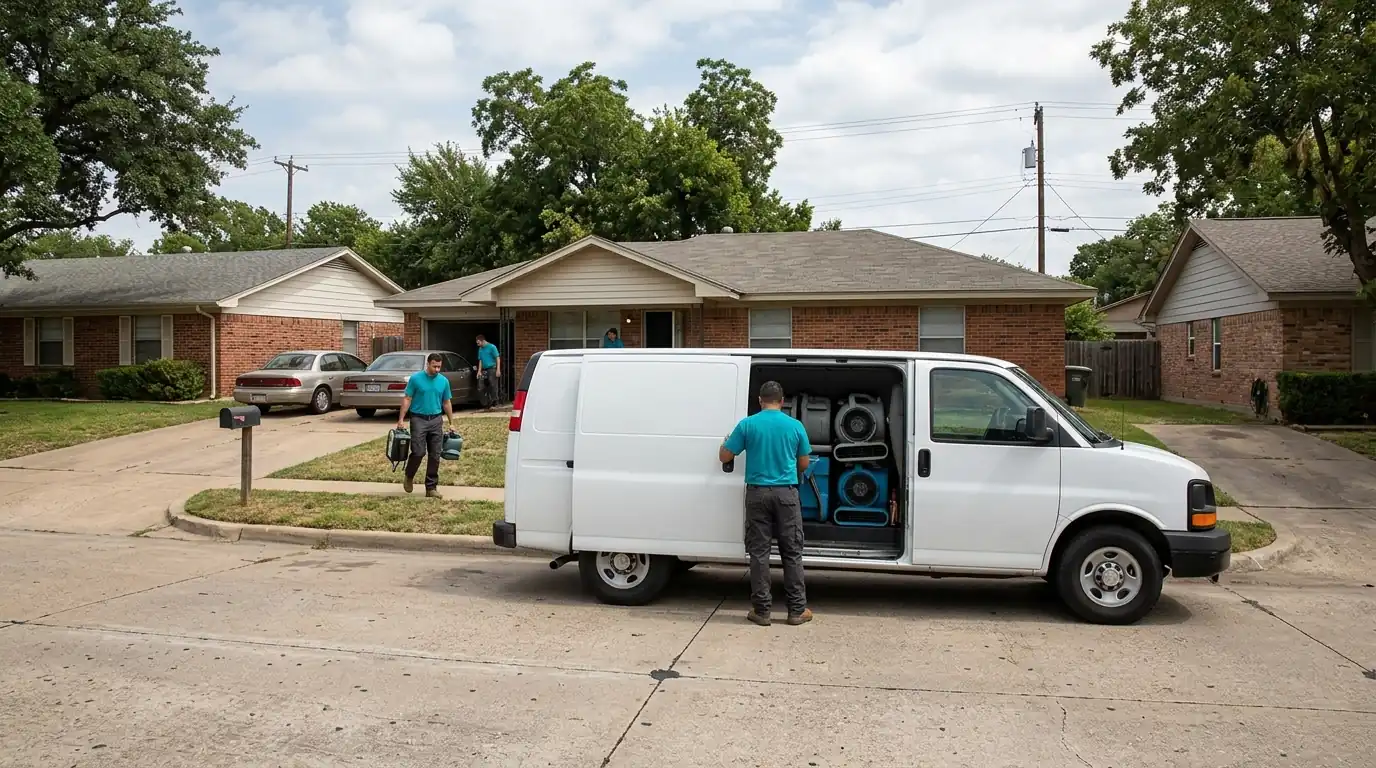
We answer Haltom City calls around the clock. On the phone we ask if the water is coming from outside or a drain, whether it is still climbing, and whether power to the wet rooms is off. We bring pumps, extractors, protective gear, antimicrobials, air movers and dehumidifiers. Mud and silt come out before drying starts.
Haltom City Restoration Questions
The city and FEMA flood maps show floodplain boundaries. If your property sits on low ground near Big Fossil Creek or its feeder channels, check those maps and ask your insurance agent about flood coverage.
Shut off power to flooded rooms at the breaker if it's safe to reach. Move valuables and electronics to higher ground. Avoid touching the water without boots and gloves. Then call us to start extraction.
Mud itself doesn't harm concrete, but it holds moisture and bacteria against the slab and wall bottoms. Leaving it slows drying and invites mold. We shovel and vacuum it out, then scrub and disinfect before drying.
Water may still be trapped in wall cavities, under flooring or in insulation. Musty odor usually means mold has started. We scan with an infrared camera and confirm with a meter, then open and dry only the wet sections.
Nearby Areas We Cover
Water, Fire or Storm Damage in Haltom City?
Tell us what happened and where the water or smoke went. We will walk you through the first steps on the phone.
Updated October 2026