Quick answer
After a hail or wind storm in Fort Worth, check the attic first, because hail cracks shingles and breaks vent seals that often leak days later, not during the storm. A March 2024 study ranked Tarrant County third in the nation for hail risk among more than 600 counties. A methodical check of attic, ceilings, windows and walls catches water before it spreads.
Why Hail Leaks Show Up Late
Hail usually doesn't punch clean holes. It bruises shingles, knocks off granules, cracks the mat underneath and breaks the seals around pipe boots, vents and skylights. The roof may look fine from the ground and hold through the storm itself. The next heavy rain finds the damage. That's why a check right after the storm, and another after the next rain, is worth doing. Tarrant County has a long hail record: the St. Patrick's Day hailstorm of March 17, 2016 was described as a $600 million day of hail damage in the county, ruining thousands of Fort Worth roofs.
Start in the Attic
If you can safely get into your attic, take a strong flashlight and look at the underside of the roof decking. Dark spots, wet stains or daylight coming through are clear signs. Check around every penetration: plumbing vent pipes, bathroom fan ducts, the furnace flue and any skylight shafts. Those seals are where hail damage often leaks first. Look at the insulation too. Wet insulation looks matted and darker and may feel heavy or cold. Step only on joists or walkways, never between them, because the ceiling drywall won't hold your weight.
- Decking stains or daylight through the roof
- Wet rings around vent pipes and fan ducts
- Matted or dark patches of insulation
- Water marks on rafters or the furnace flue
Check Ceilings and Upper Walls
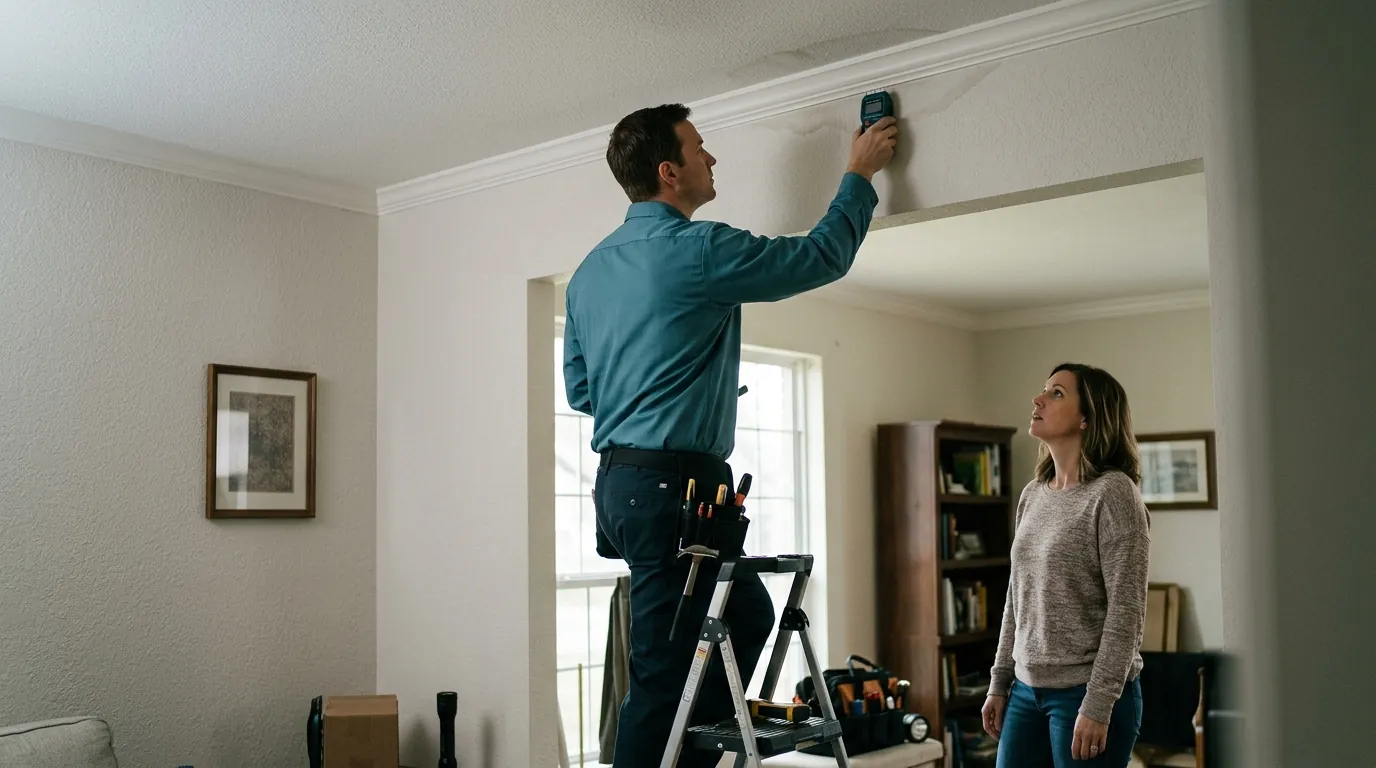
Walk every room and look up. New brown rings, yellow stains, bubbling paint or small cracks along drywall seams can point to water above. Pay extra attention to rooms on the top floor, closets with ceilings you rarely look at, and ceilings near exterior walls. Look at light fixtures and ceiling fans for water or rust. If water is dripping from a fixture, turn off that breaker before doing anything else. A bulging ceiling means water is pooling on the drywall; keep people out from under it.
Water Still Spreading While You Read This?
Shut off the source if you can, then call. We answer any hour and walk you through the next steps.
Windows, Doors and Wind-Driven Rain
Wind pushes rain sideways, past window frames and under door thresholds. Check sills and the drywall below each window for stains, softness or peeling paint. Check carpet along exterior walls by pressing it with your hand; damp pad often shows up there first. Broken glass or a damaged door needs covering right away, both to keep rain out and to keep the house secure. Board-up service closes those openings until replacements arrive.
Garages, Skylights and the Places People Forget
A storm check usually focuses on bedrooms and living areas, but leaks often start in spaces nobody visits. Look at the garage ceiling and the wall where the garage meets the house, since water there can run into the bottom plate of an inside wall. Check skylight shafts for stains or bubbling paint along the drywall. Open closets on the top floor and look at their ceilings. Check around bathroom exhaust fans and kitchen vent hoods, which go through the roof. Outside, look at window screens and siding on the side the storm came from, because hail damage there often means wind-driven rain reached the wall too.
- Garage ceiling and the shared wall
- Skylight shafts
- Top-floor closet ceilings
- Exhaust fans and vent hoods
Hail Hits Hard Across North Texas
Hail tracking shows how often this happens. There have been 249 hail reports within 10 miles of Keller since 2004, including baseball-size hail in nearby Hurst on May 27, 2024. Baseball-size hail of 2.75 inches was also reported in Euless that day, and 2 inches in Bedford. The same holds to the west. Hail of 3 inches fell in Hudson Oaks and 2.5 inches in Weatherford on June 1, 2025. With hail that size, roofs often take damage across whole slopes, so checking only the spot with a visible dent can miss the leaks.
What to Do When You Find Water
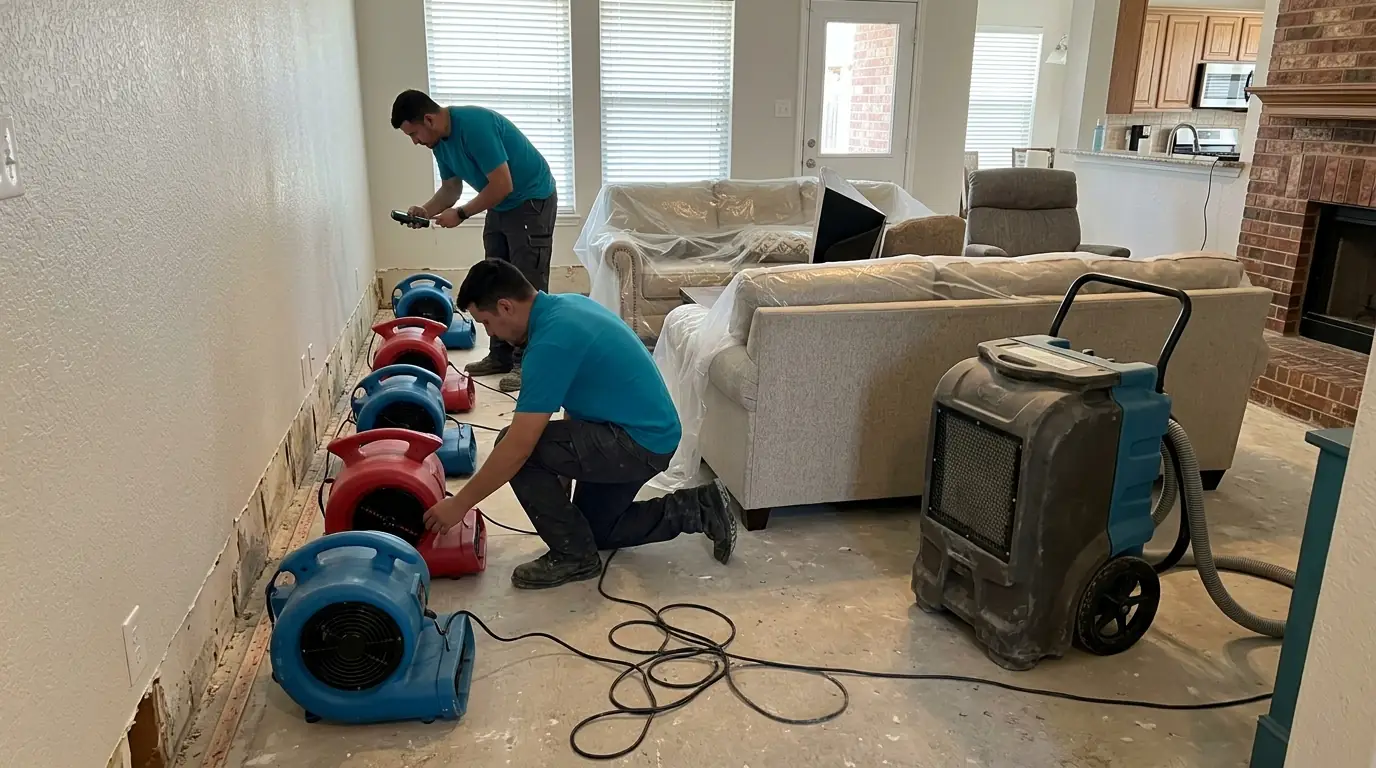
Catch drips, move belongings and photograph everything from the ground and inside. If water is still entering, the roof needs a cover before the next rain. Emergency roof tarping keeps water out until a roofer can make permanent repairs, which after a big storm can be weeks away. Inside, wet insulation and ceiling drywall need attention fast, before mold has a chance to start. Storm damage restoration covers removing wet materials and drying with logged readings. For the claim side, see our guide on documenting water damage for insurance.
Questions About This Topic
It's safer not to. Wet or damaged shingles are slippery, and hail can weaken areas you can't see. Check from the ground with binoculars, look at gutters and downspouts for dents and granules, and do most of your checking from inside the attic, where leaks actually show.
Check as soon as the storm passes and it's safe, then again after the next heavy rain. Many hail leaks don't appear until later rain finds cracked shingles or broken vent seals. A quick look after each of the next few storms is worth the few minutes it takes.
Not always, but they show hail of a size that can damage shingles. Dents in gutters, downspouts, AC fins and vent caps are clues. Granules from shingles collecting at downspout outlets are another sign. Use them as reasons to check the attic carefully, not as proof either way.
It's risky to wait. A small stain often sits under wet insulation that keeps pressing water into the drywall. If the roof keeps leaking, the stain grows and mold can start. Cover the roof opening and have the attic and ceiling checked before the next rain.
Cover it from outside as soon as it's safe, because rain will pour straight in. A tarp or plywood over the skylight frame works as a temporary fix. Inside, check the ceiling and drywall around the shaft for water and dry or remove what got wet.
Services Related to This Guide
Need Someone to Look at It Today?
We answer around the clock for Fort Worth and the surrounding area.