Quick answer
After a house fire, hard items like glass, metal and ceramic usually clean well, while food, medicine, cosmetics and heavily smoked mattresses usually go. The deciding factors are heat, soot type and water from firefighting. Sorting carefully, with photos of everything before it leaves, saves both belongings and claim headaches.
Three Kinds of Damage in One Fire
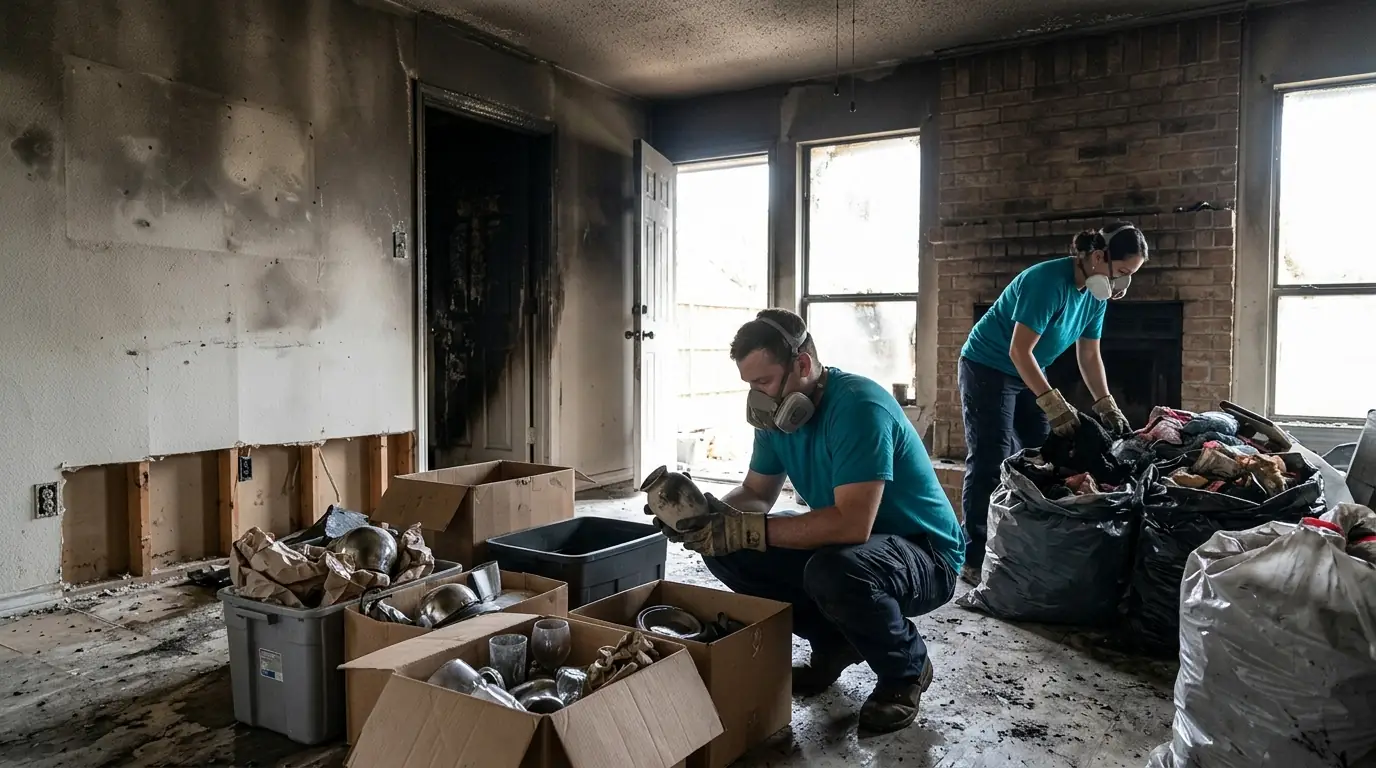
A house fire damages things in three ways. Heat warps, melts and chars. Smoke and soot coat surfaces and work into fabrics, wood and plastic, leaving odor and acidic residue. And water from firefighting soaks floors, walls and contents, sometimes doing more damage to the rooms the fire never reached than the fire itself. Each of those calls for a different response. Something heat-warped is usually gone. Something smoke-coated may clean up. Something water-soaked needs drying quickly before mold starts. Most rooms have all three in different amounts, so sorting has to happen item by item.
What Usually Cleans Up Well
Hard, nonporous items are the best candidates. Glass, ceramic, porcelain, metal cookware, stone and most hard plastics that didn't warp can be cleaned of soot and odor. Solid wood furniture with a sound finish often cleans and deodorizes well too, especially if it wasn't in the room with the fire. Clothing, bedding and curtains can often be cleaned with professional textile methods if they weren't burned or melted. Many documents and photos can be saved with careful drying and cleaning. Contents pack-out and cleaning moves these items out of the house so they can be cleaned and stored while the structure is repaired.
- Glass, ceramic, porcelain and metal
- Solid wood furniture with an intact finish
- Most clothing and bedding without burn damage
- Hard plastics that didn't warp
What Usually Has to Go
Anything you'd eat, drink, put on your skin or take as medicine should be thrown out if it was exposed to heat, smoke or firefighting water. That includes canned goods exposed to high heat, since heat can damage the seal and spoil the food inside. Cosmetics and medicine absorb contaminants and can't be checked at home. Mattresses and pillows that took heavy smoke usually go, because smoke works deep into foam and filling. Upholstered furniture soaked by firefighting water or covered in oily soot is often not worth the cost of restoration. Items that melted, warped or charred are typically gone too.
- Food, drinks and anything in the fridge if power was lost
- Medicine and cosmetics
- Heavily smoked mattresses and pillows
- Burned, melted or warped items
Water Still Spreading While You Read This?
Shut off the source if you can, then call. We answer any hour and walk you through the next steps.
Water From Firefighting Needs Its Own Attention
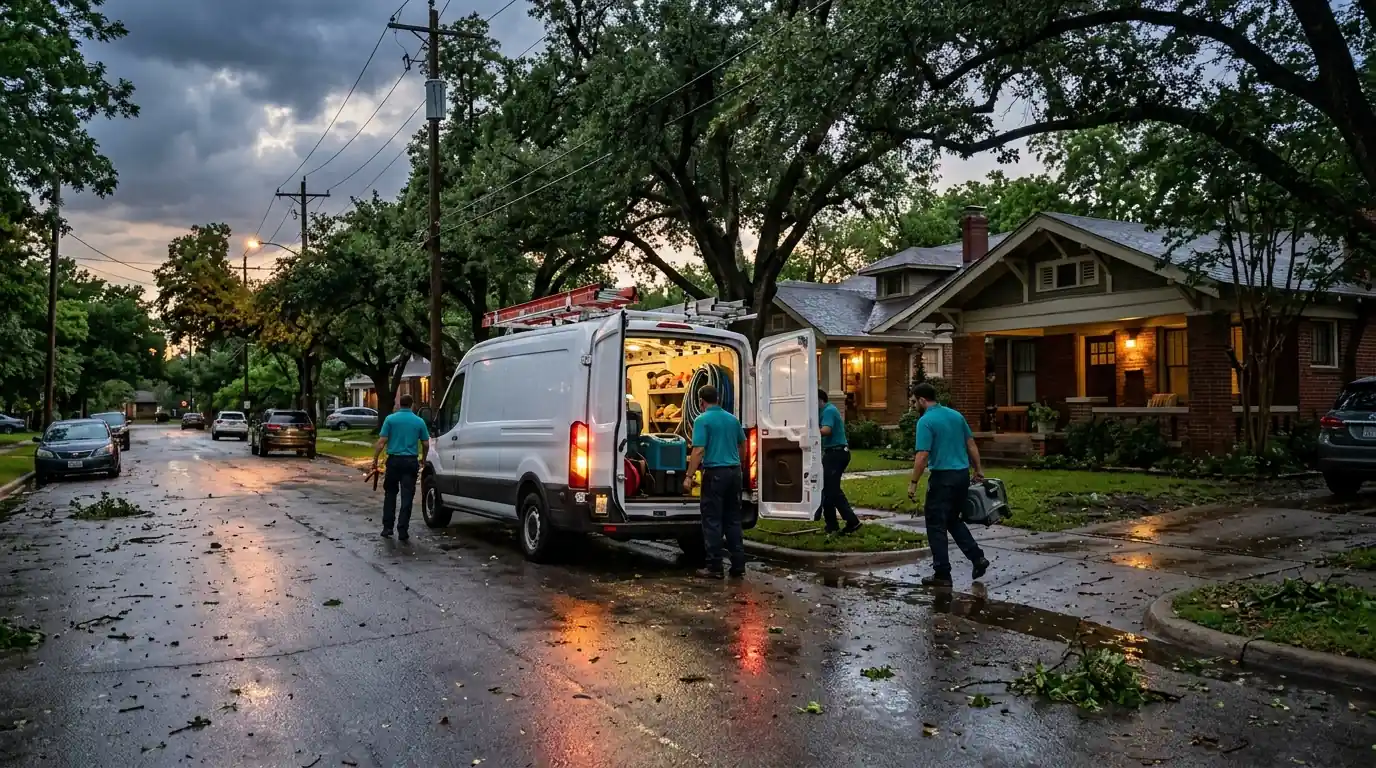
Firefighters may put hundreds or thousands of gallons of water into a house, and that water doesn't stop at the burned room. It runs through floors into rooms below, soaks into walls and carpet and settles under cabinets. Because the focus after a fire is on smoke and char, the water is easy to forget, but it can grow mold within days. Wet drywall, insulation and flooring need to be extracted and dried on the same schedule as any other water loss. Contents that got wet but not smoky, like books in a closet downstairs, may need drying more than they need cleaning.
Soot Type Changes the Answer
Soot isn't all the same. Dry soot from fast, hot fires burning paper and wood is powdery and wipes off more easily. Oily soot from burning plastics and synthetics smears and stains, and it's harder to remove from fabrics and porous surfaces. Protein residue from kitchen fires is almost invisible but carries a strong odor. Wiping soot with a wet rag or regular cleaner often smears it deeper into the surface. Dry soot sponges and HEPA vacuuming come first. Soot removal matches the method to the residue, which is why some items that look ruined end up clean and some that look fine still smell.
Electronics and Appliances
Electronics exposed to smoke can fail weeks later, because soot is corrosive and can work into circuit boards. Don't turn on TVs, computers or appliances that were in a smoky room until they've been checked and cleaned. Doing so can short them out or pull more soot inside. Large appliances that were close to the fire or soaked by water often need replacing. Ones in rooms with light smoke can sometimes be cleaned. When in doubt, keep the item, photograph it and set it aside until it can be evaluated.
How to Sort Without Losing Track
Before anything leaves the house, photograph it. Work room by room, writing a simple list of what was there, what condition it's in and whether you think it can be saved. Keep receipts for anything you buy to replace essentials. Don't throw out damaged items until your adjuster says it's okay. Fire damage comes with water from firefighting, so the structure needs drying at the same time as contents are sorted. Fire damage restoration covers both the building and its contents. Our guide on documenting water damage for insurance covers record-keeping in more detail.
Questions About This Topic
Often, yes. Clothing that wasn't burned or melted can usually be cleaned with professional textile methods that remove soot and odor. Washing smoky clothes at home with regular detergent sometimes sets the odor instead. Bag smoky clothes separately and keep them away from clean items until they can be cleaned properly.
If the cans were exposed to high heat, yes. Heat can damage the seal and let bacteria grow inside, even if the can looks fine. Cans that bulge, rust or have a dented seam should always go. Cans stored in a room the fire never reached may be fine after the outside is cleaned.
Hold off. Soot is corrosive and conductive, and powering on a smoky device can short it or pull soot deeper inside. Have electronics cleaned and checked first. Photograph them, keep them dry and set them aside rather than testing them at home right away.
Many can. Photos and papers that got wet from firefighting can be frozen in sealed bags to slow damage until they're dried properly. Soot can sometimes be removed from documents with careful dry cleaning. Badly burned items may only be salvageable as copies or scans.
Smoke travels through the whole house, moving through HVAC ducts, gaps around outlets and the attic. Fabrics and foam absorb it even in rooms the fire never touched. Cleaning and deodorizing those items, along with treating the ducts and structure, usually removes the odor.
Services Related to This Guide
Need Someone to Look at It Today?
We answer around the clock for Fort Worth and the surrounding area.