Quick answer
Texas separates mold assessment from mold remediation, and on one project the assessor and the remediator cannot be the same company. A licensed Mold Assessment Consultant writes a protocol, the remediator works to it, the consultant checks clearance afterward, and a Certificate of Mold Damage Remediation is issued. Visible mold under 25 contiguous square feet can be cleaned by people who are not licensed.
Why Texas Splits Mold Work in Two
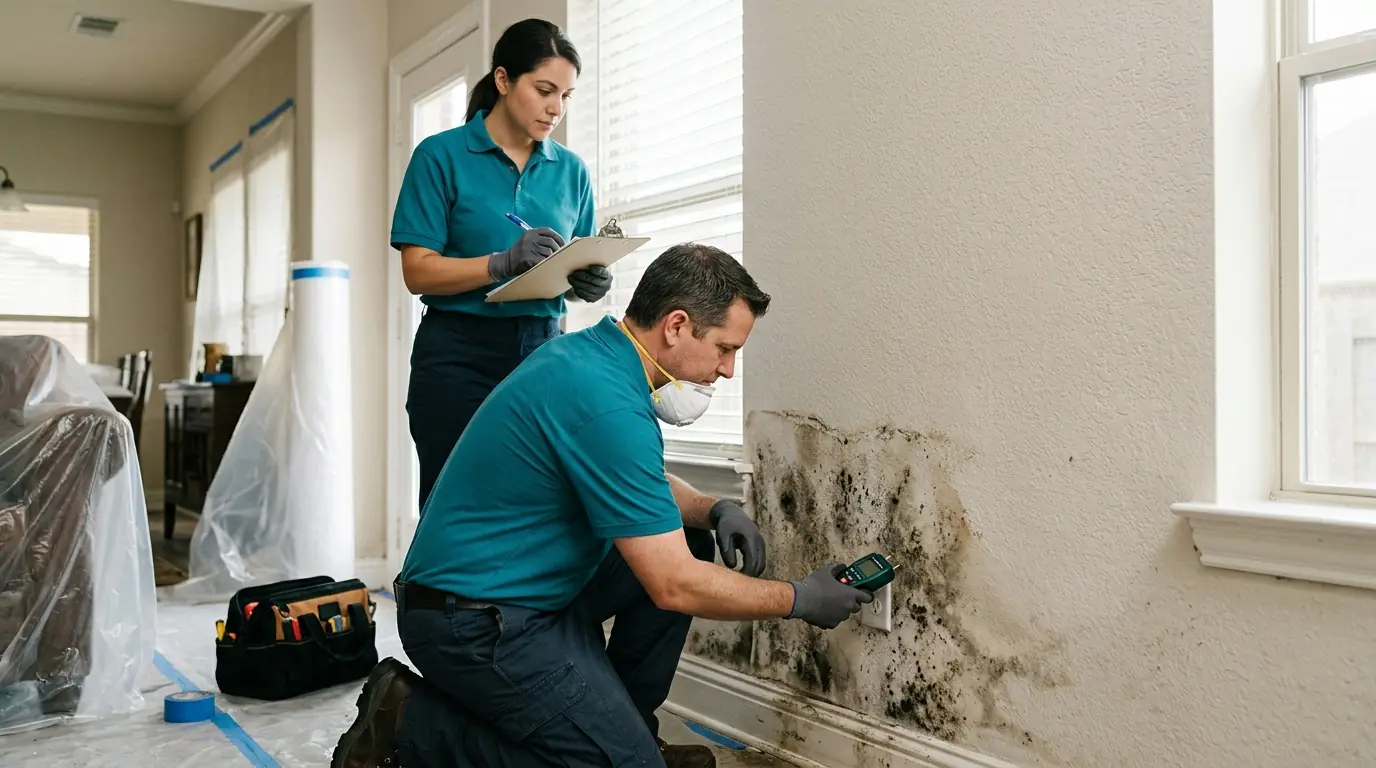
Texas law, administered by the Texas Department of Licensing and Regulation, treats finding and judging mold as one job and removing it as another. The idea is simple: the company that decides how big the problem is shouldn't be the company that earns money fixing it. On any single project, the assessor and the remediator have to be separate companies. For homeowners, that means a mold job above the small-area threshold has two sets of people involved. One firm comes out to assess and later to confirm the job is done. Another firm does the containment, removal and cleaning in between. Each has a different role and a different paper trail.
Step One: The Assessment and the Protocol
The process starts with a licensed Mold Assessment Consultant. The consultant inspects the house, figures out where the mold is and how far it goes, and writes a protocol. The protocol is the plan: which areas are affected, what has to be removed, how containment should be set up and what the end result should look like. You hire the assessor directly. If you don't know one, we can point you to independent assessors in the area, but the choice and the relationship are yours. The protocol belongs to the job, and the remediator's plan has to follow it.
- Inspection of affected and nearby areas
- A written protocol for the remediation
- Defined scope, containment and cleanup goals
Step Two: The Remediation Work
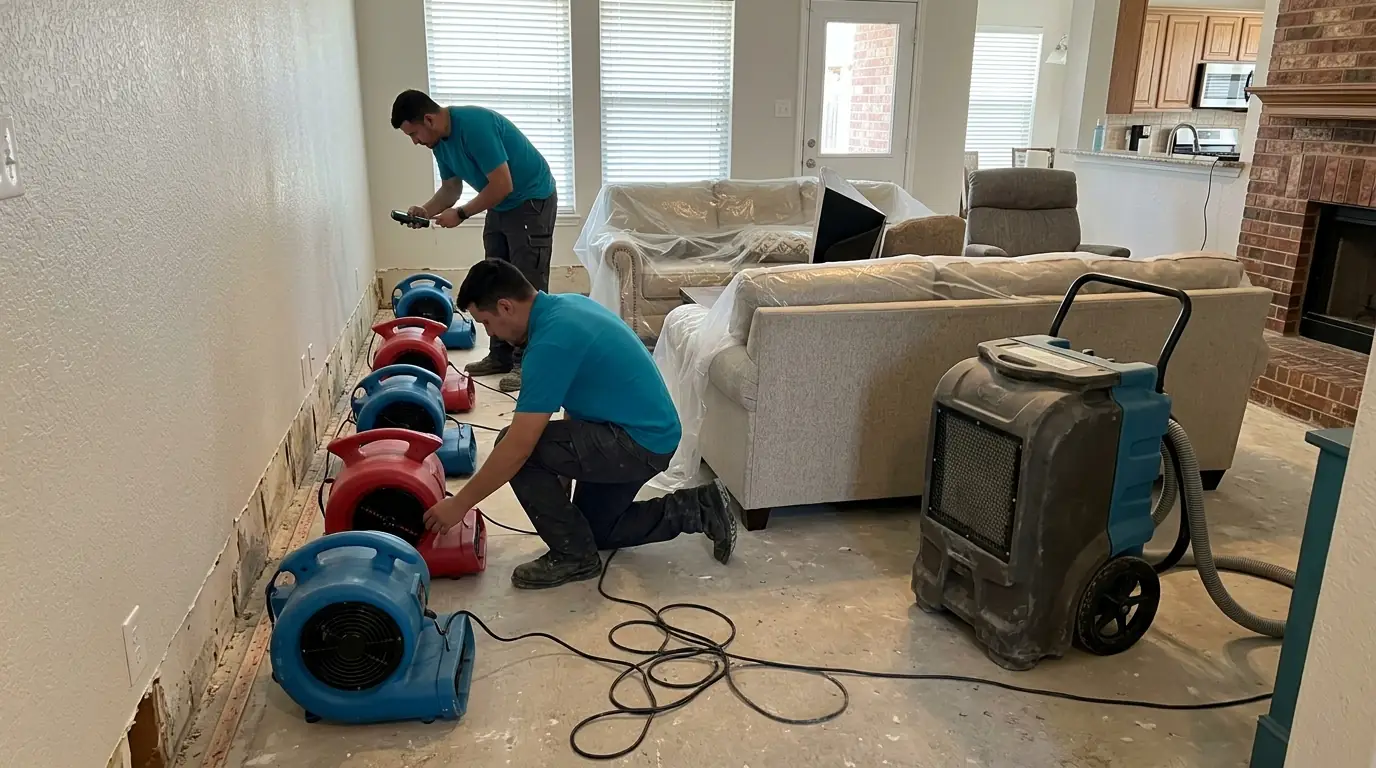
The remediation side is where the physical work happens, and it's the side we handle. The remediator's work plan follows the consultant's protocol. In practice, that means setting up containment with plastic sheeting and negative air so spores don't spread, removing affected drywall, insulation and other porous materials, HEPA vacuuming and cleaning framing, and drying the structure. If the mold came from a leak that hasn't been fully dried, drying is part of the work, because mold returns to wet materials. Mold remediation covers that full sequence from containment to cleaned, dry surfaces. In attics and crawl spaces, attic mold removal and crawl space work follow the same protocol-driven approach.
Water Still Spreading While You Read This?
Shut off the source if you can, then call. We answer any hour and walk you through the next steps.
Step Three: Clearance and the Certificate
When the remediation is finished, the consultant comes back for a post-remediation assessment, often called clearance. The consultant checks that the work matched the protocol and that the area meets the goals set at the start. If it does, the job passes. After a project passes clearance, a Certificate of Mold Damage Remediation, or CMDR, is issued. Keep it with your house records. It shows the mold was handled through the Texas process, which can matter when you sell the house or talk to an insurer about the area later.
The 25 Square Foot Threshold
Not every mold spot triggers the full process. Areas of visible mold under 25 contiguous square feet can be cleaned by people who are not licensed. That covers many small jobs: a patch under a sink, a spot behind a toilet, mildew on a bathroom ceiling. Contiguous means connected. Several small patches in different rooms are measured separately, while one large connected area is measured as a whole. Even under the threshold, the cleaning has to be done carefully, with the water source fixed first, damaged porous materials removed and the area dried so mold doesn't return. Our guide on how fast mold grows after a leak explains why drying matters.
Practical Tips for Homeowners
Before any work starts, fix the source of moisture. Mold removal without stopping the leak or the humidity problem behind it only buys time. If a pipe, roof or AC drain caused the mold, get that repaired first or alongside the remediation. Ask both firms what their part covers, and keep copies of the protocol, the work plan, photos and the clearance results together. If the mold is tied to a water event, the moisture readings from drying belong in the same file. In bathrooms, bathroom mold removal often goes hand in hand with fixing a failed exhaust fan or shower seal.
What to Ask Before Mold Work Starts
A few questions up front keep the job clear. Ask the assessor what the protocol will cover, how they'll check clearance and when they'll return. Ask the remediation side how containment will be set up, which rooms will be sealed off, how long the work should take and whether drying is part of the plan. Ask both how they'll share photos and results with you. If the mold came from a leak or a flood, find out whether the moisture source has been fixed. A clear answer to each of those questions before work begins saves confusion at clearance time.
- What does the protocol cover?
- How will containment be set up?
- When will clearance be checked?
- Has the moisture source been fixed?
Questions About This Topic
Not on the same project. Texas requires the assessor, who writes the protocol and later checks clearance, and the remediator, who does the removal, to be different companies on any one job. That separation is the core of how the Texas rules work for projects above the small-area threshold.
If the visible mold is under 25 contiguous square feet, Texas allows people who are not licensed to clean it, so a formal assessment isn't required by that rule. You still need to fix the leak, remove damaged porous materials and dry the area, or the mold will come back.
A Certificate of Mold Damage Remediation, or CMDR, is issued after a project passes its post-remediation assessment. It documents that the mold was handled through the Texas assessment and remediation process. Keep it with your house records, because buyers and insurers may ask about past mold work.
Usually the homeowner. The consultant works independently from the remediator, which is the point of the rule. If you don't know an assessor, we can point you to independent firms, but you choose and hire them. Their protocol then guides the remediation work.
The law sets up the process, and the consultant's protocol decides the scope for your specific house: which materials are removed, how containment is set up and what clearance requires. The remediator's work plan has to follow that protocol, and clearance checks the result against it.
Services Related to This Guide
Need Someone to Look at It Today?
We answer around the clock for Fort Worth and the surrounding area.