Quick answer
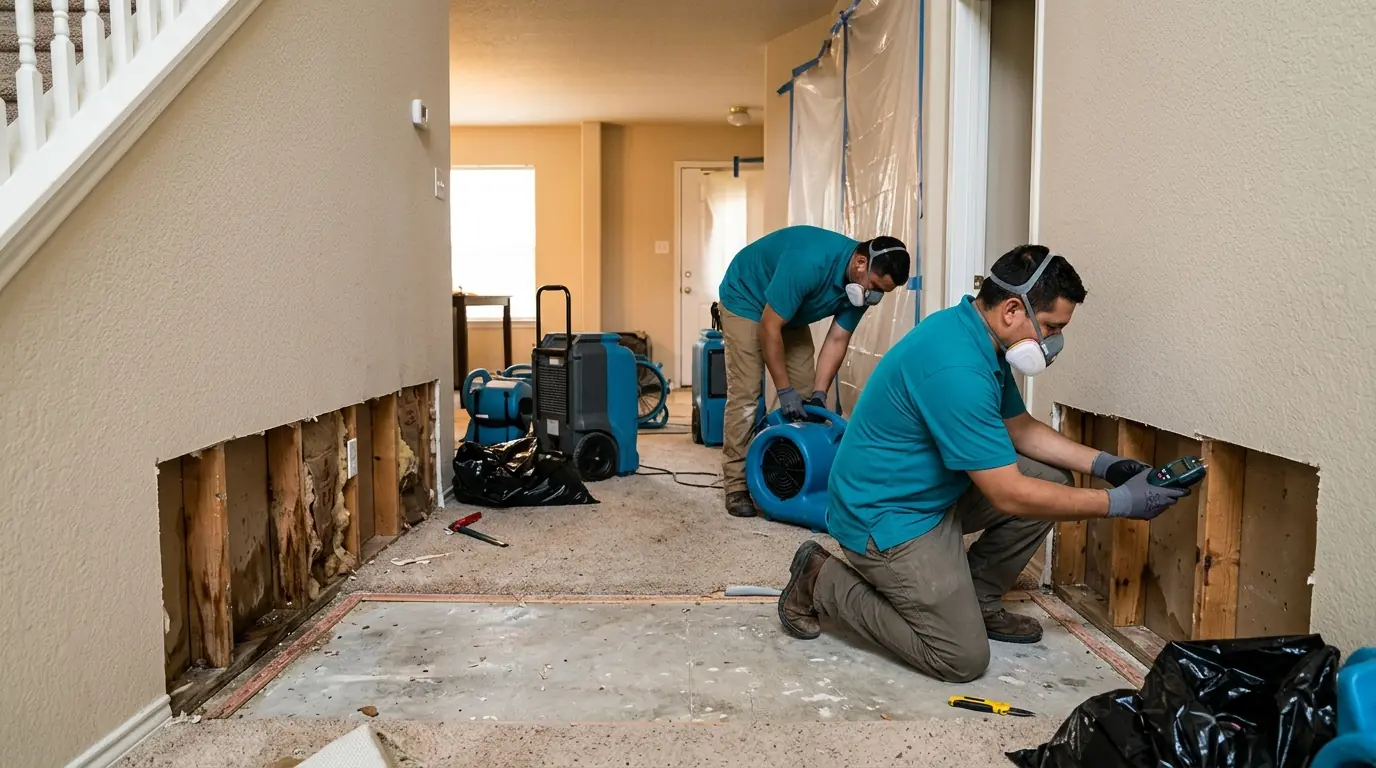
Mold can start growing on wet drywall, carpet pad and wood within 24 to 48 hours after a leak, and it spreads faster in warm, humid houses. What stops it isn't bleach on the surface but getting materials dry fast: removing what's soaked, running dehumidifiers and air movers, and confirming dryness with a moisture meter.
The 24 to 48 Hour Window
Mold spores are already in every house. They float in the air and settle on surfaces without doing anything until they find moisture and something to eat. Drywall paper, wood, carpet backing and dust are all food. When those materials stay wet, spores can start growing within 24 to 48 hours. That timeline isn't a deadline where everything changes at hour 49. It's a window where fast drying keeps growth from getting established. Visible mold usually takes longer to appear, often a week or two, but growth has usually started inside walls or under floors well before you see it.
Where Mold Shows Up First After a Leak
Mold grows first where water sits longest and air moves least. The back of drywall inside a wall cavity is a classic spot, because the face may dry while the paper behind stays wet against the insulation. Carpet pad, the bottom plate of a wall, and the underside of cabinet floors are others. In attics, wet insulation pressed against roof decking or ceiling drywall can grow mold quickly in summer heat. In pier-and-beam homes, wet crawl spaces with poor air flow are prime spots. These are the places to check first after any leak.
- Back side of drywall inside wall cavities
- Carpet pad and tack strip
- Under sink cabinets and behind toe-kicks
- Wet attic insulation and roof decking
- Crawl space joists and vapor barriers
Why Texas Heat Speeds It Up
Mold grows faster in warmth, and many North Texas leaks happen when the house is already warm and humid. Fort Worth gets most of its rain from March through June, so spring storm leaks often arrive in humid weather. Summer AC overflows soak attic insulation and ceilings when attics are hottest. That combination of heat and moisture is why a leak you might leave for a few days in a cold climate needs attention here sooner. Running the AC to dry the air helps, but it doesn't reach water trapped inside walls.
Water Still Spreading While You Read This?
Shut off the source if you can, then call. We answer any hour and walk you through the next steps.
What Actually Stops Mold After Water Damage
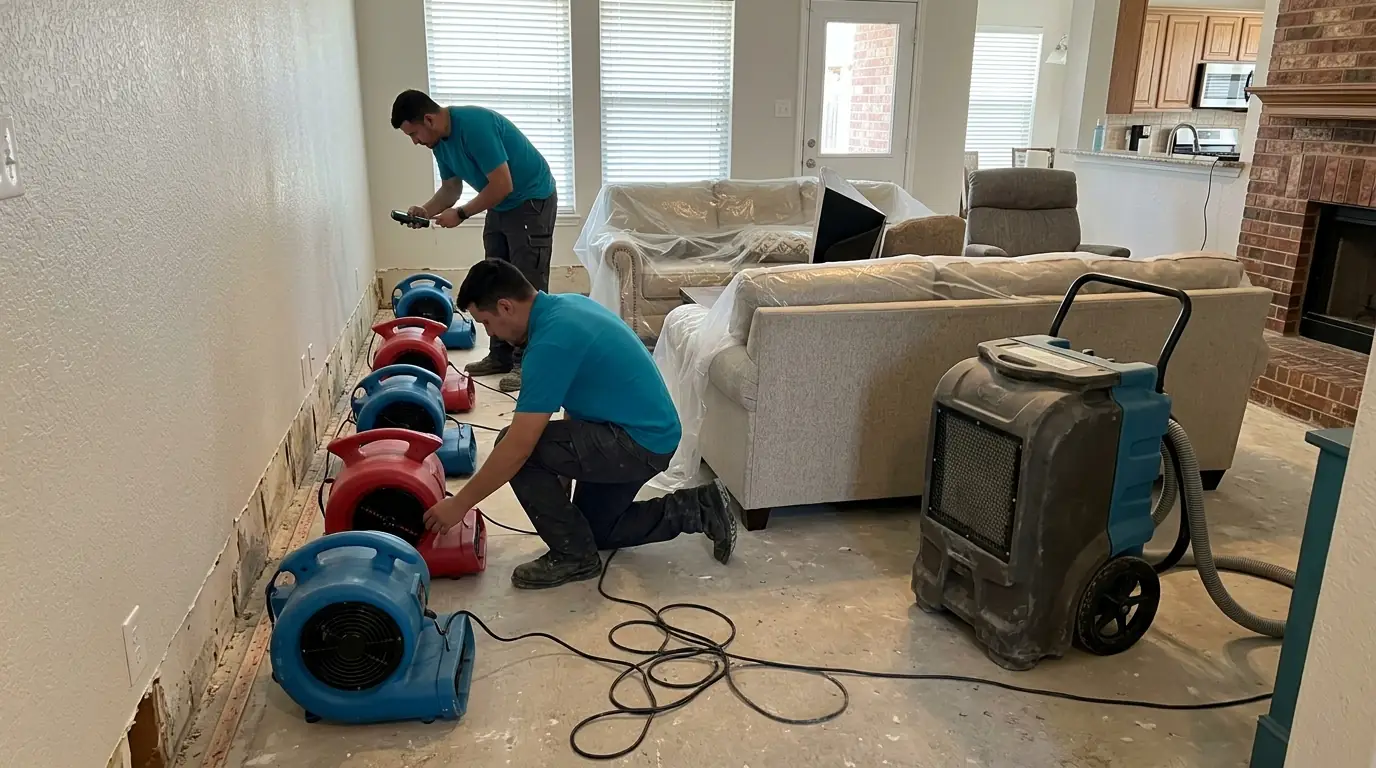
Drying stops mold. Spraying bleach on a wet wall doesn't, because it doesn't reach the cavity and adds more water. What works is removing soaked materials that won't dry in time, like carpet pad and saturated insulation, then drying what's left with air movers and dehumidifiers. Moisture readings tell you when you're done. Drying is finished when the wet materials read close to dry reference areas of the same house. Mold prevention after water damage often adds an antimicrobial on framing that stayed wet, but it's applied after extraction and alongside drying, not instead of it.
- Extract standing water fast
- Remove soaked pad and insulation
- Open walls where readings show trapped water
- Dry with dehumidifiers and air movers
- Confirm with moisture readings, not touch
Materials That Resist Mold and Materials That Don't
Not everything in a wet room is equally at risk. Concrete, tile, glass and metal don't feed mold, so they only need to be cleaned and dried. Solid framing lumber can usually be dried and kept if it's caught in time, because mold needs a while to get into dense wood. Drywall paper, carpet pad, cardboard, ceiling tiles and the facing on fiberglass batts are different. They soak up water quickly, stay wet for a long time and give mold an easy meal. Those are the materials we read first and remove first when readings stay high, because drying them in place often takes longer than mold needs to start.
Signs Mold Has Already Started
A musty, earthy smell is often the first sign, sometimes before anything is visible. Look for spotting or discoloration at the bottom of walls, on baseboards, along ceiling stains and under sinks. Peeling paint or bubbling wallpaper can mean the wall behind is wet. If you find mold, don't scrub it dry or blow fans across it. That spreads spores. Small patches can be cleaned carefully, and our guide to Texas mold remediation rules explains when the job gets bigger. Larger growth calls for containment and mold remediation.
Keeping a Small Leak From Becoming a Mold Problem
Most mold jobs start as water jobs that were dried too slowly or not completely. A leak cleaned up on the surface, with a wet wall cavity left behind, is the most common path. If water ran into a wall, under a floor or into insulation, have it read with a moisture meter even if things look dry. Structural drying with daily readings, documented until the structure is dry, is the best protection. It also gives you a record showing the house was dry before walls were closed, which helps if you ever sell.
Questions About This Topic
Usually not. Growth can start in that window, but visible colonies typically take longer to appear, often a week or more. By the time you see spots on a wall, growth is often already established behind it. That's why drying fast matters even when nothing looks wrong yet.
It helps by pulling humidity out of the air in the room, but it doesn't dry water trapped inside walls, under flooring or in insulation. Those spaces need direct air movement, dehumidifiers sized to the area, and sometimes openings cut in the drywall so dry air can reach the cavity.
Bleach can lighten mold on hard surfaces, but on drywall it mostly removes color while the water in it soaks deeper into the paper. Mold growing in drywall usually means the affected section needs removing. On hard surfaces, cleaning with detergent and drying works better than bleach alone.
Not always, but it's a strong sign of trapped moisture where mold can grow. The smell often comes from wet carpet pad, insulation or the inside of a wall. Have the area checked with a moisture meter. If materials are still wet, drying them usually stops the smell from getting worse.
Dehumidifiers pull water out of the air, which helps materials dry, but they work best with air movers pushing air across wet surfaces and with soaked materials removed. A dehumidifier in the corner of a room won't dry a wall cavity behind closed drywall on its own.
Services Related to This Guide
Need Someone to Look at It Today?
We answer around the clock for Fort Worth and the surrounding area.