Quick answer
An attic AC unit pulls several gallons of water out of the air on a humid day, and when its condensate drain line clogs, that water overflows the pan onto insulation and ceiling drywall. A brown stain near the air handler is the usual first sign. Keeping the line clear and the safety switch working prevents most of these leaks.
How Attic AC Units Make Water
Many Texas homes have the air handler and evaporator coil in the attic. As warm, humid air passes over the cold coil, moisture condenses and drips into a primary drain pan. From there, a PVC condensate line carries the water out, usually to the outside of the house or into a nearby drain. Under the unit, there's usually a secondary pan as backup, with its own drain line or a float switch that shuts the system off if water rises. When all of that works, the water leaves quietly. When the line clogs and the backup fails, the water ends up in the attic.
Why Drain Lines Clog
Condensate lines are dark, damp and slow-moving, which makes them a good home for algae and bacterial sludge. Over a cooling season, that growth builds up until it blocks the line. Dust pulled through the system adds to it. Lines that sag without enough slope hold water and clog faster. Long cooling seasons mean the system runs and makes water for months. A line that was clear in spring can be blocked by late summer. Pans can also rust through on older units, sending water straight onto the attic floor even when the line is clear.
- Algae and sludge inside the PVC line
- Dust and debris from the coil
- Sagging lines without enough slope
- Rusted or cracked drain pans
Warning Signs of an Overflow
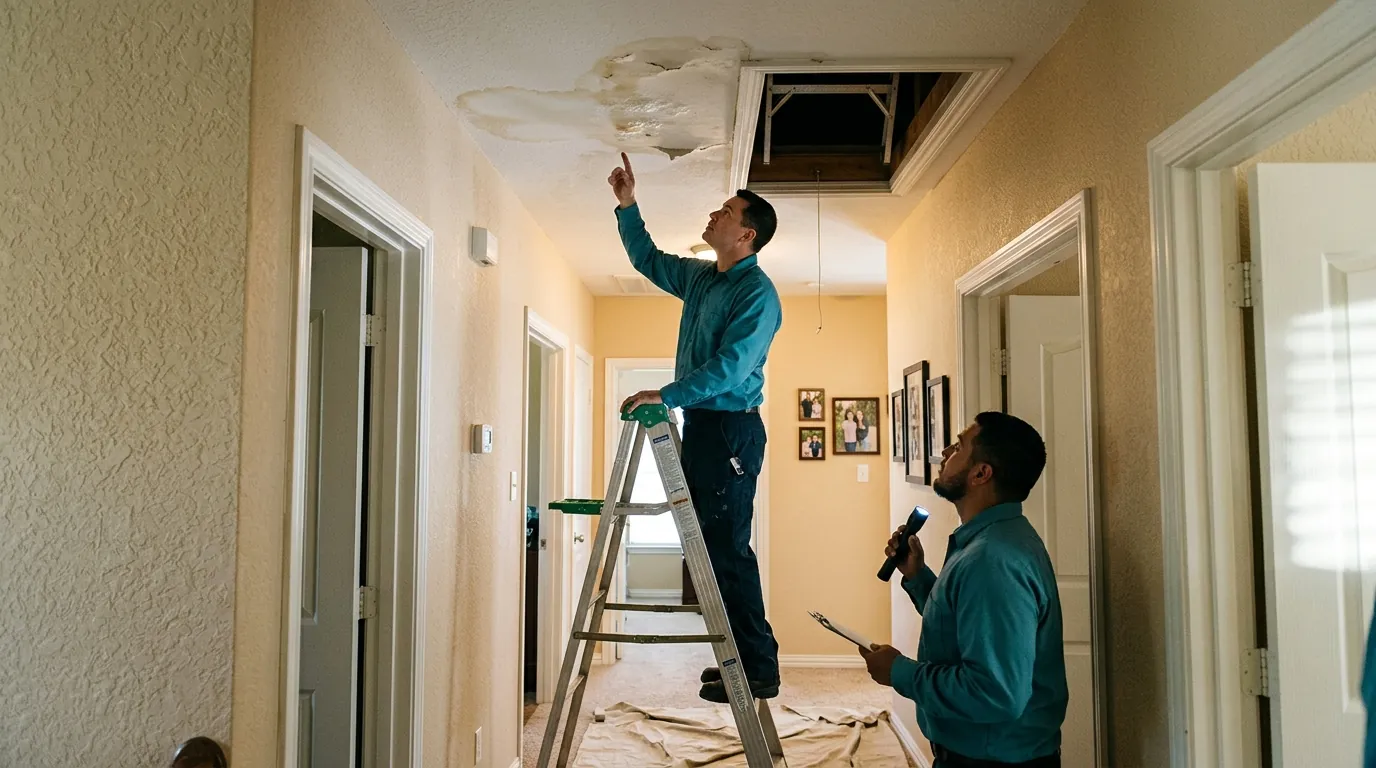
The most common sign is a ceiling stain near the hallway or closet below the air handler. It often starts small and grows during hot weeks when the system runs hardest. Bubbling paint, sagging drywall or water dripping from a ceiling vent are later signs. Other clues include water in the secondary pan when you look in the attic, a musty smell near return vents, or the AC shutting off unexpectedly, which can mean a float switch tripped. Water dripping from the secondary drain outlet, often over a window, means the primary line is blocked.
- A stain on the ceiling near the air handler
- Water standing in the secondary pan
- AC shutting off on its own
- Dripping from the secondary drain outlet
Water Still Spreading While You Read This?
Shut off the source if you can, then call. We answer any hour and walk you through the next steps.
Why Summer Is When Most AC Overflows Happen
Air conditioners make the most water when they run the longest on humid days, and that's also when attics are hottest. A drain line that was slow in spring can block completely by midsummer, and a wet attic at that temperature dries slowly while mold grows quickly. Many homeowners don't go into the attic during summer because of the heat, so an overflow can run for weeks before a ceiling stain shows. Checking the secondary pan after the first heavy cooling weeks of the year, and again in late summer, catches most problems before the drywall below is ruined.
What the Water Does to Ceilings and Insulation
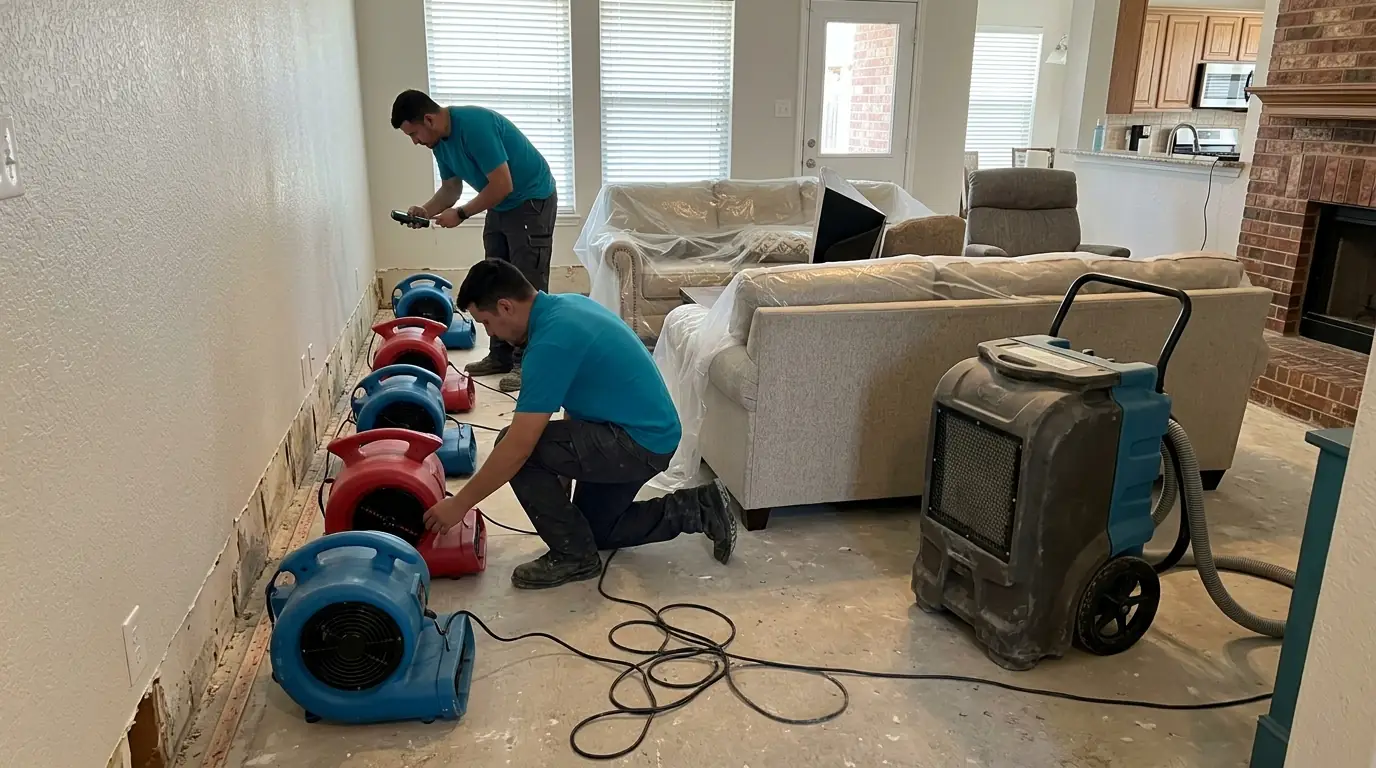
Overflow water lands on blown-in insulation first. The insulation soaks it up and holds it against the ceiling drywall, which absorbs water, stains and eventually sags. Because the leak often runs for days or weeks before anyone notices, the wet area can be larger than the stain suggests. Wet insulation usually needs removing, and ceiling drywall that's soft or sagging has to come down. Ceiling water damage work starts with tracing the source, then reading the ceiling and attic to find how far the water spread. Drywall and insulation are replaced only after the framing reads dry.
How to Prevent Overflow
Prevention is simple and cheap compared with ceiling repairs. Many systems have a cleanout tee near the air handler; pouring a cup of white vinegar into it every month or two during cooling season helps slow algae growth. Have the line cleared during routine AC service, and ask the technician to test the float switch. Look in the attic once in a while during summer. If there's water in the secondary pan, the primary line is blocked. Clear it, and if the pan is rusted, get it replaced before it leaks.
- Flush the line with vinegar during cooling season
- Test the float safety switch
- Check the secondary pan for water
- Replace rusted pans before they fail
What to Do When the Ceiling Is Already Wet
Turn off the AC at the thermostat to stop making water. If the ceiling is sagging, keep people out from under it and turn off breakers for any wet light fixtures. Photograph the ceiling and, if safe, the attic and the pan. Then have the line cleared and the wet materials addressed. AC leaks that go unnoticed for weeks often end in mold on the back of drywall or on the decking near the unit. If you see spotting, see our guide on how fast mold grows after a leak. Insulation replacement and attic mold removal cover the follow-up work if it's needed.
Questions About This Topic
Often, yes. Turn off the system, find the line's outside end and use a wet vac to pull the clog out, or flush vinegar through the cleanout. If water keeps backing up, the line may be sagging or blocked deeper, and an HVAC technician should look at it.
It's a safety device in the drain pan or line that shuts the system off when water rises too high. If your AC stops cooling suddenly in summer, a tripped float switch from a clogged line is a common reason. Clearing the line usually lets the system restart.
That's often the secondary drain outlet, placed where you'll notice it. Water coming from it means the primary condensate line is blocked and water is overflowing into the backup pan. Clear the primary line soon, before the secondary pan fills or fails too.
Yes. Water that soaks insulation and decking near the air handler, especially for weeks in summer heat, can grow mold. Look for dark spotting on the decking, the back of drywall or the unit's platform. Wet materials have to be removed or dried quickly to stop it.
Yes, because the stain is only what shows. Above it, insulation may be wet over a larger area and pressing water into the drywall. Clear the line first, then have the attic and ceiling read with a moisture meter to see how far the water went.
Services Related to This Guide
Need Someone to Look at It Today?
We answer around the clock for Fort Worth and the surrounding area.