Quick answer
HomeAdvisor reports water damage restoration at $1,383 to $6,369 (average $3,868), and HomeGuide's cost guide puts it at $2,000 to $6,000. Those are national planning ranges, not quotes. Your cost depends on how much area got wet, the water category, how long it sat and what has to be removed and rebuilt.
Published Cost Ranges for Water Damage
Several national cost guides track what homeowners pay for water damage restoration. HomeAdvisor reports a range of $1,383 to $6,369, with an average of $3,868. HomeGuide's cost guide puts typical restoration at $2,000 to $6,000. These are national figures, so they're useful for planning, but they aren't a price for any particular house. Both guides break costs down further. HomeGuide lists water extraction and drying at $4 to $12 per square foot, with $4 to $6 for clean water, $6 to $9 for gray and $9 to $12 for black water. HomeAdvisor reports extraction and drying at between $3.50 and $7.50 per square foot.
- HomeAdvisor: $1,383 to $6,369 (average $3,868)
- HomeGuide: $2,000 to $6,000
- HomeGuide per sq ft: $4 to $12 depending on category
- HomeAdvisor per sq ft: $3.50 and $7.50 per square foot
Water Category Changes the Price Most
HomeGuide's per-foot breakdown shows how much the water category matters: clean water costs the least to handle and black water the most. Clean water from a supply line can often be dried in place. Gray water usually means removing carpet pad and treating surfaces. Black water from sewage or floods means removing more porous materials and working with protective gear. Related jobs have their own published ranges. Bob Vila's guide puts sewage cleanup at $2,000 to $10,000. HomeAdvisor's drywall repair guide puts drywall repair after water damage at $600-$1,550, which comes on top of drying when walls have to be opened. Our guide to clean, gray and black water explains the categories.
Factors That Raise or Lower the Cost
The size of the wet area is the biggest driver. A leak under one sink cabinet is a small job; water that ran across a whole floor and into several rooms is a large one. How long water sat matters next, because time pushes water deeper into walls and floors and can turn clean water into gray. Materials matter too. Hardwood floors, finished ceilings and custom cabinets cost more to dry or replace than vinyl plank and stock cabinets. Access counts: water in a crawl space or behind built-ins takes more work to reach.
- Square footage of wet materials
- Water category and how long it sat
- Flooring and finish materials affected
- Walls and ceilings that must be opened
- Access to crawl spaces, attics and cabinets
Water Still Spreading While You Read This?
Shut off the source if you can, then call. We answer any hour and walk you through the next steps.
Related Costs That Often Come With Water Damage
Water damage rarely stays a single line item. If water reached hardwood, HomeAdvisor reports hardwood floor water damage repair at $8 to $100 per square foot, a wide range that reflects everything from refinishing to full replacement. If mold has started, This Old House puts mold remediation at $1,200-$3,750, with an average of $2,300. If the cause was a roof opening, Angi lists emergency roof tarping at $150 to $3,300, with an average of $450. These are national planning ranges from each source, not quotes, but they help explain why the final cost of a water loss can land above the base restoration range.
- Hardwood repair: $8 to $100 per square foot (HomeAdvisor)
- Mold remediation: $1,200-$3,750 (This Old House)
- Roof tarping: $150 to $3,300 (Angi)
Drying Costs vs Rebuild Costs
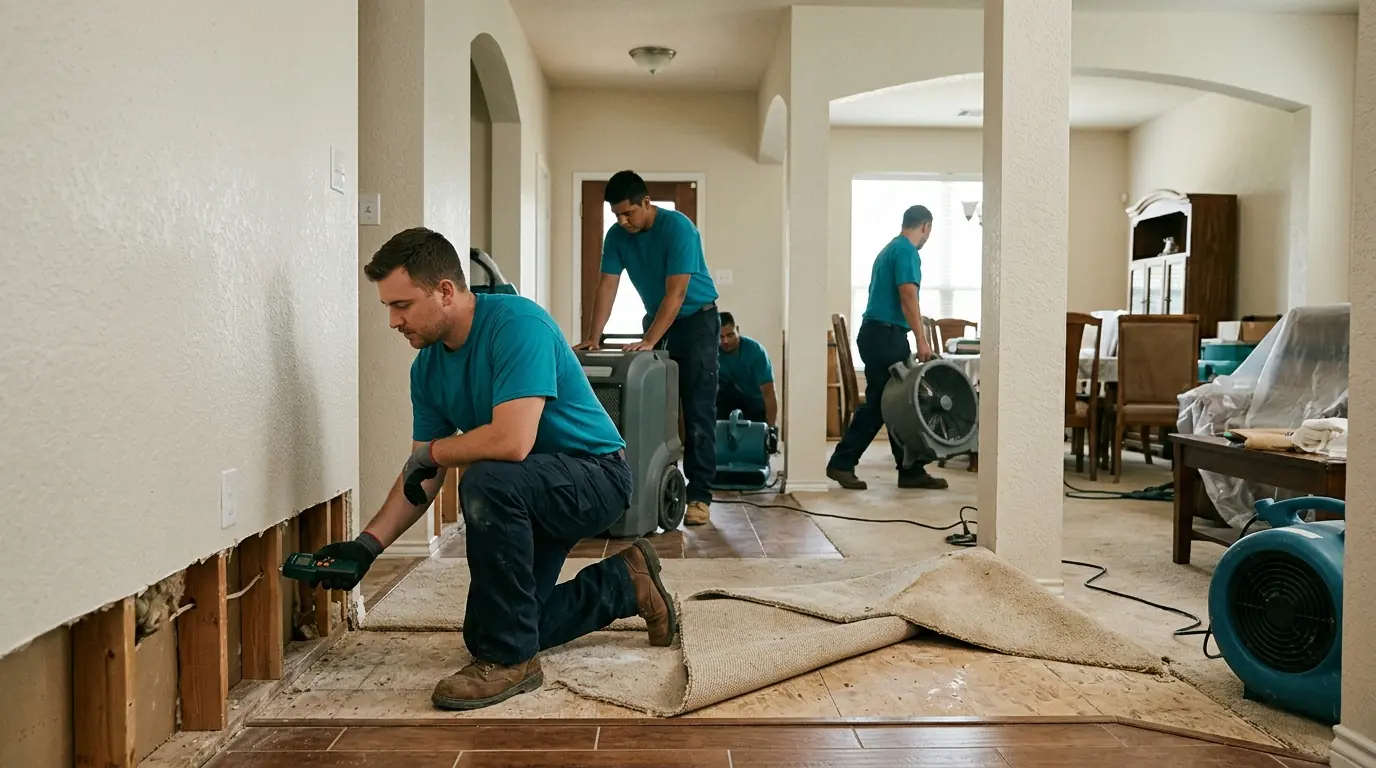
Restoration usually happens in two parts. The first is mitigation: extraction, removal of wet materials and drying with equipment until readings show the structure is dry. The second is rebuild: new drywall, flooring, baseboards and cabinets to replace what came out. Published ranges often focus on the first part. If your floor needs replacing or cabinets need new boxes, those costs add on. Water damage restoration covers the drying side, and home reconstruction covers putting rooms back.
How Fast Action Keeps Costs Down
The cheapest water damage is the one caught early. Water extracted the same day and dried promptly often means drying carpet and drywall in place. The same leak found a week later often means replacing them, and possibly dealing with mold too. Shutting off the water, removing what you can and starting drying fast are the most practical ways to keep a job at the lower end of any range. Our guide on the first hour after a leak covers the steps that limit damage before help arrives, and emergency water extraction starts the drying.
Insurance and Planning
Many homeowners policies cover sudden water damage, like a burst pipe, and often exclude slow leaks or flooding from outside, which typically needs separate flood coverage. Check your own policy and talk with your adjuster about what applies. Whatever the coverage, documentation helps. Photos, moisture readings, drying logs and receipts give a clear picture of what happened and what was done. Our guide on documenting water damage for insurance covers what to keep.
Questions About This Topic
Each guide draws on different job data and defines the work slightly differently. Some include only extraction and drying, others include repairs. HomeAdvisor reports $1,383 to $6,369 and HomeGuide $2,000 to $6,000, and both are national averages. Your house's size, damage and materials decide where it falls.
Yes. HomeGuide lists extraction and drying at $4 to $6 per square foot for clean water, $6 to $9 for gray and $9 to $12 for black water. Black water calls for removing more porous material, more cleaning and protective gear, which adds labor and disposal.
Not always. Many published ranges cover extraction and drying. HomeAdvisor lists drywall repair after water damage separately at $600-$1,550. If walls have to be opened for drying, rebuilding them is often a separate line on the job.
Usually. Water spreads into walls and under floors over time, clean water can degrade to gray, and mold can start within 24 to 48 hours. Materials that could have been dried in place may need replacing. Starting drying quickly is the most reliable way to limit the cost.
It's reasonable to ask how the job will be scoped and billed. The full scope often isn't clear until moisture readings show how far water spread, especially inside walls. Expect the first visit to map the damage, with the scope refined as readings come in.
Services Related to This Guide
Need Someone to Look at It Today?
We answer around the clock for Fort Worth and the surrounding area.